New Mexico’s Mescalero Sands Dunes
Mescalero Sands can look deceptively easy from the parking area: soft dunes, open sky, and plenty of room to ride. But loose sand, shifting wind, heat, and long distances between services can turn an enjoyable outing into a tiring one fast. This guide explains how to plan a safer ATV or UTV trip, prepare your machine, understand access rules, and ride the dunes with care.
Getting Oriented at Mescalero Sands
Finding the right dune area
Mescalero Sands is in southeastern New Mexico, in a region where open dune country sits among broad stretches of desert and ranch land. Riders commonly mean the Mescalero Sands North Dune Area when they talk about visiting the dunes. Because place names and access points can be easy to mix up, confirm the exact recreation area and current route before you leave. A name in a phone map is not, by itself, proof that a road is public or that a particular parcel is open to riding.
The dunes are not a managed amusement park with a staffed entrance and a marked loop that brings you back to the same staging area. They are a remote riding landscape, and the way you approach them matters. Check the route to the designated OHV area, identify the legal staging location, and avoid cutting across private property or unfamiliar ranch roads to save a few minutes. If a gate, sign, or posted boundary makes access unclear, stop and sort it out rather than assuming the route continues.
Before the trip, read [New Mexico's Mescalero Sands Dunes] alongside the broader overview of [New Mexico Dune Riding Areas]. Use those guides as starting points, then confirm current access information with the responsible land manager. That extra check is especially useful if you are driving in from Roswell, Tatum, or another town and are relying on a route saved months ago.
What the terrain feels like
Dune riding is different from following a hard-packed forest road. Sand shifts under your tires, slopes may conceal what lies beyond a crest, and tracks made by other riders can become misleading after wind reshapes the surface. A route that looked obvious on the way out may not look the same when you return. Keep track of your general direction and your staging area rather than treating every visible track as a reliable trail.
The dune field is also a landscape with its own hazards. A low spot can collect loose, soft sand; a steep face can hide a drop on the far side; and a vehicle that loses momentum on a climb may slide backward or become difficult to turn around. New riders sometimes see a broad open slope and assume it is an easy route. In practice, the angle, the sand texture, the wind, and the machine’s momentum all affect how manageable that slope will be.
The dunes’ height and shape can vary across the riding area, so do not plan around a single number or assume every dune is suitable for every rider. The overview [60-Foot Dunes in the Southeast] helps set expectations, while [Mesquite Dunes and How They Ride] adds useful context about the changing surface and vegetation around dune country. Treat unfamiliar slopes as something to assess from a safe distance before committing.
Planning the Trip Before You Leave
Check access, weather, and closures
A good dune day starts with a few checks at home, not with a last-minute guess at the roadside. Confirm that the area is open, that the access road is passable for your tow vehicle and trailer, and that the staging area you intend to use is still appropriate. Public-land access can change because of road conditions, fire restrictions, maintenance, or other temporary closures. If your plan depends on a particular route, check that route specifically rather than relying on a general statement that the area is open.
Weather deserves the same attention. Wind can make travel dusty and reduce visibility, while a storm can create muddy access roads, washouts, or hazardous conditions in low areas. A forecast that seems manageable in town may feel very different in exposed dune country. Look at the forecast for the riding area and the travel corridor, and have a simple plan for turning around if conditions deteriorate.
Monsoon weather can change quickly, especially when storms develop over nearby higher ground and move across open country. Review [New Mexico Riding in Summer Monsoon] before a warm-season trip, and do not enter a low wash or continue along an unfamiliar road just because it was dry when you arrived. Flash flooding can affect roads and drainage channels beyond the point where rain is falling. If thunder or a strong storm approaches, get off exposed terrain and make a conservative decision about whether to continue.
Plan for distance and limited services
Do not assume you will find fuel, drinking water, food, or repair help at the dunes. Plan to arrive with enough fuel for the drive, the ride, and a reasonable margin in case you need to reroute or assist another rider. That margin matters more than a neat estimate based on the shortest possible route. Deep sand can increase fuel use, and repeated acceleration or climbing can use more energy than a casual loop on a firm road.
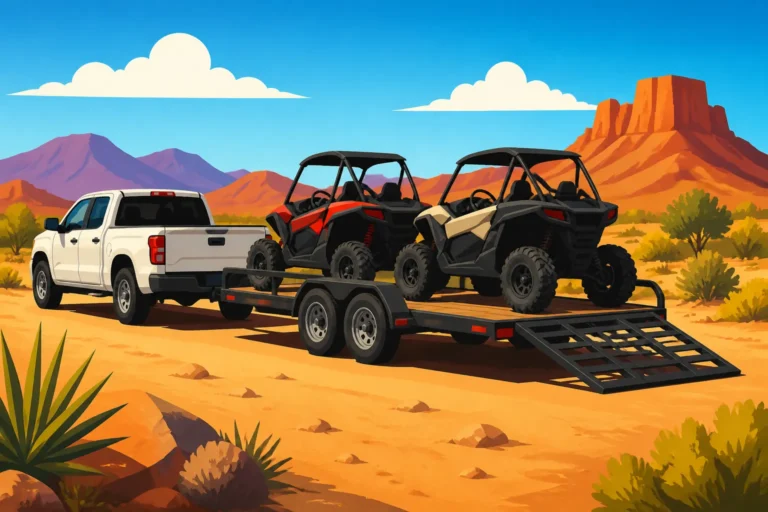
Think through the whole day as a sequence: drive to the area, unload safely, ride, take breaks, reload, and return to town. A group that starts late may end up riding during the hottest or windiest part of the day and loading in poor light. Set a turnaround time before anyone is tired, and tell someone who is not on the trip where you are going and when you expect to be back.
Water is not a detail to improvise. Carry more than you expect to drink on a short ride, keep it accessible, and account for passengers, children, and anyone who may need to help with a recovery. [Carrying Water in the Southern Desert] offers a useful planning lens for heat and hydration. Your water plan should include both the ride and the time spent dealing with a breakdown, a stuck vehicle, or an unexpected delay.
Use maps without depending on a phone signal
A map app can be helpful for route planning, but the lack of reliable cell coverage can make a phone-only plan fragile. Download or save the information you need before leaving town, keep your device charged, and bring a backup way to orient yourself. A paper map or an offline navigation tool is useful when a screen is cracked, overheated, out of battery, or showing your location without enough detail to make a safe decision.
A service such as onX Offroad can help riders review mapped routes and plan around public-land boundaries, but no mapping app replaces signs, land-manager information, or judgment on the ground. Map layers can be misunderstood, and a line on a screen does not automatically mean that every connecting road is open to motorized use. Compare your planned route with reliable land-management information and stop if the route on your device conflicts with posted signs.
Before the group leaves the staging area, make sure everyone knows the basic return direction and the meeting point. If riders become separated, a clear plan is much better than a series of calls that may not connect. Agree on what to do if someone stops, how long the group will wait, and which safe landmark or staging location to use. A little orientation at the start can prevent a small separation from becoming a long search.
Choosing and Preparing an ATV or UTV
Match the machine to the sand and the rider
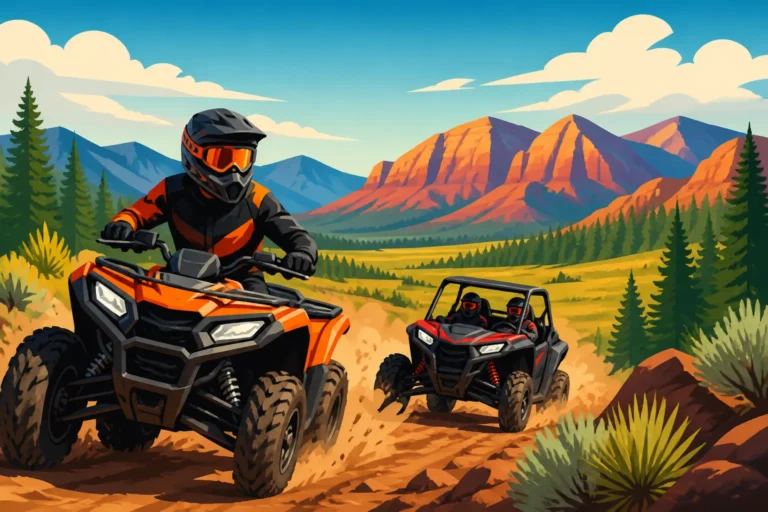
An ATV can feel nimble on a dune, but that responsiveness asks the rider to make frequent adjustments. The rider needs to stay balanced, keep a useful view of the terrain, and avoid abrupt steering or braking on a slope. A smaller or less experienced rider may tire sooner than expected, especially when the sand is soft and the route involves repeated climbs. A short, conservative first ride is a better way to gauge ability than starting with the steepest face in sight.
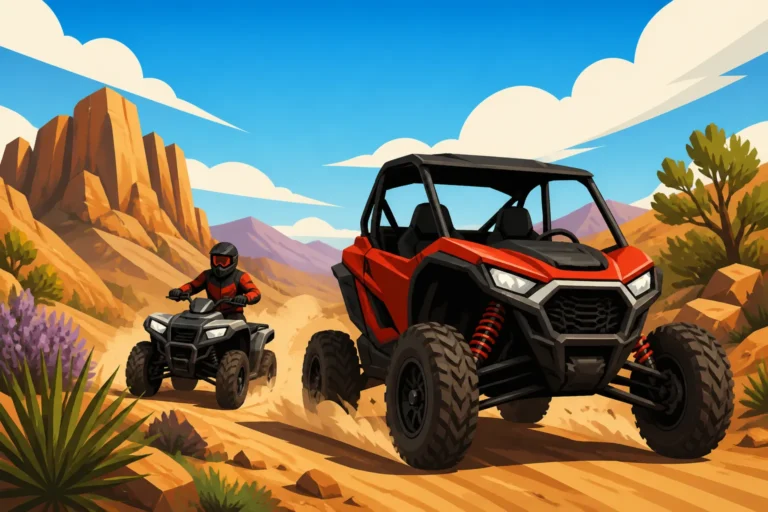
A UTV offers a different set of trade-offs. It can carry more people and gear, but its size and weight make route choice especially important. A wide vehicle may not fit comfortably between vegetation or through a narrow line of travel, and a heavier machine can be harder to recover once bogged down. Passengers also need to understand that a UTV is not a substitute for safe speed, seat belts, or staying on terrain suited to the machine.
Choose based on the least experienced person who will be riding, not just on the most capable driver. If a family group includes a new rider, plan a route with room to stop, turn, and regroup. [New Mexico Trails for Beginners] can help with the broader question of finding a manageable ride, while [New Mexico Trails for a Wide Side-by-Side] is a reminder to consider vehicle width before heading toward a narrow or uncertain route.
Prepare tires, cooling, and recovery gear
Tire setup can make a noticeable difference in sand, but there is no one pressure that suits every tire, vehicle, load, and riding style. Follow the vehicle and tire maker’s guidance, make changes cautiously, and check pressure with a gauge rather than guessing by appearance. Too much pressure can reduce the contact area and make the vehicle feel skittish; too little can increase the chance of a tire coming off the bead or being damaged. Do not experiment far from help on a route you do not know.
Inspect the machine before unloading. Check tire condition, wheel fasteners, brakes, steering, throttle return, lights, and visible fluid leaks. Confirm that the radiator or cooling system is unobstructed where applicable, and carry the tools and small repair items your group knows how to use. Sand and dust can work into exposed components, so a quick check at the start and periodic checks during the day are more useful than waiting for a warning sign.
Recovery equipment should match the machine and the people carrying it. A suitable strap, shovel, gloves, basic tools, and a way to communicate can make a stuck vehicle less stressful. Know where recovery points are before you need them, and do not attach a strap to an unsuitable component. If nobody in the group has experience recovering a loaded or angled vehicle, do not improvise a high-risk pull simply to avoid a longer walk or a call for assistance.
Dress for sun, sand, and changing conditions
A hot forecast does not make protective clothing unnecessary. Wear a properly fitted helmet, eye protection, gloves, long sleeves, long pants, and footwear that protects your feet and ankles. Sand can strike exposed skin at speed, and dry brush or an unexpected tip-over can turn light clothing into a problem. For a UTV, wear the required restraint correctly and keep arms, hands, and legs inside the vehicle.
Eye protection matters even when the sky is clear. Windblown sand can make it hard to see, and a group riding too close together can throw grit into the next rider’s face. Use goggles or other appropriate eye protection, and consider carrying a clean backup pair. A spare pair is especially valuable on a longer outing because dusty or scratched lenses can quickly become tiring and unsafe.
Dress in layers if the day begins cool or the forecast suggests a change in wind or temperature. Pack sunscreen, a hat for breaks, and enough water to keep passengers comfortable as well as drivers. Children may need more frequent rest stops than adults, even when they insist they are fine. A useful trip is one where riders finish alert and comfortable, not one where the group pushes through discomfort until concentration fades.
Riding the Dunes with Control
Read the slope before you climb
Approach an unfamiliar dune slowly enough to assess it. Look for the slope’s angle, soft or disturbed patches, vegetation, tracks, and anything hidden beyond the crest. If you cannot see a safe route down the other side, do not use the crest as a place to discover what is there. Pick a line with an obvious exit and enough room to turn around, and make sure other riders are not approaching from the opposite direction.
A climb requires steady, controlled momentum, not a last-second burst of speed. If you are unsure whether your machine or skill level is suited to a slope, choose an easier line. Avoid turning sharply across a steep face, where the vehicle can become unstable, and do not stop in a position where you could slide into another rider. If momentum fades, prioritize a controlled response over forcing the machine higher.
The person leading the group should not disappear over a ridge and leave everyone else guessing. Use clear signals, keep enough space between machines, and wait in a visible safe area where the next rider can decide whether to continue. If a slope is too difficult for someone in the group, change the route together. Nobody needs to prove a point on an unfamiliar dune, and a patient turnaround is often the best riding decision of the day.
Keep visibility and spacing in mind
Open terrain can create a false sense of security. A rider may see a broad view ahead but still be hidden from someone coming over a nearby ridge. Avoid cresting a dune at speed, and do not park just beyond a rise where approaching riders cannot see you. Choose stopping places that are visible, stable, and away from active lines of travel.
Leave enough space between vehicles to respond if the rider ahead slows, gets stuck, or changes direction. Close following is particularly risky in dust because the person behind may lose sight of the track and the vehicle in front. When the group is larger, divide it into manageable pairs or small clusters, with planned regrouping points rather than a long unbroken line.
Agree on simple signals before riding. A raised arm, a stopped vehicle in a safe location, or a prearranged regrouping point can communicate more clearly than shouting across wind and engine noise. Do not assume everyone heard a verbal instruction. If a rider is missing at a planned stop, pause the group and follow the agreed plan instead of allowing everyone to scatter in search.
Ride within your limits and the area’s rules
A public riding area is still a shared landscape. Stay on routes or within areas where motorized travel is allowed, avoid damaging vegetation, and give other riders room. Do not assume that a track is open simply because someone has ridden it before. Follow posted signs and respect barriers, closures, and boundaries, even when the alternate route is longer.
If you are not sure whether a section is open to motorized use, stop and check rather than testing the boundary. This is especially important when trails approach ranch property, roads, or land with unclear ownership. [Riding BLM Land in New Mexico] explains why public-land rules can be more specific than “it looks public,” and [New Mexico Trail Maps Worth Carrying] is a good companion for keeping route information in perspective.
Respect the people sharing the area, including other riders, land managers, and anyone traveling the access road. Keep speeds appropriate to visibility and terrain, slow down near staging areas, and avoid unnecessary noise. Pack out all trash, including small items that can be easy to leave behind in the sand. Leaving a clean staging area helps preserve access and makes the next group’s visit better.
Staying Safe in Remote Desert Country
Manage heat, fatigue, and exposure
Heat can affect judgment before a rider recognizes how tired they are. Take breaks before the group is struggling, drink regularly, and pay attention to headache, nausea, dizziness, unusual fatigue, or confusion. Those are reasons to stop riding, get to shade if possible, cool down, and reassess the plan. Do not assume that a short ride means heat is not a concern; loading and unloading in the sun also adds to the day’s exposure.
Plan breaks around the group rather than around the most energetic rider. A child, passenger, older rider, or person unused to dry desert conditions may need more time to recover. Let people speak up without feeling that they are holding everyone back. A planned rest stop is easier than an emergency stop made after someone is already overheated.
Wind and dust add another kind of strain. Dust can irritate eyes and airways, make it difficult to see, and leave riders dehydrated without them noticing. If the wind becomes strong enough to reduce visibility or make communication difficult, stop in a safe place and consider ending the ride. Continuing simply because the group has already driven out is not a good reason to take a worsening risk.
Prepare for breakdowns and separation
Before leaving the staging area, make sure each rider knows the location and name of the meeting point. Keep a small first-aid kit, a charged phone, and an alternate communication method appropriate to the group and location. In remote terrain, a phone may be useful when it has signal, but it should not be the only plan for getting help.
If a vehicle breaks down, move it out of the line of travel if it can be done safely, then assess the issue without rushing. A minor problem may be manageable with tools and experience, but a damaged tire, overheating machine, or failed steering component can change the risk quickly. Do not continue on a machine that no longer handles or stops properly. Decide whether the group can safely return, whether another rider can assist, or whether outside help is needed.
If riders become separated, the group’s prearranged plan matters. Avoid having every person search in a different direction, especially if the terrain is unfamiliar or visibility is poor. Use the agreed meeting point, wait at the location where the group last separated if it is safe, and communicate with the person who stayed behind. Telling someone outside the trip your route and expected return time provides another layer of help if the whole group is delayed.
Know when to stop or turn back
A ride does not have to end in a crisis to justify turning around. If wind rises, a storm approaches, a vehicle begins to act strangely, or someone is tired, change the plan early. The choice to turn back can be frustrating after a long drive, but forcing the original route can turn ordinary discomfort into a recovery problem.
Set a firm turnaround time before you start. That helps avoid the familiar trap of extending the ride because the next dune or landmark looks close. Include time to return to the staging area, load, and drive out before dark. If the group is behind schedule, shorten the ride instead of trying to make up time by going faster.
Use the same conservative judgment when the access road is in poor condition. If the tow vehicle, trailer, or support vehicle is struggling, continuing farther away from help may make the day harder. The dunes will still be there another time. A safe trip is not measured by how far the group went; it is measured by whether everyone and every machine make it back in good shape.
Permits, Access, and Responsible Riding
Check New Mexico OHV requirements
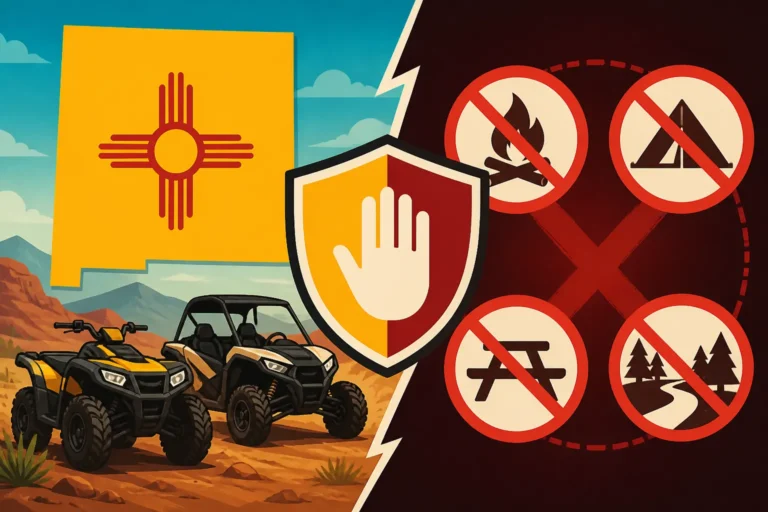
Registration, permit, and safety requirements can depend on where the machine is registered, who is riding, and where the vehicle will be used. Before traveling, work out which rules apply to every machine in the group. Do not assume that a plate or sticker from home automatically covers every New Mexico requirement, or that a local registration rule is the same as a public-land access rule.
A practical starting point is [New Mexico OHV Permits Explained]. Review the guidance for visitors and residents, and confirm which proof you need to carry. If you are bringing a machine from another state, check reciprocity rather than relying on what another rider says at a fuel stop. Keep documents accessible but protected from dust and water, and make sure the registration or permit details match the machine.
Minors may have additional requirements, including safety-related rules. A parent or guardian should check what applies before the group travels, not at the trailhead. If a young rider is joining, make the adult responsible for verifying those requirements and carrying any required proof. The broader [New Mexico Rules for Riders Under 18] can help families identify questions to resolve before the trip.
Follow land-use boundaries and local restrictions
A recreation area can sit near different types of land, each with its own rules. A road that appears to lead naturally from one public parcel to another may cross private property or an area where motorized travel is limited. Use current land-management information, posted signs, and marked route boundaries, and do not ride around a closure because it appears inconvenient.
Treat an open route as permission for that route, not as permission to explore every adjacent surface. Stay within the area intended for OHV use, avoid sensitive vegetation, and leave gates as you find them unless signs or instructions say otherwise. If the route crosses a grazing area, give livestock room and do not chase or crowd animals. A few minutes of patience can prevent injury and conflict.
When using a mapping service such as onX Offroad, compare the displayed boundary and route information with signs on the ground. An app can support planning, but conditions and access details can change. If map information and a posted closure disagree, respect the closure and seek clarification from the land manager. Do not rely on an unverified social media track as the sole basis for entering an unfamiliar area.
Leave the dunes in good shape
The most responsible riding choices are often simple: stay on legal routes, avoid unnecessary wheelspin around fragile vegetation, and do not leave trash or broken parts behind. A stuck vehicle can tempt riders to dig or spin aggressively, but that can damage the surface and make the machine harder to recover. Use a measured recovery plan and avoid turning one stuck vehicle into a larger scar in the landscape.
Keep noise and speed in check near other visitors and the staging area. Give people space to unload, keep children away from active vehicle paths, and do not block access for emergency or land-management vehicles. If you see a hazard or a damaged sign, report it through the appropriate land-management channel when practical rather than trying to repair or relocate it yourself.
A useful final check is to walk around the staging area before driving away. Pick up straps, bottles, wrappers, tools, and any loose gear that may have fallen from a trailer. Check that machines are secured, everyone is accounted for, and the group has the route back to town. A careful departure is part of a good ride, not an afterthought.
A Practical Mescalero Sands Planning Checklist
Compare the main planning decisions
The right plan depends on your group, vehicle, and experience. Use this table as a starting point, then confirm access and requirements for your specific trip.
| Planning question | Safer approach | Common mistake to avoid |
|---|---|---|
| Which area are we visiting? | Confirm the exact Mescalero Sands recreation area and access route | Assuming any map result with “Mescalero Sands” is the right staging point |
| Is the route open? | Check current land-manager information and obey posted signs | Treating an old GPS track as proof of current access |
| Is the group ready for dunes? | Choose terrain that suits the least experienced rider | Letting the most confident rider set the pace and route for everyone |
| Do we have enough fuel and water? | Carry a generous margin for delays and extra effort in sand | Planning only for the shortest possible ride |
| Can we navigate without service? | Save maps offline and agree on a meeting point | Depending on live phone coverage for every turn |
| Is the machine prepared? | Inspect tires, steering, brakes, cooling, and recovery gear | Waiting for a problem before checking the vehicle |
| Is everyone protected? | Wear helmets, eye protection, gloves, and suitable clothing | Assuming slow riding means protective gear is unnecessary |
| Do we understand the rules? | Verify registration, permits, and age-related requirements | Assuming a home-state document covers every situation |
Work through the day in order
-
Confirm the destination. Identify the specific recreation area, legal access road, staging location, and any route restrictions. Save the details before leaving reliable service.
-
Check conditions. Review weather, road access, fire or land-use restrictions, and any relevant closure notices. Have a backup plan if the access road or riding area is unavailable.
-
Prepare vehicles and people. Inspect the ATV or UTV, load recovery gear, pack water and food, and make sure each rider has appropriate protective equipment. Confirm that passengers understand the basics of staying secure and communicating a concern.
-
Share the plan. Tell someone outside the group where you are going, which route you expect to use, and when you plan to return. Agree on a turnaround time and a regrouping location with the riders.
-
Start conservatively. Use the first part of the ride to assess sand, wind, visibility, and how the group is feeling. Do not begin with a difficult climb or a long separation between vehicles.
-
Reassess as the day changes. Take breaks, check fuel and water, and watch for fatigue, changing weather, or machine trouble. Shorten the outing early if conditions become less favorable.
-
Close out carefully. Return to the staging area with enough time to load safely, check for lost gear and trash, and drive out before conditions or light worsen.
Make the trip suitable for the whole group
A strong plan leaves room for different comfort levels. If one person wants a challenging climb and another is new to sand, split the outing only if everyone can navigate safely and you have a clear meeting plan. Otherwise, keep the group together and choose a route that everyone can manage. The purpose is to share a good day, not to pressure someone into a slope they do not trust.
For families, explain the boundaries before unloading. Children should know where they may walk, when they must stay near an adult, and how to signal if they feel uncomfortable. Passengers need to know that the driver may slow down, stop, or turn back without warning. A short safety conversation in the staging area can prevent confusion once engines are running.
For experienced riders, remember that familiarity with dunes elsewhere does not guarantee that an unfamiliar slope is safe. Conditions change, sand behaves differently from one section to another, and a vehicle loaded with passengers may respond differently than it does on a solo ride. Leave space for uncertainty, and take the conservative line when you cannot see what comes next.
Mescalero Sands can reward a thoughtful visit with a memorable day on open terrain. The best preparation is practical rather than complicated: confirm access, bring what you need, ride within your limits, and stay alert to the desert conditions around you. With that groundwork in place, you can spend less time solving preventable problems and more time enjoying the ride.
Disclaimer
This article is for general informational purposes only and does not constitute professional advice. Laws, prices and regulations vary by location and change over time. Consult a qualified professional for guidance on your specific situation.