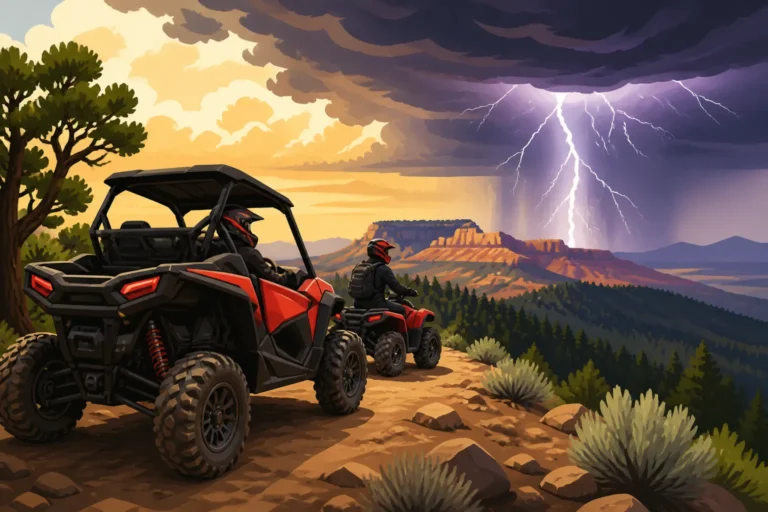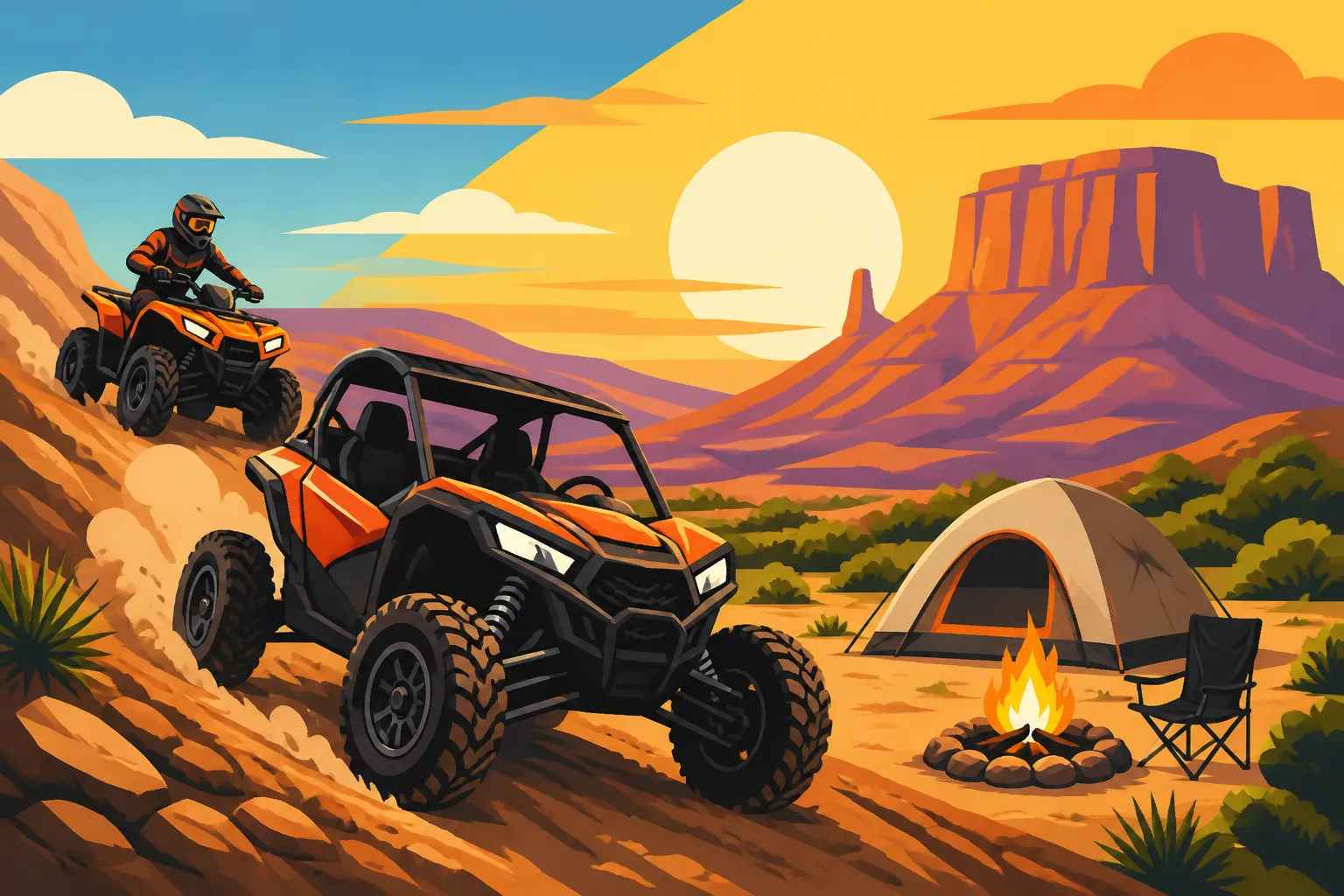
New Mexico OHV Camping Spots
Camping near a New Mexico OHV area can make a ride easier, but a trailhead parking area is not automatically an overnight campsite. This guide explains where to look around popular riding areas, how to choose between developed and dispersed camping, and what to check before unloading your ATV or UTV.
How to choose a New Mexico OHV campsite
Decide whether you want to camp at the riding area or nearby
Camping close to a trail network saves time and makes early starts less stressful. It can also mean fewer chances to get separated from your group while shuttling machines and gear. But the staging area where you unload may not allow overnight stays, and a nearby pullout is not necessarily an approved campsite.
Start by identifying the land manager for the riding area. BLM land, national forest land, private property, and a developed campground can each have different rules. Check whether overnight camping is allowed at the location you have in mind, whether a permit is required, and whether vehicles must stay in established sites. The details matter even when a spot looks remote.
If you want hookups, restrooms, or an easier setup for a trailer, look for a developed campground or RV park within driving distance of the trails. If you are comfortable with fewer facilities, dispersed camping may put you closer to the riding area—but you will need to bring more of what you need and take responsibility for choosing a legal, low-impact site.
For a broader look at what to expect at different destinations, see [New Mexico OHV Camping Spots] and [Camping Near New Mexico Riding Areas]. For riding options around the state, [Where to Ride an ATV in New Mexico] can help you match a campsite search to the kind of terrain and trip you have in mind.
Match the campsite to your machines and group
A campsite that works for a tent and one ATV may be awkward for a long trailer, a wide side-by-side, or several vehicles. Before setting out, think through the space you will need to park, unload, turn around, and secure your equipment. Narrow, rutted access roads can be a headache for a large trailer, particularly after rain.
Also consider who is coming along. Families may prefer a developed site with nearby facilities and a predictable place to rest after a dusty ride. A group of experienced riders may be comfortable with a more basic camp, but it still needs enough room to keep vehicles and tents safely arranged. If the site is close to a route, avoid putting sleeping areas where passing machines could kick up dust or create a safety hazard.
Apps such as onX Offroad can help you review route context and plan how to reach an area, but map information is not a substitute for land-manager rules or current closure notices. Use mapping tools to help plan; confirm that camping and vehicle access are allowed before you go.
New Mexico riding areas to consider for a camping trip
Glade Run and Chokecherry Canyon near Farmington
The Glade Run area near Farmington is a well-known destination for OHV riding, with open riding areas and designated routes in the broader area. It can suit riders who want to pair a day on the machine with a camp nearby. However, do not assume that every open-looking patch is an approved place to set up camp. Check the current BLM information for camping locations, access, and any permit requirements before you arrive.
Some camping at Glade Run requires a free BLM permit. Confirm the rules and arrange the permit through the appropriate BLM process before your trip rather than waiting until you reach a crowded staging area. You can also read [Why Glade Run Camping Needs a Free BLM Permit] and [Getting a Free Camping Permit at Glade Run] for more focused planning information.
Chokecherry Canyon is part of the larger Farmington riding landscape, but its terrain and access may not suit every machine or driver. If you are towing a wide side-by-side or traveling with a newer rider, check the route conditions and trail choices carefully. Use [Glade Run and Chokecherry Canyon at Farmington] to compare the riding area options, and check [New Mexico Trail Closures to Check First] before building your trip around a particular route.
Red Sands in southern New Mexico
Red Sands, near US 54 in southern New Mexico, is a popular place to ride among mesquite-covered dunes. The area is known for its open, informal feel, but that does not mean every nearby patch of land is available for overnight camping. Confirm where camping is allowed and whether there are restrictions on fires, vehicle placement, or access before you park for the night.
Plan for a basic desert camp. Do not count on water, restrooms, shade, or dependable cell service at a dispersed site. Bring enough drinking water for camp and riding, keep food secured, and have a way to deal with waste. Wind and loose sand can make tent setup and equipment storage more challenging than they look in a calm afternoon.
Red Sands is a useful example of why riding access and camping permission should be treated as two separate questions. Check [Red Sands OHV Area in Southern New Mexico] for riding-area context and [Camping at Red Sands Without Facilities] for the practical realities of camping nearby. If your group needs toilets, hookups, or a shower, compare nearby developed options instead of assuming the riding area will provide them.
Haystack Mountain and other regional options
Haystack Mountain near Roswell offers another option for riders exploring eastern New Mexico. Before planning an overnight stay, check whether camping is permitted at the location you intend to use and whether there are designated sites or specific access rules. An OHV area may have a day-use or staging area without allowing overnight camping in the same place.
For a first visit, look at [New Mexico's 1,920-Acre Haystack Mountain] and [Riding Haystack Mountain for a Day] to understand the area as a riding destination. Then confirm overnight arrangements separately. If your group needs services, a campground or RV park in the surrounding region may be a more comfortable base than a primitive site.
Other parts of New Mexico offer very different camping conditions. High-elevation forest roads near Red River, for example, can be seasonal, and access may change with weather, snow, or closures. Before choosing a mountain camp, review [New Mexico Forest Roads Closed December to May] and [New Mexico Riding Seasons by Elevation]. A desert campsite and a forest campsite can require completely different gear, access planning, and backup plans.
| Riding area | Camping approach to investigate | Things to plan for |
|---|---|---|
| Glade Run near Farmington | Check BLM camping rules and permit requirements | Designated locations, permit, route access, space for trailers |
| Red Sands near US 54 | Verify whether nearby overnight camping is allowed | Water, shade, wind, limited facilities |
| Haystack Mountain near Roswell | Confirm whether overnight camping is allowed at your intended site | Separate day-use and camping rules, nearby alternatives |
| Red River and nearby forest roads | Check current forest access and seasonal closures | Weather, elevation, road conditions, seasonal access |
What to check before you camp and ride
Confirm land access, permits, and closures
Before you leave home, confirm who manages the land where you plan to camp. A site that appears to sit beside a riding area could be on a different parcel with different rules. Look for official information about camping, permits, stay limits, road access, fire restrictions, and seasonal closures. If the rules are unclear, contact the relevant land manager rather than relying on an old map note or an online comment.
Check the route as well as the campsite. A road that is open to regular vehicles may not be open to OHVs, and a route that was passable last season may be closed or damaged now. [Designated Routes and Travel Management in New Mexico] explains why checking route status matters, while [New Mexico Rules for Riding Federal Land] offers helpful context for riding on public land.
Use onX Offroad or another mapping tool to help identify access roads, route connections, and nearby terrain, then compare what you see with official maps and notices. Save important information before you head into an area with limited reception. A phone map is useful, but it is not a guarantee that a route is legal, open, or safe for your vehicle.
Prepare for weather, water, and limited services
New Mexico’s conditions can change sharply by region and elevation. Southern desert rides can bring heat, dust, and long stretches without services. Mountain areas may be cooler, wetter, or affected by snow and seasonal road closures. Check the forecast for both the riding area and the campsite, not only the nearest town.
Carry more drinking water than you expect to use, especially if your camp is remote or your ride may take longer than planned. Bring food, a first-aid kit, basic tools, tire repair supplies, and a way to communicate if cell service drops out. Tell someone where you are going and when you expect to return. A small issue, such as a flat tire or an unexpectedly slow trail, can become a bigger problem when you are far from help.
Wind and dust deserve their own preparation. Secure loose gear, keep food and sleeping equipment covered, and use eye protection when handling dusty machines. If a storm is possible, think carefully about low-lying campsites and washes. An arroyo can look harmless in dry weather and become dangerous after rain elsewhere in the drainage. For more planning detail, see [New Mexico Riding in Summer Monsoon] and [Carrying Water in the Southern Desert].
Camp with care around other visitors and the land
Choose an established campsite where one exists, and avoid widening roads or creating new tracks to reach a scenic spot. Keep machines on routes open to OHVs, and do not ride through campsites or across vegetation to find a shortcut. Follow posted fire rules, and never assume a campfire is allowed simply because other visitors have used one before.
Treat gates, livestock, and wildlife as part of the trip—not as obstacles to rush past. Close gates the way you found them, slow down near animals, and give other campers space. Keep noise reasonable, especially early in the morning and late at night. Pack out trash, food scraps, and anything else you brought in.
These habits help preserve access and make the area more welcoming for the next group. For practical guidance on shared landscapes, read [New Mexico Trail Etiquette on Shared Ground] and [New Mexico Riding With Livestock Around]. If a route or camp area is posted closed, choose another option rather than risking damage or a citation.
A practical planning routine for a smoother trip
Plan the campsite and ride as one itinerary
A common mistake is choosing a riding area first and leaving the campsite decision until the last minute. That can leave a group scrambling for legal overnight options after arriving with a trailer, tired kids, and dusty machines. Instead, pick a primary campsite and a backup before departure. Confirm that both allow your type of vehicle and camping setup.
Next, estimate how long it will take to reach the riding area from camp. A site that looks close on a map may be separated by roads unsuitable for a trailer or by routes where OHV travel is not allowed. Decide whether you will trailer machines to the staging area or ride from camp only where permitted. Do not assume that public roads between camp and the trail are open to your ATV or UTV.
Use onX Offroad as one part of your route-planning process, especially for reviewing the broader layout and saving information for offline use. Then cross-check route permissions, land boundaries, camping rules, and closures with official sources. This extra step is far less frustrating than discovering at the trailhead that your planned access road or overnight spot is not available.
Make a simple pre-departure checklist
Before leaving, check the campsite reservation or permit details, the land manager’s notices, and the weather forecast. Confirm the route your trailer can handle, and make sure your group understands where to meet if someone gets separated. Pack the machine documents and safety gear you need, along with enough supplies to handle a delay.
A useful checklist includes:
- Verify overnight camping is allowed at the exact site.
- Confirm permits, reservations, fees, and any stay limits.
- Check road, trail, and seasonal closure notices.
- Save maps and directions for offline use.
- Pack water, food, fuel, recovery gear, and first aid.
- Bring camping equipment suited to the expected weather.
- Share your itinerary and expected return time with someone.
If your plan depends on a particular trail or camp road being open, have an alternative. That small bit of flexibility can save a trip when weather, maintenance, fire restrictions, or temporary closures change the plan. For trail-specific preparation, [New Mexico Trail Maps Worth Carrying] is a useful companion to your camping research.
Disclaimer
This article is for general informational purposes only and does not constitute professional advice. Laws, prices and regulations vary by location and change over time. Consult a qualified professional for guidance on your specific situation.