New Mexico Rules for an Electric Machine on Trails
Electric ATVs and UTVs may need New Mexico OHV permits and route approval; electric power does not override registration or land rules.
Your sticker stops at the state line.
Non-resident permits, what they cost and how long they last, and which states honor each other’s — or, increasingly, none at all.
Electric ATVs and UTVs may need New Mexico OHV permits and route approval; electric power does not override registration or land rules.
New Mexico’s 96-decibel OHV limit applies on public land; maintenance and proper testing matter, while phone readings cannot prove compliance.
New Mexico fines for no safety permit can reach $400; teens riding public land should carry valid proof and check license exceptions before heading out.
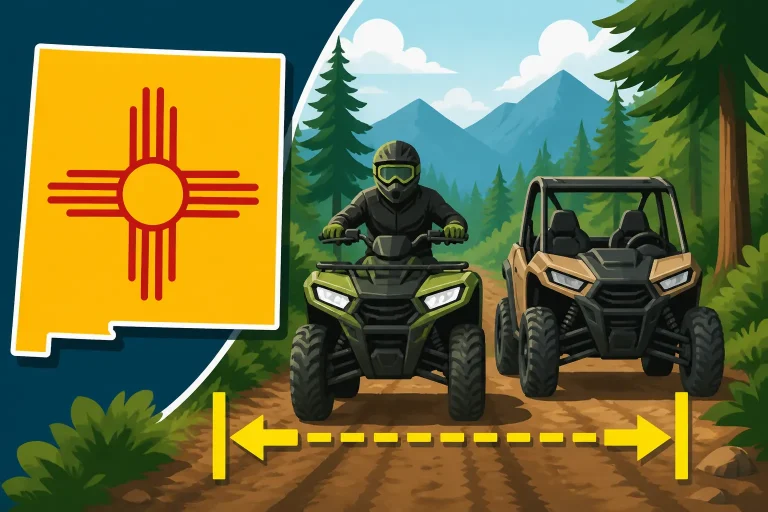
New Mexico forest trail width limits restrict ATV and UTV access based on route designations and vehicle measurements.
New Mexico fines for no OHV permit depend on the violation; check reciprocity, carry proof, and follow the citation’s response instructions and deadline.

Filming on New Mexico public land depends on the land manager, production purpose, route access, and whether a crew or equipment affects public use.
New Mexico guided ATV and UTV operators must confirm land access, commercial authorization, machine permits and rider rules before leading tours.
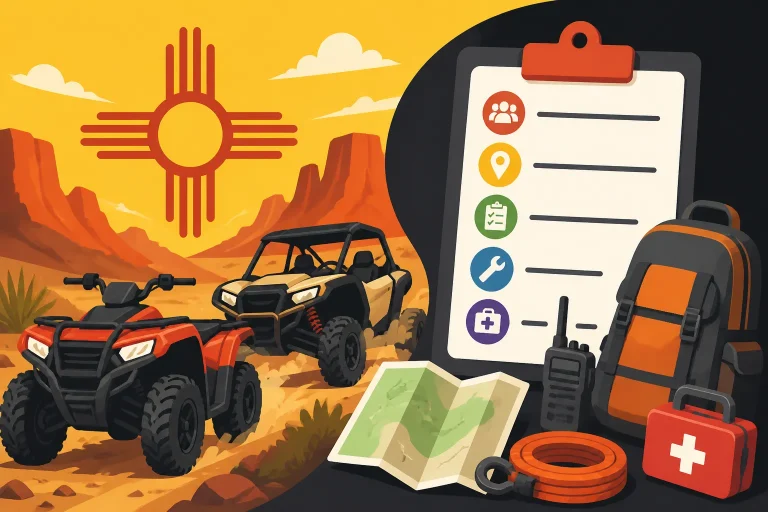
New Mexico rally organizers learn how to confirm land ownership, secure permits, and plan safe routes across public, private, and tribal areas.

New Mexico group rides require individual paperwork checks, route verification, and extra planning when an outing becomes an organized event.

New Mexico ATV and UTV riders should secure spare fuel, prevent spills, and check land-manager fire orders before carrying gas onto public land.