New Mexico Riding With Livestock Around
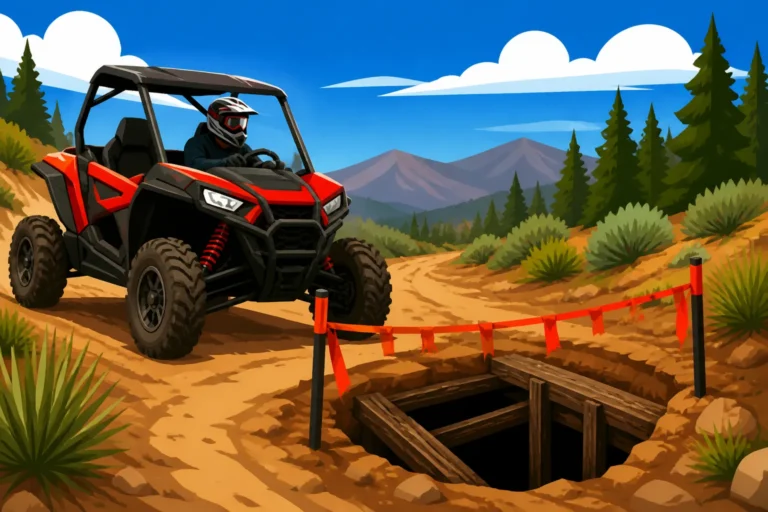
Livestock and OHVs share many New Mexico landscapes, from open desert country to forest roads and grazing allotments. A cow, horse, or gate can appear around a bend with little warning, and even a calm animal may react badly to engine noise or dust. This guide explains how to approach livestock, pass safely, handle gates, and avoid turning a routine ride into a dangerous encounter.
Before You Ride Through Livestock Country
Check access and route conditions first
Seeing a two-track on a map does not automatically mean it is open to motorized travel. In New Mexico, roads and trails can cross public land, private ranch property, grazing allotments, or land with different access conditions. Before unloading, confirm that your planned route is open to your type of machine and that you have permission wherever it is required.
Use current land-manager information and posted signs to check restrictions, closures, and route designations. Mapping tools such as onX Offroad can help you understand where roads and property boundaries appear to run, but a map is a planning aid, not permission to ride. Boundaries can be easy to misread on the ground, especially where fences, gates, and roads do not line up neatly. When access is uncertain, choose a clearly authorized route or contact the landowner or managing agency before riding.
It also helps to look beyond the trail itself. A route that appears straightforward on a screen may pass through a narrow ranch road, a cattle guard, a water tank area, or a place where animals gather. Look at the full route, not just the destination. These reminders about [New Mexico Rules for Riding a Ranch Road](New Mexico Rules for Riding a Ranch Road) can help you think through the access and conduct questions before you leave.
Prepare your machine and your group
A quiet, predictable approach is easier when your group is ready to ride considerately. Check that your exhaust and other equipment are in good working order, secure loose gear, and agree on how you will respond if someone spots livestock. A rider who suddenly accelerates to catch up can startle animals and create confusion for the rest of the group.
Set expectations before the ride: maintain space between machines, avoid racing, and do not pass another rider near animals unless there is plenty of room and the rider ahead understands what you are doing. If you are traveling with children or less-experienced riders, explain that they should stay with the group and follow the lead rider’s instructions rather than trying to ride around an animal on their own.
Plan for delays. Livestock may be standing in the route, moving slowly, or spread across a wide area. If your group has a tight schedule, it can be tempting to push past them. It is safer to treat an animal encounter as a normal part of the ride and leave enough time to stop, wait, or turn around. For more practical guidance on shared routes, see [New Mexico Trail Etiquette on Shared Ground](New Mexico Trail Etiquette on Shared Ground).
| Situation | Safer response | Avoid |
|---|---|---|
| Livestock is ahead on the trail | Slow down early and prepare to stop | Accelerating toward the animals |
| Animals are moving away | Give them room and wait for a clear path | Following closely to hurry them along |
| An animal blocks the route | Stop at a distance and allow time | Revving, honking, or trying to squeeze past |
| A gate is closed | Stop and follow posted directions or turn back | Opening it without knowing what access allows |
| A gate is open | Check signs and route instructions before proceeding | Assuming the open gate means unrestricted access |
How to Approach and Pass Livestock
Slow down well before you reach the animals
A sudden stop close to a herd can be as alarming as a loud approach. When you see cattle, horses, sheep, or other livestock, ease off the throttle early and slow to a controlled pace. Watch how the animals respond. If they lift their heads, bunch together, turn toward the machines, or begin moving quickly, stop and give them more time and space.
Keep the engine sound steady and avoid abrupt throttle changes. Do not rev to make animals move, honk, shout, or ride repeatedly toward them. Those actions can cause a startled animal to bolt, turn, or run into another machine. A calm animal can change direction quickly when it feels pressured, and a rider may have less room to react than expected on a narrow road.
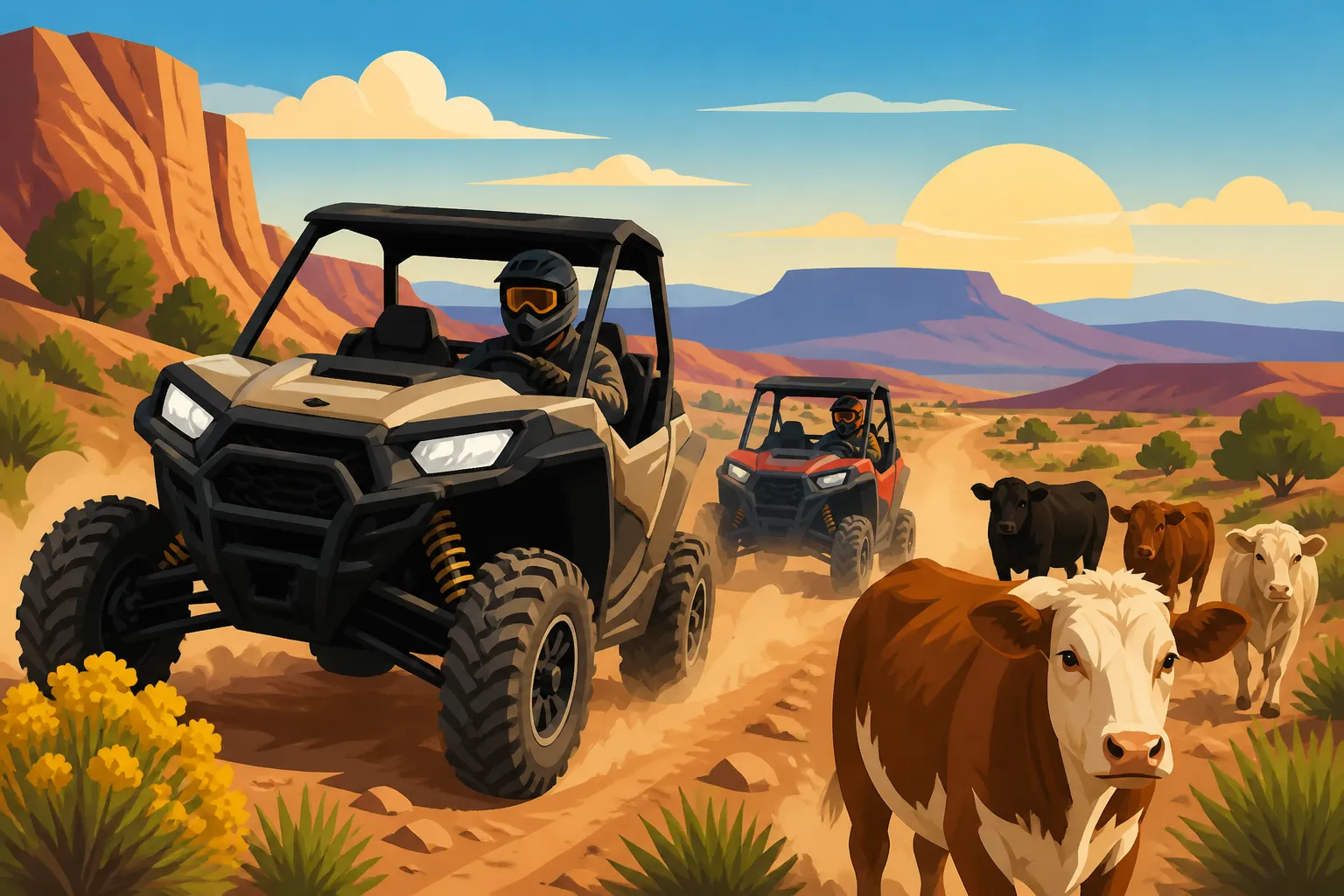
If you are approaching a bend, rise, or patch of brush where visibility is limited, reduce speed before you reach it. Livestock may be standing just beyond the visible section, and a rider coming the other way may be unable to stop quickly. A little extra caution is especially useful on forest roads and ranch tracks where cattle can blend into shadows or dusty backgrounds. For a closer look at this common situation, read [Cattle on a Forest Road](Cattle on a Forest Road).
Give animals room and let them choose their direction
There is no single safe passing distance that works for every animal and setting. A small group of cattle on a wide, open road is different from a horse beside a narrow trail or a herd gathered near a fence. The practical rule is to leave as much space as the terrain allows and avoid making the animals feel trapped between the machine, a fence, and other riders.
Do not cut across an animal’s path or try to push it toward a particular opening. If livestock is moving away from you, stay back and let it continue without pressure. If it turns or moves toward the route, stop and reassess rather than trying to guess which way it will go. Animals do not always respond as riders expect, and quick movements can create a hazard for both the animal and the people nearby.
When there is not enough room to pass safely, wait. A few minutes of patience is a better choice than squeezing past a horse, crowding cattle against a fence, or startling a herd into a run. If the animals remain in the route, consider turning around and using another authorized trail. On a group ride, keep the whole group stopped until the lead rider confirms that there is a safe way forward.
Handle horses and riders with extra care
Horses can react strongly to engine noise, sudden movement, and a machine approaching from behind. If you meet a mounted rider or a horse being led on the trail, stop well back and make your presence known calmly. Follow the rider’s directions, and do not move forward until they indicate that it is safe. The person handling the horse is in the best position to judge how it may react.
If you are approaching from behind, do not assume the person ahead has heard you. Stop at a respectful distance and wait for a safe opportunity to communicate. Avoid creeping closer while the horse is facing away; the sound and movement of an approaching machine can be startling even at low speed. Once the rider gives you room to pass, move slowly and steadily, leaving ample space.
If the path is narrow or the horse appears uneasy, wait for the rider to find a safe place to let you by. Do not pass on the edge of a steep drop, near loose footing, or where the horse could be forced toward a fence. After passing, continue at a modest pace until you are well clear. The same courtesy applies when meeting hikers, bicyclists, or other trail users; shared routes work best when the more powerful or noisy user takes extra care.
Gates, Fences, and Grazing Allotments
Treat every gate as a deliberate boundary
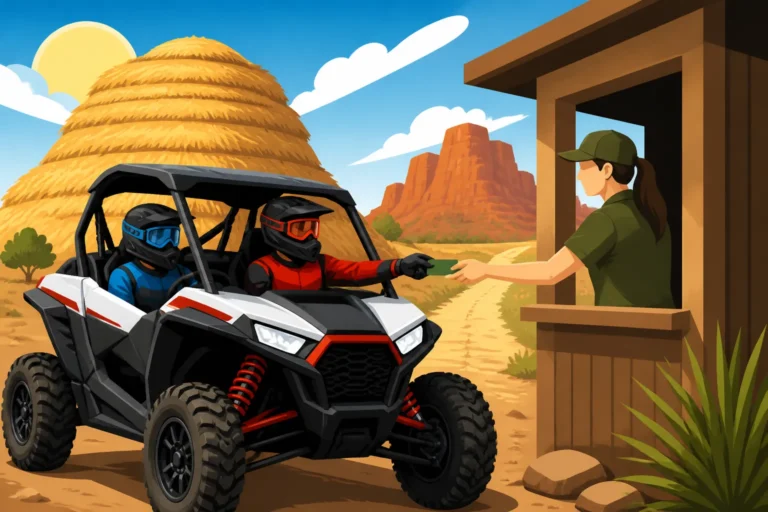
A gate is not just an obstacle to get past. It may help keep livestock in a grazing area, prevent animals from entering a road, or mark a boundary between properties or land-management areas. Stop before the gate and look for signs or instructions. Do not assume that an open gate means the route is public, or that a closed gate is safe to open.
If you are authorized to use the route and the gate instructions allow passage, follow those instructions carefully. A gate that was closed when you arrived should generally be left in the same condition after you pass, unless signage or the person responsible for the property directs otherwise. When you are unsure, do not guess. Turn back or seek clarification rather than risking an animal getting loose or entering a road.
Take extra care when several machines are traveling together. The first rider should tell the group what the gate instructions say, and the group should make sure the gate is secure before leaving the area. A rider who assumes someone else handled it may leave a gap behind the last machine. For more on this practical responsibility, see [Why You Close Every Gate Behind You](Why You Close Every Gate Behind You) and [Gates on Grazing Allotments](Gates on Grazing Allotments).
Understand that a grazing allotment is not an invitation to roam
A grazing allotment is an area used for livestock grazing under a management arrangement. It may include roads or trails that are open to some kinds of travel, but that does not mean every visible track is available to riders. Routes can cross private land, follow a designated corridor, or be subject to closures and restrictions. Check the rules for the specific road or trail rather than relying on the general appearance of the landscape.
Fences can be difficult to interpret from a machine. A fence may mark a property boundary, divide grazing areas, protect a water source, or guide livestock along a route. Never ride around, through, or over a fence to continue a trip. If a designated road appears to end at a fence, stop and confirm access. Do not create a new route across grassland or around a barrier, even if the detour looks convenient.
Respecting an allotment also means avoiding unnecessary disturbance to livestock and the land. Stay on authorized roads, do not chase or feed animals, and avoid riding through a group when another route or a wait is possible. If your ride crosses a grazing area, keep your group controlled and leave the place as you found it. [Riding a Grazing Allotment Politely](Riding a Grazing Allotment Politely) offers another useful way to think about being a considerate visitor.
Know when to ask for permission or turn around
If you cannot tell whether a road is open, ask the landowner or relevant land manager before entering. A route shown by a navigation app may not reflect a current closure or a private-access restriction. onX Offroad can help you review mapped boundaries and plan alternatives, but the final decision should come from posted information and the responsible authority or owner.
Permission matters particularly when a route crosses private property, a ranch entrance, or land where access is not clearly signed. Do not treat a gate left open, tire tracks, or another rider’s presence as proof that you may proceed. Someone else may have permission that does not extend to you, or the conditions may have changed since their last visit.
Turning around is sometimes the best outcome. If a rancher, land manager, or posted notice tells you that a route is closed, follow that direction without arguing or trying to find a way around. A courteous question asked before the ride is far better than a confrontation after a group has entered an area where it does not belong. For a related discussion of access, see [Permission From a Ranch Owner](Permission From a Ranch Owner).
What to Do When an Encounter Becomes Difficult
If livestock blocks the route
Stop at a distance and give the animals time. Avoid surrounding them with several machines, and do not send one rider ahead to try to drive them away. If you are with a group, keep riders together but leave enough room so the animals are not boxed in. Turn off or quiet the machines only if doing so is safe and practical; do not create a new hazard by dismounting in an exposed or unstable place.
Watch for the animal’s movement rather than focusing only on the trail opening. Cattle may drift across a road, split around a machine, or turn back toward the group. Horses may startle and move unpredictably. Keep your hands ready to control the machine, maintain a clear escape path, and avoid sudden steering or acceleration.
If the route remains blocked, wait longer or turn back. Do not use a machine to push an animal, force it through a fence gap, or separate it from the herd. If there is an immediate danger, move to a safe location and contact the appropriate land manager or local authority for guidance. Avoid approaching an injured or distressed animal; a frightened animal can injure people even when it appears weak.
If an animal is injured, loose, or separated
Do not assume that an animal is abandoned simply because it is alone. Livestock may be grazing away from a herd or temporarily out of view of its handler. Keep your distance, avoid feeding it, and do not try to lead it by a rope or halter unless you are trained and have been asked to help by the responsible person.
If an animal appears injured, trapped, or in immediate danger near a road, note the location as accurately as you can without putting yourself or your group at risk. A nearby road name, trail marker, landmark, or GPS position can help the landowner or agency locate it. onX Offroad or another navigation app may help record a location, but do not leave the designated route to get closer.
Contact the landowner or land manager when you can identify the responsible party, or notify the appropriate local authority if there is an urgent public-safety concern. Keep your report factual: describe the animal, its condition, the location, and any immediate hazard. Do not post a precise location publicly if doing so could attract people to private land or encourage others to approach the animal.
If a gate or fence appears damaged
Do not make repairs unless you have permission and know how to do so safely. A damaged fence or gate may be under tension, difficult to handle, or part of a boundary you cannot identify. Keep machines and people clear, and avoid leaving a gate open while deciding what to do.
If you are authorized to be on the route, record the location and report the problem to the landowner or managing agency. If the gate is open and livestock could wander onto a road, mention that clearly when you contact them. If you can close it safely and the instructions at the gate allow you to do so, follow those instructions; otherwise, do not improvise.
The same approach applies if you discover livestock on a public road or near a staging area. Keep a safe distance, warn other riders only when you can do so without creating a distraction, and contact the responsible party. Avoid trying to herd animals with a group of ATVs or UTVs. A well-intended attempt can scatter them, move them into traffic, or make them harder for the owner to locate.
Building a Livestock-Safe Riding Routine
Use a simple group protocol
Before starting, choose a lead rider and a sweep rider, and agree that anyone who spots livestock will slow down and signal the group. Signals should be simple and understood by everyone. The goal is not to create a complicated system; it is to prevent the rider at the back from accelerating into an encounter that the lead rider has already seen.
When the lead rider stops, the rest of the group should stop in a controlled way and leave room between machines. Avoid piling up close behind the person in front, especially on a slope or narrow road. Once the lead rider has assessed the situation, they can explain whether the group should wait, pass slowly, or turn around.
A good protocol also helps inexperienced riders. Someone who has never encountered cattle on a trail may be tempted to blip the throttle or follow another rider too closely. A short conversation before the ride can prevent that reaction. Remind everyone that the group’s schedule is secondary to the safety of animals, riders, and other trail users.
Plan around weather, visibility, and terrain
Dust can make livestock harder to see and can make a group appear larger or more threatening than it is. On dry roads, leave enough space between machines to keep dust from clouding the view of riders behind you. If visibility drops, slow down and increase following distance rather than trying to maintain the pace.
At dusk, early morning, or in shaded forest, animals may be difficult to distinguish from brush or terrain. Reduce speed where sightlines are short, especially on blind corners and narrow roads. The same caution applies after rain, when slick surfaces can make sudden braking or steering more difficult. If conditions make it hard to see far enough ahead to stop, adjust the pace to match the visibility.
In a remote area, carry enough water, fuel, and basic repair supplies to handle a delay or an unplanned turnaround. A blocked trail should not become a reason to take an unauthorized shortcut. Keeping a paper or offline route plan can help if your phone loses signal. Use onX Offroad or another mapping tool to review legal route options in advance, then follow signs and local directions when you reach the trail.
Keep the ride courteous from start to finish
A considerate ride is about more than avoiding a close encounter. It also means not leaving trash, not disturbing livestock for photographs, and not treating ranch roads as a place to test speed or exhaust noise. If you see a rancher or livestock handler, give them room to work and follow their directions. A short, respectful conversation can often clarify whether the route is open and how to proceed.
Be especially thoughtful when other users are present. A horse rider may need time to move to a wider spot, while hikers or cyclists may be startled by a fast approach. Slow early, pass only when there is room, and avoid revving as you go by. These habits help keep access relationships positive and make shared routes safer for everyone.
The most useful rule is also the simplest: when you are uncertain, stop and give the situation space. Livestock encounters are part of riding in much of New Mexico, but they do not need to become a close call. A little patience, careful route planning, and respect for gates and property boundaries can make the ride safer for the animals, the people handling them, and your group.
Disclaimer
This article is for general informational purposes only and does not constitute professional advice. Laws, prices and regulations vary by location and change over time. Consult a qualified professional for guidance on your specific situation.