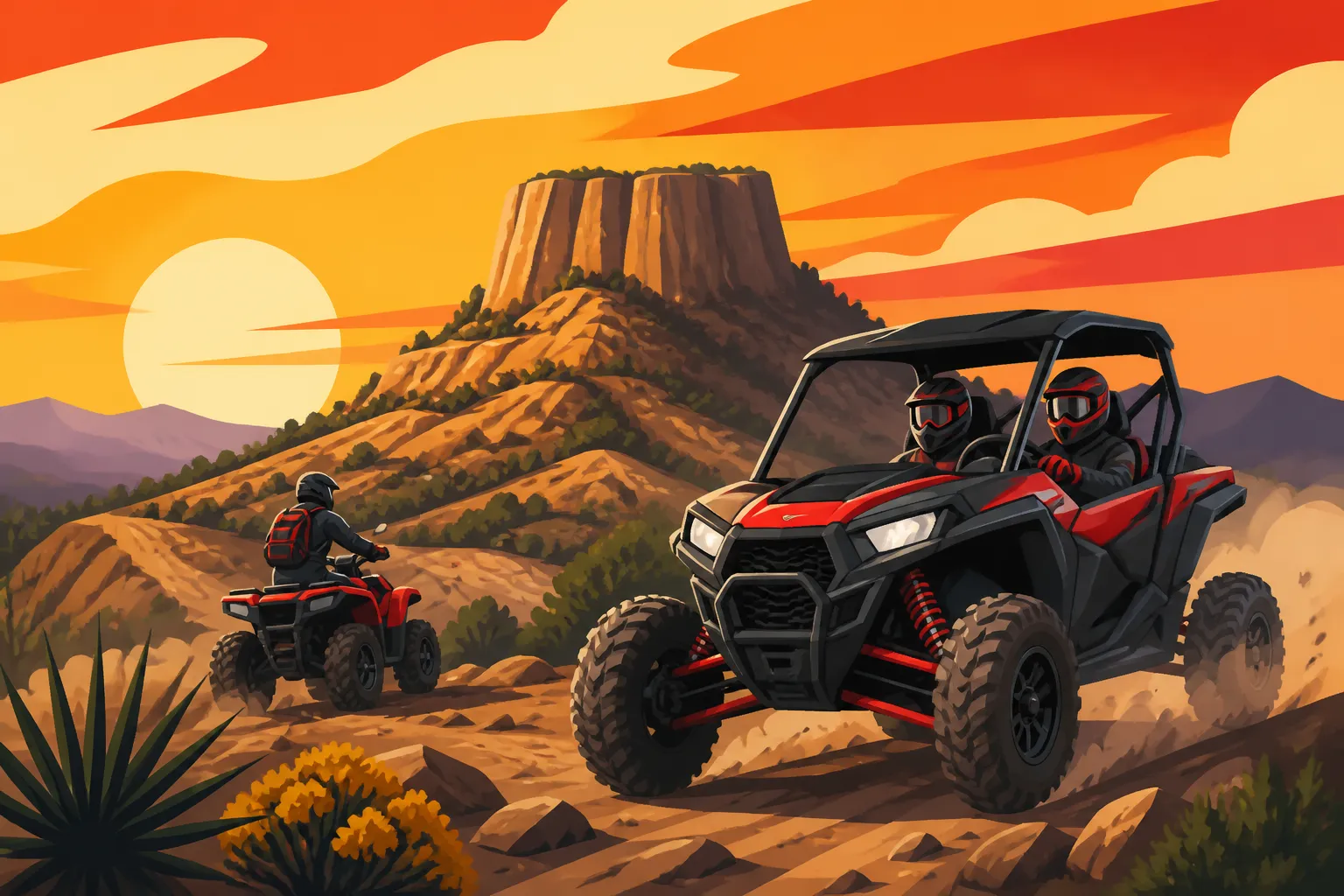
New Mexico’s 1,920-Acre Haystack Mountain
Haystack Mountain offers a rare treat in southeastern New Mexico: a large riding area within reach of Roswell, where you can spend the day exploring without planning a long backcountry expedition. The challenge is knowing what to expect before you arrive. This guide covers access, terrain, preparation, safety, and how to make a ride at Haystack Mountain work for your group.
What to expect at Haystack Mountain
A sizable riding area near Roswell
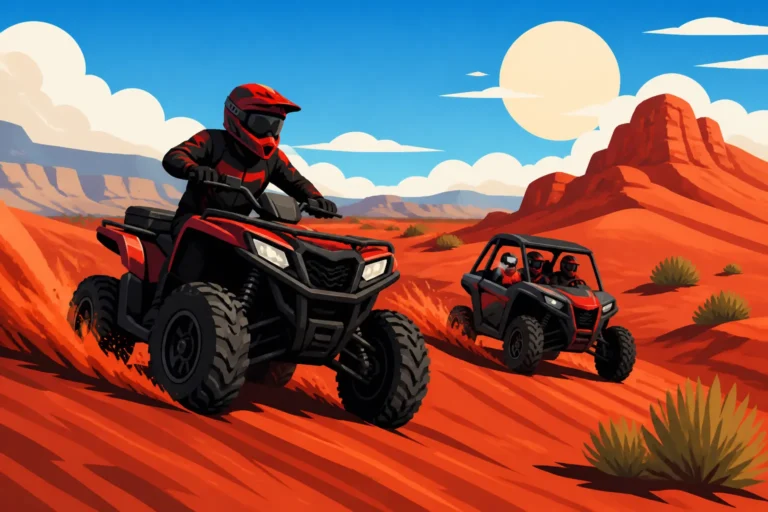
Haystack Mountain is a Bureau of Land Management recreation area east of Roswell, in the wide-open landscape of southeastern New Mexico. Its roughly 1,920 acres give riders room to explore, but it is still important to think of the area as a managed riding destination—not an invitation to drive anywhere that looks passable. Routes and boundaries matter, especially where tracks lead toward open desert or neighboring land.
The area’s scale can be a welcome change from a small practice lot, but it also means your ride may feel different from one outing to the next. One group might spend most of its day following established routes, while another pauses often to check terrain, practice skills, or let younger riders get comfortable. If you are visiting from out of town, start with [New Mexico OHV Areas Near Roswell] to see how Haystack fits into a broader local riding plan.
It helps to arrive with a flexible idea of the day rather than a fixed expectation that you will cover the entire area. The pace depends on your machine, your group’s experience, trail conditions, and how often you stop. A family with new riders may have a better day exploring at a relaxed speed than trying to rack up distance.
A good fit for different kinds of riders
Haystack can appeal to riders who want a day out on ATVs or UTVs without committing to a long trip into the mountains. It may also suit people who are still learning how their machine handles on unfamiliar ground. A nearby destination can make it easier to keep the outing manageable: you can bring your own supplies, take breaks when needed, and head back toward Roswell if someone in the group is tired or uncomfortable.
That does not mean every part of the area will feel beginner-friendly. Open ground can hide soft spots, uneven surfaces, sharp changes in traction, and turns that are harder to judge than they look from a distance. New riders should stay within their comfort zone, keep a sensible gap between machines, and avoid following a faster rider onto terrain they have not assessed for themselves.
Groups with mixed experience usually do best when they agree on the plan before unloading. Choose a pace everyone can maintain, decide where you will regroup, and make sure each person knows how to stop safely and get help. For more trip-planning ideas around the area, see [Riding Haystack Mountain for a Day].
Planning your visit
Getting there from Roswell
Haystack Mountain is located east of Roswell, making the city a practical starting point for food, fuel, lodging, and last-minute supplies. Plan your drive using current directions to the recreation area and pay attention to the final approach. The route can include stretches away from town where you will want to have enough fuel, water, and time to handle a wrong turn without turning the day into a scramble.
Do not assume that every road shown on a general map is the correct public access route or that a nearby track is open to OHVs. Follow posted signs and the land manager’s directions, and do not cut across private land to reach a trail. If a gate or sign makes the route unclear, stop and sort it out before continuing. [How Far Haystack Mountain Is From Roswell] can help you picture the destination in relation to town, while [New Mexico Trail Maps Worth Carrying] is useful background for planning how you will navigate once you arrive.
Before leaving Roswell, check your fuel and supplies rather than counting on finding them at the riding area. A machine with a shorter range may need a more conservative route plan, and a group should not assume someone else packed essentials such as drinking water, a basic tool kit, or a phone charger. If your route depends on a mapping app, download the information you need before you leave reliable service.
Fees, facilities, and the final details
Some OHV recreation areas have a day-use fee, and fee arrangements or on-site services can change. Check current information for Haystack Mountain before you set out, and be prepared to follow the posted payment instructions when you arrive. The reference topic [The $5 Day Use Fee at Haystack Mountain] is a useful reminder to include access costs in your planning, but posted signs and current land-manager information should guide what you do on the day.
It is equally important to confirm what facilities are available rather than assuming the area has everything you might find at a developed campground. A riding destination may have limited services, and drinking water, food, fuel, and repair help may not be close at hand. Treat the outing as one where you bring what your group needs and pack out your rubbish.
For first-time visitors, the last few minutes before unloading are worth slowing down for. Read signs at the entrance, confirm any local rules, check that your trailer is parked safely, and make sure everyone knows where the group will meet if separated. If you have questions about paying or using the entrance, [Paying at the Haystack Entrance] is a related topic to review before your trip.
| Planning question | What to do before riding |
|---|---|
| Where is the area? | Use current directions to Haystack Mountain east of Roswell and follow posted access signs. |
| Is there an entrance fee? | Check current land-manager information and follow the payment instructions posted on site. |
| Are services guaranteed? | Do not assume water, fuel, food, or repair services will be available at the riding area. |
| What should I bring? | Carry water, food, basic tools, communication essentials, and any required documents or safety gear. |
| How should I navigate? | Use a current map, understand the area boundary, and stay on routes open to your machine. |
Choosing routes and managing terrain
Match the ride to your machine and ability
A route that feels easy on a nimble ATV may feel very different in a wider, heavier side-by-side. Turning room, ground clearance, wheelbase, tire setup, and the driver’s experience all affect how a machine handles. Before following a narrow or unfamiliar track, consider whether you can turn around safely and whether there is enough room for the vehicle to pass or regroup without leaving the route.
The same caution applies to skill level. A confident rider may be comfortable negotiating loose ground or uneven turns, while a beginner may need to take those features slowly. Agree that anyone can ask to stop without being pressured to keep up. A pleasant day is not measured by how fast the group moves or how many tracks it follows.
If you are not sure how challenging a route is, approach it cautiously and assess it before committing. Look for changes in surface, steep sections, washouts, or signs that the track narrows ahead. [New Mexico Trail Difficulty Ratings] explains why difficulty labels and route descriptions are worth checking, but your own judgment on the ground remains essential.
Navigate without drifting onto closed ground
Open desert can make it surprisingly easy to lose your sense of direction. Several tracks may look similar, landmarks can seem farther away than they are, and a rider focused on keeping pace may not notice that the group has drifted from its intended route. Decide in advance who is navigating, and make sure other riders can find their way back to the staging area if they become separated.
An app such as onX Offroad can help you review mapped routes and keep track of your position, particularly when cell service is limited. It is best used as one tool in your navigation plan, not as a substitute for checking signs, respecting closures, and understanding the land boundary. Download maps ahead of time, carry a backup option, and make sure someone in the group knows how to read it.
Before turning onto a track, pause long enough to confirm it is open and appropriate for your vehicle. A visible tire track does not prove that a route is legal or currently accessible. If a route is marked closed or its status is uncertain, do not use it as a shortcut. That small decision can protect both the riding area and your group’s access to it.
Safety, weather, and responsible riding
Prepare for sun, heat, and sudden weather
Southeastern New Mexico can feel exposed, particularly when the sun is strong and there is little shade. Start the ride with enough water for every person, not just the driver, and take breaks before anyone feels depleted. Young riders, passengers, and people who are not used to desert conditions may need more frequent stops than the most experienced adult in the group expects.
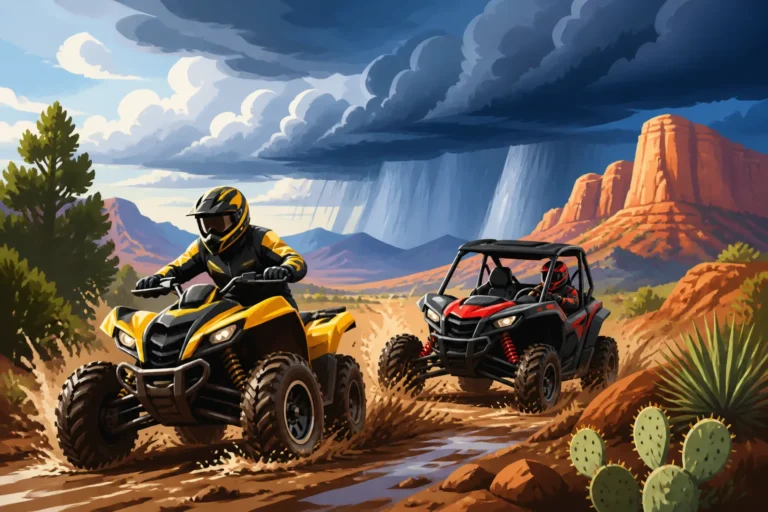
Weather can change the character of a ride quickly. During summer monsoon season, storms may bring lightning, heavy rain, or runoff that makes low areas and washes hazardous. A dry route at the start of the day may not be safe later. Check the forecast before leaving, keep an eye on the sky, and be ready to turn back rather than trying to outrun a storm. [New Mexico Riding in Summer Monsoon] offers more context on planning around seasonal weather.
Dust is another practical concern, especially when several machines are riding close together. Leave enough space for dust to clear, slow down when visibility drops, and do not assume the rider ahead can see you. Eye protection matters even when the weather is calm, and helmets and other appropriate protective equipment help reduce the consequences of an unexpected fall or collision.
Keep the group together without rushing
Before the first machine moves, set a simple group plan. Pick a lead rider and a sweep rider, agree on an easy-to-recognize regrouping point, and decide what everyone should do if they lose sight of the group. For a family ride, make sure children know not to continue alone or follow an unfamiliar machine. A basic plan can prevent a brief separation from becoming a stressful search.
Riders should keep a generous distance from the machine ahead, particularly on loose or dusty ground. Avoid stopping in the middle of a narrow route, and give other vehicles room to pass only where it is safe and permitted. A slower rider should never feel pushed into a speed that makes them uncomfortable. The person setting the pace should be able to stop smoothly and give the group time to regroup.
Good trail etiquette also means thinking about other visitors and the landscape. Do not cut corners, widen routes, or create new tracks to get around an obstacle. Keep noise and dust in mind, and leave the area as you found it. For a deeper look at shared-space habits, read [New Mexico Trail Etiquette on Shared Ground].
A practical day-trip checklist
Before you leave town
A little preparation in Roswell can save a lot of frustration at the trailhead. Fill the vehicle and machine as needed, check tire condition and basic controls, and confirm that the trailer is secure. Pack water, food, sun protection, first-aid supplies, and tools suited to your machine. If you are carrying a phone-based map, download it before you lose service and bring a charging option.
Check the riding area’s access information and any current closures or restrictions. Rules can differ by land manager and may change with conditions, so do not rely solely on a memory of an earlier visit. Verify what routes are open, whether any fee applies, and what equipment or documents your group needs. If you are riding on public land elsewhere during the same trip, [New Mexico Rules for Riding BLM Land] is a useful related read.
For visitors choosing among nearby destinations, it may help to compare the kind of day you want rather than simply choosing the closest place. [New Mexico Riding Areas Near Roswell] can support that planning. Haystack may make sense for a focused day of riding near town, while another destination could better suit a group looking for different terrain or a longer outing.
At the staging area and after the ride
Once you arrive, take a moment to orient yourself before unloading or riding out. Read the entrance information, identify the open routes, and agree on the direction of travel and the first regrouping point. Make sure passengers know how to communicate with the driver and where the group will stop if someone needs a break. A calm start helps everyone settle in, especially children and first-time riders.
At the end of the day, look over the machine before loading it. Check for loose parts, tire damage, leaks, and anything that may need attention before the next ride. Keep rubbish and gear contained, and make sure you have not left anything at the staging area. If weather or fatigue shortened the outing, that is still a successful day: getting everyone back safely matters more than finishing a planned route.
Haystack Mountain is easiest to enjoy when you treat it as a real desert ride, not a casual spin where preparation is optional. Bring what you need, stay within your ability, pay attention to signs and conditions, and give the group room to ride at a comfortable pace. Those habits make the area more approachable for newcomers and help protect it for the next visit.
Disclaimer
This article is for general informational purposes only and does not constitute professional advice. Laws, prices and regulations vary by location and change over time. Consult a qualified professional for guidance on your specific situation.