New Mexico Dune Riding Versus Forest Riding
New Mexico riders often have to choose between soft sand that drains energy quickly and forest roads where elevation, weather, and seasonal closures can change the whole day. This guide compares dune and forest riding so you can pick a terrain that fits your machine, experience, timing, and group—and plan for the conditions that commonly catch riders off guard.
How dune and forest riding feel different
Dunes demand momentum and constant adjustment
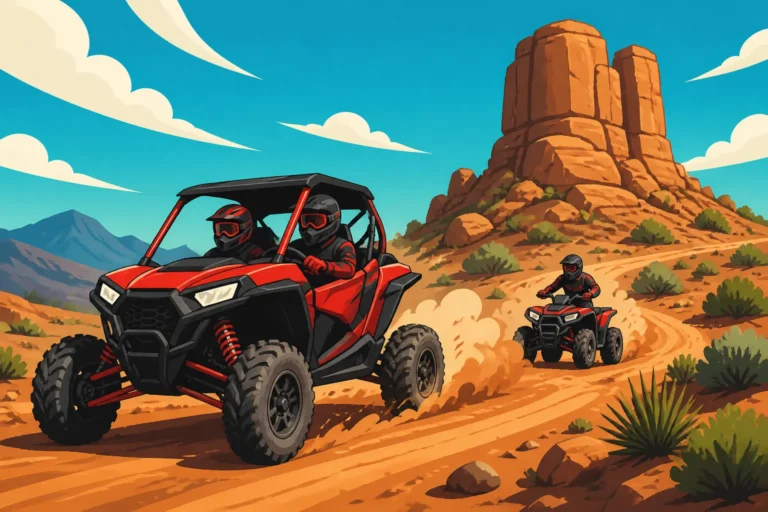
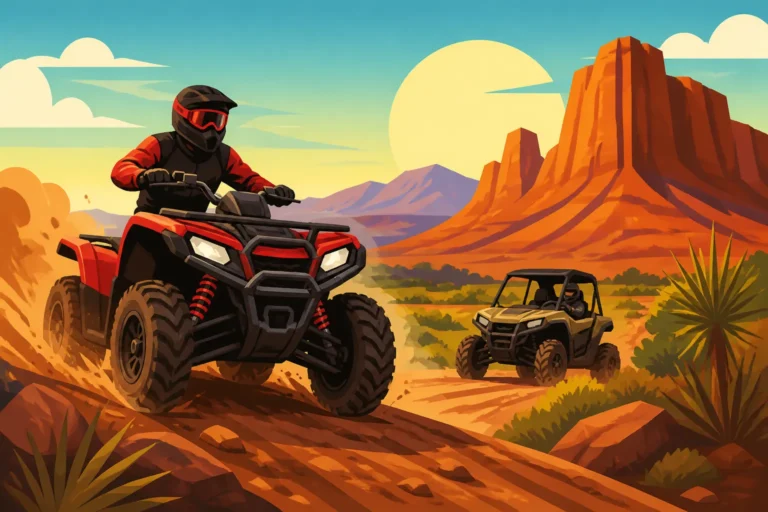
Dune riding is active from the moment you leave the staging area. Sand shifts under the tires, slopes can hide what lies beyond a crest, and a line that looked easy from a distance may feel much steeper once you reach it. Riders continually adjust speed, throttle, and steering to keep the machine moving without losing control. On a quad, that can mean choosing a clean approach and avoiding abrupt turns on a slope. In a side-by-side, it also means allowing room to maneuver and keeping passengers prepared for bumps and changes in direction.
Soft sand takes more effort than firm ground, so a ride can feel tiring even when the trail distance looks short on a map. Repeated climbs and descents make that especially noticeable. Newer riders may find themselves gripping the controls tightly, reacting late, or trying to climb a dune that is beyond their comfort level. Taking a break, watching how other riders handle the terrain, and starting with gentler slopes can make the day more enjoyable than trying to keep pace with the most confident person in the group.
Visibility is another important part of the dune experience. A crest can block your view of a rider coming from the other side, and dust can make it harder to see who is nearby. Slow down near blind rises, avoid stopping where another rider might be climbing toward you, and leave enough space that you have time to respond. These small habits matter whether you are riding a broad open dune field or a more tangled area where sand meets shrubs and brush.
Forest riding can mean roads, trails, and changing conditions
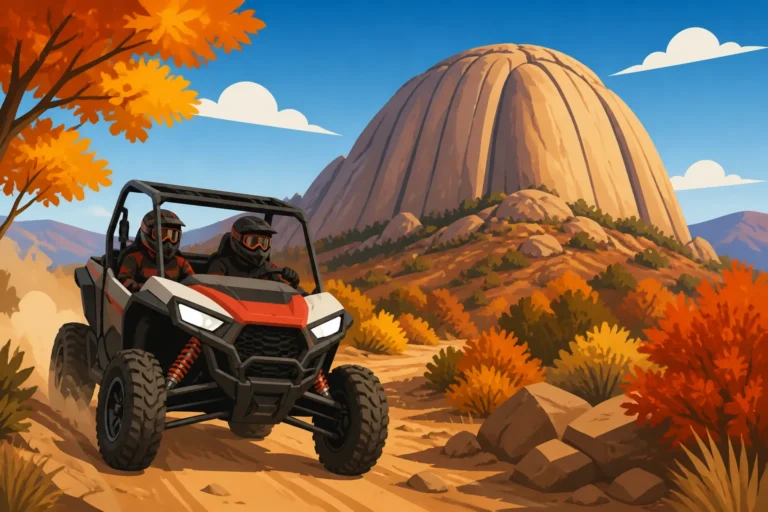
“Forest riding” is not one uniform experience. It can mean a wide dirt road that climbs gradually through trees, a narrow route with rocks and ruts, or a network of marked roads where junctions are easy to miss. The surface can shift from packed dirt to loose gravel, mud, snow, or exposed rock as elevation and weather change. A forest route that feels simple near a trailhead may become more demanding farther from the staging area.
In northern New Mexico, forest roads around the Red River area offer a very different rhythm from open dunes. Riders may spend more time navigating bends, watching for other road users, and keeping an eye on route signs than managing steep sand. Trees and terrain can limit sightlines, and a narrow road may leave little room to pass. A machine that handles a broad dune field comfortably still needs careful, controlled driving on a rocky forest road.
Forest terrain can also bring a stronger sense of exposure to changing weather. A sunny start does not guarantee a dry afternoon, especially when clouds build over higher ground. Rain can make a road slick or wash water across a low section; snow and seasonal closures can affect access to some routes. Before choosing a route, check local land-manager information and make sure the road is open to your machine. For broader planning, see [New Mexico Forest Riding Areas] and [New Mexico Trail Closures to Check First].
A quick comparison before you choose
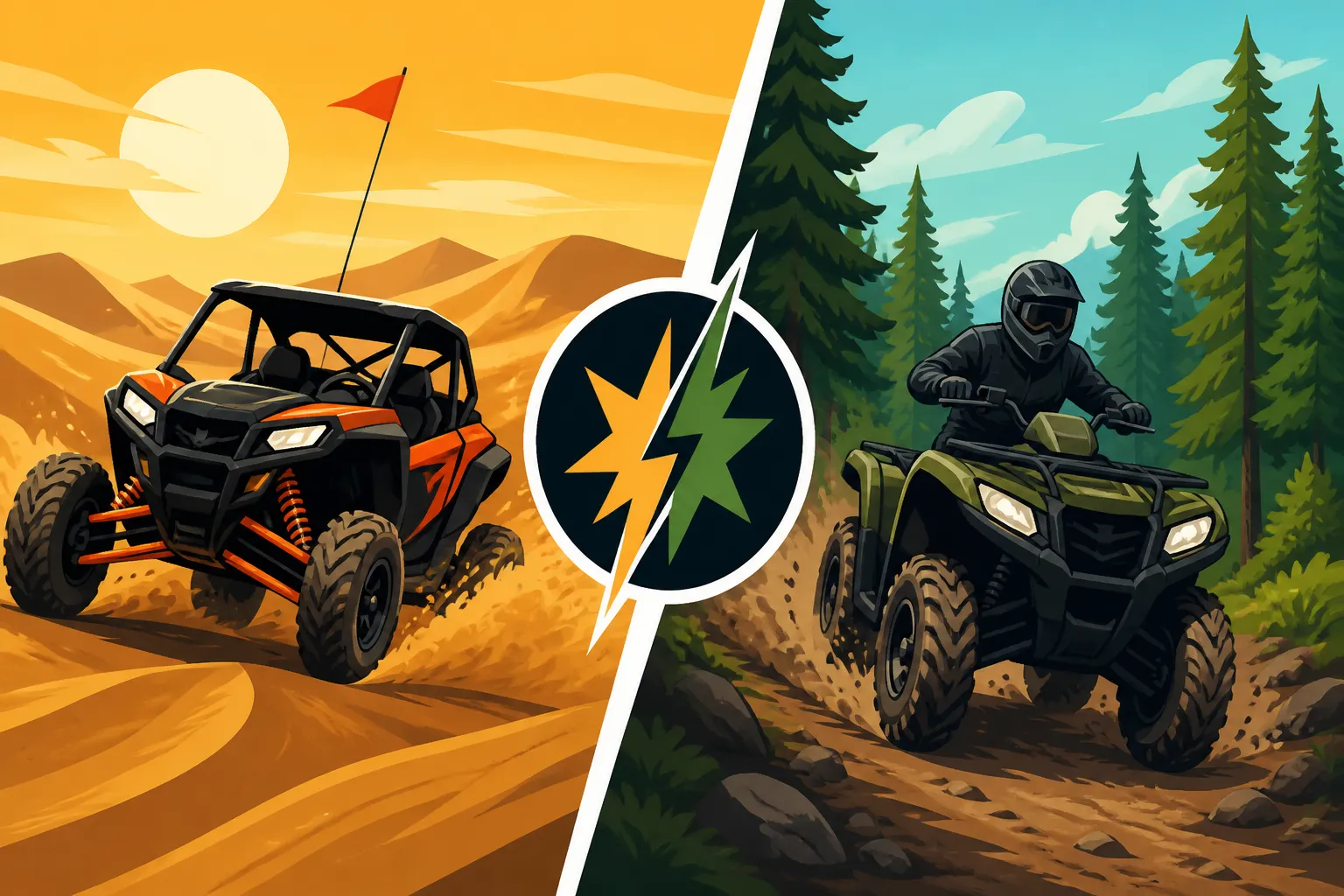
The best terrain depends on what you want from the day. Dunes generally reward riders who enjoy active steering, shifting sand, and open sightlines, while forest routes often suit riders who prefer varied surfaces, scenery, and the challenge of staying on a route through changing conditions. Neither is automatically easier. A mild forest road may be more approachable than a steep dune, but a rough, narrow forest route can be harder than a broad sand area.
| Riding factor | Dunes | Forest routes |
|---|---|---|
| Typical surface | Soft, shifting sand | Dirt, gravel, rock, mud, or seasonal snow |
| Riding style | Frequent speed and line adjustments | Route awareness and careful control through changing terrain |
| Common challenge | Soft sand, steep slopes, blind crests | Narrow roads, rocks, weather, and route closures |
| Visibility concern | Dust and hidden traffic over a crest | Trees, bends, and limited sightlines |
| Planning priority | Water, recovery readiness, and riding within your ability | Route status, maps, weather, and seasonal access |
| Good fit for | Riders who enjoy open terrain and active maneuvering | Riders who enjoy varied terrain and route-focused travel |
Use the table as a starting point, not a promise about every location. Conditions can differ across a single riding area, and the same route can feel very different after rain, wind, or heavy use. A careful rider chooses based on the day’s actual terrain and group, not just the label “dune” or “forest.”
Where New Mexico’s dunes and forests differ by area
Southern dune areas suit a different kind of day
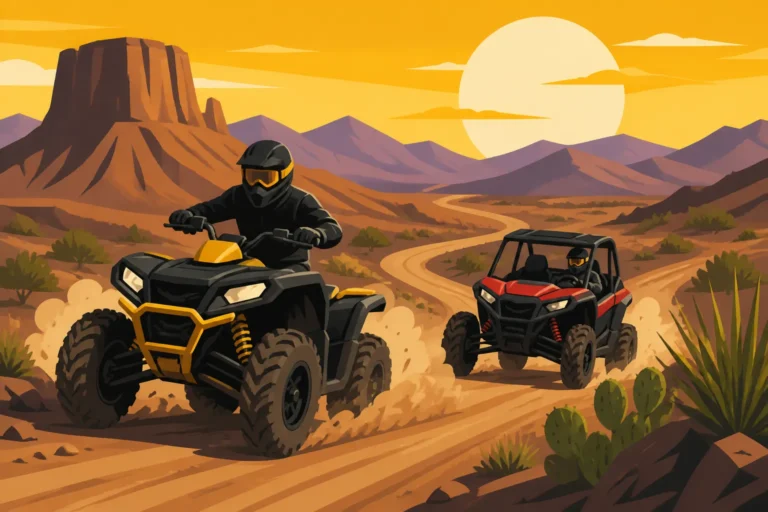
New Mexico’s dune riding is often associated with the southeast part of the state. Mescalero Sands is known for its dune terrain, while Red Sands OHV Area near US 54 offers a desert setting with mesquite and sand features. These areas can appeal to riders who want open, sandy terrain rather than a long forest-road tour. The experience can still vary substantially within an area: some sections may be more open, while others involve tighter turns around vegetation or changing sand.
Do not assume that all dunes are equally soft or that the ground will behave the same throughout the day. Wind and recent weather can change surface conditions, and traffic can create ruts or churned-up sections. The route you choose should match the machine and the least experienced rider in your group. If someone is new to sand, begin conservatively, keep the group together, and avoid turning a first outing into an attempt to conquer the steepest slope in view.
Before heading out, check the details that determine whether the outing will be comfortable: access, permitted routes, available staging, water, cell coverage, and nearby fuel. A remote-looking area can leave you with a long drive back to services if you run low on fuel or have a mechanical problem. Planning notes for [New Mexico's Mescalero Sands Dunes] and [Red Sands OHV Area in Southern New Mexico] can help you compare destinations and identify questions to resolve before departure.
Northern forest routes bring elevation and seasonality
Forest riding in northern New Mexico can take you into cooler, higher terrain, including roads in the Carson National Forest near Red River. The setting is part of the attraction: trees, mountain views, and a cooler alternative to exposed desert riding can make a forest outing feel like a completely different kind of trip. But higher elevation also makes weather and seasonal access central to planning. A road that is pleasant in one season may be muddy, snow-covered, or closed in another.
Forest roads are not automatically open to every vehicle or every kind of use. Some roads are designated for certain uses, and land managers may close routes for winter, fire danger, maintenance, or other conditions. Follow posted signs and current local notices instead of relying on an old route description or a track saved from a previous visit. A closed gate or road sign is not an invitation to find a way around it; it is a reason to change plans.
The trip can involve more than riding. You may need to trailer to an appropriate staging point, confirm that the route allows your machine, and build in time to turn around if conditions worsen. The guide [Riding the Carson National Forest at Red River] is a useful place to start when comparing forest riding with southern dunes. For broader seasonal context, see [New Mexico Forest Roads Closed December to May] and confirm current access information before leaving.
Match the destination to your group’s priorities
A group with mixed experience often benefits from choosing the terrain that gives the least experienced rider room to learn without pressure. That might mean a conservative route through a riding area rather than an ambitious dune climb, or a wider, less technical forest road rather than a rocky route with tight turns. Talk through expectations before you arrive: does everyone want a relaxed scenic ride, a technical challenge, or a full day of exploring? If the group disagrees, the least experienced person should not be pushed into terrain they are not ready to handle.
Consider practical needs as well as riding style. Families may care more about predictable breaks, available facilities, and a reasonable route back to the trailer. A group riding in several machines may need room to regroup without blocking traffic. A rider bringing a wide side-by-side should confirm route width and turning space rather than assume every forest road or trail can accommodate it. A dune area may offer more room in some places but still include obstacles, soft patches, and limited visibility.
You can also plan a trip around both kinds of scenery without trying to ride both terrain types in one day. New Mexico’s distances can make a rushed itinerary frustrating, particularly if you need to trailer between areas. It is often more rewarding to choose one riding area, allow time to explore safely, and save another terrain type for a separate trip. If you are looking for ideas by location, [New Mexico Riding Areas Near a City] can help frame the search around where you are staying.
Choose the right machine and prepare for the surface
Set up for sand without treating every dune the same
Soft sand increases rolling resistance, so riders often notice the machine working harder than it does on packed dirt. That can mean more heat, more fuel use, and a greater chance of getting bogged down if you lose momentum. Before the ride, check the owner’s guidance for tire pressure and machine setup rather than copying a number from another rider. Tire type, vehicle weight, passenger load, and terrain all affect what is appropriate.
The way you ride matters as much as the setup. Use smooth inputs, choose a line before committing, and avoid sudden braking or sharp turns on a slope. If a hill looks too steep, has a blind crest, or is already beyond your ability, choose another route. It is not worth risking a rollover or leaving a machine stuck in a place where recovery is difficult. Keep enough distance from the rider ahead that you can see the terrain and react to a stop or change in direction.
A small preparation routine can prevent a long interruption. Check that the machine is in good condition, carry the tools and basic recovery equipment appropriate to your vehicle, and agree on a regrouping plan. Know what your group will do if a machine becomes stuck or overheats. For more terrain-specific preparation, read [Tire Pressure for Soft Sand] and [Fuel Range Between Desert Towns]. Those topics are especially useful when you are planning a longer day away from services.
Prepare for forest roads, rocks, and elevation
Forest terrain calls for a different kind of patience. Loose rocks, ruts, and uneven surfaces can challenge tires and suspension, while narrow sections may require a slower pace than riders expect. Keep a safe gap between machines so dust and kicked-up stones do not become a problem. On blind bends, stay to the appropriate side of the road and be ready for a truck, another OHV, a cyclist, or a pedestrian coming the other way.
Elevation can affect both riders and machines. A route that climbs steadily may feel more demanding than its distance suggests, particularly if you are not accustomed to higher ground. Take breaks, drink water, and pay attention to signs of fatigue. If a machine seems to be losing power or behaving differently, stop somewhere safe and check it rather than pressing on simply because the group is moving.
Weather preparation should be practical, not optimistic. Pack layers even when the staging area feels warm, and bring rain protection if the forecast or local conditions suggest showers. Snow or wet ground can change traction quickly, and a route may be unsuitable even if it is technically accessible. Look at [Snow on High Forest Roads] and [New Mexico Riding at High Elevation] when deciding whether a high-country outing fits your group and the day’s conditions.
Take the right gear for the terrain
Dunes and forests have different demands, but both require riders to plan for time away from the trailer. Carry enough water for the expected ride and more than you think you will need if the route is remote or the weather is hot. Bring food, a first-aid kit, a charged phone, and any essential personal medication. If your route has unreliable reception, consider how your group will communicate or call for help if separated or delayed.
For dunes, eye protection and a way to manage dust can make a major difference in comfort. Keep loose items secured, and avoid riding so close behind another vehicle that you are breathing its dust or losing visibility. For forest routes, layers and rain protection can be just as important as goggles, especially when the temperature changes with elevation. In either setting, protective riding gear should fit properly and be worn consistently rather than packed away for the “easy” sections.
A map plan is part of your gear plan. onX Offroad can help you review routes and orient yourself, but do not treat a phone app as a substitute for posted signs or the land manager’s current route information. Download or prepare for the possibility of poor service before you leave, and make sure at least one other person in your group understands the route. A paper map or offline backup can be valuable if a device runs out of power, gets damaged, or cannot locate your position.
Plan a safer and more rewarding ride
Check access, route rules, and closures first
The first planning step is confirming where you are allowed to ride. Public land is not a single open playground: routes may be designated, closed, restricted to particular vehicle types, or subject to seasonal conditions. A road visible on a map is not necessarily open to OHVs. Confirm that your planned route is allowed and that your machine is suitable for it. If you are unsure, contact the managing office or use its official travel information rather than guessing at a junction.
This matters in both dune and forest areas. In a dune area, riders still need to stay within the permitted riding area and respect boundaries. In forest country, route restrictions and seasonal closures can be more prominent, particularly where roads are managed for multiple uses. Do not create a new route around a closure or follow tracks that appear to leave the designated system. Responsible route choices protect the land and reduce the chance of a citation, damaged habitat, or a difficult recovery.
Use more than one planning source when the consequences of a wrong turn are significant. onX Offroad can be one tool for reviewing the area and preparing a route, while current information from the relevant land manager should guide decisions about closures and permitted use. Save the route before departure, tell someone where you plan to go, and decide in advance when you will turn around. For a broader overview, see [Riding BLM Land in New Mexico] and [New Mexico Trail Maps Worth Carrying].
Adjust your pace to visibility and other users
A common mistake is riding at the pace that feels exciting rather than the pace that leaves enough time to respond. Dunes can hide traffic beyond a crest, while forest roads can conceal an approaching vehicle around a bend. Reduce speed where you cannot see far ahead, and do not stop in a place where another rider may be unable to see you. If dust or glare makes it hard to judge distance, slow down and give the group more space.
Other people may be using the area for reasons unrelated to OHV riding. On forest routes, you can encounter hikers, cyclists, horseback riders, hunters, or work vehicles. In areas with livestock, animals may be near or on the route. Ease off the throttle, avoid startling them, and follow local rules about gates and access. Treat a narrow road as shared space, not as a racecourse.
Agree on simple group procedures before setting out. Decide where to regroup, how to signal a problem, and what to do if someone is out of sight. A lead rider should know the route, and a sweep rider can help make sure nobody is left behind. Keep the group’s pace suitable for its least experienced rider. That approach may feel slower at first, but it often prevents the stop-start confusion that turns an enjoyable ride into a stressful one.
Build a realistic day plan with a turnaround point
A useful ride plan includes more than a destination. Estimate how long the route may take, but leave room for breaks, navigation, and delays. In soft sand, a short distance may take longer than expected because riders are working hard and stopping to assess slopes. In forest terrain, road conditions, junctions, and weather can slow progress. If you schedule the day too tightly, the group may feel pressured to continue when it should turn back.
Set a turnaround time or a clear condition for ending the ride. That might be a specific time, a fuel threshold, worsening weather, or a rider becoming tired. Agree on the rule before anyone is eager to reach one more viewpoint or dune. If a route becomes unsuitable, turning around is a good decision—not a failure. A short, safe ride is better than a long day that ends with a stuck machine or an avoidable injury.
Finally, plan the return as carefully as the outbound route. Check fuel before leaving, account for the distance back to the trailer, and keep water and communication equipment accessible rather than buried under cargo. Let someone at home know the general plan and when you expect to check in. If you are riding in a remote area, think ahead about what you would do if a vehicle breaks down or a rider needs assistance. A little structure gives everyone more freedom to enjoy the terrain once the ride begins.
Decide which terrain fits your next New Mexico ride
Pick dunes when you want open, active riding
Dunes may be the right choice when your group wants a hands-on ride with frequent changes in line and speed. Riders who enjoy reading the terrain, choosing a safe approach, and responding to shifting sand often find the experience engaging. Open areas can also make it easier to see the general landscape, although individual crests and dust can still create blind spots. The key is to ride within your ability and avoid treating every hill as a challenge that must be climbed.
A dune day is not automatically a good beginner day. Someone who is new to OHVs may need time to learn throttle control and steering before tackling soft sand. Choose a forgiving area of the riding zone, keep the first ride short, and make it easy for the group to stop. If riders become tired, frustrated, or stuck repeatedly, scale back rather than insisting on a more difficult line.
Think through the practical details before you commit: water, fuel, shade, recovery options, and how far you will be from help. If your group enjoys open terrain and is comfortable managing sand, a southern dune area may fit well. If you would rather travel steadily through varied scenery with less emphasis on climbs and momentum, forest roads may be a better match.
Choose forest routes for scenery and route-focused travel
Forest riding can be a better fit when the group enjoys a slower, exploratory outing with changing views and varied surfaces. It can be especially appealing in warmer parts of the year when a higher-elevation setting offers a different feel from the southern desert. The tradeoff is that route access and conditions can be more complex. Weather, elevation, closures, and road width can all shape what is possible on the day.
This terrain rewards preparation and attention. Check route permissions, watch for signs, and be willing to turn around if conditions change. Keep a steady, controlled pace on narrow or rocky sections, and take time to let other users pass safely. If the group is expecting an easy scenic drive, be honest about the surface and route demands before loading the machines.
For riders who are unsure, the best choice may be a conservative forest road or an easy section of a dune area rather than a difficult route in either setting. Ask what each person hopes to get out of the day, choose an area that meets the group’s experience level, and leave room to adjust. New Mexico offers enough variety that there is little reason to force a terrain choice that does not suit the people riding.
Make the experience fit the day, not just the map
A map can show distance and direction, but it cannot tell you how tired a beginner will feel in soft sand, how much a storm will change a forest road, or whether the group will be comfortable with a steep climb. Use route tools, including onX Offroad, to support planning—not to override local closures, posted restrictions, or good judgment. Before departure, confirm the ride area’s access information and make sure everyone understands the plan.
If you are trying a new terrain type, keep the first outing manageable. Choose a route or section that leaves room to learn, schedule breaks, and avoid stacking several unfamiliar challenges into one day. A first dune ride does not need to include steep slopes, and a first forest ride does not need to include the roughest road in the district. Confidence grows when riders have time to practice without feeling rushed.
Most importantly, be ready to change the plan. A hot afternoon, unexpected rain, a tired child, or a machine that is not handling well can all be reasons to stop early or select another route. A successful ride is not measured by how far you went. It is the day everyone gets back safely, has enough energy to enjoy the trip home, and is already looking forward to riding again.
Disclaimer
This article is for general informational purposes only and does not constitute professional advice. Laws, prices and regulations vary by location and change over time. Consult a qualified professional for guidance on your specific situation.