Riding a Snow-Packed Forest Road
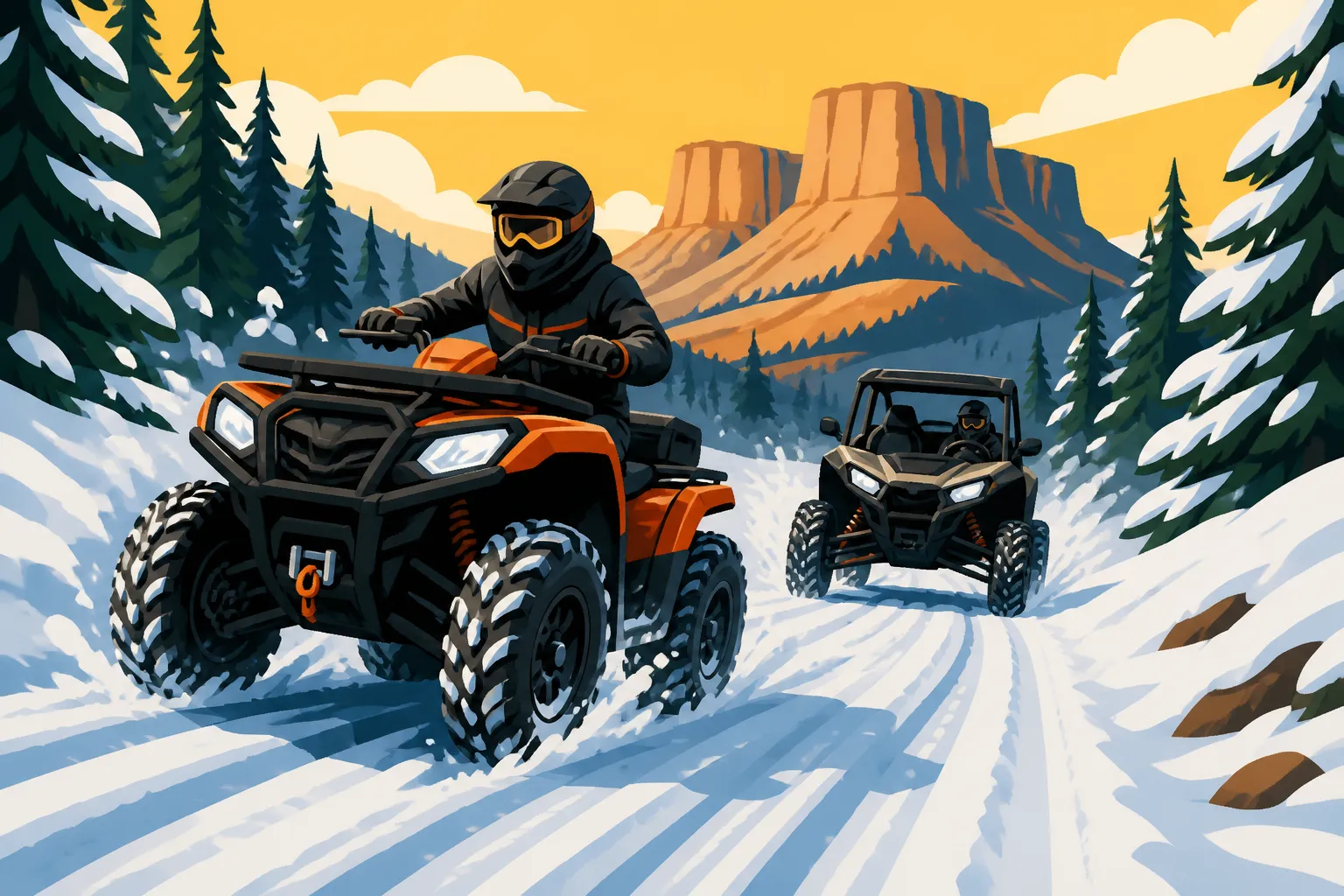
There’s nothing quite like the allure of taking your ATV or UTV out when New Mexico transforms into a winter wonderland. The crisp air, the hushed beauty of snow-covered pines, and the unique challenge of navigating a snow-packed forest road can be incredibly rewarding. However, many riders feel a real pang of uncertainty – is it even allowed? What about safety? This guide is here to unravel those worries, providing you with the practical knowledge and confidence you need to safely and legally enjoy your off-highway vehicle in New Mexico's snowy backcountry.
Navigating the Rules for Snowy Forest Roads in New Mexico
The dream of riding through freshly fallen snow can quickly turn into a headache if you’re not sure about the rules. It’s a common frustration: you see snow, you think "adventure!" but then wonder if you're venturing into a legal grey area or, worse, a prohibited zone. New Mexico's vast and varied terrain means that rules can differ, especially when snow blankets the landscape. Understanding these specifics is the first step to a worry-free winter ride.
Official Closures and Seasonal Restrictions
First things first, not all forest roads are open year-round, regardless of snow. Many areas within New Mexico’s national forests, like the Carson or Cibola, implement seasonal closures, typically from December through May, depending on elevation and snow accumulation. This isn't just about snow depth; it's often to protect wildlife during sensitive wintering periods or to prevent road damage during freeze-thaw cycles. It's crucial not to assume that a snow-packed road is automatically open just because there are no physical barriers yet. Always check with the specific Forest Service district office for the area you plan to visit. Their websites and ranger stations are your best friends for current conditions and closure orders. Ignoring these can lead to fines and environmental damage, which none of us want. You can learn more about these typical restrictions in [Forest Roads That Close From December Onward].
It's tempting to explore, but responsible riding means respecting these closures. Sometimes, a road might be open, but conditions might be so severe that it’s impassable or dangerous, even for a well-equipped OHV. This often happens after a significant snowfall when plowing hasn't occurred, or if ice has formed beneath the snow. Always prioritize safety over the desire to explore. Remember, a forest road might not have a physical gate or barrier; a sign indicating "Seasonal Closure" is often the only warning.
Registration, Permits, and Road Legalities
Just like any other time of year, your ATV or UTV needs to be properly registered in New Mexico, even if you’re only riding on forest roads. This means having your current OHV decal displayed correctly. For New Mexico residents, this is usually a biennial registration through the MVD. Non-residents have options too, depending on their home state's registration status. Whether you have a yellow or green decal, it's essential. The yellow decal means off-highway use only, which is perfect for most forest roads. The green decal allows for both off-highway and limited paved road use, which can be handy if you need to connect between trail sections or reach a trailhead via a designated paved county road. You can dive deeper into these requirements with [New Mexico OHV Permits Explained].
Beyond state registration, if you're riding on federal lands managed by the Forest Service or Bureau of Land Management (BLM), you generally just need your valid New Mexico OHV registration or a non-resident permit. No special "winter permit" is required, but you must adhere to all travel management plans and designated routes. These rules are designed to protect natural resources and ensure everyone's safety. For instance, you can find detailed information about [New Mexico Rules for Riding a Forest Road] to ensure you're compliant. Riding off designated routes, even in snow, can lead to serious environmental damage and hefty fines.
Essential Equipment Checks for Winter Riding
Before you even think about hitting those snowy trails, your machine needs to be in tip-top shape. Winter conditions put extra strain on your OHV, so a thorough pre-ride inspection is non-negotiable. First, ensure all your lights are working – headlights, taillights, and brake lights. Visibility can be severely reduced in snowy conditions, especially if snow is actively falling or if you encounter blowing snow. A bright headlight is crucial for seeing the trail ahead, and a visible taillight is vital if you're riding with others. Mirrors, though not always mandatory for off-road use, are highly recommended for situational awareness, especially if you're sharing the trail. You can refresh your memory on general equipment guidelines in [New Mexico Equipment Rules for Road Use].
Brakes are another critical component. Snow and ice can drastically reduce traction, meaning you'll need your brakes to be in perfect working order and responsive. Check fluid levels and pad wear. And don't forget your spark arrester! This is a legal requirement on most public lands in New Mexico year-round, and especially important in dry winter conditions where a stray spark could ignite dry vegetation. It prevents embers from escaping your exhaust and causing a wildfire, even when everything seems covered in snow. A quick check of [New Mexico Spark Arrester Requirement] will give you the specifics. Finally, consider adding a winch if your machine isn't already equipped; getting stuck in deep snow is a real possibility, and a winch can be your best friend for self-recovery or helping a fellow rider.
Gearing Up Your Machine for the New Mexico Winter Wonderland
Preparing your ATV or UTV for snow isn't just about throwing on some extra gear; it's about making strategic choices that enhance performance, safety, and comfort. The New Mexico winter can be harsh, with temperatures dropping well below freezing and snow depths varying dramatically from a light dusting to several feet. A little preparation goes a long way in ensuring your adventure is enjoyable rather than a struggle.
Choosing the Right Tires and Traction Aids
Your tires are your primary point of contact with the snow, and having the right set can make all the difference. Standard all-terrain tires might get you by in light snow, but for truly challenging, snow-packed forest roads, you'll want something more aggressive. Look for tires with an open, self-cleaning tread pattern that can shed snow effectively, preventing it from packing up and turning your tires into slicks. Deep lugs are also crucial for digging into the snow and finding traction. Some riders even opt for studded tires or tire chains for extreme ice and deep snow conditions, where legally permitted. Always check local regulations regarding studs or chains before you install them.
For the ultimate traction and flotation in deep snow, some riders invest in track systems, like those offered by brands such as SuperATV. These systems replace your wheels with a set of four specialized tracks, transforming your OHV into a true snow machine. While a significant investment, they provide unparalleled capability in conditions where wheeled vehicles would bog down instantly. They distribute weight over a much larger surface area, allowing you to float over deep powder and tackle ascents that would be impossible on tires. Even if you stick with tires, ensuring they are properly inflated for the conditions is key. Slightly lower tire pressure can increase your contact patch and improve flotation in soft snow, but don't go too low, or you risk de-beading.
Protecting Your OHV from the Cold and Snow
Winter riding isn't just tough on the rider; it's tough on the machine. Protecting your OHV from the elements is vital for longevity and reliable performance. A full windshield can make a huge difference in rider comfort, deflecting bitter winds and blowing snow. Many windshields are made from durable polycarbonate and can be easily installed, enhancing your ride experience. Heated grips and seats are also game-changers, keeping you warm even on the coldest days. If you plan on doing any trail maintenance or clearing snow from access points, a sturdy plow system can be a worthwhile addition.
Beyond comfort, consider protecting your machine's underside. Snow can hide rocks, stumps, and frozen ruts that can cause serious damage. Robust skid plates, A-arm guards, and CV boot protectors are crucial. Brands like SuperATV offer a wide range of these protective accessories designed to withstand harsh impacts. These aren't just for extreme rock crawling; they're essential insurance against hidden dangers on snowy trails. The constant exposure to moisture and road salts (if you're accessing trails via treated roads) can also accelerate corrosion, so a good wash after each snowy ride and applying a corrosion inhibitor to exposed metal parts is a smart practice.
Winterizing Your Engine and Fuel System
Getting your machine to start in freezing temperatures can be a challenge. Ensure your battery is fully charged and in good health; cold significantly reduces battery performance. Consider a battery tender or a block heater if your OHV sits in unheated storage. Use a high-quality fuel stabilizer, especially if you won't be riding frequently, to prevent fuel degradation and condensation in the tank. Ethanol-free fuel is always a good choice if available, as ethanol can attract moisture, which is problematic in cold weather.
Checking all fluids is critical. Ensure your coolant is rated for the expected low temperatures in New Mexico's mountains to prevent freezing and engine damage. Engine oil should be appropriate for cold weather; thinner oil weights flow better at low temperatures, making starting easier and ensuring proper lubrication from the get-go. Always carry extra fuel in approved containers. Fuel consumption can increase in snowy conditions due to increased engine load and lower efficiency, and being stranded without fuel in the cold is a dangerous situation. Think about longer rides and the possibility of getting stuck, which burns more fuel. This is where [New Mexico Rules for Carrying Fuel] come into play, ensuring you transport it safely.
Staying Safe and Prepared on Snowy New Mexico Trails
Venturing into New Mexico's winter backcountry on an OHV is an exhilarating experience, but it demands respect for the elements and thorough preparation. The serene beauty of a snow-covered landscape can quickly turn unforgiving if you're not equipped to handle its challenges. Safety isn't just a suggestion; it's the key to enjoying your ride and returning home without incident.
Personal Attire and Hypothermia Prevention
Layering is absolutely paramount when riding in cold, snowy conditions. Forget cotton; it absorbs moisture and loses its insulating properties when wet, leading to rapid heat loss. Instead, opt for synthetic or wool base layers that wick moisture away from your skin. Mid-layers of fleece or down provide insulation, and a waterproof, windproof outer shell is essential to keep you dry from snow, sleet, and spray from your own machine, as well as protecting against the biting wind chill. Don't forget your extremities: warm, waterproof gloves or mitts, insulated boots, and a warm hat (worn under your helmet) are crucial. A full-face helmet with a heated shield can prevent fogging and keep your face much warmer.
Hypothermia is a real and present danger in the cold, even on days that don't feel "that" cold, especially if you get wet or stranded. Know the signs: shivering, confusion, slurred speech, and loss of coordination. If you suspect hypothermia in yourself or a riding partner, seek shelter, remove wet clothing, and try to warm up with dry layers, warm drinks, and body heat. Always carry an extra set of dry clothes and an emergency blanket in a waterproof bag; it could literally be a lifesaver if you have a mechanical breakdown or get stuck far from your vehicle.
Navigation, Communication, and Emergency Gear
Cell phone service is notoriously unreliable in many of New Mexico’s remote forest areas, especially in canyons or heavily treed sections. Relying solely on your phone for navigation or emergencies is a recipe for disaster. Always carry a dedicated GPS unit pre-loaded with detailed topographic maps of the area, and even better, a physical paper map and compass as a backup. Knowing how to use them is crucial. For communication, a satellite messenger or a satellite phone is highly recommended. These devices can send emergency messages and your location even when no cell service is available. [Satellite Messengers in the Bootheel] might focus on a specific region, but the principle applies to all remote areas.
Beyond navigation and communication, a comprehensive emergency kit is non-negotiable. This should include a well-stocked first-aid kit, a headlamp or flashlight with extra batteries, a sturdy shovel (for digging out snow or your machine), a tow strap, a small toolkit for basic repairs, tire repair kit, a fire starter, and emergency food and water. Even in winter, staying hydrated is important, and warm liquids can help maintain core body temperature. Consider carrying a thermos of hot coffee or soup. Always tell someone your planned route and estimated return time, and stick to that plan as much as possible.
Understanding Winter Hazards and Etiquette
Winter riding presents unique hazards. Deep, unconsolidated snow can hide obstacles, make steering difficult, and dramatically increase the risk of getting stuck. Ice, often hidden beneath a fresh layer of snow, can lead to sudden loss of traction. Be extra cautious on shaded slopes, bridges, and near water crossings where ice is more likely to form. Avalanche risk, while less common on typical forest roads in New Mexico compared to steeper, high-alpine terrain, is still something to be aware of if you venture into very steep areas, especially after heavy snowfall. Always be mindful of your surroundings and avoid areas with obvious avalanche danger. You can learn about how elevation impacts riding conditions in [New Mexico Riding Seasons by Elevation].
Trail etiquette also takes on new importance in winter. If you're on a multi-use trail, be aware of other users like cross-country skiers, snowshoers, and hikers. Yield to non-motorized users and pass slowly and courteously. If you encounter gates, leave them as you found them – if it was closed, close it behind you. Respect all posted signs and closures. These rules are in place to protect the fragile winter environment and ensure that everyone can enjoy the backcountry safely and responsibly. By being prepared and considerate, you contribute to a positive experience for all and help preserve access for future rides.
Disclaimer
This article is for general informational purposes only and does not constitute professional advice. Laws, prices and regulations vary by location and change over time. Consult a qualified professional for guidance on your specific situation.