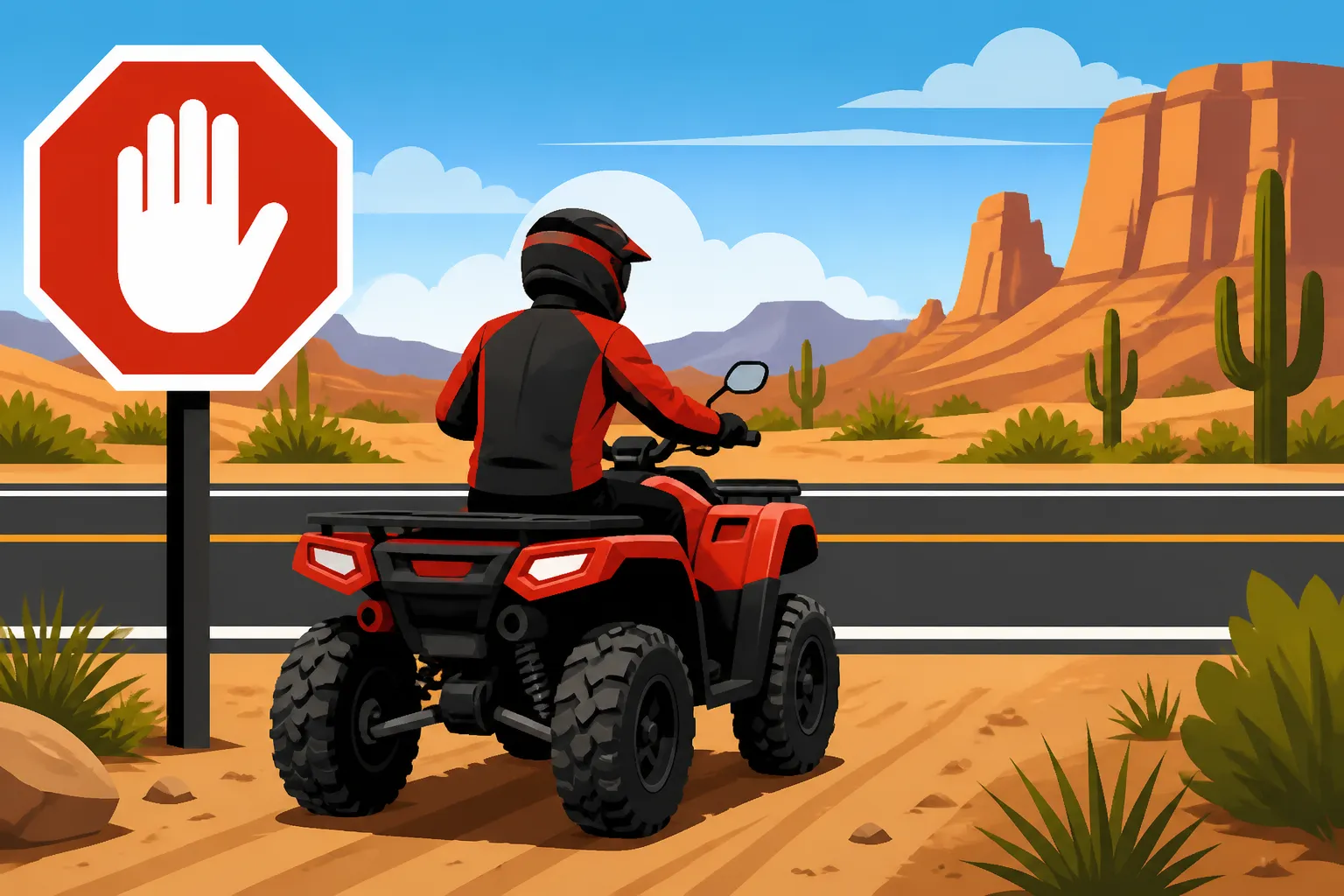
Stopping Fully Before You Cross the Asphalt
One of the trickiest parts about enjoying New Mexico's incredible off-highway vehicle (OHV) trails is navigating those moments when your dirt path meets an asphalt road. It’s a common point of confusion and frustration for riders – how exactly are you supposed to handle crossing a paved street in your ATV or UTV without running afoul of the law or, more importantly, risking a serious accident? This guide is here to untangle all those rules and give you the clear, actionable steps you need to make those paved road crossings safely and legally, ensuring your adventures stay fun and penalty-free.
The Absolute Necessity of a Full Stop at New Mexico Road Crossings
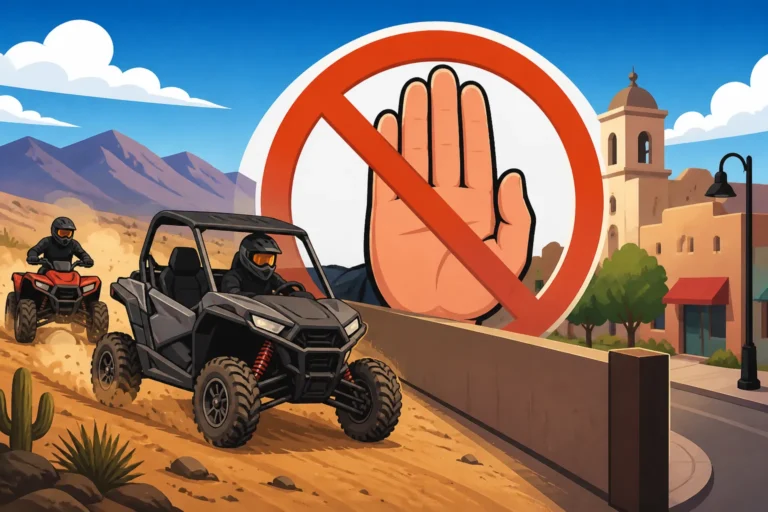
Look, I get it. You're out on the trails, maybe you've been ripping it up, covered in a little dust, and you see that glorious ribbon of asphalt ahead. Your first instinct might be to just slow down and roll across, especially if you don't see any traffic. But that instinct, my friends, could land you in hot water or, worse, a dangerous situation. New Mexico law is crystal clear on this: when your OHV approaches a paved road, a full and complete stop isn't just a suggestion; it's a legal requirement.
Why the Law Demands a Complete Halt
The legal framework around OHV use on or near paved roads in New Mexico isn't designed to be a buzzkill; it's there to protect everyone. Paved roads are for registered motor vehicles, and while New Mexico does allow for [New Mexico's Paved Street Opt-In] in some areas, the general rule is that OHVs are off-road machines. When you encounter a paved road, you're transitioning from your designated riding environment into a space shared by cars, trucks, and often, much faster traffic. The law demands a full stop precisely because it gives you, the rider, a critical moment to assess the situation.
Think about it from a legal perspective: without a clear directive, it would be a free-for-all. Imagine if riders could just "yield" or "slow down" without stopping. That ambiguity would create countless opportunities for misjudgment, especially at intersections or blind spots where visibility might be limited. The requirement to stop fully before you enter any paved road ensures that you are actively acknowledging the transition and giving yourself the best chance to proceed safely. It’s part of the broader [New Mexico Equipment Rules for Road Use] that dictate how OHVs interact with public infrastructure.
Beyond the Law: Safety First for OHV Riders
Beyond the legal ramifications, a full stop is absolutely paramount for your own safety and the safety of others. OHVs, by their nature, are designed for varied terrain, not for the smooth, high-speed flow of paved road traffic. Their acceleration, braking, and handling characteristics are different from street-legal vehicles. A rolling stop just doesn't provide the same level of control or situational awareness as a complete halt.
When you come to a full stop, you can take a moment to look, listen, and truly process your surroundings. Are there cars coming around a bend? Is there a semi-truck approaching faster than you anticipated? Are there pedestrians or cyclists? On a dusty trail, your mirrors might be obscured, or your attention might be focused on the terrain immediately ahead. A full stop allows you to reset, clear your vision, and dedicate your full sensory input to the road environment. It's an essential moment of self-preservation that no rider should ever skip, regardless of how deserted the road may seem.
The "Perpendicular Crossing" Rule and What It Means for Your Stop
New Mexico law doesn't just ask you to stop; it also specifies how you should cross if allowed. The "perpendicular crossing" rule is crucial here. It means you must cross the paved road at as close to a 90-degree angle as possible, making the crossing swift and direct, not riding down the road itself. This rule is directly tied to the need for a full stop.
Why is this important? When you're stopped, you're gathering all the information you need to make this short, decisive move across the asphalt. The perpendicular crossing minimizes your time on the paved surface, reducing your exposure to potential hazards from other vehicles. If you roll through the stop, you might not have the optimal approach angle, leading to a longer, less direct path across the road. This increases your risk. A good, solid stop allows you to position your machine correctly, ensuring you can execute the quick, straight shot across the pavement that the law envisions. You can read more about this specific requirement in [New Mexico's Perpendicular Crossing Rule].
Mastering the Art of the New Mexico OHV Road Crossing
So, you understand why it's important. Now, let's talk about how to execute a perfect, safe, and legal paved road crossing in New Mexico. It's not rocket science, but it does require discipline and a clear mental checklist before you even touch that asphalt.
Step-by-Step: Your Pre-Crossing Checklist
Before your tires even think about kissing the blacktop, you should have a routine. This isn't just for safety; it's about conditioning yourself to always approach these transitions with the utmost care.
- Anticipate the Pavement: As you see the paved road approaching, start to slow down well in advance. Don't wait until you're right at the edge.
- Look and Listen: Even before you stop, start scanning for traffic. Listen for the sound of approaching vehicles. This pre-scan helps you anticipate potential hazards.
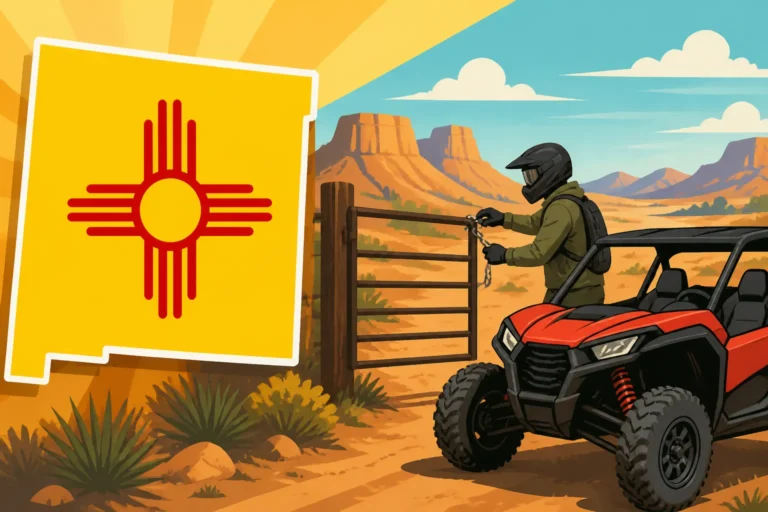
- Find a Safe Stop Point: Bring your OHV to a complete stop before entering the paved lane of traffic. This means your tires should still be on the dirt, gravel, or shoulder, not in the active roadway. Stopping slightly back gives you a buffer zone.
- Confirm Machine Readiness: Is your machine in the right gear for a quick, decisive crossing? Are your lights on if it’s dusk or dawn? Some riders even like to give their brakes a quick squeeze to ensure they're responsive after dusty trail riding. For those looking to upgrade their lighting or mirror setup for better visibility, companies like SuperATV offer a range of accessories that can make a real difference, giving you an edge in these critical moments.
- Check for Visibility Obstructions: Are there bushes, parked cars, or blind curves blocking your view? If so, you might need to creep forward slightly after your initial stop, just enough to gain a clear line of sight, always being ready to stop instantly.
By making this checklist a habit, you significantly reduce the element of surprise and give yourself the best possible chance for a smooth crossing.
Executing the Stop: Where and How
Once you've done your pre-checks, it's time for the definitive full stop. This isn't a "California roll" or a brief hesitation; it's a complete cessation of forward motion.
- Placement: Stop where you have the best visibility of oncoming traffic without actually being in the lane of travel. This often means stopping at the very edge of the trail where it meets the road, or on the shoulder if one exists. You want to be able to see clearly in both directions.
- Duration: The stop should be long enough for you to perform a thorough visual check. Scan left, right, then left again. Check your mirrors if you have them. If your machine is equipped with [New Mexico Mirror Requirements for Road Use], use them! This isn't a race; taking an extra few seconds here is an investment in your safety.
- Stability: Ensure your machine is stable during the stop. If you're on a dirt bike, put a foot down. On an ATV or UTV, engage the brake firmly. You don't want to be wobbling or rolling forward inadvertently.
This absolute stop is your command post for a safe crossing. Without it, you’re essentially guessing, and that’s a gamble you should never take with traffic.
Signaling Your Intent and Proceeding Safely
After you've come to a full stop and confirmed the way is clear, you still have one more step: signaling, if appropriate, and then executing the crossing.
- Signal (if applicable): If you're crossing a particularly busy road, or if you plan to briefly travel on the paved road (only where allowed by local ordinance, like [New Mexico Rules for Riding a County Road] or [Red River's ROV-Only Streets]) before returning to a trail, hand signals can be a good idea, though often not explicitly required for a direct crossing. However, clear [New Mexico Lighting Requirements for OHVs] are always a must if you're traveling at certain times.
- The Crossing Itself: Once you've determined the path is clear, proceed directly across the road at a perpendicular angle. Don't hesitate. Accelerate smoothly but decisively. You want to get across the pavement as quickly and efficiently as possible, minimizing your time in the active traffic lane. This is where having a machine in good working order is key; you need reliable power to get across.
- Maintain Awareness: Even as you cross, keep your head on a swivel. Scan for changes in traffic, and be prepared to react. Don't assume that because the road was clear a second ago, it still is.
- Return to Trail Pace: Once you've safely crossed and are back on unpaved terrain, you can gradually resume your trail riding speed and focus.
Remember, the goal is to make these crossings as predictable and low-risk as possible for both you and any other road users.
Common Missteps and Consequences of Improper Crossings
Even seasoned riders can sometimes fall into bad habits or underestimate the risks associated with paved road crossings. Understanding these common missteps and their potential consequences is a crucial part of staying safe and legal in New Mexico.
The Rolling Stop: A Costly Shortcut
The most common mistake, by far, is the "rolling stop." This is when you slow down significantly but don't actually bring your OHV to a complete halt before entering or crossing a paved road. It might feel harmless, especially on a quiet road, but it's a direct violation of New Mexico law and a significant safety risk.
Why is it so problematic? A rolling stop often means:
- Inadequate Observation: You haven't given yourself enough time to truly scan for traffic coming from all directions. Your eyes might still be adjusting from the trail environment, or you might be biased towards only looking in one direction.
- Compromised Control: Your machine is still in motion, which means your ability to react instantly to an unforeseen hazard is reduced. You can't just slam on the brakes effectively from a roll if a car suddenly appears.
- Legal Vulnerability: Even if no accident occurs, a law enforcement officer witnessing a rolling stop can issue a citation. These aren't minor tickets; [New Mexico Fines for an OHV Violation] can add up, and repeat offenses can have more severe repercussions. It also establishes a pattern of negligent behavior should an incident occur.
Don't let a momentary impatience turn into a costly mistake.
The Dangers of Inadequate Visibility and Speed
Another dangerous scenario arises when riders fail to adequately assess visibility or try to "beat" oncoming traffic. Whether it's a blind corner, a crest of a hill, or simply misjudging the speed of an approaching vehicle, these situations are ripe for accidents.
- Blind Spots: You might be at a stop, but if your view is obstructed by tall weeds, trees, or structures, you haven't truly assessed the risk. In these cases, it's safer to nudge forward cautiously, just enough to gain a clear line of sight, while remaining prepared to stop immediately if traffic appears. Remember, you're responsible for seeing what's coming. Good quality aftermarket mirrors from companies like SuperATV can significantly improve your rearward visibility, but they are no substitute for a thorough head check when entering an intersection.
- Misjudging Speed: It's surprisingly easy to underestimate how fast a car is approaching, especially on a rural road where vehicles might be traveling at highway speeds. What looks like plenty of time to cross can vanish in a blink. Always err on the side of caution. If there's any doubt, wait. Another car will come eventually, and your safety is worth the delay.
- Over-reliance on Others: Never assume a motorist sees you or will yield to you. OHVs can be harder to spot, especially if they blend into the background or appear suddenly from a trail. Always ride defensively.
These factors, combined with an improper stop, create a cocktail of hazards that could lead to a serious incident.
Penalties and Risks for Non-Compliance
Ignoring New Mexico's rules for OHV road crossings carries tangible consequences. It's not just about getting a ticket; it's about the broader implications for your riding privileges and financial well-being.
- Fines and Citations: As mentioned, law enforcement can and will issue tickets for improper crossings, including rolling stops or failing to yield. These can range in cost, but they are never cheap. You can find more details on potential penalties in [New Mexico Fines for Illegal Road Riding].
- Increased Insurance Premiums: If you're involved in an accident due to an improper crossing, even a minor one, your insurance rates are likely to increase. If you ride on paved roads (where allowed), you're subject to [New Mexico's Mandatory Financial Responsibility Act], meaning you need liability insurance. An accident on the pavement without proper insurance or due to negligence can be financially devastating.
- Personal Injury and Damage: This is, of course, the most severe consequence. Collisions between OHVs and road vehicles can result in serious injury or even fatalities for OHV riders, who have far less protection than occupants of a car or truck. Your OHV can also sustain significant damage, leading to expensive repairs or even being a total loss.
- Loss of Riding Privileges: Repeated infractions or severe accidents could potentially lead to the suspension or revocation of your OHV registration or even your driver's license if the incident involves negligence on a public roadway. Remember, even if you don't need a driver's license for purely off-road riding, [A Driver's License on a New Mexico Paved Road] is often required for any legal paved road use or crossing.
The bottom line is that the few seconds you save by not stopping fully are simply not worth the immense risks and penalties involved.
Equipping Your Machine and Yourself for Safer Road Interactions
Beyond understanding the rules, there's a lot you can do to physically prepare your machine and yourself for those inevitable moments when trail meets asphalt. Enhancing visibility and having the right gear are crucial elements of responsible OHV riding in New Mexico.
Visibility Enhancements for On-Road Approaches
Being seen is paramount, especially when you're momentarily sharing space with larger, faster vehicles. Your stock OHV might be great for the trails, but it might lack some of the visibility features beneficial for road interactions.
- Lights, Lights, Lights: Ensure all your machine's lights are functional and clean. This includes headlights and taillights. Many aftermarket options exist, including brighter LED lights that significantly improve your visibility to oncoming traffic. The law has specific requirements, such as a headlight visible for 150 feet and a taillight visible for 200 feet. If your stock lights don't cut it, consider an upgrade. Companies like SuperATV offer robust lighting solutions designed for tough off-road conditions that will also serve you well during crossings.
- Mirrors: While not always mandatory for strictly off-road use, [New Mexico Mirror Requirements for Road Use] exist for pavement. Having at least one rearview mirror, and ideally two, is a game-changer for situational awareness. It allows you to check for traffic behind you without having to turn your whole body, which is especially helpful when stopped at an intersection. Make sure they are securely mounted and offer a clear, stable view.
- Reflective Tape/Markings: Adding reflective tape to your helmet, machine's fenders, or other visible areas can increase your visibility, particularly in low-light conditions. Every little bit helps.
- Flags: If you're riding in open desert or dune areas where visibility can be an issue, a brightly colored flag mounted on a whip can make your machine more visible from a distance, especially to other OHV riders and potentially to motorists from afar.
Think of these enhancements as an extra layer of protection, giving other drivers more time to see and react to your presence.
Essential Safety Gear Beyond the Crossing Point
While helmets and eye protection are always important, they become absolutely critical when you're interacting with paved roads, even for a brief crossing.
- Helmets: New Mexico has specific [New Mexico Helmet Law for ATV Riders] for certain ages and conditions, but honestly, every rider should wear a properly fitted, DOT-approved helmet every time they ride. A helmet is your primary defense against head injuries in a collision, and the stakes are much higher when interacting with a hard, unforgiving paved surface and fast-moving vehicles.
- Eye Protection: Dust, debris, and even bugs can impair your vision on the trail. On the road, wind can also be a factor. Always wear goggles or a face shield that meets safety standards. [New Mexico Eye Protection Requirement] often mandates this, especially for paved road use. Clear vision is non-negotiable for safe crossing.
- Appropriate Clothing: Long sleeves, long pants, gloves, and sturdy boots protect you from scrapes and impact in a fall. While this is general riding advice, its importance is amplified when there's a risk of sliding on asphalt.
Equipping yourself properly ensures that if the worst happens, you’ve done everything you can to mitigate injury.
Understanding Different Road Types and Their Crossing Nuances
Not all paved roads are created equal, and understanding the subtle differences can help you be even more prepared for crossings.
- State Highways (Closed to OHVs): Generally, New Mexico state highways are off-limits for OHVs, meaning you cannot ride on them, and in many cases, even crossing them is tightly restricted or prohibited, especially if it's a multi-lane highway or freeway. Always check local ordinances. [New Mexico Rules for Crossing a Highway] are very strict.
- County Roads: Many [New Mexico Rules for Riding a County Road] allow for OHV use or crossings, especially in rural areas where counties have opted in. However, the requirement for a full stop at an intersection with a paved county road remains absolute. These roads can still have high-speed traffic, so vigilance is key.
- City Streets: Rules for city streets vary widely by municipality. Some towns, like Red River, have specific [Red River's ROV-Only Streets] ordinances that allow certain OHVs (like ROVs/UTVs) on particular streets, but even then, crossing rules apply, and ATVs are often prohibited. Never assume a city street is open to OHVs without verifying the local ordinance.
- Private Paved Roads: If you're on private land and crossing a private paved driveway or access road, the legal requirements might be different, but the safety principles of stopping and checking for traffic remain paramount.
Always be aware of the specific type of road you're approaching, and if in doubt, assume it's a "no-go" for anything but a quick, decisive, fully-stopped crossing, if even that. Knowledge of [New Mexico OHV Decal Colors Explained] can also indicate if a machine is even eligible for limited paved road use.
| Action Step | Purpose | Key Considerations |
|---|---|---|
| Anticipate & Slow Down | Early awareness of paved road | Allows more time to react, scan ahead. |
| Full Stop (Before Pavement) | Required by law; maximum situational awareness | All tires off asphalt; stable machine. |
| Look Left, Right, Left | Identify oncoming traffic, pedestrians, cyclists | Use mirrors if equipped; check blind spots. |
| Confirm Clear Path | Ensure sufficient gap in traffic for crossing | Never rush; err on the side of caution. |
| Position for Perpendicular Crossing | Minimize time on paved surface; legal requirement | Straightest path across road (approx. 90-degree angle). |
| Accelerate Decisively | Cross quickly and efficiently | Smooth, controlled power delivery; avoid hesitation. |
| Maintain Awareness | Stay vigilant for sudden changes in traffic | Head on a swivel; don't assume the path remains clear. |
Disclaimer
This article is for general informational purposes only and does not constitute professional advice. Laws, prices and regulations vary by location and change over time. Consult a qualified professional for guidance on your specific situation.