Why Every New Mexico State Highway Is Closed to OHVs
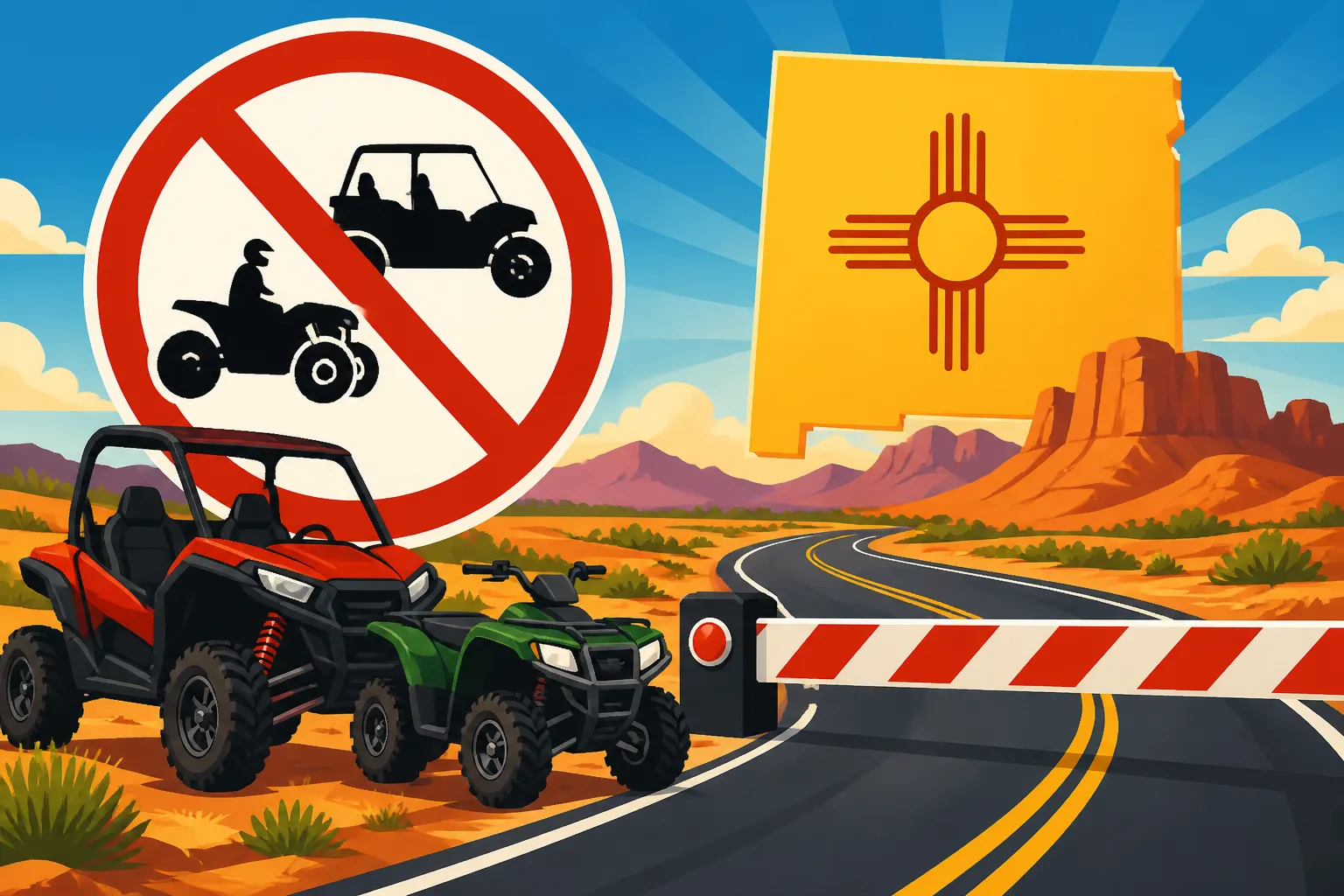
It’s a frustrating reality for many of us who love exploring the vast and beautiful landscapes of New Mexico on our ATVs and UTVs: you're out on an incredible trail, or you're trying to get from one great riding spot to another, and suddenly you hit a state highway, forcing you to trailer up or find a massive detour. It often feels like a giant roadblock in an otherwise open state. This guide is here to shed some light on why New Mexico’s state highways remain firmly off-limits to off-highway vehicles, helping you understand the regulations so you can ride safely and legally.
The Legal Backbone: Understanding New Mexico's Road Classifications and OHV Restrictions
Navigating the rules for riding your ATV or UTV in New Mexico can sometimes feel like solving a complex puzzle. One of the biggest pieces of that puzzle is understanding how different types of roads are classified, and why that classification dictates where your off-highway vehicle (OHV) can and cannot go. It's not just arbitrary; there's a legal framework that underpins these decisions, largely driven by safety and infrastructure considerations.
Defining "State Highway" in New Mexico Law
When we talk about a "state highway" in New Mexico, we're not just referring to any paved road. These are specific routes, designated and maintained by the New Mexico Department of Transportation (NMDOT), that form the backbone of our state's transportation network. Think of major arteries like US-54, US-70, NM-38, or NM-14 – the "Turquoise Trail." These roads are designed for high-speed vehicular traffic, connecting cities, towns, and regions across the state. They have specific engineering standards, speed limits, and traffic volumes that differ significantly from a dirt county road or a quiet city street. The laws governing their use are primarily focused on maintaining consistent traffic flow and safety for conventional automobiles and commercial vehicles. It’s the state, not local municipalities, that holds the authority over these routes, and they prioritize the safety of the millions of cars, trucks, and buses that rely on them daily.
The legislative intent behind these classifications is pretty clear: to create an efficient and safe system for public travel. OHVs, by their very nature, are built differently and perform differently than cars or trucks. They aren't held to the same manufacturing or safety standards for high-speed, multi-lane environments. This fundamental difference is what largely drives the state's decision to keep them off the major paved arteries, reserving them for vehicles specifically designed for that environment.
Why OHVs Don't Fit the Traditional Highway Mold
It boils down to a fundamental mismatch between the design and intended use of off-highway vehicles and the demands of a state highway. OHVs, whether you’re talking about a quad, a side-by-side, or a dirt bike, are engineered for off-road performance. They excel on uneven terrain, through mud, over rocks, and across open deserts. Their suspension systems, tire choices, gear ratios, and often their top speeds are all optimized for these conditions.
When you put an OHV on a paved state highway, several issues immediately arise. Their knobby tires, while fantastic for grip off-road, wear quickly and offer less traction on smooth asphalt at high speeds. The suspension, designed to absorb huge bumps, can make them feel squirrelly or less stable on smooth, fast pavement. Furthermore, many OHVs simply aren't built to maintain highway speeds for extended periods without overheating or excessive wear, nor do they often come equipped with the full suite of lighting, signaling, and braking systems that are standard on street-legal vehicles. While aftermarket solutions, like those you might find from a company like SuperATV, can add things like turn signals, horns, or better mirrors, these additions don't fundamentally change the vehicle's core engineering or its ability to safely handle high-speed highway conditions alongside passenger cars and heavy trucks. The risk of mechanical failure or a loss of control increases dramatically in an environment they weren't designed for, which leads directly to the state's stringent restrictions.
Safety Concerns and Public Policy: Protecting Riders and Other Motorists
The primary reason behind the ban on OHVs on New Mexico state highways is, unequivocally, safety. This isn't just about protecting the OHV rider, though that's a huge part of it. It's also about safeguarding every other motorist on the road. The differences between OHVs and conventional vehicles create a hazardous dynamic that the state simply isn't willing to risk.
Speed Differentials and Accident Risk
Imagine driving down US-70 near Alamogordo at 65 mph, and suddenly encountering a side-by-side that's only capable of doing 40 mph, or even less, trying to maintain speed. The difference in velocity creates a massive hazard. Automobile drivers, especially on highways, are accustomed to a relatively consistent flow of traffic and expect vehicles to be traveling within a similar speed range. A slow-moving OHV becomes an unexpected obstacle, leading to drastic braking, sudden lane changes, or even rear-end collisions.
Consider a hypothetical scenario: you're heading south on I-25 just outside of Las Cruces, and an OHV suddenly enters the highway from a side road. Even if they accelerate quickly, they won't match the flow of traffic. The closing speed for a truck traveling at 75 mph approaching an OHV doing 40 mph is immense, leaving very little reaction time. This isn't just a nuisance; it's a recipe for disaster. Such a speed differential increases the risk of serious accidents exponentially, not just for the OHV operator but for every other vehicle involved. The state's policy is a proactive measure to prevent these kinds of catastrophic events.
Lack of Essential Safety Features for Highway Use
Modern automobiles are packed with safety features designed for highway travel: crumple zones, airbags, anti-lock brakes, traction control, stability control, advanced lighting systems, and expansive mirrors for visibility. OHVs, on the other hand, prioritize different features. While they have excellent brakes for off-road, they aren't necessarily designed for repeated high-speed stops on asphalt. Their lighting might be adequate for a trail at dusk, but often lacks the brightness and specific beam patterns required to illuminate the road for hundreds of feet or make the vehicle highly visible to others on a busy highway, especially [New Mexico Rules for Riding After Dark].
Many OHVs don't come standard with turn signals, horns, or rearview mirrors that offer sufficient visibility for navigating multi-lane traffic. Even with aftermarket kits – like a comprehensive street-legal kit from SuperATV – that add these components, they can't fully compensate for the fundamental design differences. An OHV's small footprint and open-air design also make it less visible to other drivers, particularly in their blind spots, further escalating the danger. These deficiencies contribute to the state's decision to ban them from high-speed, high-volume state highways. [New Mexico Equipment Rules for Road Use] outlines what is needed for any paved road use.
Rider and Passenger Vulnerability
Perhaps the most compelling safety argument against OHVs on state highways is the sheer vulnerability of the rider and any passengers. Unlike an enclosed vehicle that offers a steel cage, airbags, and seatbelts designed to absorb impact energy, an OHV provides minimal protection in a collision. Riders are exposed to the elements and, more critically, to direct impact in an accident.
A collision with a car or truck at highway speeds, even a minor one, could have devastating, life-altering consequences for an OHV rider or passenger. There's no metal frame to crumple, no airbags to deploy, just the rider and the machine. The public policy decision to close state highways to OHVs is largely rooted in this stark reality: the potential for severe injury or fatality is simply too high when these vehicles mix with conventional traffic at high speeds. It's about recognizing the inherent risks and drawing a clear line where those risks become unacceptable for public road use.
The "Opt-In" vs. "Opt-Out" Dynamic: Local Control on Lower-Class Roads
One of the reasons the rules feel so confusing is because local governments have more say over certain roads. While the state takes a firm "opt-out" stance on OHVs on its highways – meaning they're prohibited unless explicitly stated otherwise, which they aren't – counties and cities operate on an "opt-in" basis for their own, lower-class roads. This difference is crucial for understanding where you can ride your OHV legally.
How County Roads and City Streets Differ
Unlike state highways, which are under the strict purview of the NMDOT, county roads and city streets fall under local jurisdiction. This means that county commissions and city councils have the authority to enact ordinances or resolutions that allow OHV use on some of their roads. This is why you might see signs in certain areas, particularly in rural counties like Sierra County, indicating that OHVs are permitted on county roads. [New Mexico Rules for Riding a County Road] are very different from state highway rules.
The logic here is often tied to local needs and traffic patterns. Many rural county roads are unpaved, experience very low traffic volumes, and serve as essential connectors for residents to access trails, ranches, or small communities. In these environments, the speed differentials and safety concerns are significantly reduced compared to a bustling state highway. Similarly, some towns and cities, especially those with a strong tourism draw for outdoor recreation, might open specific streets to OHVs to allow riders to access amenities, lodging, or staging areas. For example, some streets in Red River allow UTVs, though with specific restrictions. [New Mexico Rules for Riding a City Street] are therefore highly localized. This "opt-in" flexibility allows local governments to tailor regulations to their unique circumstances, providing some avenues for OHV use on paved surfaces without undermining the safety of the broader state highway system.
The Limited Exception: Perpendicular Crossings
While riding along a state highway is strictly forbidden, there's a very narrow and specific exception that allows OHV riders to interact with these major roads: the perpendicular crossing. This rule is designed to facilitate access between trail systems or properties that are divided by a state highway, without allowing for extended travel on the highway itself.
To legally make a perpendicular crossing, you must adhere to very strict conditions:
- Stop Completely: Before entering the highway, you must bring your OHV to a complete stop at the shoulder or edge of the roadway.
- Yield to All Traffic: You must yield the right-of-way to all oncoming traffic. The highway traffic has priority, and you cannot proceed until it is absolutely safe to do so.
- Cross at a 90-Degree Angle: The crossing must be made as close to a 90-degree angle as possible, moving directly across the highway to the other side. This minimizes your time on the paved surface.
- Minimum Time on Highway: The intent is to get across as quickly and safely as possible. No cruising down the shoulder, no taking a wide arc; just a straight shot across.
- Safety Equipment: Even for a crossing, your OHV should be equipped with appropriate lighting, and you should wear a helmet. While the full suite of "street legal" equipment isn't required for a mere crossing, basic visibility and protection are always smart.
This allowance for [New Mexico's Perpendicular Crossing Rule] is a small concession to practicality, but it comes with a huge responsibility for the rider. It's not an invitation to treat the highway as an extension of the trail, but rather a carefully regulated maneuver to bridge a gap. Always exercise extreme caution and prioritize safety above all else when executing one of these crossings. The goal is to get from one side to the other without ever disrupting the flow of highway traffic or putting anyone at risk. [New Mexico Rules for Crossing a Highway] also cover these specifics.
What This Means for Your Riding Plans: Navigating New Mexico's OHV Landscape
Understanding the rules is one thing; putting them into practice when you're planning your next adventure is another. The state highway ban isn't there to ruin your fun, but to ensure everyone's safety. Knowing how to plan around it can make all the difference between a great trip and a frustrating encounter with law enforcement.
Planning Your Routes to Avoid Highways
The key to seamless OHV adventures in New Mexico is meticulous route planning. Before you even load your machine onto the trailer, pull out your maps – physical ones or digital apps that show different road classifications – and identify your intended riding areas. Look for designated OHV trails, Bureau of Land Management (BLM) roads, Forest Service roads, and county roads that explicitly allow OHV use. Services like those offered by SuperATV can often help you upgrade your machine with GPS units that can also assist in navigating these varied terrains, though always double-check local regulations.
If a state highway divides two fantastic trail systems, you'll need a strategy. This might mean finding a different route that uses only legal county roads or, if absolutely necessary, identifying a safe, legal spot for a perpendicular crossing. Sometimes, the most realistic solution is to trailer your OHV to the other side. Many popular riding areas, like the Glade Run Recreation Area near Farmington or the Mescalero Sands, have designated staging areas that allow you to offload your machine directly onto legal riding terrain without ever touching a state highway illegally. Always check local land management agency maps and resources for the most up-to-date information on trail access and road classifications. When planning your ride, look for routes that maximize your time on legal OHV roads and minimizes the need for highway contact. You’ll want to prioritize [New Mexico Rules for Riding a Forest Road] and [New Mexico Rules for Riding a BLM Road].
The Importance of Local Ordinances and Designations
Beyond state law, the local level is where much of the OHV access in New Mexico is decided. Just because a road isn't a state highway doesn't automatically mean you can ride your OHV on it. Counties and cities have the power to "opt-in" to OHV use on their roads, but they also have the power to keep them closed. This leads to a patchwork of regulations across the state.
For instance, while Sierra County has opened many of its county roads to OHVs, a municipality within that county might still prohibit OHV use on its city streets. This means you need to do your homework for every area you plan to visit. Check the county's website for their OHV ordinances, or contact the local sheriff's department or city hall. These local rules often dictate speed limits for OHVs on their roads, specific times of day they can be ridden, or whether a paved road plate is required in addition to your standard OHV registration. Ignoring these local designations can lead to unexpected fines and a ruined trip, so always verify the rules for your specific destination. Knowing [New Mexico Fines for an Unregistered OHV] or [New Mexico Fines for Illegal Road Riding] can be a stark reminder of the importance of checking.
Equipping Your Machine for Legal Road Use (When Permitted)
If you plan to ride your OHV on any public roads where it's legally permitted (i.e., not state highways, but potentially open county roads or city streets), your machine will need to meet certain requirements. This often goes beyond just having your [New Mexico's Yellow and Green Decals] and [New Mexico OHV Registration and Liability Insurance].
Typically, these requirements include:
- Headlights and Taillights: Operational and visible from specific distances.
- Brake Lights: Functioning properly.
- Mirrors: At least one rearview mirror, and often two, for adequate visibility of traffic behind you.
- Horn: An audible warning device.
- Muffler and Spark Arrester: To keep noise levels within limits and prevent wildfires.
- Driver's License: A valid driver's license for the operator.
- Insurance: Proof of financial responsibility, typically liability insurance.
Many riders turn to aftermarket companies like SuperATV to get their machines up to snuff with these requirements. They offer a wide range of accessories, from full street-legal kits with turn signals and horns to windshields and DOT-approved tires, that can help you comply with local ordinances when riding on legally designated roads. Remember, while these additions make your machine compliant for some paved roads, they do not magically make it legal for New Mexico state highways. Always carry your proof of registration and insurance, and be prepared to show it if stopped by law enforcement. The goal is to be fully compliant and ready for wherever your New Mexico adventure takes you, as long as it's not a state highway!
| Road Type | Authority | OHV Access on Pavement | Typical Traffic Volume | Primary Purpose |
|---|---|---|---|---|
| State Highway | NMDOT (State) | Strictly Prohibited (except perpendicular crossing) | High | Inter-city, high-speed, commercial & passenger |
| County Road | County Commission (Local) | May be Permitted (opt-in by ordinance) | Low to Moderate | Rural access, connectors, local traffic |
| City Street | City Council (Local) | May be Permitted (opt-in by ordinance) | Moderate to High | Local access, residential, business districts |
| Forest Road | US Forest Service (Federal) | Generally Permitted (designated routes only) | Low | Recreation, resource management, forest access |
| BLM Road | BLM (Federal) | Generally Permitted (designated routes only) | Low | Recreation, resource management, land access |
Disclaimer
This article is for general informational purposes only and does not constitute professional advice. Laws, prices and regulations vary by location and change over time. Consult a qualified professional for guidance on your specific situation.