New Mexico Rules for Riding Near Livestock
There's nothing quite like hitting the trails in New Mexico on your ATV or UTV, soaking in the vast landscapes, and feeling the freedom of the open country. But that sense of freedom can quickly turn into a moment of anxiety when you round a bend and find a herd of cattle, a flock of sheep, or a lone horse standing right in your path. It's a common scenario in our beautiful state, and knowing how to navigate these encounters safely and respectfully is absolutely crucial. This guide will walk you through the New Mexico rules and etiquette for riding near livestock, helping you understand your responsibilities and ensuring enjoyable, safe rides for everyone.
Understanding the New Mexico Landscape and Livestock
New Mexico's identity is deeply intertwined with its ranching heritage. From vast desert plains to high mountain pastures, livestock are an integral part of the landscape. As an off-highway vehicle (OHV) enthusiast, you're often sharing these spaces, whether it's public land managed by the Bureau of Land Management (BLM) or the National Forest Service, or even private land with easements.
The Reality of Shared Spaces: Ranches, Public Lands, and You
When you head out on your favorite New Mexico trail, it's easy to think of it solely as a recreational playground. However, many of these trails, especially in rural areas, crisscross working ranch lands, historical grazing allotments, and properties where livestock have a long-standing presence. This means that a trail you perceive as "yours" for riding might also be part of someone's livelihood, a place where their animals graze, drink, and live. It's a fundamental aspect of the western landscape that sets our riding experiences apart from more urbanized areas.
Imagine riding through a wide-open valley in the Gila National Forest or exploring a remote two-track on BLM land near Truth or Consequences. It’s not uncommon to suddenly find yourself in the midst of a cattle drive or stumbling upon a quiet herd resting under a juniper tree. These aren't wild animals in the same sense as deer or elk; they are someone's property, and they contribute significantly to the local economy and culture. This shared-use reality requires a different mindset from riders, one that prioritizes awareness, respect, and caution. It’s about acknowledging that you are a visitor in a working landscape.
Why Livestock Roam: Open Range Laws and Grazing Allotments
A significant factor contributing to these encounters is New Mexico's "open range" status in many areas. While not every part of the state is open range, vast tracts of rural and public lands operate under these principles. What does "open range" mean for you? Essentially, it means that livestock owners are not legally required to fence in their animals. Instead, it's often the responsibility of property owners (or, in the case of roadways, vehicle operators) to keep livestock out or to avoid collisions. This is why you'll see "open range" signs in many rural areas, alerting drivers and riders to the potential presence of animals.
Furthermore, many public lands—including national forests and BLM land—are leased to ranchers for grazing through a system of "grazing allotments." These permits allow ranchers to let their cattle, sheep, or horses forage freely within designated areas. These allotments often encompass a mosaic of landscapes, including the very trails and backcountry roads that OHV enthusiasts love to explore. This legal framework explains why [Cattle on a Forest Road] or [New Mexico Rules for Riding a Grazing Allotment] are such common occurrences. It's not that the animals have escaped; they are simply where they are meant to be, exercising their right to graze. Understanding this helps foster a sense of shared responsibility rather than frustration when you encounter them.
Legal Responsibilities and Rider Etiquette Near Animals
Riding near livestock isn't just about common sense; it also involves specific legal responsibilities and unspoken rules of etiquette that are crucial for everyone's safety and continued access to these lands. Ignoring these can lead to serious consequences, both for you and the animals.
New Mexico's Laws on Interacting with Livestock
While New Mexico doesn't have a specific "OHV and livestock" law that dictates every single interaction, several existing statutes govern how we should behave around other people's property and animals. The core principle is that you, as an OHV operator, have a duty to exercise reasonable care to avoid injuring livestock. This means that if you're speeding or acting recklessly and cause an animal to be injured or killed, you could be held liable for its value and potentially face charges for animal cruelty or property damage. Livestock are considered property, and damaging someone's property carries legal weight.
Additionally, harassing or intentionally disturbing livestock can lead to fines and penalties. While a startled animal might be an accident, repeatedly driving through a herd, revving your engine, or otherwise causing undue stress to the animals can be seen as harassment. This is particularly true if the animals are actively grazing, calving, or being moved. The goal is always to prevent injury to the animals, potential damage to your machine, and harm to yourself. Remember, a panicked several-hundred-pound animal can be unpredictable and dangerous. It's also worth noting that many trails, especially those designated as [New Mexico Rules for Riding a Ranch Road], fall under private ownership or are public access with specific rules from the landowner. Always be mindful of [New Mexico Rules for Trespass Rules for Riders] to avoid unintended issues.
Best Practices for Minimizing Impact and Ensuring Safety
When you encounter livestock, your first priority should be safety for yourself, your passengers, and the animals. Here are some best practices that seasoned New Mexico riders swear by:
- Slow Down Immediately: As soon as you spot animals, significantly reduce your speed. A fast-approaching OHV, especially one making noise, can easily spook them. Think about it: they're not used to fast-moving vehicles like cars on a highway; your OHV can appear as a predator.
- Give Them Space: Try to give animals as wide a berth as possible. Don't drive directly through a herd. If you must pass, choose the clearest path around them, ideally downwind if possible, and move slowly and steadily.
- Avoid Sudden Movements or Loud Noises: Don't rev your engine, honk your horn, or make any sudden, aggressive movements. Keep your speed consistent and your engine noise to a minimum. This is where a well-maintained muffler and spark arrester, perhaps even a quieter aftermarket option from a brand like SuperATV, can really make a difference. These not only comply with [New Mexico Sound Limit for ATVs] but also help reduce the chances of frightening wildlife and livestock.
- Be Patient: Livestock might be slow to move. Don't try to rush them. Wait for them to clear the path naturally. If they seem hesitant, stop your machine entirely and wait. Sometimes, turning off your engine can help calm them.
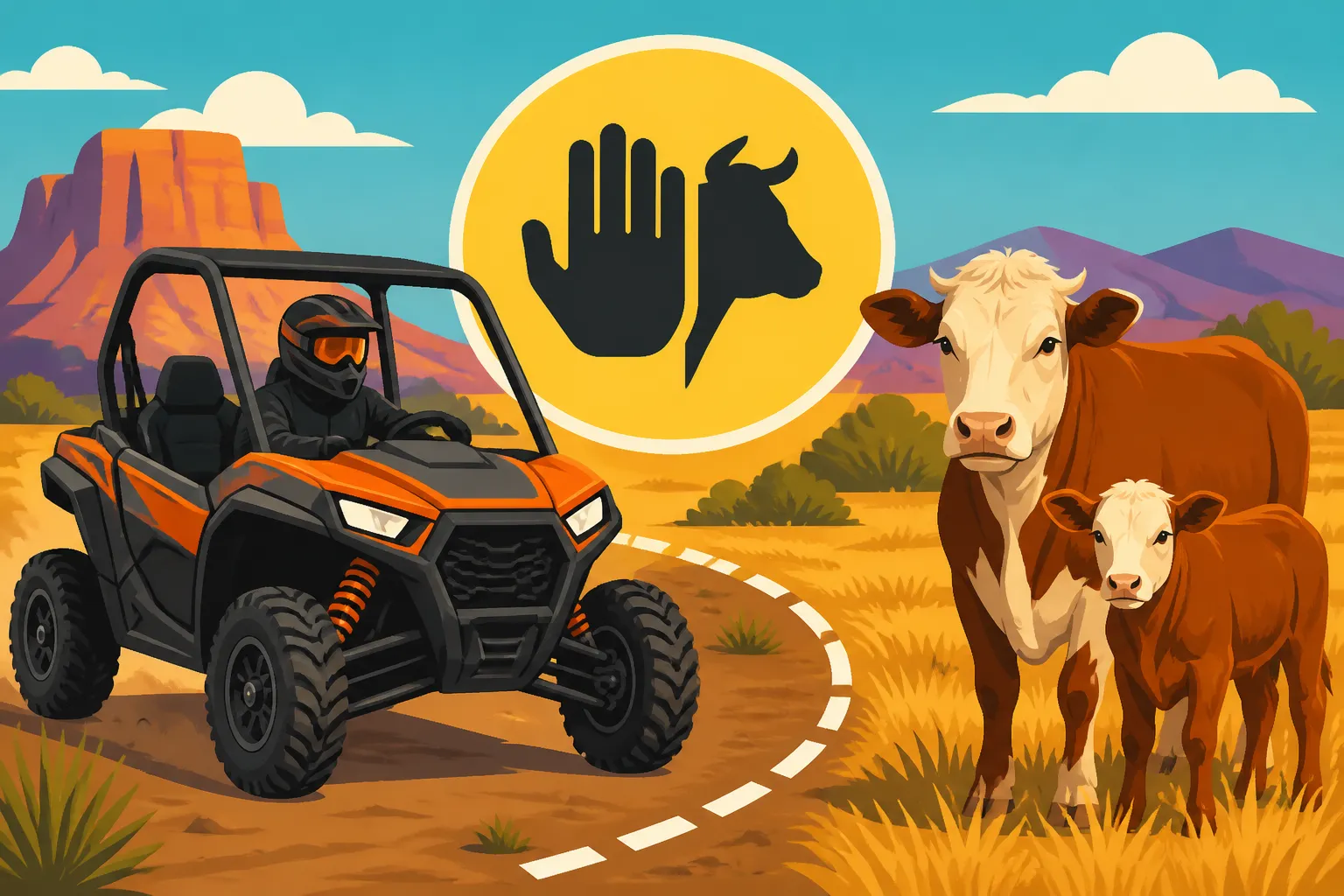
- Observe Their Behavior: Watch how the animals react. Are they nervous? Are there calves or foals present? Mothers are naturally more protective. If they seem agitated, give them even more space and time.
- Turn Off Your Engine if Necessary: If you find yourself surrounded or directly in their path, it's often best to turn off your engine and wait quietly for them to move on. This reduces noise and makes your machine seem less threatening.
- Keep Dogs Leashed: If you're riding with a dog, keep it securely leashed at all times when in areas where livestock might be present. An unleashed dog, no matter how friendly, can easily be perceived as a threat by livestock and lead to a dangerous situation, potentially causing animals to stampede or become injured. This falls under the general guidelines of [New Mexico Rules for Riding With a Dog].
Navigating Gates and Fences on Grazing Allotments
Gates and fences are a common feature on many trails that cross grazing allotments or private ranch land. They serve a vital purpose: to contain livestock and manage their movement. Your adherence to a simple, golden rule here is paramount: "Leave it as you found it." This isn't just a courtesy; it's a critical part of respecting land access.
If you encounter a closed gate, assume it's closed for a reason—likely to keep animals in or out of a specific area. Always close it securely behind you, even if you don't see any livestock nearby. Ranchers depend on these gates to manage their herds, and leaving a gate open can lead to significant problems, like animals straying onto roadways, mixing with other herds, or accessing areas they shouldn't. Before you pass through, take a moment to understand how the latch works so you can close it correctly.
Conversely, if you encounter an open gate, leave it open. It might be open for a specific reason, such as allowing animals access to water or moving them between pastures. Changing its status could disrupt the rancher's plan. This principle is a core part of [New Mexico Rules for Opening a Gate] and applies universally across grazing lands, whether you're on a [New Mexico Rules for Riding a Forest Road] or a designated [New Mexico Rules for Riding BLM Land]. Always check for "private land" signs as well; sometimes, a gate marks the boundary of private property, and you might not have permission to enter.
Potential Hazards and How to Mitigate Them
Encounters with livestock, while often peaceful, carry inherent risks. Understanding these potential hazards, both to you and the animals, is key to preventing accidents and ensuring a smooth ride.
Recognizing Risks to Both Rider and Animal
The most immediate risk is a collision. A large animal like a cow or a horse can weigh upwards of 1,000 to 2,000 pounds. Hitting one, even at a relatively low speed, can cause severe injury or death to the animal, extensive damage to your OHV, and serious injury to you or your passengers. Livestock, especially cattle, can also be unpredictable. While they often move away, they might also stand their ground, or worse, a protective mother might charge if she perceives a threat to her calves.
Beyond direct collision, there's the risk of stampeding. Startling a herd can cause them to panic and run, potentially injuring themselves by falling, running into fences, or getting lost. This can be a huge financial loss for ranchers. Also, animals can carry diseases, and while direct transmission to humans from a casual encounter is rare, it's another reason to maintain distance. Their waste can also affect trail conditions, and you might encounter areas with deeper ruts or disturbed ground where they've moved through. Lastly, remember that some animals, like bulls, can be naturally aggressive, especially if they feel cornered or threatened.
Preparing Your Machine and Yourself for Livestock Encounters
Being prepared for these encounters starts before you even leave your driveway.
- Maintain Your Machine: Ensure your OHV is in good working order. Brakes should be sharp, and your steering precise. A well-tuned engine is also quieter, which is crucial. Consider ensuring your exhaust system is up to par with the [New Mexico Spark Arrester Requirement] and that your muffler is effective in keeping noise down.
- Install Protective Gear: While you can't prevent every impact, accessories like brush guards, bumpers, and robust skid plates, available from manufacturers like SuperATV, can offer some protection to your machine in unexpected close quarters or if you need to maneuver around obstacles quickly. They can help absorb minor impacts and protect vital components.
- Carry a Map and Know Your Route: Familiarize yourself with the area you're riding. If you know you'll be in an active grazing allotment, you can mentally prepare for encounters. Carry a physical map and consider a GPS device, so you can navigate calmly if you need to find an alternate route around a large herd.
- Dress Appropriately: Wear protective gear like helmets, goggles, long sleeves, and pants. In the event of an accident with an animal, this gear could be critical in protecting you from serious injury. [New Mexico Helmet Law for ATV Riders] is a good baseline, but further protection is always wise.
- Ride with a Buddy: Riding with another person offers an extra set of eyes and an additional resource if you encounter a difficult situation or need help moving animals safely. Communication is key.
- Pack Essentials: Always carry water, a first-aid kit, and basic tools for minor repairs. If an encounter leads to a delay, being self-sufficient is vital. Consider a satellite messenger for areas without cell service, which are common in many of New Mexico's remote grazing lands.
Here's a quick summary of essential dos and don'ts when riding near livestock:
| Action | Do's | Don'ts |
|---|---|---|
| Approach | Slow down, approach calmly, maintain distance | Speed through, drive directly into a herd, chase or harass |
| Noise | Keep engine quiet, consider turning off if stopped | Rev engine loudly, honk horn unnecessarily, create sudden loud noises |
| Movement | Use smooth, predictable movements, give wide berth | Make sudden turns, swerve erratically, try to "herd" animals with your OHV |
| Gates/Fences | Leave as you found it (open gates open, closed gates closed, secure latches) | Leave closed gates open, force open locked gates, damage fences |
| Pets | Keep dogs leashed at all times | Allow dogs to run loose near livestock |
| Responsibility | Be patient, observe animal behavior, report incidents | Ignore animals, assume they will move quickly, deny responsibility for damage |
What to Do in a Problematic Encounter
Even with the best intentions and preparation, sometimes things don't go as planned. Knowing how to react in a problematic encounter with livestock can de-escalate a situation and mitigate negative outcomes.
If an Animal Gets Injured or Panics
The absolute worst-case scenario is an animal getting injured. If you accidentally hit an animal or cause it to panic and injure itself (e.g., running into a fence), your immediate actions are crucial.
- Stop Immediately and Safely: Pull your OHV over to a safe spot, but do not leave the scene.
- Assess the Situation (from a distance): If the animal is injured, approach with extreme caution, or not at all, as an injured animal can be very dangerous. Note its condition, location, and any identifying marks (brands, ear tags) if visible and safe to do so.
- Prioritize Safety: Do not put yourself or others at risk trying to "help" an injured, large animal. They can be unpredictable and may lash out.
- Contact Authorities: This is where you need to call local law enforcement (sheriff's department) or, if you know it, the land manager (BLM or Forest Service office). Provide them with your exact location, a description of the animal, and the situation. They can then contact the appropriate rancher or animal control services. If you have cell service, take photos from a safe distance, but never approach a distressed animal directly. Even if it seems minor, a simple phone call can prevent further suffering and fulfill your legal obligation.
Remember, attempting to "fix" the situation yourself without proper training or equipment could lead to further injury to the animal or yourself. Your role is to report, not to provide veterinary care.
Reporting Incidents and Understanding Liability
Reporting an incident promptly is not only the right thing to do but can also be legally important. Failing to report an incident where you've caused damage to livestock could be considered a hit-and-run, which carries its own penalties. When you report, be honest and factual about what happened.
Regarding liability, New Mexico's open-range laws can be complex. In many open-range areas, the general rule is that if you hit an animal on the road, the livestock owner is typically not liable for damage to your vehicle, as they are not required to fence their animals. However, this doesn't mean you're always off the hook for injuring the animal. If it can be proven that you were negligent (e.g., speeding, reckless driving, intentionally harassing the animal), you could be held liable for the value of the animal, veterinary costs, or other related damages. This is why practicing caution and respect as outlined in this guide is so vital.
Always carry your identification and registration information for your OHV. While [New Mexico OHV Registration Paperwork] doesn't directly address livestock encounters, it's essential for any roadside interaction with authorities. Understanding the potential for fines for violations, as outlined in [New Mexico Fines for an Unregistered OHV] or other traffic violations, reinforces the need for responsible riding. Ultimately, respecting the land, the animals, and the livelihoods of New Mexico's ranchers ensures that our beautiful trails remain open and enjoyable for everyone for years to come.
Disclaimer
This article is for general informational purposes only and does not constitute professional advice. Laws, prices and regulations vary by location and change over time. Consult a qualified professional for guidance on your specific situation.