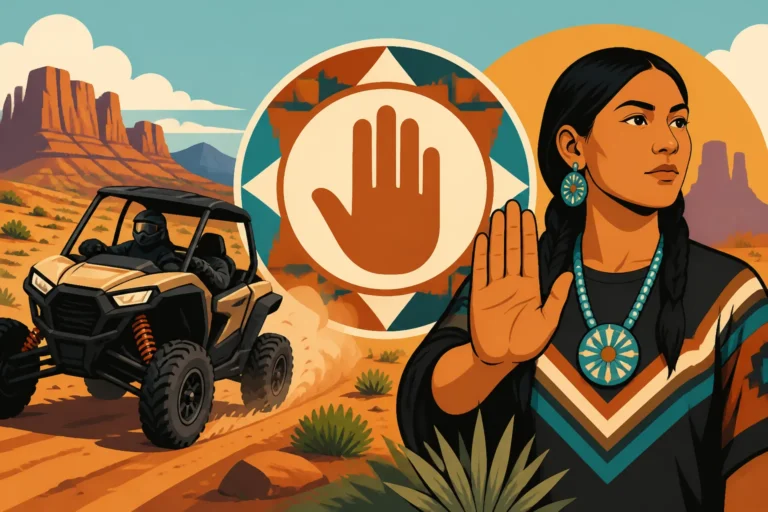
Can You Ride a UTV on a New Mexico Street?
Riding your UTV on the open road in New Mexico sounds like a dream, letting you connect trails or even cruise to a local diner without the hassle of trailering. But the reality can be a confusing maze of rules, permits, and specific equipment requirements that leaves many riders scratching their heads. This guide is here to untangle the complexities of New Mexico's laws, helping you understand exactly when and how you can legally operate your UTV on the state's streets and paved roads.
The Nuance of "Street Legal" for UTVs in New Mexico
It's easy to assume that if you can drive it off-road, you should be able to drive it on a paved street for a short jaunt. But New Mexico, like many states, has very specific classifications for vehicles, and UTVs (Utility Task Vehicles), often referred to as Side-by-Sides or ROVs (Recreational Off-Highway Vehicles), fall into a category that isn't automatically street legal. The simple answer to "Can you ride a UTV on a New Mexico street?" is usually "yes, but with significant conditions and not everywhere." You can't just slap a license plate on and go; there's a specific pathway to achieve this, and it doesn't apply to every road.
The Default: OHVs and the "Off-Highway" Designation
By their very definition, Off-Highway Vehicles (OHVs), which include UTVs, are primarily designed for use on unpaved surfaces. New Mexico's state laws reflect this, meaning that without meeting specific criteria and obtaining the proper registration, your UTV is generally restricted from paved public roads. This isn't meant to frustrate you, but rather to ensure public safety, as OHVs often lack the same safety features and handling characteristics as traditional street vehicles. It's a fundamental difference that dictates where you can and cannot ride.
Imagine planning a fantastic weekend trip up to Red River, ready to hit the trails, but you also want to drive your side-by-side from your cabin to the general store for supplies. If you haven't met the paved road requirements, that short trip could land you a hefty fine. The state wants to protect both OHV riders and other motorists by maintaining clear distinctions.
State Highways Are Generally Off-Limits
Here's one of the biggest points of confusion: even if your UTV is equipped for paved road use, New Mexico State Highways are almost universally off-limits for OHVs. This includes major routes like US 54, US 70, or even smaller state-maintained roads often denoted with an "NM" prefix. The only exceptions are specific, brief perpendicular crossings to access another legal road or trail, which we'll discuss later.
This restriction is a critical one to remember, as these highways are designed for higher speeds and heavier traffic, presenting a significant safety risk for OHVs. Many riders find this frustrating because these roads often connect popular riding areas or small towns. However, understanding this rule is key to avoiding penalties and staying safe. Remember, if you see an "NM" shield, your UTV likely shouldn't be on it for any sustained travel. [Why New Mexico State Highways Are Off Limits] can shed more light on this.
Obtaining a New Mexico Paved Road Plate for Your UTV
So, how do you get your UTV onto those county and city roads? New Mexico offers a specific mechanism for this: the Paved Road Plate. This isn't just an extra sticker; it's a dedicated registration category that signifies your UTV has met the requirements for limited paved road use.
What the Paved Road Plate Allows
Once your UTV is registered with a Paved Road Plate, it allows you to operate on county roads and city streets that have been "opened" by local ordinance or resolution. This is a crucial distinction – the state issues the plate, but local jurisdictions make the decision on which of their roads are fair game. The plate acts as your official permission slip from the state, but you still need the local town or county to say "come on in!"
This system offers flexibility, allowing communities to decide what works best for their specific traffic patterns and safety concerns. For a UTV rider, it means that while you might be street legal in Sierra County, crossing into a neighboring county could put you in violation if their roads aren't open. The plate is your ticket, but the local rules are your map.
The Process: Titling First
Before you can even think about a Paved Road Plate, your UTV must first be properly titled in New Mexico. This is a foundational step, just like with any car or truck. If you bought your UTV new from a dealer, they likely handled the initial titling. If you bought it used, especially from a private seller, you'll need to ensure the title is properly transferred into your name. Without a clear title, the MVD won't be able to issue any kind of registration or plate.
For many riders who previously only rode off-road, the title might have seemed less critical, but for paved road eligibility, it's non-negotiable. Don't skip this step, or you'll hit a bureaucratic roadblock. If you're wondering about the cost, [New Mexico OHV Title Cost] can provide some general information.
Beyond the Decal: Why Stickers Ended
You might remember a time when New Mexico had a "paved road sticker" program. That program, however, has ended. As of December 2025, those stickers are no longer valid for paved road use. The state moved to the dedicated Paved Road Plate system to provide a more robust and clear form of identification for UTVs and other OHVs used on pavement.
This transition means that if you're relying on an old sticker, you're out of luck. You need the current Paved Road Plate. This change streamlined the process and brought New Mexico more in line with how other street-legal vehicles are regulated, emphasizing the distinction between pure off-road use and the limited paved road privilege. For more details on this transition, consider [Why Paved Road Stickers Ended in December 2025].
Where Can You Actually Ride? Decoding Road Types
Understanding the plate is one thing, but knowing where you can use it is another. New Mexico's landscape is diverse, and so are its road designations.
County Roads and the Local "Opt-In"
This is where the magic happens for most UTV riders looking for paved road access. New Mexico counties have the authority to "opt in" and open their county roads to OHV traffic, including UTVs, provided the machines meet state requirements and have the Paved Road Plate. This means one county might be wide open, while its neighbor remains closed to OHV traffic on its paved county roads.
This local control is both a blessing and a curse. It allows communities to manage their roads effectively, but it places the burden on the rider to know the rules for every county they plan to visit. Before heading out, it's absolutely vital to check the specific ordinances for the county you'll be riding in. [New Mexico Rules for Riding a County Road] delves deeper into these specific regulations.
Consider Sierra County, for example, which has adopted ordinances that open a significant portion of its county road system to OHV use, making it a popular destination for UTV enthusiasts. Other counties might have much more restrictive rules, only opening specific segments or none at all. Always confirm before you go!
City Streets and Municipal Discretion
Similar to counties, New Mexico cities and towns also have the power to open their municipal streets to OHVs. This is entirely at their discretion and can vary wildly from one town to the next. Some towns, particularly those that cater to outdoor recreation like Red River, have embraced UTVs as part of their local economy and have specific ordinances allowing their use on certain streets. Others might ban them entirely.
The rules can also be quite intricate within a city. A town might allow UTVs on its main thoroughfare but restrict them from residential side streets, or enforce curfews. Again, doing your homework before you ride is paramount. A quick call to the local police department or town hall can save you a lot of trouble. [New Mexico Rules for Riding a City Street] might be helpful here.
Crossing a State Highway: The Perpendicular Rule
As mentioned, state highways are generally off-limits for sustained UTV travel. However, New Mexico law does allow for perpendicular crossings of state highways. This means you can drive your UTV directly across a state highway to get from one legal road or trail to another, but you must do so as directly and safely as possible. You can't turn and drive down the highway, even for a short distance.
This rule is designed to facilitate access to riding areas without encouraging dangerous mingling of OHVs and high-speed highway traffic. It's a quick, straight shot across the asphalt, treating the highway as a temporary obstacle rather than a route. Always come to a complete stop, check for traffic in both directions, and cross quickly and efficiently. [New Mexico Rules for Crossing a Highway] provides full details on this important safety measure.
Federal Land Roads: A Different Set of Rules
It's important to distinguish paved county and city roads from roads found on federal lands, like those in national forests or on Bureau of Land Management (BLM) property. While these often feel like "off-road" areas, some federal roads are maintained and can be paved or graveled. The rules for OHV use on these roads are dictated by federal land management agencies, not state or local paved road laws, although state registration may still be required.
Generally, on federal lands, you must stick to designated routes. If a specific forest road is open to OHVs, you can usually ride it, regardless of its surface, as long as your machine is registered appropriately (which may include an OHV registration, but not necessarily a "paved road plate" specifically for that federal road). Always check with the local Forest Service or BLM office for current travel management plans and restrictions.
Gearing Up: Equipment and Rider Requirements for Paved Roads
So, you've got your Paved Road Plate, and you're heading to an OHV-friendly county. What else do you need to ensure your UTV and you are compliant with the law on pavement?
Essential Lighting and Mirrors
To be considered safe and legal for paved road use, your UTV must have:
- Headlights: Capable of illuminating objects at least 150 feet ahead. This means proper working headlights, not just dim trail lights.
- Taillights: Visible from at least 200 feet from the rear.
- Brake Lights: Functioning properly to indicate when you're slowing down or stopping.
- Turn Signals: Both front and rear, to clearly signal your intentions to other drivers.
- Mirrors: At least one rearview mirror mounted on the left side, or two mirrors if you want one on both sides. These are crucial for visibility in traffic.
Many UTVs come from the factory with some of these components, but often they need upgrades to meet the specific requirements for paved road legality. Aftermarket companies like SuperATV offer kits and individual components that can help you bring your UTV up to code, from turn signal kits to robust rearview mirrors.
Brakes, Horn, and Sound Limits
Beyond lighting, your UTV also needs:
- Brakes: Fully functional brakes on all wheels.
- Horn: An audible horn for signaling.
- Muffler and Spark Arrestor: A muffler that keeps your UTV below New Mexico's 96-decibel sound limit, and a spark arrestor that prevents hot embers from escaping, especially important when riding near dry vegetation.
While a loud exhaust might sound cool on the trails, it's a definite no-go for paved roads. The intent here is to ensure your UTV operates safely and quietly enough to blend in with other street traffic without being a nuisance or fire hazard.
Mandatory Insurance Coverage
This is non-negotiable for paved road use. If you plan to operate your UTV on any paved public road (even just to cross a highway), you must have liability insurance. This is not optional. New Mexico's Mandatory Financial Responsibility Act applies to any motor vehicle operating on public roads, and your UTV with a Paved Road Plate falls under this umbrella.
The minimum coverage required is typically in the range of $25,000 for bodily injury per person, $50,000 for bodily injury per accident, and $10,000 for property damage. Always carry proof of insurance with you when riding on paved roads. Without it, you could face significant fines or even have your UTV impounded. [New Mexico OHV Registration and Liability Insurance] details these requirements further.
Driver's License and Age Restrictions
To operate a UTV with a Paved Road Plate on an open county road or city street, you must possess a valid driver's license. This means a regular Class D driver's license, just like you would need to drive a car. A learner's permit or an OHV safety certificate alone is not sufficient for paved road operation.
Additionally, New Mexico has specific age requirements for OHV operation, and these are particularly strict when it comes to paved roads. While riders under 18 might be able to operate an OHV off-road with certain supervision and safety training, a minor cannot legally drive a UTV on an open paved road, even if it has a Paved Road Plate, if they don't hold a valid driver's license. Generally, you need to be 16 with a provisional license or 18 with a full license to drive on paved roads. [New Mexico Driver's License Rules for OHVs] provides additional details.
Here's a quick overview of equipment needs:
| Requirement | Off-Road Use (General) | Paved Road Use (With Plate) | Notes |
|---|---|---|---|
| Headlights | Recommended | Required | Must illuminate 150 ft. |
| Taillights | Recommended | Required | Visible from 200 ft. |
| Brake Lights | Recommended | Required | Fully functional. |
| Turn Signals | Not Required | Required | Front and Rear. |
| Mirrors | Not Required | Required | At least one left-side, or two (left and right). |
| Horn | Not Required | Required | Audible for signaling. |
| Muffler | Required | Required | Must meet 96 dB limit. |
| Spark Arrester | Required | Required | Essential for fire prevention. |
| Brakes | Required | Required | Functional on all wheels. |
| Liability Insurance | Not Required | Required | Minimum state requirements apply. |
| Driver's License | Not Required | Required | Standard Class D or higher. |
Navigating Local Ordinances: The Key to Success
Even with a Paved Road Plate and all the right gear, the most critical factor for UTV street legality in New Mexico is often local ordinance. The state provides the framework, but counties and cities make the ultimate decision for their own roads.
The Power of Local "Opt-In" Ordinances
Remember that "opt-in" system? This means you must verify that the specific county or city you intend to ride in has passed an ordinance or resolution allowing OHVs on their paved roads. Without this local permission, your Paved Road Plate is essentially useless within that jurisdiction's paved areas.
Many communities in New Mexico, especially those with significant tourism or recreational economies, have embraced this. They recognize the economic benefit of allowing OHV users to travel directly to trails, local businesses, and lodging. However, other communities might view OHVs on their streets as a safety hazard or a nuisance and choose to keep their roads closed. The only way to know is to check.
Red River: A Case Study in Specificity
Red River, a popular mountain town, is a fantastic example of a community that has thoughtfully integrated OHV use into its local infrastructure. They understand that visitors often want to ride their machines from their lodging to trailheads, shops, and restaurants. However, even in Red River, the rules are very specific.
The town allows ROVs (which include UTVs) on most of its main streets during certain hours, but there are restrictions. For instance, ATVs are generally not allowed on town streets, and there might be specific zones or curfews. This level of detail underscores why simply knowing a town "allows UTVs" isn't enough; you need to know the exact rules. Checking [Red River's ROV-Only Streets] can give you a better idea of how intricate these rules can be.
How to Check Local Rules
This is arguably the most important piece of advice in this entire guide:
- Check the County Clerk's Office: Most counties will have their ordinances available online through their county clerk's or administrative office. Look for sections related to "Off-Highway Vehicles" or "Traffic Ordinances."
- Contact the City or Town Hall: For municipal streets, contact the city clerk or administrative office. They can direct you to the relevant ordinances.
- Local Law Enforcement: If you're having trouble finding the information, a quick, polite call to the local Sheriff's office or city police department can often clarify the current rules. They are the ones who will be enforcing them, so their interpretation is crucial.
- Local OHV Clubs or Dealerships: Sometimes, local riding clubs or UTV dealerships that operate in an area will be excellent sources of up-to-date information on local regulations. They often have a vested interest in ensuring riders are compliant.
Never assume. The worst thing you can do is arrive in a new area, assume your UTV is street legal because you have a plate, and find yourself facing a ticket. [New Mexico Fines for an Unregistered OHV] can give you an idea of the penalties for non-compliance, but the rules for illegal paved road use can be even more substantial.
Remember, riding your UTV on New Mexico streets and paved roads is absolutely possible, but it demands diligence and preparation. It's not a free-for-all, but a privilege granted under specific conditions to enhance your riding experience safely and legally. Always verify, equip your machine properly, and ride responsibly.
Disclaimer
This article is for general informational purposes only and does not constitute professional advice. Laws, prices and regulations vary by location and change over time. Consult a qualified professional for guidance on your specific situation.