Eddy County Ordinance O-18-95
It’s a common frustration for off-highway vehicle (OHV) riders in New Mexico: you want to enjoy the vast landscapes, but the rules about where you can and can't ride your ATV or UTV on public roads can feel like a confusing maze. Navigating state statutes alongside ever-changing local ordinances often leaves riders scratching their heads, especially when planning a trip to a new area. This comprehensive guide will illuminate the specific regulations found in Eddy County Ordinance O-18-95, helping you understand how to legally and safely enjoy the county's roads.
Understanding the Landscape of OHV Road Use in New Mexico
Before diving into the specifics of Eddy County, it's essential to grasp the broader context of OHV road use across New Mexico. The state has a general framework, but it also grants considerable authority to local jurisdictions—counties and municipalities—to create their own rules. This means what's permissible in one county might be strictly forbidden just across the border, creating a challenging environment for riders.
State vs. Local Control: The Patchwork of Regulations
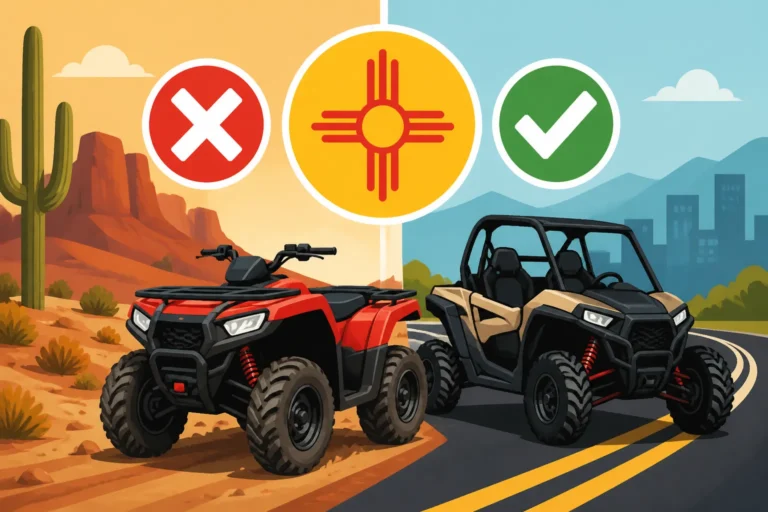
New Mexico state law provides a foundation for OHV operation, covering things like registration, safety permits for minors, and general equipment requirements. However, when it comes to riding on paved public roads, the state largely defers to local control. This legislative approach was designed to allow communities to tailor OHV access to their unique needs, traffic patterns, and public safety concerns. While it offers flexibility for local governments, it often results in a "patchwork quilt" of regulations that can be bewildering for riders. One county might welcome OHVs on nearly all its paved roads, while an adjacent county might limit them to crossing major highways or prohibit them entirely.
This local autonomy means that simply knowing the state laws isn't enough. If you plan to ride your ATV or UTV on any public road, even briefly, you absolutely must check the specific ordinances of the county and any municipalities you'll be passing through. Ignoring this step can lead to fines, citations, and even impoundment of your machine, turning a fun outing into a costly headache. [New Mexico Rules for Riding a County Road] and [New Mexico Rules for Riding a City Street] are key resources for understanding the broader implications of these local rules.
The General New Mexico Stance on OHV Road Use
Generally, New Mexico state law differentiates between riding OHVs on unpaved roads (like those found on Bureau of Land Management or National Forest lands) and riding on paved public roads. For unpaved, designated routes, state law primarily focuses on safety equipment (like helmets for minors), registration, and responsible operation. However, paved roads are a different story.
For an OHV to be legally operated on a paved public road where permitted by local ordinance, it must meet certain equipment requirements, be registered with the New Mexico Motor Vehicle Division (MVD), and the operator must carry proof of insurance. The state allows counties to "opt-in" to allowing OHV use on their paved roads, and Eddy County has done just that, but with specific conditions. It's not a blanket approval. This distinction is crucial because simply having a registered OHV doesn't automatically grant you access to every paved road in the state. Each jurisdiction has its own set of additional requirements and restrictions that build upon, and sometimes supersede, the basic state framework.
Eddy County Ordinance O-18-95: The Specifics
Eddy County is a popular destination for outdoor enthusiasts, offering a diverse landscape perfect for OHV riding. Recognizing the recreational and economic benefits, the county commissioners enacted Ordinance O-18-95 to formally regulate OHV use on its paved county roads. This ordinance aims to strike a balance between allowing residents and visitors to enjoy their machines and ensuring public safety.
Background and Purpose of the Ordinance
Eddy County Ordinance O-18-95 was enacted to provide clear guidelines for the operation of off-highway vehicles on county-maintained paved roads. Before such an ordinance, the legality of riding ATVs and UTVs on these roads was ambiguous, creating confusion for both riders and law enforcement. The county recognized the popularity of these vehicles for recreation, accessing private property, and even for agricultural purposes within its vast rural areas. Rather than a blanket ban, the ordinance sought to establish a structured approach, setting specific conditions under which OHVs could legally share the road with traditional vehicles.
The purpose was two-fold: first, to enhance public safety by mandating certain equipment and operational standards for OHVs on paved surfaces; and second, to clarify legal access for riders, reducing the likelihood of inadvertent violations. It's about providing a clear path for responsible riding, rather than leaving riders in a gray area where they might unknowingly break the law.
Key Provisions of the Ordinance
Ordinance O-18-95 lays out several critical provisions that OHV operators must adhere to when riding on Eddy County's paved roads. These provisions cover everything from the types of roads allowed to operator age and vehicle equipment.
- Designated Roads: The ordinance typically designates all county-maintained paved roads as open to OHVs, unless specifically posted otherwise. This is a significant difference from some other counties where only certain roads are opened. However, it's vital to remember that this does not extend to state highways (identified as NM-### routes) or within the incorporated limits of municipalities like Carlsbad, Artesia, or Loving, unless those specific cities have their own separate ordinances allowing it. Always look for signage; if a road is posted as closed to OHVs, that sign takes precedence.
- Hours of Operation: Riding after dark usually comes with specific requirements. While the ordinance generally permits daytime operation, it may include stipulations for nighttime use, often requiring proper lighting. [New Mexico Rules for Riding After Dark] details what state law dictates for lighting.
- Operator Requirements: Drivers must possess a valid driver's license. For passengers, especially minors, there are often age and seating capacity restrictions. Generally, youth under 18 must wear an approved helmet and eye protection.
- Vehicle Equipment: This is where much of the safety emphasis lies. To operate on paved roads under O-18-95, your OHV must be equipped with:
- Headlights (at least one, that illuminates at least 150 feet ahead)
- Taillights (at least one, visible from 200 feet to the rear)
- Brake lights
- At least one rearview mirror
- Turn signals (often required for road use)
- A horn
- A muffler with a spark arrestor
- Tires that are designed for street use or are DOT-approved (off-road knobbies can cause damage to pavement and are often restricted)
- A windshield, if the machine came with one or if desired for safety
- Registration and Insurance: All OHVs operating on Eddy County paved roads must be properly registered with the New Mexico MVD and display the appropriate [New Mexico Yellow and Green Decals], signifying their status for on- and off-highway use. Furthermore, proof of liability insurance, meeting state minimums, must be carried by the operator. [New Mexico OHV Registration and Liability Insurance] is a critical read.
These provisions are designed to make OHVs as visible and controllable as possible when sharing the road with cars and trucks, minimizing hazards for everyone.
The 'Why' Behind the Rules
These specific rules aren't arbitrary; they are rooted in safety and practical considerations. The primary goal is to integrate OHVs safely into the existing road infrastructure. For instance, requiring headlights, taillights, brake lights, and turn signals is fundamental to making an OHV visible to other motorists, especially at intersections or during low-light conditions. A rearview mirror allows the operator to monitor traffic behind them, a standard safety feature for any road-going vehicle.
The requirement for a valid driver's license ensures that operators have demonstrated a basic understanding of traffic laws and possess the necessary skills to navigate public roads. Insurance is mandated to protect all parties in the event of an accident, just as it is for cars and trucks. The emphasis on proper tires prevents damage to paved surfaces and ensures adequate traction for road speeds, which differs significantly from off-road conditions. Eddy County, like many jurisdictions, understood that simply opening roads without these safeguards would create unacceptable risks for everyone. The ordinance is a clear effort to formalize and legitimize responsible OHV use, rather than leaving it to chance or individual interpretation.
What Eddy County's Ordinance Means for Riders
For anyone with an ATV or UTV looking to explore Eddy County, Ordinance O-18-95 is a game-changer. It provides clarity and opens up new possibilities, but it also places significant responsibilities on riders. Understanding these implications is key to enjoying your ride without running into trouble.
Permitted Roads and Areas
The most exciting aspect of Eddy County Ordinance O-18-95 for riders is the broad allowance for OHVs on county-maintained paved roads. This means many of those scenic routes winding through the high desert, past ranches, or leading to distant trailheads might now be legally accessible by your side-by-side or quad. This can dramatically expand your riding opportunities, allowing you to connect trails, access remote camping spots, or simply enjoy a leisurely cruise through the rural landscape without the hassle of constantly loading and unloading your machine from a trailer.
However, the crucial caveat, reiterated for emphasis, is that this only applies to roads explicitly maintained by Eddy County. It generally does not include:
- New Mexico State Highways: These are roads designated by "NM" followed by a number (e.g., NM-285, US-82, US-285). These roads fall under state jurisdiction, and state law generally prohibits OHV use on them, except for perpendicular crossings at designated intersections.
- Municipal Streets: Roads within the incorporated city limits of Carlsbad, Artesia, Loving, or any other town or village in Eddy County are governed by their own specific municipal ordinances. While a city could choose to open its streets, it's not automatic, and you must verify with each individual municipality.
Therefore, while Eddy County has opened many doors, diligent route planning is still essential. Always consult maps, observe road signs, and if in doubt, err on the side of caution. Look for signs that specifically prohibit OHVs, as these will supersede the general allowance.
Restrictions and Prohibitions
Even on Eddy County roads where OHVs are permitted, there are strict restrictions on how they can be operated. These are designed to ensure safety and minimize disturbance to other road users and residents.
- Speed Limits: OHVs must adhere to posted speed limits, just like any other vehicle. While your machine might be capable of higher speeds, the ordinance likely restricts you to a reasonable, safe pace, often not exceeding 35 mph, even if the posted limit is higher, due to the inherent design differences of OHVs compared to cars.
- Operating Rules: Standard rules of the road apply: obey stop signs, traffic signals, yield signs, and always drive on the right side of the road. Reckless operation, excessive noise, or unsafe maneuvers are strictly prohibited and will result in penalties.
- Number of Passengers: Your OHV can only carry the number of passengers for which it was designed and equipped with factory seating and seatbelts. Overloading your machine is dangerous and illegal. [New Mexico Rules for Carrying a Passenger] offers more detail on passenger regulations.
- Age and Licensing: As mentioned, a valid driver's license is required. This means underage or unlicensed individuals cannot operate an OHV on Eddy County's paved roads, even if a licensed adult is present.
- Equipment Compliance: The absence of any required safety equipment (headlights, mirrors, etc.) immediately makes your operation illegal, even if you are on a permitted road. This is a critical point that often trips up riders.
Violating these restrictions can lead to citations, fines, and potentially even impoundment of your vehicle. Law enforcement in Eddy County is authorized to enforce these provisions to maintain public safety. [New Mexico Fines for an OHV Violation] outlines potential penalties.
Implications for Local Residents and Visitors
Ordinance O-18-95 has different implications for different groups. For Eddy County residents, especially those living in rural areas, it provides a convenient and legal way to travel short distances, access their properties, or get to nearby trailheads without needing a truck and trailer. It simplifies daily life for many who use their OHVs for work or recreation.
For visitors, the ordinance opens up a vast new playground. Tourists can now plan extended rides, connecting multiple trail systems, and enjoying the county's scenic byways. This can boost local tourism, benefiting businesses like gas stations, restaurants, and lodging providers. However, visitors must be extra diligent about understanding the local rules, as they might differ significantly from what they're accustomed to in their home state or other parts of New Mexico. Always assume local rules might be stricter or more specific than what you expect. It's not just about what you can do, but how you must do it to be a responsible and legal rider in Eddy County.
Practicalities of Riding Under O-18-95
Once you understand the 'what' and 'why' of Eddy County's ordinance, the next step is to prepare for the 'how'. Riding an OHV on paved roads requires a different mindset and different preparations than strictly off-road riding. It's about blending the thrill of your machine with the responsibilities of a road-legal vehicle.
Required Equipment for Road Use
To legally operate your ATV or UTV on Eddy County's paved roads, your machine must be equipped with specific features to enhance visibility and control, effectively making it "street legal" within the county's framework. This isn't just about avoiding a ticket; it's about making your machine safe for mixed traffic.
- Lighting: You'll need at least one white headlight visible from 150 feet, at least one red taillight visible from 200 feet, and working brake lights. Many aftermarket kits exist to add or upgrade these components. [New Mexico Headlight and Taillight Rules] provides state specifics.
- Mirrors: At least one rearview mirror is typically required, allowing the operator to see 200 feet behind the vehicle. Some riders opt for side mirrors for better visibility. [New Mexico Mirror Requirements for Road Use] is relevant here.
- Turn Signals: While some older or smaller ATVs might not have come with them, turn signals are usually a mandatory addition for road legality. These ensure other drivers can anticipate your movements.
- Horn: A functional horn is essential for warning other motorists or pedestrians.
- Muffler and Spark Arrestor: A quiet muffler system that meets the state's 96-decibel limit is typically required, along with a spark arrestor to prevent wildfires, especially when you transition from paved roads to off-road trails.
- Tires: DOT-approved tires are generally necessary. Aggressive off-road knobbies can wear quickly on pavement, reduce handling, and can be considered unsafe or damaging to roads. Consider a hybrid or street-specific tire if you plan frequent road excursions.
- Windshield/Enclosure: While not always strictly mandated for all OHVs, a windshield or full cab can significantly enhance comfort and safety when riding at speed on paved roads, protecting against wind, debris, and insects.
It's wise to do a thorough pre-ride check of all these components every time you plan to hit the county roads.
Driver and Passenger Rules
Operating an OHV on paved roads means adhering to rules typically associated with traditional vehicles, plus some OHV-specific safety measures.
- Driver's License: The operator must possess a valid driver's license from New Mexico or another state. This is non-negotiable for road use.
- Helmet and Eye Protection (Under 18): Any operator or passenger under the age of 18 must wear an approved safety helmet and eye protection (goggles or a face shield). While adults might not be legally mandated to wear helmets on county roads by the ordinance, it's always the safest practice. [New Mexico Helmet Law for ATV Riders] outlines these requirements.
- Passenger Seating: Passengers can only be carried if the OHV is designed by the manufacturer to carry more than one person and has designated seating and seatbelts for each passenger. No riding on fenders, cargo racks, or laps.
- No Open Containers: Operating an OHV on public roads, even county roads, falls under the same open container laws as any other motor vehicle.
- No DWI: Driving While Intoxicated (DWI) laws apply equally to OHVs on public roads.
These rules prioritize the safety of the OHV occupants and other road users. They recognize that an OHV, while fun, is still a powerful machine that requires respect and responsible operation, especially when sharing the road with cars and trucks.
Insurance and Registration Essentials
Perhaps the most overlooked but critical aspects of legal OHV road use in Eddy County are proper registration and insurance. Without these, even a perfectly equipped machine is operating illegally.
- New Mexico MVD Registration: Your ATV or UTV must be registered with the New Mexico Motor Vehicle Division. This involves obtaining a title (if applicable) and applying for registration. Upon successful registration, you will receive two decals: a yellow decal for off-highway use and a green decal for on- and off-highway use. For road use in Eddy County, you absolutely need the green decal. [New Mexico OHV Registration Cost] and [New Mexico's Green On and Off-Highway Decal] provide details.
- Proof of Financial Responsibility (Insurance): New Mexico's Mandatory Financial Responsibility Act applies to OHVs operating on public roads. This means you must carry liability insurance with at least the state-mandated minimum coverage. This insurance protects you financially if you cause an accident involving another vehicle or property. Always carry proof of insurance with you, as law enforcement can ask for it.
Without both valid registration and proof of insurance, you risk significant fines and other penalties. It’s not uncommon for OHV riders to be stopped by law enforcement for these simple administrative omissions. Don't let a missing piece of paper ruin your ride.
Ensuring Your Machine Complies with Eddy County and State Law
Getting your machine ready for Eddy County's paved roads isn't just about bolting on a few accessories; it's about a holistic approach to compliance that considers both the physical attributes of your OHV and your understanding of the rules.
Pre-Ride Checklist for Road Legality
Before you even turn the key, a quick but thorough pre-ride check can save you a lot of trouble. This checklist goes beyond standard mechanical checks and focuses specifically on road legality under Ordinance O-18-95 and state law.
- Registration and Decals: Is your MVD registration current? Do you have both the yellow and green decals properly affixed to your machine in the required locations? For example, [Where the Decal Goes on an ATV's Left Rear] or [Where the Decal Goes on an ROV Quarter Panel]. Is your registration card physically with you?
- Proof of Insurance: Do you have a current insurance card or declaration page in your wallet or a secure, weatherproof pouch on your OHV?
- Driver's License: Is your valid driver's license in your possession?
- Lighting: Test your headlights (high and low beam, if applicable), taillights, and brake lights. Do your turn signals flash correctly, both front and rear?
- Mirrors: Are your rearview mirrors securely mounted and adjusted to give you a clear view behind?
- Horn: Does your horn produce an audible sound?
- Tires: Are your tires DOT-approved and in good condition? Check air pressure.
- Muffler/Spark Arrestor: Is your exhaust system intact, and does it have a spark arrestor?
- Passenger Setup: If carrying a passenger, is your OHV designed for it, and do you have proper seating and restraints for them?
- Helmets/Eye Protection: If anyone under 18 is riding, do they have approved helmets and eye protection?
Making this checklist a habit ensures you're ready for any interaction with law enforcement and, more importantly, that you're operating safely on public roads.
Common Modifications for Street Legality
Many ATVs and UTVs come from the factory ready for the dirt, not the asphalt. Achieving street legality often requires a few key modifications. Fortunately, the aftermarket industry is robust, and companies like SuperATV offer a wide range of products specifically designed for this purpose.
- Turn Signal Kits: This is one of the most common additions. Universal turn signal kits include front and rear lights, a wiring harness, a switch, and often a horn. They can be relatively straightforward to install for someone with basic mechanical skills.
- Mirror Kits: Clamp-on or bolt-on rearview and side mirrors are readily available. Many are designed to be durable and easily adjustable.
- DOT-Approved Windshields: While not always mandatory, a polycarbonate or glass windshield from a brand like SuperATV can significantly improve comfort and deflect debris on paved roads. Always ensure it's specifically designed for your OHV model for proper fit and safety.
- Lighting Upgrades: If your factory lights aren't bright enough or lack specific features (like a brake light if your ATV only has a running taillight), aftermarket LED lights can provide better visibility and meet legal requirements.
- Horn Kits: Simple, compact horn kits are easy to install and satisfy the audible warning device requirement.
- Tire Swaps: If your machine came with aggressive mud or rock tires, you might consider a set of DOT-approved all-terrain or street-specific tires for better handling, less wear on pavement, and compliance.
When considering modifications, always prioritize quality and ensure the components meet or exceed state and local requirements. While a DIY approach is possible, if you're unsure, consult with a reputable OHV dealer or mechanic who specializes in street-legal conversions.
Understanding Enforcement in Eddy County
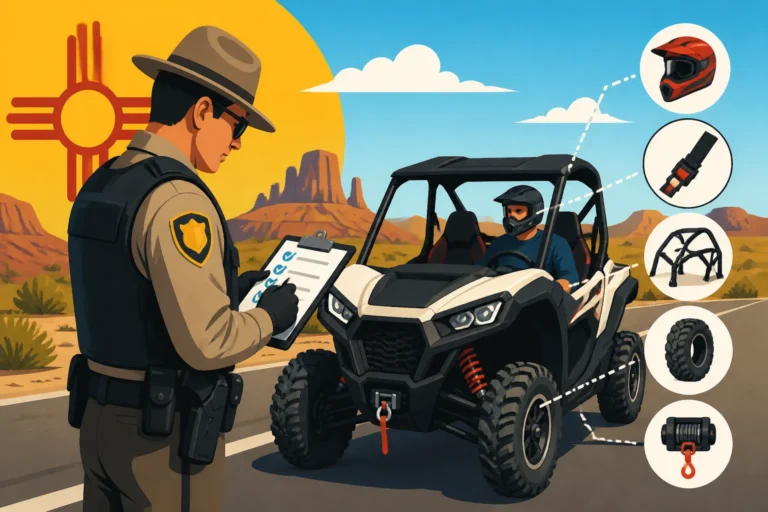
Law enforcement, including the Eddy County Sheriff's Office and New Mexico State Police, has the authority to enforce Ordinance O-18-95 on county roads. They are trained to identify OHVs that are out of compliance. It's important to understand what an officer typically looks for during a roadside stop.
- Visible Decals: The green and yellow MVD decals are the first visual cue of legal registration. If they're missing or unreadable, you're likely to be stopped.
- Required Equipment: Officers will quickly check for working lights, mirrors, and a horn. These are easy to spot.
- Driver Identification: They will ask for your driver's license, registration, and proof of insurance. Having these readily available makes the stop go much smoother.
- Safe Operation: Officers observe driving behavior. Speeding, reckless driving, or operating erratically will certainly draw attention.
- Passenger Compliance: If you have passengers, especially minors, officers will check for helmets and proper seating.
It’s crucial to treat any law enforcement stop with respect and cooperate fully. Arguing or being uncooperative will only escalate the situation. If you're confident your machine and operation are compliant, state your case calmly and clearly. Being prepared and informed is your best defense against unintended violations.
Beyond Eddy County: Other New Mexico Jurisdictions
While Eddy County's ordinance is quite progressive in opening up its paved roads, it's not the only jurisdiction in New Mexico with specific OHV rules. The "patchwork quilt" mentioned earlier means that understanding how other counties and towns handle OHVs is vital, especially if your riding adventures take you beyond Eddy County's borders.
How Other Counties Compare
Many New Mexico counties have also enacted ordinances regarding OHV use on their roads, but their specifics can vary wildly. Some counties, like Eddy, have broadly opened their county roads with specific equipment and operator requirements. For instance, [Otero County's OHV Ordinance] is another example of a county that has opened its roads, though its precise rules on speed, equipment, and designated areas may differ.
However, other counties may have more restrictive ordinances, opening only a very limited number of roads, or even none at all. Some might permit OHV use only for specific purposes, like agricultural work or accessing private property. There are also counties that have chosen not to enact any ordinance, meaning OHV use on paved county roads defaults to state law, which is generally prohibitive unless specific crossing rules are followed.
The takeaway here is that you cannot assume. If you're planning a multi-county trip or even just driving a few miles into a neighboring county, you absolutely must research that county's specific ordinances. A quick call to the Sheriff's Office or County Clerk's office for the jurisdiction you intend to ride in can save you a significant amount of hassle.
Navigating City Limits Within Eddy County
Within Eddy County, you'll find incorporated municipalities like Carlsbad, Artesia, and Loving. Even though Eddy County Ordinance O-18-95 opens county roads, these city limits are not automatically included. Each municipality is a separate legal entity with the authority to enact its own ordinances regarding OHV use on its streets.
- Carlsbad: You cannot assume you can ride your ATV or UTV on Carlsbad city streets just because you can on Eddy County roads. Carlsbad would need its own ordinance to permit it.
- Artesia: Similarly, Artesia has its own jurisdiction. Riding on Artesia's city streets requires specific permission from the city itself, not just the county.
- Loving: The same principle applies to smaller towns like Loving.
This means that while you might be able to ride legally on a county road right up to the city limits, you'll likely need to load your OHV onto a trailer to continue through the town or find an alternative route around it. Crossing a state highway to get to another county road might also have its own specific rules under state law, often limited to perpendicular crossings at intersections with full stops. The key is to be aware of these jurisdictional boundaries and understand that one set of rules does not necessarily apply to the next. Always check with the specific city if you intend to ride within its boundaries.
Summary of Eddy County OHV Road Use Requirements
To simplify the complex regulations, here's a table summarizing the core requirements for operating an OHV on Eddy County's paved roads under Ordinance O-18-95:
| Requirement | Eddy County Ordinance O-18-95 Provisions |
|---|---|
| Permitted Roads | All county-maintained paved roads, unless otherwise posted. Excludes state highways and incorporated municipal streets (unless city-approved). |
| Registration | Current New Mexico MVD registration required, displaying both yellow and green decals. Proof must be carried. |
| Insurance | Proof of New Mexico minimum liability insurance required and must be carried by operator. |
| Driver's License | Valid driver's license required for all operators. |
| Headlights | At least one white headlight, visible 150 ft ahead. |
| Taillights | At least one red taillight, visible 200 ft to the rear. Working brake lights required. |
| Mirrors | At least one rearview mirror, allowing view 200 ft to the rear. |
| Turn Signals | Functional front and rear turn signals often required. |
| Horn | Functional audible warning device (horn) required. |
| Muffler | Muffler with spark arrestor required. Must meet 96-decibel limit. |
| Tires | DOT-approved tires generally required for paved road use. |
| Passenger Limits | Only number of passengers for which machine is factory-designed and equipped with seating/seatbelts. |
| Youth Safety | Operators/passengers under 18 must wear approved helmet and eye protection. |
| Operational Rules | Obey all traffic laws, posted speed limits (often max 35 mph for OHVs), and signs. No reckless operation. |
Remember, this table is a summary and not an exhaustive legal document. Always refer to the full text of Eddy County Ordinance O-18-95 and New Mexico state statutes for complete and current information.
Disclaimer
This article is for general informational purposes only and does not constitute professional advice. Laws, prices and regulations vary by location and change over time. Consult a qualified professional for guidance on your specific situation.