Why Off-Highway Motorcycles Get No Opt-In
It can be incredibly frustrating for off-highway motorcycle riders in New Mexico to watch their friends on ATVs and UTVs cruise across certain paved roads, knowing their own dirt bikes are excluded. This guide delves deep into the specific reasons why off-highway motorcycles don't qualify for the "opt-in" street legal privileges that other off-highway vehicles enjoy in New Mexico, helping you understand the nuanced laws and navigate your riding adventures within the state's regulations.
The New Mexico Paved Road Opt-In: Who Benefits and How
New Mexico has made strides in recent years to allow off-highway vehicle (OHV) riders more flexibility, particularly when it comes to briefly accessing or crossing paved roads. This "opt-in" provision is a huge convenience for many, connecting trails, allowing access to fuel or supplies, and generally enhancing the riding experience. However, it's important to understand that this privilege isn't universal across all OHV types, and off-highway motorcycles are a notable exception to the rule.
What the Opt-In Actually Allows for ATVs and UTVs
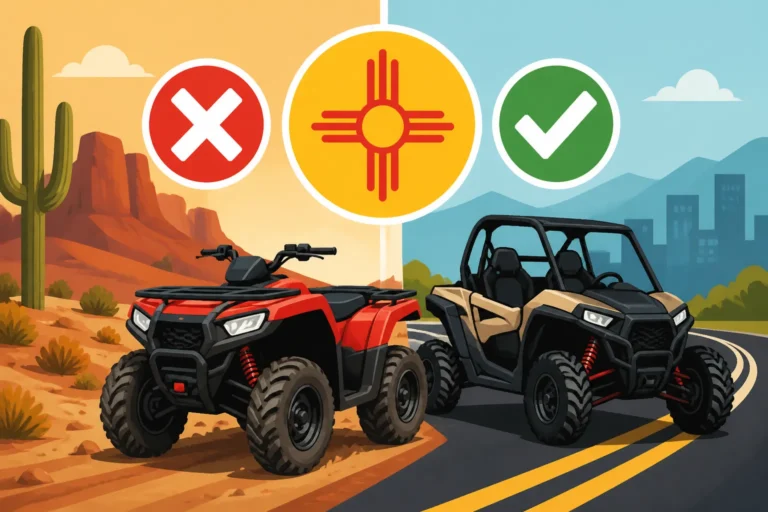
For riders of ATVs (All-Terrain Vehicles) and UTVs (Utility Terrain Vehicles, often called side-by-sides), the opt-in provision means that under specific conditions, they can legally operate their machines on certain paved roads. This isn't a blanket permission to treat them like street vehicles, but rather a carefully structured allowance designed to improve connectivity for recreational users. The primary goal is to let riders transition between different off-road areas, access local businesses, or cross highways to reach new trailheads without needing to trailer their machines for short distances. Many counties and municipalities have embraced this, opening up their local roads to make OHV recreation more accessible. This capability allows a group of riders to leave a staging area, hit a trail, then perhaps head into a small town for lunch, all without loading and unloading their machines.
The key to this system is often the local ordinance. While state law provides the framework, it's up to individual counties and cities to pass resolutions or ordinances that open their particular roads. This means that an ATV or UTV might be welcome on a paved county road in Sierra County, for instance, but strictly prohibited on a city street in a neighboring municipality that hasn't passed such legislation. It's a patchwork, which can be confusing, but the principle is clear: ATVs and UTVs, with the right equipment and decals, are generally favored for this limited paved road access. You can find more details on [New Mexico Rules for Riding a County Road] and [New Mexico Rules for Riding a City Street] to get a clearer picture of where you might ride.
The Importance of the Green Decal and Paved Road Plate
Central to New Mexico's paved road opt-in for ATVs and UTVs are specific registration and equipment requirements. Any OHV registered in New Mexico for off-highway use receives a yellow decal. This decal signifies that the machine is registered and legal for off-road use, but it explicitly keeps you off pavement. To gain the limited paved road access, ATVs and UTVs need an additional layer of approval: the green decal or, in some cases, a specific paved road plate.
The green decal is what signals that your ATV or UTV is equipped and permitted for on-highway use where allowed by local ordinance. This isn't just a sticker; it represents that the owner has met additional requirements, including specific safety equipment (like headlights, taillights, mirrors, and sometimes turn signals) and, crucially, proof of liability insurance. This insurance requirement is a big one, reflecting the increased risk and potential for damage when operating on public roads alongside other vehicles. Without that green decal, or the previous paved road sticker, even an ATV or UTV with all the right physical gear is not legal for paved road use. This distinction is clearly laid out in [Why the Green Decal Lets You Onto Pavement] versus [Why the Yellow Decal Keeps You Off Pavement]. The entire system is built on these visible indicators, allowing law enforcement to quickly identify compliant machines.
Understanding Off-Highway Motorcycles: Key Distinctions
So, if ATVs and UTVs get this flexibility, why are off-highway motorcycles, commonly known as dirt bikes, left out? The answer lies in how New Mexico law defines and categorizes different types of OHVs, along with fundamental differences in their design, intended use, and inherent safety characteristics when on pavement. It's not an arbitrary exclusion, but rather a reflection of these distinctions.
Defining an Off-Highway Motorcycle in New Mexico Law
New Mexico statutes define "off-highway motorcycles" quite specifically, and this definition is key to their exclusion from the paved road opt-in. Generally, an off-highway motorcycle is a two-wheeled vehicle designed for off-road use, characterized by features like long-travel suspension, knobby tires, high ground clearance, and a lightweight frame. Unlike street-legal motorcycles, they typically lack many of the safety and emissions features required for regular on-road operation. Crucially, the law distinguishes them from "motorcycles," which are designed and manufactured to meet federal highway safety standards for paved road use.
This legal distinction isn't unique to New Mexico; many states have similar classifications. The intent is to differentiate between machines built for rugged trails and those built for asphalt. When a piece of legislation offers an "opt-in" for OHVs, it often implicitly or explicitly limits that to multi-wheeled vehicles that can more readily be adapted to road safety standards. Dirt bikes, by their very nature and design, present a different set of challenges that make integrating them into the existing paved road opt-in less straightforward, both from a legislative and a practical safety standpoint. This is why you'll often see regulations like [New Mexico Rules for Riding an Interstate Crossing] apply differently based on vehicle type.
Design and Functional Differences from Other OHVs
The functional and design differences between off-highway motorcycles and ATVs/UTVs are profound, and they are at the heart of why the paved road opt-in doesn't extend to dirt bikes.
- Stability: ATVs and UTVs, with their multiple wheels and wider stances, offer a level of inherent stability that a two-wheeled dirt bike simply cannot match. On paved roads, especially at higher speeds or during evasive maneuvers, the stability of a four-wheeled vehicle is generally considered superior. A UTV, for example, especially models like those offered by SuperATV with wider suspension setups, provides a much more stable platform on asphalt.
- Seating and Control: ATVs typically have straddle seating and handlebar controls, similar to a dirt bike, but their four wheels make them less prone to tipping. UTVs offer side-by-side seating with a steering wheel and foot pedals, mimicking an automobile, which is generally considered more familiar and safer for paved road operation. A dirt bike, requiring constant rider input for balance, is a much more dynamic and responsive machine that demands a higher level of rider skill, particularly on a surface that offers less grip and different handling characteristics than dirt.
- Weight Distribution and Braking: The way weight shifts on a dirt bike during braking and acceleration is very different from an ATV or UTV. Dirt bikes are designed for aggressive off-road braking, often using significant front brake pressure, which can be dangerous on slippery or uneven paved surfaces. ATVs and UTVs distribute braking forces more evenly across their multiple wheels, offering more predictable stopping power on asphalt.
These fundamental design philosophies mean that while an ATV or UTV can often be equipped with road-appropriate tires and safety gear with relatively minor modifications (even if a full transformation isn't always possible or practical), a dirt bike fundamentally remains a dirt bike. Its core design is optimized for dirt, not pavement, and that distinction is paramount in how it's treated under road use laws.
Safety and Equipment: Why Dirt Bikes Face Different Rules
The primary reason New Mexico, like many other states, draws a line in the sand regarding dirt bike access to paved roads is safety. Off-highway motorcycles are thrilling machines, but their design and typical equipment are optimized for rugged, uneven terrain, not the smooth, high-speed environment of asphalt. Adapting them for road use presents significant challenges that simply aren't present to the same degree for ATVs and UTVs.
Handling Characteristics and Stability on Pavement
One of the most critical factors is how dirt bikes handle on paved surfaces.
- Tires: Dirt bikes come standard with knobby tires, designed to dig into loose dirt, mud, and rocks for maximum traction. On pavement, these aggressive knobs offer very little contact patch and poor grip, especially when cornering or braking. The result is significantly reduced traction, making the bike prone to sliding, particularly in wet conditions or during sudden maneuvers. This dramatically increases the risk of a crash compared to vehicles with road-specific tires.
- Suspension: The long-travel suspension found on off-highway motorcycles is built to absorb large impacts and smooth out rough terrain. While excellent off-road, this soft, compliant suspension can lead to excessive dive under braking and squat under acceleration on pavement, making the bike feel unstable and "wallowy." This can be disconcerting and dangerous at road speeds, reducing the rider's control and feedback.
- Ground Clearance: High ground clearance, while essential for clearing obstacles off-road, raises the center of gravity. On pavement, a higher center of gravity can reduce stability, particularly during turns, and make the bike feel top-heavy. This design choice, coupled with the knobby tires and soft suspension, creates a handling dynamic that is poorly suited for the demands of paved road riding.
Even an experienced rider will tell you that a dirt bike feels completely different—and often unsettling—on asphalt compared to a street bike. The inherent characteristics that make them excel off-road become liabilities on the highway, posing a greater risk not only to the rider but also to other road users. This is a significant factor in the legislative decision to exclude them from the paved road opt-in.
Road-Specific Equipment Needs Not Met by Most Dirt Bikes
Beyond handling, the typical equipment found on an off-highway motorcycle rarely meets the basic safety requirements for paved road use. While some aftermarket parts are available, the vast majority of dirt bikes leaving the factory are not equipped for public roads.
Consider the following common requirements for any vehicle operating on a paved road:
- Lighting: Dirt bikes often have minimal lighting, if any. Many lack proper headlights (some have only a small, dim enduro light), taillights, brake lights, and turn signals – all of which are critical for visibility and communication with other drivers on public roads. [New Mexico Headlight and Taillight Rules] are quite clear on the standards required for road use.
- Mirrors: Side mirrors are essential for seeing traffic behind and beside you. Most dirt bikes either have no mirrors or flimsy, foldable ones designed to survive falls off-road, not for clear, stable rear visibility on the highway. [Mirrors and Brakes for New Mexico Road Use] specifies these requirements.
- Horn: A loud, functional horn is a fundamental safety device for warning other drivers. While dirt bikes might have a small "beep" horn, it's rarely adequate for road use.
- Muffler/Sound: While not strictly safety equipment, New Mexico has sound limits, such as [New Mexico's 96 Decibel Ceiling], which many performance-oriented dirt bikes might exceed without road-specific mufflers.
- Brakes: While dirt bike brakes are powerful, they are optimized for off-road use. The brake pad compounds and rotor designs might not provide optimal fade resistance or consistent performance during prolonged or high-speed braking on pavement.
- Emissions: While not directly a safety concern, many dirt bikes are designed for competition or recreational off-road use and may not meet the emissions standards required for street-legal vehicles.
To make an off-highway motorcycle truly "street legal" in the full sense often requires extensive, and sometimes costly, modifications that go far beyond what's typically needed for an ATV or UTV to meet the opt-in requirements. These modifications can fundamentally alter the bike's off-road performance and character, making the process less appealing for many dirt bike enthusiasts. The fact that the base machine is so far from road-ready contributes significantly to its exclusion from the simpler opt-in.
Legal Framework and the Intent Behind the Law
Understanding the specific statutory language and the legislative intent behind New Mexico's OHV laws helps clarify why off-highway motorcycles are treated differently. These laws aren't arbitrary; they stem from a comprehensive approach to public safety, environmental protection, and the promotion of responsible recreation.
The Legislative History of New Mexico's OHV Road Use Laws
New Mexico's OHV laws have evolved over time, reflecting changes in technology, public demand, and a growing understanding of the impact of these vehicles. The provisions allowing limited paved road access for certain OHVs did not appear overnight. They were the result of careful consideration, often driven by advocacy from OHV user groups who sought to improve connectivity for their ATVs and UTVs. The legislature had to weigh the benefits of increased access against the paramount concern of public safety. This delicate balance led to the current framework, which is designed to allow certain OHVs to operate on pavement only when specific conditions are met and where local authorities have given permission.
When the legislative discussions occurred regarding the paved road opt-in, the distinctions between different OHV types were thoroughly examined. Lawmakers likely considered the ease with which a four-wheeled vehicle could be made to comply with basic road safety equipment (lights, mirrors, etc.) compared to a two-wheeled off-highway motorcycle. They also factored in the general public's perception and familiarity with various vehicle types on public roads. The intent was to enhance recreation for the broader OHV community while maintaining safety standards that minimize risks to both OHV riders and other motorists. This led to specific requirements like [New Mexico's Mandatory Financial Responsibility Act] for vehicles operating on public roads, ensuring that any accidents could be covered. The legal definition of an OHV itself, and how it differs from a conventional motorcycle, has also played a critical role in shaping these laws.
The Role of Rider Safety in Distinguishing Machine Types
Rider safety is undeniably at the core of why off-highway motorcycles are excluded from the paved road opt-in. As discussed, the inherent design characteristics of dirt bikes – their knobby tires, long-travel suspension, and agile, two-wheeled nature – make them inherently less stable and predictable on paved surfaces compared to their multi-wheeled counterparts. The legislative body understood that simply bolting on a headlight and a mirror wouldn't fundamentally change these handling dynamics.
The law aims to prevent situations where vehicles unsuited for road use are legally mixed with street-legal traffic. The average rider of an ATV or UTV might find adapting to pavement less jarring due to the vehicle's inherent stability. For a dirt bike, however, the transition is more profound. The risks of loss of control, especially during emergency braking or swerving, are significantly higher. This isn't to say dirt bike riders are less skilled, but rather that the equipment itself is not designed for that environment. The New Mexico Department of Game and Fish, and eventually [Why the Agency Becomes the Department of Wildlife], along with the Motor Vehicle Division (MVD), all play a role in promoting OHV safety, and this distinction for paved road access is a key component of that mission. It's about minimizing accidents and ensuring that when an OHV does venture onto a paved road, it does so with the best possible safety profile, which for off-highway motorcycles, is a steeper climb to achieve.
Navigating New Mexico Roads on Your Dirt Bike: What You Can Do
While the news that your dirt bike can't generally use New Mexico's paved road opt-in might be disappointing, it doesn't mean you're entirely stuck. There are still provisions for limited road interaction and, more importantly, a vast network of incredible off-highway riding areas where your machine truly belongs. Understanding these alternatives and restrictions is key to responsible and enjoyable dirt biking in the Land of Enchantment.
Permitted Road Crossings and Short Stretches
Even without the full "opt-in" for general paved road use, off-highway motorcycles are typically still permitted to cross paved roadways. This is a crucial distinction and a significant convenience for trail riders. Imagine you're on a fantastic dirt trail, and it's bisected by a paved county road. Instead of having to trailer your bike to the other side, you can usually cross that road directly.
However, there are rules for these crossings:
- Perpendicular Crossing: The crossing must be made as close to perpendicular as practicable. You're not meant to ride down the road, even for a short distance, but to go straight across. [New Mexico's Perpendicular Crossing Rule] emphasizes this direct approach.
- Yielding to Traffic: You must yield to all vehicular traffic on the paved road. This means coming to a complete stop, checking for oncoming vehicles, and only proceeding when it's safe to do so.
- Minimum Distance: Some regulations might specify that you can only ride a very short distance on the paved shoulder to find a suitable crossing point, but this is usually measured in feet, not miles. The intent is not to allow travel along the road.
- Interstates are Different: Major controlled-access highways, like interstates, are generally off-limits even for crossing. [Why New Mexico State Highways Are Off Limits] and freeways you may not even cross are important to remember.
These limited interactions are designed to connect the off-road experience, not to integrate dirt bikes into the flow of traffic. Always be aware of local ordinances, as they can sometimes impose stricter rules or designate specific crossing points. When in doubt, it's always safer to assume less access rather than more.
Exploring Designated Off-Highway Trails and Areas
The real joy of owning an off-highway motorcycle in New Mexico lies in its purpose-built design for actual off-road riding. Instead of focusing on the paved roads you can't ride, shift your attention to the expansive public lands and designated OHV areas that welcome dirt bikes with open arms. New Mexico boasts an incredible diversity of terrain, from high-desert arroyos to alpine forest trails, all perfect for off-highway motorcycles.
Consider these options:
- Bureau of Land Management (BLM) Land: Vast stretches of BLM land across New Mexico are open to OHV use, often with designated routes or open riding areas. These areas are perfect for exploring, trail riding, and sometimes even dispersed camping. Always check current travel management plans for specific areas, as some may have restrictions or require you to stay on marked trails. Areas like [Red Sands OHV Area in Southern New Mexico] or parts of [Glade Run and Chokecherry Canyon at Farmington] offer miles of riding perfectly suited for dirt bikes.
- National Forests: New Mexico's national forests (like Carson National Forest near Red River, or Lincoln National Forest) offer extensive networks of forest roads and trails, many of which are ideal for dirt bikes. These areas often have seasonal closures, especially at higher elevations, so always check with the local ranger district before heading out. [Riding the Carson National Forest at Red River] gives a glimpse into the forest riding experience.
- Designated OHV Parks: New Mexico has several dedicated OHV parks that cater to various types of off-road vehicles, including dirt bikes. These areas are often managed to provide different levels of challenge and typically have amenities like staging areas and restrooms. [Haystack Mountain in Eastern New Mexico] and [New Mexico's Mescalero Sands Dunes] are examples where you can truly let your dirt bike shine.
Remember that when riding on public lands, you'll still need to ensure your machine is registered (with a yellow decal), that you adhere to sound limits, and that you have a spark arrester. Always carry essential safety gear, proper hydration, and a map, and inform someone of your riding plans. Focus on the adventure that your off-highway motorcycle was designed for, and you'll find endless opportunities in New Mexico.
Comparison of OHV Paved Road Access in New Mexico
To help clarify the differences, here's a quick look at how various OHV types are generally treated under New Mexico's paved road regulations regarding the "opt-in" provision:
| Vehicle Type | New Mexico Classification | Paved Road Opt-In Eligibility | Typical Paved Road Use (Where Permitted by Local Ordinance) | Primary Road-Specific Equipment Needed for Opt-In (if eligible) |
|---|---|---|---|---|
| All-Terrain Vehicle (ATV) | Off-Highway Vehicle (OHV) | Yes | Connecting trails, accessing services, crossing highways. | Headlights, taillights, brake lights, mirrors, horn, insurance. |
| Utility Terrain Vehicle (UTV) | Off-Highway Vehicle (OHV) | Yes | Connecting trails, accessing services, crossing highways. | Headlights, taillights, brake lights, mirrors, horn, insurance. |
| Off-Highway Motorcycle | Off-Highway Motorcycle (OHM) | No | Limited to perpendicular crossings only. | None (as general road use is not permitted). |
| Street Legal Motorcycle | Motorcycle (not an OHV) | N/A | Full paved road use as a conventional vehicle. | Meets all federal and state highway safety standards. |
This table highlights the clear distinction. While ATVs and UTVs (which often benefit from aftermarket accessories from companies like SuperATV that help meet equipment requirements) can participate in the paved road opt-in, off-highway motorcycles cannot. Their role on New Mexico's roads is strictly limited to short, perpendicular crossings to connect off-road sections.
Disclaimer
This article is for general informational purposes only and does not constitute professional advice. Laws, prices and regulations vary by location and change over time. Consult a qualified professional for guidance on your specific situation.