When a Dealer Leaves the MVD Trip to You
You've just shelled out your hard-earned cash for that shiny new (or new-to-you) ATV or UTV, dreaming of wide-open New Mexico trails or buzzing along a designated county road. The last thing you expect, or frankly, want to deal with, is the tedious process of state registration and titling. Often, the dealership handles all that MVD paperwork for you, making the sale feel seamless. But what happens when you're handed the keys and a stack of papers and told, "Good luck at the MVD"? Suddenly, that excitement can turn into a real headache. This guide is here to walk you through exactly what to do when your dealer doesn't take care of the MVD trip for you, ensuring you get your machine legally titled and registered in the Land of Enchantment.
The Expectation vs. Reality: When Dealers Don't Handle MVD
It's a common scenario: you buy your off-highway vehicle (OHV) and assume the dealer will handle all the bureaucratic heavy lifting, like getting your title and registration squared away. After all, isn't that part of the service? Most reputable dealerships do. They have processes in place, know the MVD forms inside and out, and often have direct access to MVD systems or personnel to make things smooth. So when they don't, it can feel like you've been left high and dry.
Why Some Dealers Opt Out
There are several reasons why a dealer might choose to leave the MVD trip to you, and it’s not always about trying to cut corners or being unhelpful. Sometimes, it's a genuine logistical challenge for them. For instance, smaller independent dealers might not have the dedicated staff or volume to justify setting up an MVD processing system. They might focus solely on sales and leave the administrative burden to the buyer, which, while inconvenient, keeps their overhead lower.
Another common reason, especially if you bought your machine from an out-of-state dealer, is that they simply aren't equipped to handle New Mexico's specific MVD requirements. Every state has its own quirks when it comes to vehicle registration, and a dealer in, say, Texas or Arizona, might not have the forms, knowledge, or authorization to process New Mexico paperwork. They'll provide you with the necessary manufacturer's documentation, and then it's up to you to navigate your home state's rules.
Lastly, some dealers might sell machines "as-is," particularly used ones, where the profit margin is tighter, or the machine has a history that might complicate a dealer-handled title transfer. They'll typically make this very clear during the sale, but in the excitement of a new purchase, it's easy to miss. Always confirm upfront who is responsible for the MVD paperwork before you sign on the dotted line.
What You Should Have Received
Even if the dealer isn't handling the MVD paperwork for you, they absolutely must provide you with several critical documents. Without these, your journey to legal ownership in New Mexico will be significantly more complicated, if not impossible. Think of these as your golden tickets to the MVD.
The first and most important document for a new machine is the Manufacturer's Certificate of Origin (MCO), sometimes called a Manufacturer's Statement of Origin (MSO). This is essentially the birth certificate of your OHV, proving it's new and has never been titled before. It lists the manufacturer, the vehicle identification number (VIN), make, model, and other identifying information. For a used machine, you'll need the current title, properly signed over by the previous owner (who might be the dealer in this case). [Titling an Off-Highway Vehicle in New Mexico] is the first hurdle you'll face.
Next up is a clear and complete Bill of Sale. This document proves you purchased the machine, specifies the buyer and seller, the purchase price, and a detailed description of the OHV, including its VIN. This is crucial for establishing ownership and calculating any applicable sales tax. If the dealer hasn't provided one, or if you're buying privately, you might need to draft one yourself. Reputable online services like LawDepot offer customizable bill of sale templates that can ensure you cover all the necessary legal bases, making sure you meet [New Mexico ATV Bill of Sale Requirements]. Finally, for certain transactions, especially with used machines or those being brought in from out-of-state, an Odometer Disclosure Statement might be required, though this is less common for pure off-highway vehicles than for street-legal cars and trucks.
Gathering Your Paperwork for the MVD Journey
Okay, so the dealer has left you to it. Deep breaths! It might seem daunting, but with a clear checklist and a bit of patience, you can absolutely get this done. The key is to arrive at the MVD prepared, with every single piece of paper they could possibly ask for. Nothing is more frustrating than waiting in line only to be turned away for a missing signature or an unreadable VIN.
The Critical Documents You'll Need
Let's break down the essential paperwork you'll be gathering before you even think about heading to your local New Mexico Motor Vehicle Division office.
First, as mentioned, you need either the original MCO (for a new machine) or the properly assigned title (for a used machine). This document must be complete, free of alterations, and for a used machine, signed by the seller exactly as their name appears on the title. If there's a lienholder (a bank or finance company), their information might also be on the title or MCO, and sometimes you'll need a lien release if it's a used machine that was paid off. Losing this document is a nightmare, so keep it safe!
Then, you'll need a comprehensive Bill of Sale. This should include the full names and addresses of both the buyer (you) and the seller (the dealership), the date of sale, the purchase price, and a clear description of the OHV, including the year, make, model, and, most importantly, the VIN. If you're concerned about having all the right information, using a template from a service like LawDepot can be incredibly helpful to ensure no critical details are missed, preventing a trip to the MVD from being wasted. This is also where you'll show proof of any sales tax paid or that tax is due.
You'll also need proof of identity and residency. This usually means a valid New Mexico driver's license or state ID card. The MVD needs to confirm you are who you say you are and that you live in New Mexico. Don't forget proof of insurance if you plan to get a paved road plate for your OHV. While off-road riding in New Mexico doesn't always mandate insurance, riding on paved roads certainly does.
Finally, for certain situations, especially if you're bringing in an OHV from another state or if it's an older machine without a clear paper trail, you might need a VIN inspection. This is a physical verification of the VIN on your machine by an authorized MVD agent or law enforcement officer to ensure it matches your paperwork and hasn't been tampered with. It's an extra step, but a necessary one to prevent fraud and ensure your machine is legitimately yours. All these pieces of [New Mexico OHV Registration Paperwork] are vital.
Understanding VIN Verification and Why It Matters
The Vehicle Identification Number (VIN) is like the OHV's fingerprint – a unique identifier that tells its whole story. VIN verification isn't always required for every registration, but when it is, it's a crucial step you can't skip. You'll typically encounter this requirement if you're [Registering an Out-of-State Machine in New Mexico], or if the MVD has any doubts about the machine's provenance. It's also often necessary for salvaged titles or if there's a discrepancy in paperwork.
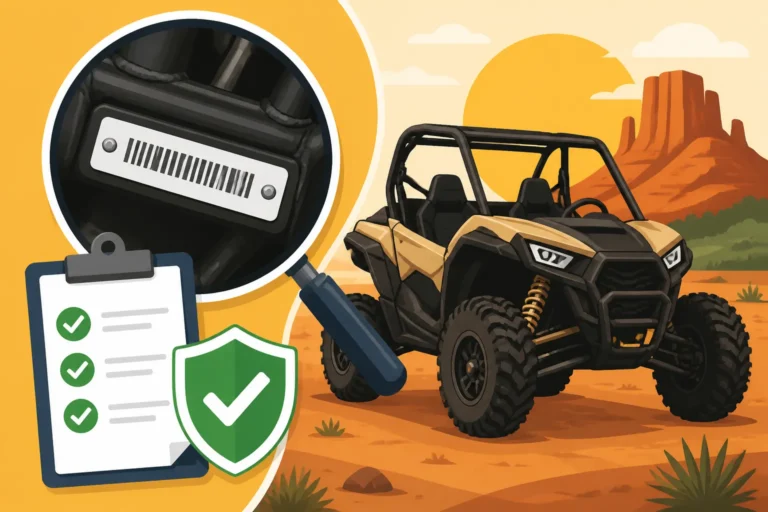
So, what does a VIN verification entail? It means an authorized individual will physically examine the VIN stamped on your OHV (usually on the frame or engine) and compare it against your title or MCO. They'll ensure the numbers match perfectly and that there are no signs of alteration or tampering. In New Mexico, this can often be done at the MVD office itself by an MVD inspector, or sometimes by a certified law enforcement officer. It's a quick process, but make sure your OHV is accessible for inspection. Don't show up with a muddy machine where the VIN is obscured; give it a quick clean!
The MVD wants to ensure that the machine you're trying to register is the same machine documented on your paperwork. This helps combat theft and ensures that only legally recognized machines are on New Mexico's trails and roads. If your machine is older and the VIN is difficult to read due to wear and tear, this process can sometimes get a bit tricky, so be prepared for potential questions or a more thorough examination.
Navigating the New Mexico MVD Process Yourself
Alright, paperwork in hand, deep breaths again! It's time for the actual MVD visit. While the MVD can sometimes feel like a maze, knowing the general steps and what to expect can significantly reduce stress and make your trip more efficient. Remember, you're not the first person to do this, and you won't be the last.
Step-by-Step: Your First Visit to the MVD
First things first: plan your visit. Check your local MVD office's hours, and if possible, see if they offer appointments or a virtual queue system. Showing up right when they open or mid-morning on a weekday can sometimes save you from longer waits. Bring all your gathered documents, including your driver's license, the MCO or title, your bill of sale, and any proof of insurance if needed. Organize them in a folder so nothing gets lost.
Once you get to the counter, you'll tell the MVD agent you're there to title and register an off-highway vehicle. They'll likely hand you an Application for Vehicle Title and Registration (MVD-10002). Take your time filling this out accurately. Double-check all the information, especially the VIN. Any errors here could lead to delays or require you to restart the process. The agent will then review all your submitted documents. This is where those properly prepared documents truly shine – making their job easier makes your process smoother.
Be ready to pay the associated fees. There's a fee for titling, and then a separate fee for registration. The [New Mexico OHV Title Cost] is a one-time fee, but the [New Mexico OHV Registration Cost] is a recurring expense. These fees contribute to maintaining the MVD system and, importantly, some of the OHV registration fees go towards trail maintenance and safety programs for riders in New Mexico.
Titling First, Then Registering (Usually)
It's important to understand the sequence here. In New Mexico, like most states, you generally need to title your OHV before you can register it. The title proves legal ownership, while registration allows you to operate it on public lands or designated roads. Think of it this way: you can't get a driver's license for a car you don't legally own.
So, your primary goal at that first MVD visit will be to establish clear legal ownership in your name by getting the title processed. Once the title is in your name, the registration process can then commence. Sometimes, if all your paperwork is in order and the MVD isn't too busy, they might be able to handle both the titling and initial registration in one go. You'll walk out with your new title application submitted, and often, your registration decal for your OHV on the same day. Understanding [Why New Mexico Residents Register at MVD] helps clarify the state's approach to OHV regulation.
If there's an issue with your title paperwork, the registration will be put on hold until that's resolved. This is why getting your title absolutely perfect is so critical. It's the foundation upon which everything else is built.
The Decal and Plate Decision
After your OHV is successfully titled, the next step is registration, which involves getting the correct New Mexico decals or, if applicable, a paved road plate. This isn't a one-size-fits-all situation, as New Mexico offers different options based on where you plan to ride.
You'll primarily encounter two types of decals:
- The Yellow Off-Highway Decal: This is for machines that will only be ridden on designated off-highway trails and private land. It restricts you from riding on any paved public roads.
- The Green On and Off-Highway Decal: This decal allows you to ride on both designated off-highway trails and on paved public roads where OHV use is permitted. This is the more versatile option if you plan to access trails via county roads or connect between riding areas.
Choosing between a [New Mexico Yellow Off-Highway Decal] and a [New Mexico Green On and Off-Highway Decal] depends entirely on your riding intentions. If you're strictly a dirt person, yellow is fine. But if you think you'll ever need to legally cross a paved road or ride a short distance on one, the green decal is essential.
Additionally, for those who intend to ride their OHV on paved roads (and the OHV qualifies as an "Off-Highway Motor Vehicle" under state law), you might also need to apply for a [New Mexico's Paved Road Plate]. This plate is distinct from the registration decal and comes with additional requirements, such as carrying liability insurance and adhering to specific equipment standards for road use. It's a way for your OHV to be recognized as street-legal on designated roads.
Here's a quick overview of the New Mexico OHV identification options:
| Identification Type | Primary Use Case | Paved Road Access? | Additional Requirements? | Associated Cost |
|---|---|---|---|---|
| Yellow Decal | Exclusive off-highway trail & private land use | No | None beyond basic registration | Included in reg. |
| Green Decal | Off-highway trails + designated paved public roads | Yes | None beyond basic registration | Included in reg. |
| Paved Road Plate | For OHMV riding on paved roads where permitted | Yes | Liability insurance, specific equipment (lights, mirrors, etc.) | Separate fee |
Choosing the right decal or plate at the MVD is important because it dictates where you can legally operate your OHV. Be sure to discuss your riding plans with the MVD agent to ensure you get the correct identification. Remember, choosing the green decal or a paved road plate doesn't automatically mean you can ride anywhere – you still have to adhere to local ordinances and specific state laws regarding OHV road use.
Common Pitfalls and How to Avoid Them
Even with all the right intentions, the MVD process can sometimes throw curveballs. Anticipating these common pitfalls can help you avoid unnecessary delays and frustration. It's about being proactive and meticulously checking your work before you even step foot in the MVD office.
Incomplete or Incorrect Paperwork
This is arguably the number one reason people get turned away from the MVD. A missing signature, a misspelled name, an incorrect VIN, or a date discrepancy between documents can halt your process dead in its tracks. Imagine buying a used quad, and the seller accidentally writes the wrong VIN on the bill of sale. That one small error means your MVD agent can't process your request until it's corrected, which often requires you to go back to the seller, adding time and hassle.
To avoid this, treat your documents like they're gold. Before leaving the dealership (or the private seller), carefully review every piece of paper they give you. Does the VIN on the MCO or title match the VIN on the bill of sale exactly? Are all necessary fields filled out? Is the seller's signature present where required, and does it match the name on the title? If you used a template from a service like LawDepot for your bill of sale, ensure every field is completed accurately. It sounds tedious, but a few minutes of careful review on the front end can save you hours or even days of headaches.
Out-of-State Purchase Complications
Buying an OHV from another state introduces an extra layer of complexity. Different states have different titling and registration practices. For example, some states don't issue titles for older OHVs, or they might have different terminology for their registration documents. When you attempt to register such a machine in New Mexico, the MVD might require additional documentation or a VIN inspection that wouldn't be necessary for an in-state purchase.
Always inquire about the specific title and registration requirements of the state you're buying from. If they don't issue titles for certain types or ages of OHVs, ask what official documentation they provide in lieu of a title. This might be a registration card, a certificate of ownership, or something similar. New Mexico MVD needs to see a clear chain of ownership, so having as much documentation as possible from the selling state is crucial. Familiarize yourself with [Registering an Out-of-State Machine in New Mexico] before you make your purchase. Be prepared for the possibility that you might need a VIN inspection, and ensure the machine's VIN is clearly visible and accessible when you visit the MVD.
Understanding Fees and Payments
While we can't give you exact figures, it's safe to say there will be fees for both the title and registration. There might also be sales tax (if not collected by the dealer), a VIN inspection fee (if required), and possibly a paved road plate fee. These costs can add up, so it's wise to budget for them. [What a New Mexico Renewal Costs] will give you an idea of the recurring expense, but the initial registration is generally higher.
The MVD typically accepts various forms of payment, including cash, checks, and credit/debit cards, but it's always a good idea to confirm acceptable payment methods with your specific MVD office beforehand. Having a backup payment option is smart. Don't assume your credit card will always work, or that you'll have enough cash on hand. Ask about the total estimated cost when you call to inquire about hours or appointments so you can be financially prepared for your visit. Remember, these fees are generally fixed and non-negotiable, so budgeting for them is a key part of your OHV ownership journey.
Dealing with the MVD on your own after a dealer leaves you in the lurch can feel like an unexpected chore, but it's a manageable one. By understanding the required documents, preparing meticulously, and knowing what to expect, you can navigate the process efficiently and successfully. Soon, you'll have your New Mexico title and registration decals proudly displayed on your OHV, ready for your next adventure in the diverse landscapes of our beautiful state. Don't let a bit of paperwork stand between you and the open trail!
Disclaimer
This article is for general informational purposes only and does not constitute professional advice. Laws, prices and regulations vary by location and change over time. Consult a qualified professional for guidance on your specific situation.