Buying a Quad With Nothing but a Key
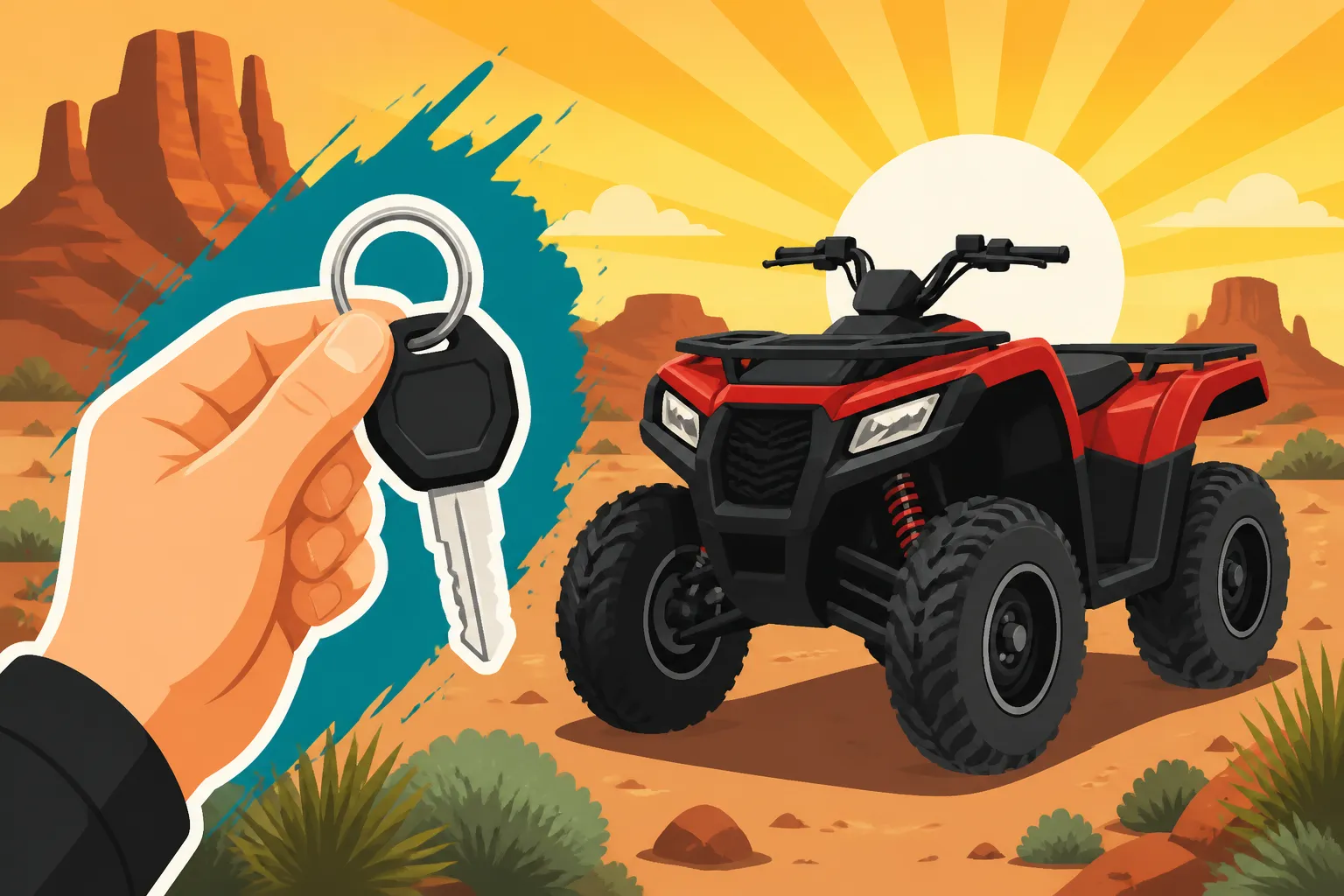
Oh, the thrill of finding what seems like an incredible deal on an ATV or UTV! You’re scrolling through online marketplaces, checking out local ads, and then – bam – there it is. The perfect quad, at a price that almost makes you giddy. But then, as you start asking questions, the seller sheepishly admits, "Well, I've got the key, but… that's about it." No title, no registration, maybe not even a formal bill of sale. Your heart sinks a little, doesn't it? You're left wondering if this amazing opportunity is actually a ticking legal time bomb. This guide is going to walk you through the absolute minefield of trying to buy an off-highway vehicle (OHV) in New Mexico when all the seller offers is a key, explaining why it's usually a terrible idea and what crucial documents you always need to ensure a smooth, legal, and stress-free purchase.
The Red Flags of a "Key-Only" OHV Purchase
Let's be real for a moment: if a seller can only hand you a key, it's a giant, flashing, neon red flag. Your gut instinct is probably screaming "RUN!" and for very good reason. In New Mexico, like most places, proving ownership and registering an OHV relies on a paper trail. Without it, you’re not just potentially buying a headache; you might be buying someone else’s problem, or worse, a stolen machine.
Why the Title is Your Golden Ticket in New Mexico
Think of the title as the OHV's birth certificate and deed rolled into one. It’s the official document that proves who legally owns the machine. In New Mexico, it’s absolutely paramount. When you buy an OHV, the seller should sign over the title to you, effectively transferring ownership. This isn't just a formality; it's a legal requirement for several reasons.
Without a title, you cannot legally transfer ownership into your name. This means that as far as the New Mexico Motor Vehicle Division (MVD) is concerned, you don't own that OHV. Even if you paid cash, even if you shook hands, without a proper title, you’re in a precarious position. Trying to [Titling an Off-Highway Vehicle in New Mexico] without this document is an uphill battle, often an impossible one. Imagine wanting to sell this machine down the road – no legitimate buyer will touch it without a title, and you'll be stuck in the same frustrating loop, trying to explain why you only have a key.
The Importance of a Bill of Sale (Even for an OHV)
A bill of sale might seem like a secondary document, but it's incredibly important, especially for a private sale. It's a written agreement that details the transaction, including the buyer's and seller's information, the date of sale, the purchase price, and a detailed description of the OHV, including its Vehicle Identification Number (VIN). This document serves as a record of the transaction and is often required by the New Mexico MVD to support the title transfer and initial registration.
Even if a seller did have a title but no bill of sale, you'd still face hurdles. The MVD needs to verify the transaction details. A proper [A New Mexico Bill of Sale for an ATV] provides that crucial link. If you're buying a quad from a private party, you really need this in writing. Resources like LawDepot offer templates for creating legally sound bills of sale, ensuring all the necessary fields are covered. It protects both the buyer and the seller by clearly outlining the terms and confirming the transfer of goods for money. Without it, you have no formal proof of what was bought, when, or for how much, leaving you vulnerable to disputes or difficulties with MVD.
Registration and Decals: More Missing Pieces
Once you successfully navigate the titling process (which, remember, is unlikely without a title to begin with), your next step in New Mexico is registration. Every OHV operated on public lands in New Mexico must be registered and display current decals. This biennial process is how the state keeps track of OHVs and ensures funds are available for trail maintenance and rider safety programs. [Registering an OHV in New Mexico] requires proof of ownership (that title and bill of sale we just talked about!) and often proof of New Mexico residency.
Without a title and a valid bill of sale, you simply won't be able to register the OHV in your name at the MVD. This means you won't get those all-important yellow or green decals that grant you permission to ride. Operating an unregistered OHV on public land in New Mexico can lead to significant [New Mexico Fines for an Unregistered OHV], not to mention the possibility of your machine being impounded. So, even if you manage to ride it for a bit without being caught, you're constantly looking over your shoulder, and that's no way to enjoy the beautiful New Mexico trails.
Navigating the Legal Labyrinth (Or Why You Probably Can't)
You might be thinking, "Surely there's some way to get a title if it's genuinely just lost?" And while that's true in very specific circumstances, the "key-only" scenario usually doesn't qualify. This isn't just about a lost piece of paper; it's about a complete lack of verifiable ownership history.
Proving Ownership Without a Title in New Mexico
Trying to prove ownership without a title is an immense undertaking in New Mexico. The MVD is very clear on its [New Mexico OHV Title Requirements]: a properly assigned title is the primary document for transfer. In rare cases, such as a title being genuinely lost or destroyed after a legitimate purchase, and you have substantial supporting documentation (like a bill of sale, previous registration in your name, or a lien release), you might be able to apply for a bonded title or pursue a court order to establish ownership. However, these are complex, expensive, and time-consuming processes designed for very specific, verifiable situations. They are absolutely not for instances where the seller never had a title to begin with, or refuses to provide one.
Furthermore, any attempt to register an OHV without a title will involve a VIN inspection. The VIN (Vehicle Identification Number) on the machine will be checked against national databases to ensure it hasn't been reported stolen. If it comes back as stolen, you've just bought yourself a whole heap of trouble.
The Risk of Buying a Stolen Machine
This is, by far, the most critical and frightening risk of a "key-only" purchase. The overwhelming likelihood when someone only offers a key and no paperwork is that the OHV is stolen. Thieves aren't typically concerned with titles or bills of sale; they just want to move the hot item quickly and cheaply.
If you purchase a stolen OHV, even unknowingly, you stand to lose everything. The machine will be confiscated by law enforcement, and you will not get your money back. In some cases, you could even face legal repercussions yourself, depending on the circumstances. It's a devastating outcome that can lead to significant financial loss and emotional distress. This is why verifying the VIN before purchase is absolutely essential. Always [Checking a VIN Before You Buy] by contacting local law enforcement or the MVD directly to check its status.
Potential Fraud and Financial Loss
Even if the OHV isn't stolen (a big "if"), the lack of a title and bill of sale leaves you wide open to fraud. The seller could be a scam artist simply trying to offload a machine they don't legitimately own, or one that has a hidden lien on it from a previous owner. Once you hand over your cash, if you have no proper paperwork, you have virtually no recourse if the machine turns out to be defective, encumbered by debt, or if the "seller" disappears.
The old adage "if it seems too good to be true, it probably is" applies perfectly here. The incredibly low price for a "key-only" OHV isn't a bargain; it's a trap. You're setting yourself up for financial loss with no legal standing to recover your investment.
What to Do If You've Already Made a "Key-Only" Purchase (And Regret It)
Okay, let's say the excitement got the better of you, or you genuinely didn't know better, and you've already bought an OHV with nothing but a key. You're probably feeling a knot in your stomach right about now, and that's completely understandable. While there's no easy fix, there are a few steps you can take, though be warned: they might lead to uncomfortable truths.
Documenting Everything You Have
First, gather every single piece of information you do have. This might feel like grasping at straws, but it's better than nothing.
- Communication records: Any text messages, emails, or even social media messages from the seller.
- Payment records: Bank statements, Venmo/Cash App transactions, or receipts for cash withdrawals.
- Seller information: Name, phone number, address (if you have it).
- Machine details: Photos of the OHV, its VIN, any unique markings or characteristics.
- Any makeshift notes: Even a scribbled paper with the seller's name and price is technically a document, however weak.
Take clear, detailed photos of the OHV, paying special attention to the VIN plate or sticker. You might even consider having a professional mechanic or a law enforcement officer inspect the VIN for signs of tampering. Tampered VINs are another huge red flag for a stolen vehicle.
Contacting Law Enforcement (The Hard Truth)
This is the moment of truth, and it can be a painful one. You must contact your local law enforcement agency (sheriff's office or police department) to report the situation and have the VIN checked against the stolen vehicle database. Be completely honest about how you acquired the machine.
If the OHV is reported stolen, it will be confiscated, and you will lose your investment. While devastating, this is the legal and ethical outcome. You don't want to be in possession of stolen property, even if you bought it innocently. If it's not stolen, they still might not be able to help you register it without proper ownership documents, but at least you've ruled out the worst-case scenario.
Seeking Legal Counsel
In very limited situations, if you have substantial evidence of fraud and can identify and locate the seller, you might consider seeking legal counsel. A lawyer can advise you on whether you have a civil case to recover your money. However, be realistic about the costs involved. Pursuing legal action can be expensive, and if the value of the OHV is low, or the seller is untraceable, it might not be a financially viable option. This is usually a last resort after contacting law enforcement.
Best Practices for a Safe OHV Purchase in New Mexico
To avoid all the headaches, risks, and potential financial ruin associated with a "key-only" purchase, always follow these best practices when buying an OHV in New Mexico. This applies whether you're looking for a new side-by-side or a used quad.
Always Demand a Clear Title and Proper Paperwork
This is the golden rule, and it should be non-negotiable. When buying any OHV, always insist on a clear title that the seller can legally sign over to you. Inspect the title carefully for any signs of alteration, liens, or discrepancies between the seller's ID and the name on the title. If the seller can't produce a title, or offers an excuse about why they only have a key, walk away. There are plenty of legitimate sellers out there with proper paperwork. Don't let a "deal" blind you to potential legal pitfalls.
Using a New Mexico Bill of Sale
A comprehensive bill of sale is your proof of purchase. Make sure it includes:
- The full names and addresses of both the buyer and the seller.
- The date of the sale.
- The purchase price.
- A detailed description of the OHV (make, model, year, color).
- The complete Vehicle Identification Number (VIN).
- Signatures of both the buyer and the seller, and ideally, a notary public, though often not required for OHVs it adds a layer of verification.
Keep a copy for your records, and ensure the seller also has a signed copy. A good template, perhaps from a reputable service like LawDepot, can ensure you don't miss any critical details. This document, along with the properly signed-over title, forms the bedrock of your new ownership. If you're looking to [Buying a Used ATV in New Mexico], a solid bill of sale is non-negotiable.
Verifying the VIN (Vehicle Identification Number)
The VIN is the unique identifier for your OHV, much like a social security number for a person. It's usually found stamped on the frame or on a metal plate. Before you hand over any money, always do the following:
- Locate the VIN: Find the physical VIN on the OHV and compare it to the VIN listed on the title and bill of sale. They must match exactly. If they don't, that's a serious red flag.
- Check for tampering: Look for signs of grinding, welding, or altered numbers on the VIN plate or frame.
- Run a VIN check: Contact your local MVD or law enforcement to run the VIN through their databases. This will tell you if the OHV has been reported stolen or has any outstanding liens. This proactive step can save you immense trouble down the road.
Complete the Transfer of Ownership at MVD
Once you've got the title signed over and a proper bill of sale, don't delay. Head to the New Mexico MVD office as soon as possible to complete the title transfer and [New Mexico's First OHV Registration]. You'll need to pay the necessary fees and sales tax, and the MVD will issue you a new title in your name and the required registration decals. This final step formalizes your ownership and ensures you're ready to hit the trails legally and without worry.
When [Selling an OHV in New Mexico], the roles reverse, and you, as the seller, are responsible for providing these documents to the buyer. This ensures a clean break and protects you from future liability.
Here's a quick comparison of what a proper OHV purchase looks like versus a "key-only" scenario:
| Feature | Proper OHV Purchase | "Key-Only" OHV Purchase |
|---|---|---|
| Title Provided? | Yes, signed over by seller | No |
| Bill of Sale? | Yes, detailed and signed by both parties | No, or informal/unreliable |
| VIN Verification? | Yes, compared on OHV, title, and run through MVD/LE | Often skipped, high risk of tampered or stolen VIN |
| Proof of Ownership | Strong and legally binding | Virtually none |
| MVD Registration | Straightforward process | Extremely difficult, often impossible |
| Legal Riding | Yes, with proper decals | No, high risk of fines and impoundment |
| Resale Value | Good, with clear chain of ownership | Minimal to none, impossible to sell legally |
| Risk of Theft/Fraud | Low, with due diligence | High, very high |
| Financial Recourse | Yes, if issues arise and documents are clear | Little to none |
In the end, while that "key-only" quad might look like an irresistible bargain, the hidden costs in potential legal battles, fines, and the risk of losing your investment far outweigh any upfront savings. Always prioritize the paperwork – especially the title and a robust bill of sale from a trusted source like LawDepot – for a safe and enjoyable OHV experience in New Mexico.
Disclaimer
This article is for general informational purposes only and does not constitute professional advice. Laws, prices and regulations vary by location and change over time. Consult a qualified professional for guidance on your specific situation.