New Mexico’s Green On and Off-Highway Decal
It can be incredibly confusing to navigate New Mexico's off-highway vehicle (OHV) regulations, especially when you want the flexibility to ride both off-road and on certain paved roads. Many riders grapple with understanding the specific permits and decals needed to avoid fines and ensure legal, safe enjoyment of their machines. This guide will demystify the New Mexico green on and off-highway decal, explaining what it is, why you need it, and how it impacts where and how you can ride your ATV or UTV in our beautiful state.
Understanding New Mexico's Green Decal for OHVs
For years, New Mexico OHV riders have navigated a system designed to regulate where and how their machines can be used. At the heart of this system are the distinctive decals issued by the state. While the yellow decal is strictly for off-highway use, the green decal is the key for those who want a bit more freedom, allowing for both off-road adventures and legal access to certain paved public roads. It's not just a sticker; it's a testament that your machine meets specific requirements for expanded use, offering a crucial distinction for the diverse riding environments New Mexico offers.
What Makes the Green Decal Different?
The primary difference between the green and yellow decals boils down to one critical aspect: paved road access. The yellow decal means your machine is registered solely for off-highway use, strictly prohibiting any travel on paved public roads. This includes county roads, city streets, and highway crossings, even if just for a short distance. The green decal, however, signals that your machine and its operator meet the additional criteria necessary to legally operate on designated paved roads, opening up new possibilities for connecting trails, accessing services, or simply enjoying a different kind of ride. This distinction is vital, as mixing them up can lead to significant penalties.
It's a common point of frustration for riders who might assume all registered OHVs are treated equally, but the state has clear reasons for this separation. The ability to ride on paved roads comes with increased responsibilities, primarily concerning safety, insurance, and equipment standards that aren't always necessary for purely off-road excursions. The green decal acts as a visible indicator to law enforcement that your machine has met these higher standards, allowing you to venture beyond the dirt trails without constant worry. It's about ensuring all road users, both on and off-highway, are protected and compliant with traffic laws.
Why You Might Need the Green Decal
If your riding plans ever involve touching asphalt, even briefly, the green decal becomes an absolute necessity. Perhaps you want to connect two separate trail systems that are divided by a short stretch of paved county road. Maybe you need to ride into a small town for gas, food, or supplies during a multi-day backcountry trip. Or perhaps your local community has embraced the growing trend of opening certain city streets to OHVs, like Red River's progressive stance for ROVs. In all these scenarios, relying solely on a yellow decal would mean you’re breaking the law the moment your tires hit the pavement.
Beyond practical necessities, the green decal offers peace of mind. Instead of constantly looking over your shoulder or worrying about fines, you can focus on the ride itself. It empowers you to explore more extensively, knowing you have the legal right to travel on approved paved routes. For many, it's about maximizing their investment in an OHV, turning it into a more versatile tool for exploration and utility across New Mexico's diverse landscapes. Without it, your adventures are severely restricted to purely off-highway environments, which, while abundant and beautiful, sometimes require paved road connections to fully enjoy.
Key Requirements for Obtaining Your Green Decal
Getting your green decal isn't just a matter of asking for it; there are specific criteria your machine and you as the operator must meet. These requirements are in place to ensure that any OHV venturing onto paved roads is as safe as possible and that its operator understands the added responsibilities. Neglecting any of these steps can lead to delays in your registration or, worse, denial of the green decal altogether, leaving you with only the yellow off-highway option. It's important to approach this process with all your ducks in a row to make it as smooth as possible.
Proof of Ownership and Machine Information
Just like registering any other vehicle, you'll need to prove you own the OHV. This typically involves providing a bill of sale, a manufacturer's statement of origin (MSO) for new machines, or a previously issued title. Without clear documentation of ownership, the New Mexico Motor Vehicle Division (MVD) cannot issue a registration or decal. It’s also crucial to have your machine's Vehicle Identification Number (VIN) readily available and clearly visible, as this is how the MVD identifies and tracks your specific ATV or UTV. If you're buying a used machine, make sure the seller provides all necessary paperwork, and consider creating a robust bill of sale, perhaps using a template from a service like LawDepot, to protect yourself and ensure a smooth transfer of ownership. A well-documented transaction is key for [New Mexico OHV Registration Paperwork].
Sometimes, especially with older machines or those purchased in private sales, tracking down a clear chain of ownership can be a challenge. If the title is lost or was never issued, you might face additional hurdles, potentially requiring a bond or a more extensive verification process. It's always a good idea to [Do You Need a Title for an ATV in New Mexico?] to ensure you have the proper documentation. The MVD needs to be certain that you are the rightful owner before they can proceed with any registration, especially one that grants expanded road use privileges. Taking the time to gather all necessary ownership documents upfront will save you headaches down the road.
Mandatory Insurance Coverage
This is perhaps the biggest and most critical distinction for the green decal. To be eligible for on-highway use, your OHV must carry liability insurance. This isn't just a suggestion; it's a legal requirement under New Mexico's Mandatory Financial Responsibility Act. If you plan to ride your ATV or UTV on any public paved road, you need to be able to show proof of insurance, just like you would for a car or truck. The minimum coverage requirements are similar to those for other motor vehicles, designed to protect other drivers and their property in case of an accident where you are at fault. Without this insurance, you will not receive the green decal, regardless of how well your machine is equipped.
Carrying proof of insurance isn't just about getting the decal; it's about being prepared for unexpected situations. Imagine riding from a trail to a nearby gas station and getting into a minor fender-bender with a car. Without insurance, you'd be personally liable for all damages, which could be financially devastating. Showing [New Mexico ATV Insurance Requirement] at the counter when you register is essential, and carrying that proof with you while riding on pavement is equally vital. Don't assume your existing auto policy covers your OHV; most require a separate endorsement or a dedicated OHV policy. Always check with your insurance provider to ensure you have the correct and adequate coverage for on-road use.
Equipment Requirements for Paved Road Use
Beyond registration and insurance, your OHV needs to meet specific equipment standards to be granted the green decal and the associated paved road privileges. These requirements mirror those for other vehicles on the road, focusing on visibility, safety, and operational control. Your machine must have functional headlights that illuminate at least 150 feet ahead, taillights visible from 200 feet to the rear, and brake lights that clearly activate when you apply the brakes. It also needs a horn or other warning device, a mirror that allows you to see at least 200 feet to the rear, and, of course, proper working brakes on all wheels.
Additionally, a spark arrester is required for any OHV operating on public land, which includes many paved roads leading to or through such areas. While not directly a "paved road" item, it's a crucial component for fire prevention and often part of overall compliance. Ensuring your machine is up to par with these [New Mexico Equipment Rules for Road Use] is not just about legality; it's about your safety and the safety of others. Law enforcement can, and often will, check for these items during a roadside stop, and failing to meet them can result in citations, even if you have your green decal. Before heading to the MVD, give your machine a thorough once-over to confirm all required equipment is in working order.
Proper Placement of Your Green Decal
Once you’ve successfully navigated the registration process and secured your green decal, the next crucial step is ensuring it's properly affixed to your machine. This isn't just about aesthetics; New Mexico has specific regulations regarding where the decal must be placed, varying slightly depending on the type of OHV you own. Correct placement ensures that law enforcement can easily identify your machine's registration status, preventing unnecessary stops or misunderstandings. Failing to place the decal correctly can be as problematic as not having one at all, so pay close attention to these details.
ATV Decal Placement
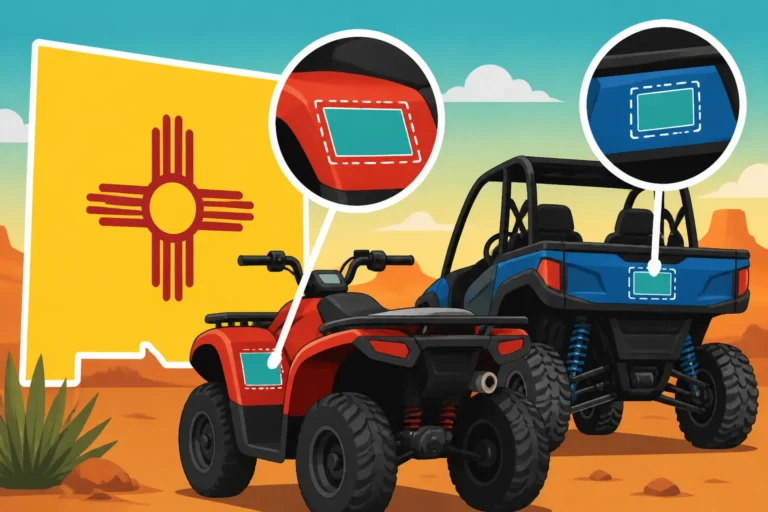
For ATVs (All-Terrain Vehicles), the rules are quite specific to ensure visibility from the rear. Your green decal must be placed on the left rear fender of the ATV. This is typically the easiest spot for an officer to see as they approach from behind or pass your machine. It should be securely adhered and clearly visible, free from mud, dirt, or anything that might obstruct its view or make it unreadable. Make sure the surface is clean and dry before applying the decal for maximum adhesion.
Improper placement, like on the handlebars or the front fender, could result in a citation. The goal is consistent, easy identification, and the left rear fender position for ATVs has been determined to best serve this purpose. Remember, your decal isn't just proof of registration; it's a quick visual cue for authorities that your machine is compliant with [New Mexico OHV Decal Placement Rules], especially important when you're riding on paved roads where you might encounter more law enforcement presence.
ROV/Side-by-Side Decal Placement
For ROVs (Recreational Off-Highway Vehicles), often referred to as side-by-sides or UTVs, the placement rules differ slightly from ATVs. The green decal needs to be displayed on the left rear quarter panel of the vehicle. This location serves the same purpose as the ATV placement – clear visibility from the rear. Similar to ATVs, the decal should be firmly attached to a clean, flat surface, ensuring it remains visible and legible at all times.
The larger body of a side-by-side offers more potential locations, but sticking to the left rear quarter panel is mandatory. Avoid placing it on removable panels, storage compartments, or areas that might frequently become caked with mud, as this could lead to issues. Ensuring your [Where the Decal Goes on an ROV Quarter Panel] is correct means one less thing to worry about when you're out exploring, allowing you to focus on the trail or road ahead.
Dirt Bike Decal Placement
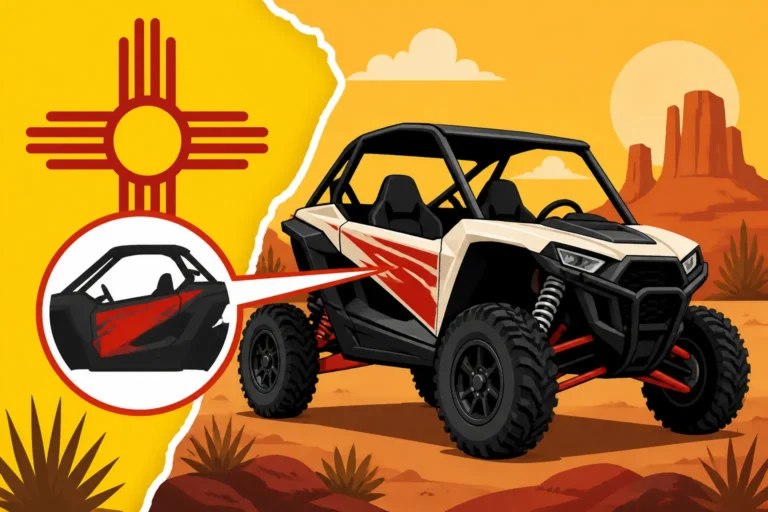
Dirt bikes, or off-highway motorcycles, have their own specific requirement for decal placement. The green decal (should a dirt bike qualify for one, which often has specific limitations due to state law about dirt bikes on pavement) must be affixed to the left fork leg of the motorcycle. This forward placement ensures it's easily seen from the side or front, where it's most practical on a dirt bike's frame. It should be placed in a way that doesn't interfere with the fork's operation or get easily damaged by trail debris.
While dirt bikes can be a bit more challenging due to their narrow profiles and exposed components, finding a visible, secure spot on the left fork leg is critical. Just like with ATVs and ROVs, making sure the area is clean before application will help the decal last longer and remain legible. Proper [Where the Decal Goes on a Dirt Bike's Fork Leg] prevents problems and ensures you're always in compliance, which is particularly important if you're attempting to ride on paved sections where your dirt bike's presence might draw more attention.
Riding with Your Green Decal: Paved Road Privileges and Limitations
Having that shiny green decal opens up a new world of possibilities for New Mexico OHV riders, granting access to certain paved public roads that are strictly off-limits to yellow-decaled machines. However, it's crucial to understand that "on and off-highway" doesn't mean "any road, anywhere." There are still very important rules and limitations to keep in mind. Embracing these privileges means also accepting the responsibilities that come with them, ensuring safety for everyone on the road.
What Paved Roads Are Open to Green-Decal OHVs?
With a green decal, you can legally operate your OHV on paved county roads and most paved city streets, provided the specific county or municipality hasn't enacted an ordinance prohibiting it. Many counties across New Mexico, like Sierra County, have taken steps to open up their rural paved roads to OHVs, making it easier to travel between communities or access trailheads. Similarly, certain towns, such as Red River, have specific ordinances allowing ROVs on their streets, which is a fantastic way to enjoy the town's amenities directly from your machine. This flexibility is a game-changer for many riders, allowing for more integrated and extensive adventures.
However, a major caveat is that New Mexico state highways are generally off-limits, even with a green decal. These are typically routes designated by numbers like US-64, NM-38, or I-25. While you can cross a state highway perpendicularly at an intersection, riding along it for any significant distance is almost universally prohibited. Always check local ordinances and signage, as exceptions are rare and usually clearly marked. Knowing [Why New Mexico State Highways Are Off Limits] to OHVs, even with the green decal, is paramount to avoiding hefty fines and ensuring your safety.
Operating Rules and Equipment for Paved Road Use
When you transition from a dirt trail to a paved road, your OHV isn't just on a different surface; it's operating under a different set of rules, much like a regular car. You must obey all traffic laws, including speed limits, stop signs, and signals. You'll need to use hand signals or turn signals if your machine is equipped, and yield the right-of-way as required. Beyond general traffic laws, specific equipment requirements are critical. As discussed, your OHV must have working headlights, taillights, brake lights, a horn, and a rearview mirror. These aren't optional; they are vital for visibility and communication with other vehicles on the road.
Additionally, while helmets are highly recommended for all OHV riding, New Mexico law mandates that riders under 18 wear a helmet and eye protection on public roads. Though adults are not legally required to wear a helmet, eye protection is still strongly advised for everyone. [New Mexico Rules for a Machine on a Dirt County Road] are generally more lenient, but once you're on pavement, the stakes change. Always ensure your machine is road-ready and you're adhering to all traffic regulations and safety guidelines, which typically include things like [New Mexico Headlight and Taillight Rules] and [Mirrors and Brakes for New Mexico Road Use].
Crossing Highways and Intersections
Even with a green decal, there are strict rules for crossing state highways. You are permitted to cross a state highway perpendicularly at an intersection, but this must be done with extreme caution. You must come to a complete stop before entering the roadway, check for traffic in both directions, and proceed only when it is safe to do so. The goal is to cross the highway as directly and quickly as possible, minimizing your time on the main thoroughfare. You cannot ride along the shoulder or use the state highway as a connecting route.
This "perpendicular crossing rule" is a specific provision designed to allow riders to access trails or roads on the other side of a state highway without making the highway itself a riding area. However, it's a moment of heightened risk due to higher speed limits and greater traffic volumes on state routes. Always be hyper-aware of your surroundings, and never assume drivers will see you. Familiarize yourself with [New Mexico's Perpendicular Crossing Rule] and always prioritize safety over speed when navigating these intersections. Some freeways may not even be crossed, so it is important to know which [Freeways New Mexico Riders May Not Cross].
Maintaining and Renewing Your Green Decal
Getting your green decal is a significant step, but maintaining its validity is just as important. Like any vehicle registration, your OHV's green decal isn't permanent; it has an expiration date. Staying on top of renewals and understanding how to replace a damaged or lost decal will ensure your riding privileges remain uninterrupted. Neglecting these aspects can lead to fines, inconvenience, and the inability to ride your machine legally on paved roads until the issue is resolved.
Renewal Process and Frequency
In New Mexico, OHV registrations, including those with a green decal, are typically renewed every two years. This biennial renewal ensures that your contact information, machine details, and eligibility for paved road use (especially regarding insurance) are kept current with the MVD. You should receive a renewal notice in the mail well before your expiration date, reminding you to take action. The renewal process is usually straightforward and can often be completed online, by mail, or in person at an MVD office or authorized agent. The cost of [New Mexico's $50 Biennial Renewal] is an investment in your continued riding freedom.
During the renewal, you'll need to re-verify your proof of insurance, especially since the green decal permits on-road use. This ensures ongoing compliance with the mandatory financial responsibility laws. If your insurance has lapsed or changed, you'll need to provide updated information. Failing to renew on time can result in your green decal expiring, immediately revoking your paved road riding privileges and potentially subjecting you to fines if caught riding on pavement with an expired registration. It's best to plan ahead and get your renewal done promptly to avoid any gaps in coverage or legal riding status. [Renewing a New Mexico OHV Registration] is a simple but critical step.
Replacing a Lost or Damaged Decal
Accidents happen, and sometimes decals get lost, damaged, or simply become unreadable due to wear and tear from sun, weather, or branches. If your green decal is no longer visible or its information is illegible, you'll need to apply for a replacement. Riding with a damaged or missing decal is akin to not having one at all in the eyes of law enforcement, and it can lead to the same legal consequences. It's always better to address this issue proactively rather than waiting for a roadside check.
The process for [Replacing a Lost New Mexico Decal] is generally quick and inexpensive. You'll typically need to visit an MVD office or an authorized registration agent, provide your OHV's registration information, and pay a small fee. They will issue you a new decal with the same expiration date as your original registration. While it might seem like a minor hassle, ensuring your decal is always intact and clearly visible is a crucial part of responsible OHV ownership, especially when utilizing the green decal's paved road privileges. Don't let a faded or missing sticker derail your next adventure.
Comparing Green and Yellow Decals in New Mexico
Understanding the nuances between the green on and off-highway decal and the yellow off-highway-only decal is fundamental to legally enjoying your OHV in New Mexico. Many riders get these confused, leading to frustration and potential legal issues. It's not just a color difference; it represents a significant distinction in where and how you can operate your machine. Let's break down the key differences to help you make informed decisions about your OHV registration.
The Yellow Decal: Off-Highway Only
The yellow decal is what most purely off-road riders will obtain. It signifies that your ATV or UTV is registered for use exclusively on designated off-highway trails, unpaved roads, and private land with permission. Crucially, any paved public road is strictly off-limits, whether it's a city street, a county road, or a state highway. This includes even crossing a paved road to get to another trail. If your machine has a yellow decal, you are expected to trailer it to and from all trailheads and riding areas, avoiding any public asphalt.
The requirements for a yellow decal are typically less stringent than for a green one. While you still need proof of ownership and VIN verification, there's no mandatory insurance requirement specifically for off-highway use. This makes it a more accessible option for those who know their riding will be confined entirely to dirt. However, the limitation of being unable to touch pavement means less flexibility in connecting trails or accessing amenities in towns. This is a common point of confusion, and understanding [Why the Yellow Decal Keeps You Off Pavement] is essential for compliance.
The Green Decal: On and Off-Highway Use
As we've explored, the green decal is the golden ticket for riders seeking more versatility. It allows your OHV to be ridden on both off-highway trails and legally opened paved public roads, such as certain county roads and city streets. This expanded access is contingent on meeting additional requirements, most notably carrying liability insurance and ensuring your machine has the necessary road-legal equipment (headlights, taillights, mirrors, horn, etc.). The green decal essentially bridges the gap between purely off-road recreation and limited on-road utility.
For many riders, the benefits of the green decal far outweigh the extra effort and cost of meeting its requirements. It allows for more seamless navigation between riding areas, the ability to quickly run into town for supplies, or to explore communities that have embraced OHV-friendly ordinances. It acknowledges that your machine meets a higher standard of safety and that you, as the operator, are taking on the added responsibilities of sharing the road with other vehicles. [Why the Green Decal Lets You Onto Pavement] is all about that compliance and safety.
Side-by-Side Comparison: Green vs. Yellow Decal
To summarize the differences, here’s a quick comparison of what each decal means for New Mexico OHV riders:
| Feature | Yellow Decal (Off-Highway Only) | Green Decal (On and Off-Highway) |
|---|---|---|
| Paved Road Access | No – Strictly prohibited on all public paved roads. | Yes – Permitted on specific county roads, city streets (where legal). |
| Highway Crossing | No – Not allowed, must trailer across. | Yes – Perpendicular crossings at intersections allowed. |
| Liability Insurance | Not Required for registration, though always recommended. | Required for registration and paved road use. |
| Road Legal Equipment | Not Required (e.g., mirrors, horn, turn signals). | Required (e.g., headlights, taillights, mirror, horn, brake lights). |
| Primary Use Case | Dedicated off-road recreation, trail riding. | Versatile use, connecting trails, accessing services via pavement. |
| Cost to Obtain (Decal) | Standard biennial OHV registration fee. | Standard biennial OHV registration fee. |
| MVD Process | Standard registration, ownership proof, VIN. | Standard registration, ownership proof, VIN, plus insurance verification. |
| Common Misconception | Many assume "registered" means "can cross roads." | Some assume "on-highway" means "any highway," including state routes. |
Ultimately, choosing between a green or yellow decal depends entirely on your riding intentions. If you envision any scenario where your OHV tires might touch public asphalt, even for a moment, investing in the green decal and meeting its requirements is the safest and most compliant path. For those who stick strictly to dirt, the yellow decal is sufficient. However, remember that if your plans ever change, upgrading to the green decal means a smoother transition to expanded riding opportunities.
Disclaimer
This article is for general informational purposes only and does not constitute professional advice. Laws, prices and regulations vary by location and change over time. Consult a qualified professional for guidance on your specific situation.