Where a Side-by-Side’s Decal Goes
It can be incredibly frustrating to go through the whole process of registering your side-by-side in New Mexico, only to be unsure about one crucial detail: where exactly does that decal go? Many riders wrestle with this, worried about placing it incorrectly and facing unnecessary hassles or fines when they just want to enjoy the beautiful New Mexico terrain. This guide will walk you through the specific, often overlooked, rules for properly placing your off-highway vehicle (OHV) decal on your side-by-side, ensuring you’re compliant and ready for your next adventure.
Understanding New Mexico's Decal System for OHVs
Before we dive into the "where," it’s important to understand the "why." New Mexico has a clear system for its OHV decals, designed to ensure machines are properly registered and to designate their allowed use. This isn't just about looking official; it's about adhering to state laws and contributing to the trails and services that benefit all riders.
The Purpose of OHV Decals in New Mexico
Think of your OHV decal as your machine's passport for public land use in New Mexico. It's proof that your side-by-side is officially registered with the Motor Vehicle Division (MVD), meaning you've paid the necessary fees and are legally recognized to operate it on designated trails and roads. Without a current and correctly displayed decal, you could face penalties, even if you’ve technically registered your machine. The fees collected from these registrations actually go back into maintaining and improving the very trails we all love to ride. You can learn more about this by reading [Where New Mexico OHV Fees Go]. These decals are a visible sign to law enforcement and land managers that you're a responsible rider, contributing to the upkeep of our incredible outdoor spaces.
Differentiating Yellow and Green Decals
New Mexico actually has two primary types of OHV decals, and understanding the difference is key to knowing where your machine is allowed to go. The yellow decal is your standard off-highway permit. This one lets you ride on designated off-highway trails, BLM land, and National Forests, essentially anywhere that isn't a paved public road. It’s the workhorse decal for true off-roading.
Then there’s the green decal. This one is specifically for machines that want to use paved public roads, typically county roads or certain city streets that have been "opted-in" by local ordinances. If you want to ride your side-by-side to a trailhead from your campsite, or cross a paved road to get to another trail section, you’ll likely need this green decal in addition to your yellow one. It signifies that your machine meets specific equipment requirements and that you've secured the necessary liability insurance. Both decals signal your machine's compliance, but the green one adds an extra layer of permissions for paved surfaces. For a deeper dive into these, check out [New Mexico's Yellow and Green Decals].
Why Side-by-Sides Have Specific Placement Rules
Side-by-sides, also known as Recreational Off-Highway Vehicles (ROVs) or UTVs, are distinct from ATVs and dirt bikes. Their larger size, often car-like controls, and multi-passenger design mean they have different visibility considerations. New Mexico's rules are designed to ensure that the decal is clearly visible to law enforcement and rangers without obstructing the operator's view or being easily damaged by riding conditions. Unlike a dirt bike, which might have its decal on the fork leg, or an ATV with its decal on the rear fender, a side-by-side needs a more prominent and protected flat surface. This attention to detail helps maintain order and safety on the trails and roads, making it easier for officials to verify compliance at a glance.
The Official Placement for Your Side-by-Side Decal
This is where the rubber meets the road, quite literally. Getting this right saves you headaches down the line. New Mexico MVD is quite specific about where that decal needs to go on your side-by-side, and it's not arbitrary.
Identifying the Right Quarter Panel
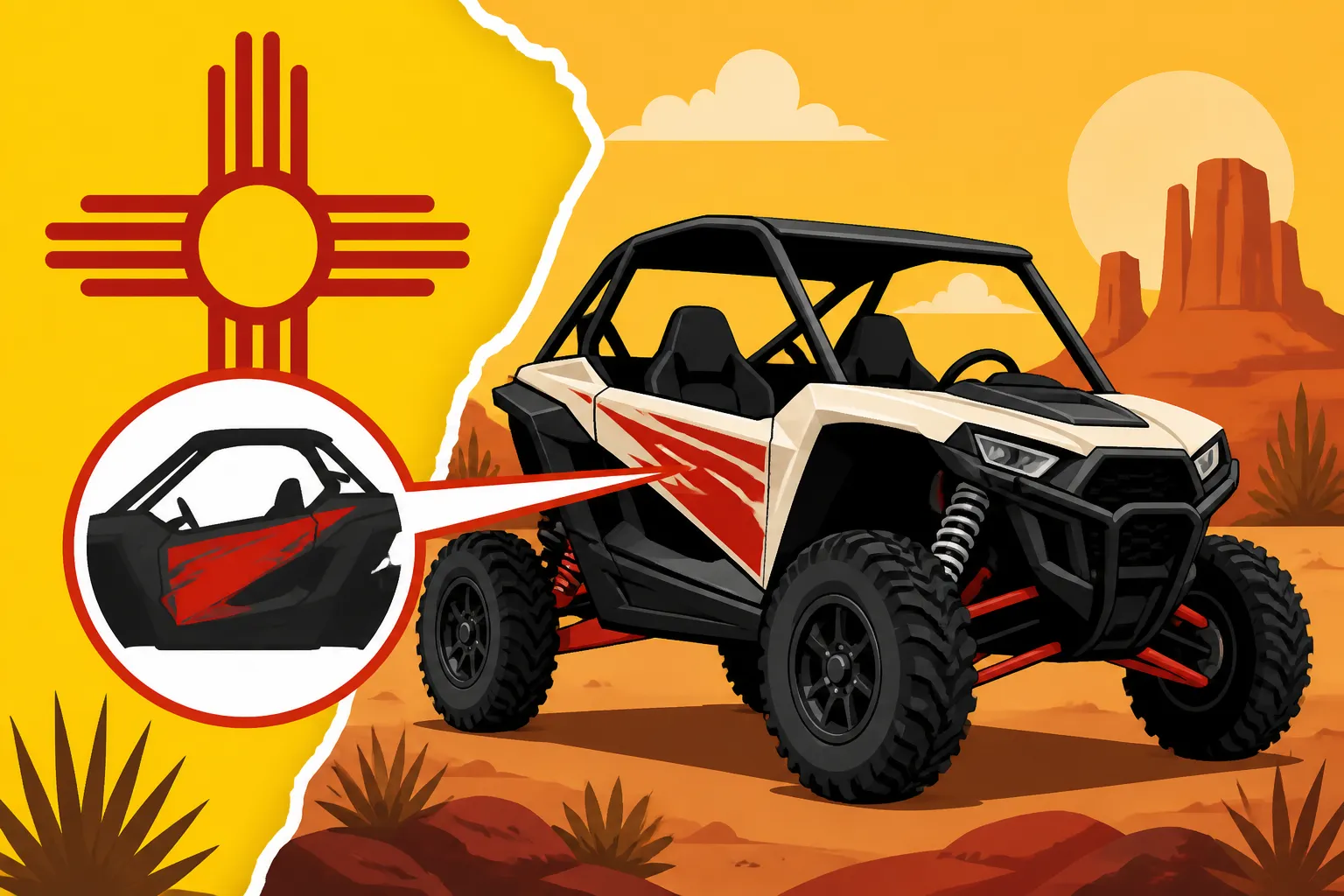
For side-by-sides, New Mexico law dictates that the decal must be affixed to the left rear quarter panel of the machine. Now, what exactly is a "left rear quarter panel" on a side-by-side? Think of it as the body panel on the driver's side, towards the back of the machine, just behind the rear wheel well. This location is chosen for maximum visibility while minimizing the risk of it being obscured by mud, equipment, or passengers.
It’s a flat, prominent surface that is typically easy to spot without having to walk around the entire vehicle. If your side-by-side has storage compartments or a bed, it would be on the solid bodywork near that area, not on a removable door or tailgate. This specific placement ensures uniformity across all side-by-sides, making enforcement straightforward. Take a moment to locate this exact spot on your machine before you even peel off the backing. For more general rules, you might want to read [Where New Mexico Decals Mount by Vehicle Type].
Step-by-Step Decal Application for Side-by-Sides
Applying the decal correctly is crucial for its longevity and readability. It’s not just a sticker; it's an official document.
- Clean the Surface Thoroughly: This is step number one and arguably the most important. The left rear quarter panel must be absolutely clean, dry, and free of any dirt, dust, mud, wax, or grease. Use an automotive-grade degreaser or rubbing alcohol and a clean cloth. Let it dry completely. A clean surface ensures maximum adhesion and prevents the decal from peeling prematurely.
- Position Before Sticking: Carefully hold the decal against the chosen spot on the left rear quarter panel without removing the backing. Take your time to eyeball it. Make sure it’s straight and not going to be easily scratched or peeled by your boots, gear, or brush on the trail.
- Apply Slowly and Smoothly: Peel off one corner of the decal backing, align it carefully, and begin pressing it down from that corner. Use a squeegee (a credit card wrapped in a soft cloth works too) to smooth it out as you slowly peel the rest of the backing away. Work out any air bubbles as you go, pushing them towards the edges.
- Final Press: Once the entire decal is applied, press firmly over the entire surface, especially the edges, to ensure full contact. Give it some time to cure before exposing it to harsh conditions, though in New Mexico's climate, that might mean just letting it sit in the sun for an hour or two.
Proper application means your decal will stay put for the entire registration period. You can find more specific guidance on where to put it in [Where the Decal Goes on an ROV Quarter Panel].
Common Mistakes to Avoid During Placement
It's easy to make a small error that can lead to big problems. Here are some common pitfalls to steer clear of:
- Applying to a Dirty Surface: This is the most frequent mistake. A decal applied to a dusty or greasy surface will inevitably peel and fall off, leaving you without proof of registration.
- Applying Over a Curved or Textured Surface: While the quarter panel usually offers a flat spot, avoid highly curved areas or heavily textured plastics. The decal needs full, even contact to adhere properly.
- Placing it Too Low or Too High: The decal should be at a reasonable height, visible from a standing position without having to bend down or climb onto the machine. Placing it too low risks it being caked in mud, while too high might put it out of a typical sightline.
- Obscuring with Accessories: Don't put the decal in a spot that will be covered by a cooler, spare tire, or other accessories you frequently attach to your side-by-side. The whole point is visibility.
- Not Applying Both Decals: If you plan on using both off-highway and paved roads, remember that you'll need both the yellow and the green decals displayed. They typically go side-by-side, or one above the other, on that same left rear quarter panel. Make sure there’s enough room for both if you opt for both.
Taking a few extra minutes to apply your decal correctly can save you a significant amount of frustration and potential fees in the long run.
Consequences of Improper Decal Placement
You might think, "It's just a sticker, who cares exactly where it goes?" But New Mexico MVD and law enforcement do care, and ignoring the rules can lead to consequences that put a damper on your riding plans. It’s not just about getting caught; it’s about respect for the system that helps maintain our riding areas.
Potential Fines and Citations
The most immediate consequence of improper decal placement is the risk of a fine. An officer or ranger conducting a routine check might deem your decal unreadable, obscured, or simply not in the correct location. This could be interpreted as operating an unregistered OHV, which carries penalties. New Mexico law enforcement can issue citations for these types of violations, and those fines can add up quickly. It's not worth the risk for something that takes a few minutes to do correctly. Ensuring your decal is properly affixed is a small step to avoid a potentially costly ticket. To understand more about what an unregistered OHV can cost you, see [New Mexico Fines for an Unregistered OHV].
Hassles During Roadside Checks
Even if you avoid a full-blown citation, an improperly placed or unreadable decal can lead to inconvenient roadside stops. Imagine you're out enjoying a beautiful day on the trails, and a ranger pulls you over. Instead of a quick wave-through, you're now spending time explaining why your decal is on the right fender, or why it's peeling off and the numbers are illegible. These interactions can be time-consuming and frustrating, delaying your ride and creating unnecessary stress. Having your decal correctly placed, clean, and visible ensures these checks are swift and smooth, allowing you to get back to what you love doing: riding.
Ensuring Your Decal Stays Put
Once your decal is on, you want it to stay there. The New Mexico desert sun, mud, water, and trailside brushes are all conspiring to make it peel or fade. To ensure it stays put:
- Avoid High-Pressure Washing Directed at Edges: When cleaning your side-by-side, be mindful of where you spray. A high-pressure washer aimed directly at the decal's edges can quickly cause it to lift.
- Periodically Check Adhesion: Every so often, give your decal a quick inspection. Press down on the edges to make sure they're still firmly adhered. If you notice any lifting, you might be able to press it back down before it gets worse.
- Protect from Scrapes: If you're riding through tight trails, be aware of branches and rocks that could snag or scratch the decal. Sometimes, a little extra caution on a narrow path can save your decal.
A well-applied and maintained decal means one less thing to worry about when you're out exploring New Mexico's incredible landscapes.
Beyond Placement: Maintaining Your Decal and Registration
The decal itself is only one part of the equation. Keeping your registration current and ensuring all your paperwork is in order is vital for responsible OHV ownership in New Mexico. It's a continuous process, not a one-and-done task.
When to Replace a Damaged Decal
Decals don't last forever, especially in the harsh New Mexico environment. Sun exposure, mud, scrapes, or even an accidental power wash can render a decal unreadable or cause it to fall off. If your decal is damaged, faded, or missing, it's considered an unregistered machine by MVD standards. You can't just operate with a half-peeled sticker.
Fortunately, New Mexico MVD has a process for replacing damaged decals. You'll typically need to contact them and pay a small fee for a replacement. It's a quick and easy process that ensures you remain compliant. Don't wait until you're pulled over to realize your decal is illegible. Be proactive. For more details on this, look up [Replacing a Lost New Mexico Decal].
Keeping Your Registration Current
New Mexico OHV registrations are typically valid for two years. It's easy to forget when that renewal date is approaching, especially if you don't ride year-round. Mark your calendar, set a reminder on your phone, or create a recurring event to ensure you don't miss the renewal window.
Renewing your registration is crucial. An expired registration means you're operating illegally. The MVD usually sends out renewal notices, but it's ultimately your responsibility to keep track. You can often renew online or at any MVD office. The cost of renewing is generally less than the initial registration fee, but the peace of mind of being legal is priceless. For more on renewal, see [New Mexico's $50 Biennial Renewal].
What to Do on a Change of Ownership
Buying or selling a side-by-side introduces a new set of responsibilities regarding registration and decals. When you sell a machine, the decal stays with it, but the registration itself needs to be transferred to the new owner. It's critical for both parties to complete the necessary paperwork promptly.
As the seller, you'll need to provide the buyer with a bill of sale. Services like LawDepot can provide customizable templates for a [A New Mexico Bill of Sale for an ATV] or OHV, which is incredibly helpful for ensuring all the necessary details are captured legally. This document protects both you and the buyer and confirms the transfer of ownership. As the buyer, you’ll then take that bill of sale, along with the title (if applicable), to the MVD to register the machine in your name and receive your new decals. Failing to transfer registration means the machine is still legally tied to the previous owner, which can create a host of problems. [Renewing on a Change of Ownership in New Mexico] is an important read in this situation.
Understanding and adhering to New Mexico's OHV decal and registration rules for your side-by-side isn't just about avoiding fines; it's about being a responsible member of the riding community. By correctly placing your decal, maintaining its condition, and keeping your registration current (and using reliable resources like LawDepot for important documents), you contribute to the safety and enjoyment of New Mexico's breathtaking off-highway experiences for everyone.
| Decal Type | Purpose | Placement on Side-by-Side | Key Requirement |
|---|---|---|---|
| Yellow Decal | Standard off-highway use | Left rear quarter panel | Valid New Mexico OHV registration |
| Green Decal | Paved road use (opt-in areas only) | Left rear quarter panel (with yellow) | Valid NM OHV registration & liability insurance |
Disclaimer
This article is for general informational purposes only and does not constitute professional advice. Laws, prices and regulations vary by location and change over time. Consult a qualified professional for guidance on your specific situation.