Registering a Farm Machine in New Mexico
It can be incredibly frustrating to figure out the maze of rules and regulations when you're just trying to get work done on the farm. You've got an ATV or a UTV, it's a workhorse for your agricultural tasks, and suddenly you're wondering if that trip across the county road to the back forty means you need a full-blown registration. This guide is here to untangle the specifics of registering a farm machine in New Mexico, helping you understand when and how your agricultural off-highway vehicle (OHV) needs to be registered with the Motor Vehicle Division (MVD), ensuring you stay compliant without unnecessary headaches.
Understanding What "Farm Machine" Means in New Mexico OHV Law
When we talk about "farm machines" in the context of off-highway vehicles, it's easy to assume they're automatically exempt from certain rules because, well, they're for work, right? But New Mexico's laws are pretty specific, and it's less about what the machine is and more about how and where you're using it. This distinction is crucial for understanding your registration obligations.
Defining Off-Highway Vehicles for Agricultural Use
An off-highway vehicle (OHV) in New Mexico broadly includes ATVs, UTVs (side-by-sides), dirt bikes, and even some specialized four-wheel-drive vehicles designed for off-road use. For agricultural purposes, we typically see ATVs and UTVs deployed due to their versatility and hauling capabilities. The key here is that the type of vehicle doesn't change just because it's being used on a farm. A UTV used to check fences is still legally a UTV, subject to the same general OHV definitions as one used for recreation.
The state doesn't necessarily have a separate "farm vehicle" registration category for OHVs in the same way it might for tractors or farm trucks that stay exclusively on private property. Instead, it looks at where the machine is operating. If your ATV or UTV is exclusively used on your private ranch or farm property and never touches any public land—not even crossing a paved county road for twenty feet—then the MVD might not require it to be registered. However, the moment that wheel hits public dirt or pavement, even briefly, the standard OHV registration rules typically kick in. This is where a lot of confusion, and potential frustration, often arises for landowners and farmers. You're just trying to get from one pasture to another, and suddenly, you're navigating state laws.
Common Farm Tasks Performed by OHVs
Let's think about the practical applications of an OHV on a farm or ranch. These machines are incredible tools, far more nimble and fuel-efficient for many tasks than a full-sized pickup. You might be using your ATV to check on irrigation lines across a large field, or perhaps your UTV is hauling fencing supplies to a remote corner of your property. Farmers and ranchers often rely on these machines for:
- Inspecting livestock and fences: Zipping across acres to check on cattle or repair a downed fence line.
- Hauling feed or supplies: Transporting bags of feed, tools, or even small equipment trailers.
- Spraying weeds or fertilizing: Attaching sprayers or spreaders to cover large areas efficiently.
- General property maintenance: Moving brush, scouting land, or accessing hard-to-reach areas.
In all these scenarios, the primary purpose is agricultural work. However, the moment that work takes your machine onto land that isn't strictly your private property—even if it's public land you have permission to access for grazing, or simply crossing a public road to get to another part of your land—that's when the New Mexico MVD wants to know about it. It’s not about the noble work you're doing, but the jurisdiction of the ground beneath your tires. This often means that most working farms and ranches, even those with vast private acreage, will eventually encounter situations where their OHVs interact with public roads or public lands, making registration a very real necessity.
The New Mexico Registration Requirement for Farm OHVs
It’s easy to think, "This is a work vehicle, it stays on the farm, so why bother with registration?" But New Mexico's regulations are designed with public safety and land management in mind, and those rules extend to any OHV that might interact with public spaces. Understanding when and why your farm machine needs to be registered can save you from unexpected fines and headaches down the road.
When a Farm Machine Needs to Be Registered
The general rule in New Mexico is quite straightforward: if your ATV or UTV is operated on any public land, road, or trail, it must be registered with the Motor Vehicle Division (MVD). This includes public paved roads, dirt county roads, Bureau of Land Management (BLM) land, National Forests, State Trust Land, and even small strips of public right-of-way that might separate parcels of your private property. It doesn't matter if you're only on public land for five minutes or five hours; the requirement applies.
Let's imagine you have a ranch that's split by a dirt county road. You use your UTV daily to check livestock on both sides. Even though the road is unpaved and seems like an extension of your property, it's a public right-of-way. In this scenario, your UTV absolutely needs to be registered. If you never, ever leave your fence line, and your property is completely self-contained without needing to cross any public access points, then you might be able to forgo registration. However, this is a rare situation for many New Mexico farms and ranches, which often border or are interspersed with public lands or easements. Many property owners discover this reality the hard way when a ranger or sheriff's deputy spots an unregistered machine. [New Mexico Fines for an Unregistered OHV] can be quite a shock, often leading to a scramble to get compliant.
The Role of the MVD in Farm Machine Registration
Unlike some states that might have specialized agricultural departments or different agencies for OHV registration, in New Mexico, it all goes through the Motor Vehicle Division (MVD). This is the same department that handles your car, truck, or motorcycle registration and driver's licenses. While it might seem a bit odd to register an ATV that hauls hay at the same place you get your car's tags, that's how the system is set up here. The MVD is the central hub for all vehicle registrations, including OHVs.
The process for [New Mexico's First OHV Registration] for a farm machine isn't dramatically different from registering a recreational OHV. You'll go to an MVD office, present your documentation, and complete the necessary forms. The MVD ensures that all OHVs operating on public land are accounted for, which helps fund trail maintenance, safety programs, and enforcement. So, while your machine's primary purpose might be agricultural, its journey onto public land puts it squarely under the MVD's purview. It’s a unified approach, aiming for consistency across all vehicle types that share public pathways, whether they are paved highways or dirt tracks.
Navigating the Registration Process for Your Farm OHV
Registering your farm OHV might seem like just another piece of paperwork, but getting it right ensures you can use your machine effectively without legal worries. The MVD process, while sometimes a bit of a wait, is straightforward once you know what to bring.
Essential Documents and Information You'll Need
Before you even head to the MVD, gathering all your paperwork is critical. Showing up unprepared can lead to multiple trips, which is a frustration nobody needs when they've got work waiting on the farm. You'll need to demonstrate clear ownership and provide identification.
Here's a breakdown of what you'll typically need:
- Proof of Ownership: This is paramount. For a new machine, you'll need the Manufacturer's Statement of Origin (MSO) or Certificate of Origin. For a used machine, you'll need the vehicle's title, properly signed over to you. If the title is missing, it can complicate things significantly, and you might need to apply for a bonded title or go through a more involved process. Always make sure the seller provides a clear title when buying used. [New Mexico OHV Title Requirements]
- Bill of Sale: Even if you have the title, a Bill of Sale is highly recommended, especially for used machines. It provides a clear record of the transaction, including the purchase price, date, and buyer/seller information. This can be crucial for tax purposes and to prove you lawfully acquired the machine. For a standardized document, resources like LawDepot can provide customizable bill of sale templates that meet legal requirements, ensuring all necessary details are captured accurately. [A New Mexico Bill of Sale for an ATV]
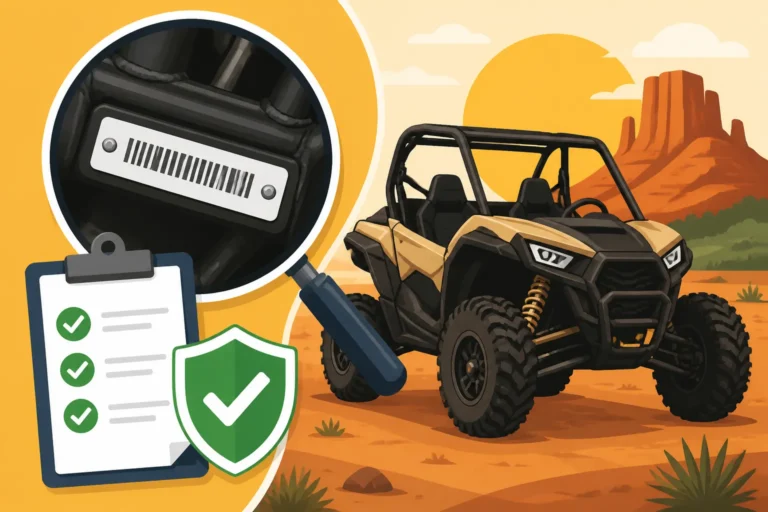
- Vehicle Identification Number (VIN) Verification: The MVD needs to verify the VIN. For new machines, this is usually straightforward. For used machines, especially older ones, they might require a physical inspection or a completed VIN inspection form from a law enforcement officer or MVD agent. Make sure the VIN on your machine matches all your documents. [New Mexico OHV VIN Requirements]
- Personal Identification: You'll need a valid New Mexico driver's license or state ID card.
- Proof of New Mexico Residency: If your ID isn't enough, you might need additional proof like a utility bill or lease agreement.
- Proof of Insurance: While not always required for the initial registration of an OHV that only uses off-highway trails, if you plan to ever operate your farm machine on paved public roads (even just crossing them), you will need proof of liability insurance. This is a critical step, as [New Mexico ATV Insurance Requirement] becomes mandatory for paved road use.
Having all these [New Mexico OHV Registration Paperwork] items in order before you go will streamline your visit to the MVD and help avoid delays.
Step-by-Step Registration at the MVD
Once you've got your documents in hand, the actual process at the MVD office generally follows these steps:
- Visit an MVD Office: Find your nearest New Mexico MVD office. It's often helpful to check their website for current hours and any potential appointment requirements, as wait times can vary greatly.
- Submit Paperwork and Forms: Present your documents (MSO/title, bill of sale, ID, etc.) to the MVD agent. You'll likely fill out an Application for Vehicle Registration and Title (Form MVD-10002) and potentially an Odometer Disclosure Statement if applicable.
- VIN Inspection (if required): If your machine needs a VIN inspection, an MVD agent or authorized law enforcement officer will conduct it. Sometimes this can be done at the MVD office, other times you might need to go to a separate location.
- Pay Fees: You'll pay the registration fees. [New Mexico OHV Registration Cost] typically includes a registration fee and a plate/decal fee. This registration is generally valid for two years. [How Long a New Mexico OHV Registration Lasts]
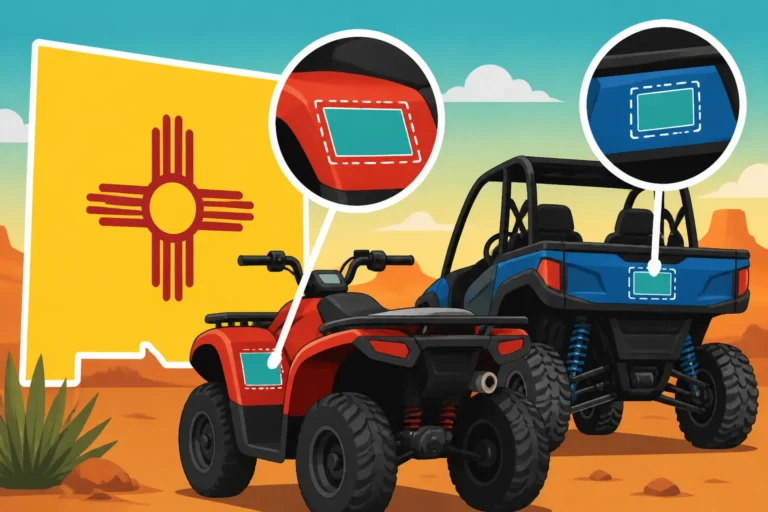
- Receive Decal and Registration Certificate: Once everything is processed and fees are paid, you'll receive your OHV registration certificate and the appropriate decal(s) to affix to your machine. For farm machines, depending on your intended use, you'll generally receive a yellow off-highway decal. [New Mexico's Yellow Off-Highway Decal] If your farm machine will ever cross or operate on paved public roads, you will need a green decal, which allows on and off-highway use. [New Mexico's Green On and Off-Highway Decal] The MVD agent can guide you on which decal is appropriate for your specific needs, but it's important to be clear about how you plan to use the machine.
This process at [New Mexico OHV Registration at MVD] is designed to be comprehensive, ensuring that all necessary information is collected for state records and public safety.
Specific Considerations for Farm Use and Paved Roads
For farm machines, the biggest "what if" often revolves around paved roads. While your primary use is agricultural and likely off-road, many farms and ranches require crossing paved county or state roads to access different fields, pastures, or even to get to town for supplies. This isn't just a minor detail; it's a significant legal distinction.
If your farm machine will ever touch a paved public road, even for a short distance or just to cross it, you will need:
- A Green On-and-Off Highway Decal: This decal, distinct from the yellow off-highway-only decal, signifies that your machine is allowed to operate both off-road and on approved paved public roads. [Why the Green Decal Lets You Onto Pavement] Without this, even a quick dash across the asphalt is a violation.
- Proof of Financial Responsibility (Insurance): As mentioned, New Mexico's Mandatory Financial Responsibility Act applies to any vehicle operating on public paved roads. This means your OHV must carry at least the minimum liability insurance coverage. Ensure your policy covers OHV operation on public roads.
- Compliance with Road Use Equipment Rules: If you're going to be on paved roads, even briefly, your OHV must comply with certain equipment requirements. This includes working headlights, taillights, a horn, and mirrors. While farm machines are built rugged, they might not always come standard with all these road-legal accessories, so check your setup.
It's tempting to think that "farm use" somehow grants an exemption from these rules, but that's generally not the case when public roads are involved. The state prioritizes the safety of all road users. Ignoring these requirements can lead to citations, fines, and even vehicle impoundment, disrupting your work and adding unnecessary expenses. It’s always better to be fully compliant, especially when you’re relying on that machine for your livelihood.
Keeping Your Farm OHV Compliant and Legal
Once your farm OHV is registered, the journey doesn't end there. There are ongoing responsibilities to ensure you remain compliant with New Mexico law. This includes keeping your registration current, knowing what to do if you sell the machine, and understanding the potential consequences of neglecting these rules.
Renewals and Transfers
New Mexico OHV registrations are typically valid for two years. This means you'll need to remember to [Renewing a New Mexico OHV Registration] biennially to keep your farm machine legal for public land use. The MVD usually sends renewal notices, but it's ultimately your responsibility to ensure it's renewed on time. You can often renew online or by mail, making it a relatively simple process once you're in the system.
If you decide to sell your farm OHV, or perhaps upgrade to a newer model, you'll need to transfer the registration to the new owner. This involves properly signing over the title and, ideally, providing a comprehensive bill of sale. For this step, once again, a reliable resource for legal forms like LawDepot can be incredibly helpful. Using their templates for a bill of sale can ensure all critical information is included, protecting both the buyer and seller. The new owner will then need to take these documents to the MVD to complete the [New Mexico OHV Registration Transfer] into their name. Remember, until the transfer is complete, your name remains associated with the vehicle, which could lead to complications if the new owner doesn't follow through.
Potential Penalties for Non-Compliance
Operating an unregistered farm OHV on public land in New Mexico, or operating a registered machine without the correct decal for paved road use, can lead to serious consequences. Law enforcement officers, whether state police, county sheriffs, or even forest rangers, have the authority to pull over OHVs and check for proper registration.
The penalties for operating an unregistered OHV can include:
- Fines: These can be substantial, and subsequent offenses often come with increased fines. [New Mexico Fines for an Unregistered OHV] can quickly add up, easily surpassing the cost of registration.
- Impoundment: Your OHV could be impounded, leading to towing and storage fees on top of the initial fine. This can be a major disruption to your farm operations.
- Citation for related offenses: If you're stopped for an unregistered OHV, the officer might also check for other compliance issues, such as lack of insurance (if on a paved road), improper equipment, or even operator age restrictions, leading to multiple citations.
It's also important to be aware that local ordinances might exist in specific counties or municipalities that add further restrictions or requirements for OHV use, even for agricultural purposes. Always check with your local government offices if you have specific concerns about operating your machine within city or county limits that might go beyond state law. The general rule is: when in doubt, register and understand the rules.
Best Practices for Farm OHV Use
To ensure smooth, legal, and safe operation of your farm OHV, consider these best practices:
- Always Carry Proof of Registration and Insurance: When you're operating your machine on public land or roads, always have your current registration certificate and proof of insurance (if applicable) with you. A physical copy or a clear digital image on your phone can suffice, but having it readily accessible is key.
- Understand Decal Placement: Ensure your decal(s) are affixed correctly and visibly to your OHV as required by MVD rules. Improper placement can lead to questions from law enforcement.
- Regular Maintenance and Safety Checks: While not directly a registration requirement, a well-maintained machine is a safe machine. Ensure brakes, lights, tires, and all safety features are in good working order.
- Stay Informed: Laws and regulations can change. Keep an eye on updates from the New Mexico MVD or Department of Game and Fish regarding OHV use.
By proactively managing your farm OHV's registration and adhering to all relevant laws, you can continue to use these indispensable machines for your agricultural needs without the worry of unexpected legal trouble. They are powerful tools, and respecting the rules ensures they remain so.
| Aspect of Use | Private Land Only | Public Dirt Roads/Trails | Paved Public Roads (Crossing/Brief Use) |
|---|---|---|---|
| Registration Req. | Generally Not Required | Required (Yellow Decal) | Required (Green Decal) |
| Insurance Req. | Recommended | Recommended (but not state-mandated for off-road) | Required (Minimum liability coverage) |
| Decal Type | N/A (or Yellow if registered but never leaves private) | Yellow Off-Highway Decal | Green On- and Off-Highway Decal |
| Road Equipment Req. | N/A | N/A (but basic safety equipment recommended) | Headlights, Taillights, Horn, Mirrors (Mandatory) |
| Purpose | Exclusively Agricultural work on private property | Agricultural work, recreation, crossing public easements | Agricultural access between private parcels or public land |
Disclaimer
This article is for general informational purposes only and does not constitute professional advice. Laws, prices and regulations vary by location and change over time. Consult a qualified professional for guidance on your specific situation.