Renewing a New Mexico OHV Registration
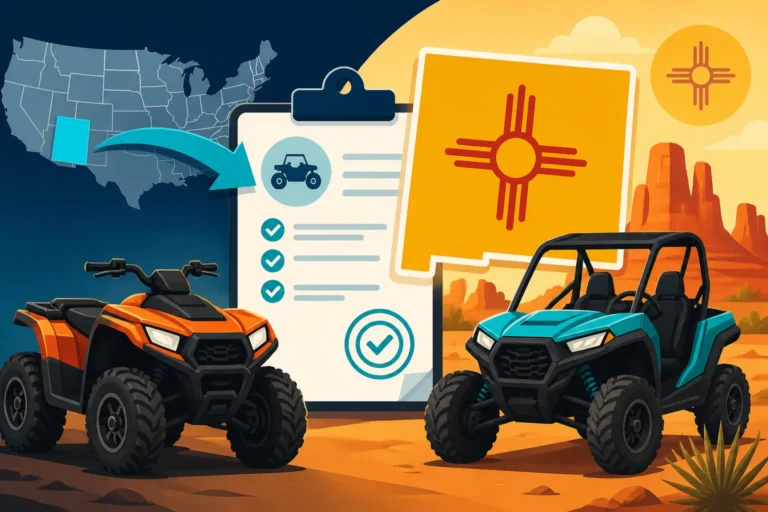
We've all been there: you're gearing up for a fantastic weekend ride out on the trails near Elephant Butte or planning a trip through the Carson National Forest, and suddenly it hits you – "Is my OHV registration still current?" That moment of dread, scrambling to find paperwork, is a frustration every off-highway vehicle owner in New Mexico knows well. This guide is here to walk you through everything you need to know about renewing your New Mexico OHV registration, making sure your machine is legal and ready for adventure without any last-minute surprises.
The Basics of New Mexico OHV Registration Renewal
Let's face it, keeping track of vehicle registrations can feel like a never-ending cycle, and your OHV is no exception. In New Mexico, keeping your off-highway vehicle properly registered isn't just a suggestion; it's a requirement to enjoy those incredible trails and open spaces our state offers. Ignoring it can lead to some real headaches, not to mention fines that put a damper on your riding budget.
Why Renewal is Necessary and How Often
Think of your OHV registration as your machine's passport to the stunning landscapes of New Mexico. Just like a passport, it has an expiration date, and keeping it current is essential for legal operation on public lands and designated trails. The state requires that OHVs be registered, and this registration isn't a one-and-done deal. It's a regular commitment to ensuring your vehicle meets state standards and that you're contributing to the resources that maintain our riding areas.
In New Mexico, OHV registrations are typically biennial, meaning they need to be renewed every two years. This two-year cycle is fairly standard, giving you a decent window before you have to think about it again, but it's easy to forget if you're not careful. This period is a good time to reassess your machine's condition, ensure all safety equipment is up to snuff, and confirm you're still in compliance with local regulations. Don't wait until the last minute; it’s always best to be proactive. You can find more details on [How Long a New Mexico OHV Registration Lasts].
The Importance of a Timely Renewal
Life gets busy, and sometimes a renewal notice can get lost in the shuffle, or you might simply forget the exact date. However, letting your OHV registration lapse in New Mexico can lead to a few unpleasant situations. The most immediate concern is the risk of a citation if you're caught riding an unregistered machine on public land. Nobody wants a fun day on the trails interrupted by a conversation with a ranger or law enforcement officer, especially when it could have been easily avoided.
Beyond legal penalties, a timely renewal ensures continuity. If you have any plans involving your OHV, like participating in an organized event or simply planning a remote camping trip where you'll use your machine, you'll need current registration. It's a small administrative task that prevents much bigger problems down the road, keeping your adventures smooth and worry-free. Make sure you understand [When a New Mexico OHV Registration Expires] so you're never caught off guard.
Understanding Your Registration's Expiration
Knowing exactly when your OHV registration expires is your first line of defense against an accidental lapse. When you first register your OHV, you'll receive a registration certificate and decals that clearly show the expiration date. It's crucial to keep this information handy, perhaps adding a reminder to your calendar or phone. The New Mexico Motor Vehicle Division (MVD), which handles OHV registrations, also typically sends out renewal notices as a courtesy. However, relying solely on these notices isn't always the best strategy, as mail can sometimes go astray.
Taking a moment to check your current decals and registration certificate periodically can save you a lot of trouble. If you’re ever unsure, the MVD has resources to help you confirm your registration status. Being proactive about tracking this date will ensure you never miss a beat and can continue enjoying New Mexico's fantastic riding opportunities without interruption.
Step-by-Step Guide to Renewing Your OHV Registration
Renewing your OHV registration in New Mexico doesn't have to be a daunting task. While it requires a bit of attention to detail, the process is generally straightforward once you know what to expect. Just like preparing for a big ride, having all your gear in order makes the journey much smoother.
Gathering Your Essential Documents
Before you even think about heading to the MVD or logging online, the very first step is to gather all the necessary paperwork. This preparation will significantly speed up your renewal process. Here's a quick checklist of what you'll typically need:
- Your current OHV registration certificate: This is usually the easiest way to provide proof of your existing registration. It contains all the vital information about your machine and you as the owner.
- Proof of identification: This could be your New Mexico driver's license or another government-issued ID.
- The vehicle's VIN (Vehicle Identification Number): While often on your registration certificate, having it separately can be helpful.
- Payment for the renewal fee: As this article cannot state current figures, be prepared for a standard fee for biennial renewal. This is known as [New Mexico's $50 Biennial Renewal]. It’s always a good idea to check the MVD website or call ahead for the most current fee information.
If you've had a change of address or name, you might need additional documentation to reflect those updates. It's always a good idea to ensure all your personal information is current with the MVD, not just for your OHV but for any vehicle registration. Should you need any specific legal forms to document ownership changes or other related matters, resources like LawDepot can be quite useful for preparing documents. This way, you’re not caught off guard by a missing document or an outdated address.
The Renewal Process: Online, Mail, or In-Person
New Mexico offers several convenient ways to renew your OHV registration, catering to different preferences and schedules.
- Online Renewal: This is often the quickest and most convenient option for many riders. The New Mexico MVD provides an online portal where you can typically enter your vehicle and personal information, pay the fee electronically, and receive confirmation of your renewal. It’s a great option if you're comfortable with online transactions and want to avoid a trip to an MVD office. Just make sure you have all your details handy and a stable internet connection. Learn more about [New Mexico OHV Registration Online].
- Renewal by Mail: If you prefer traditional methods, you can often renew by mail. You'll usually receive a renewal notice in the mail with instructions. You'll need to fill out the form, include a check or money order for the fee, and send it back. This method requires a bit more lead time to account for mailing in both directions, so plan accordingly to avoid any lapse.
- In-Person at an MVD Office: For those who prefer face-to-face interaction or have specific questions, visiting an MVD office is always an option. Be sure to bring all your gathered documents, including your ID and method of payment. While waiting times can vary, an in-person visit allows you to address any complex issues or ask questions directly with an MVD agent. This is where [What MVD Asks For at a Two-Year Renewal] comes into play.
No matter which method you choose, the goal is to successfully update your registration and receive your new decals for the upcoming two-year period.
What to Expect After You Renew
Once you've submitted your renewal, the process isn't quite over until you have those shiny new decals in hand. If you renewed online or by mail, your new registration certificate and decals will typically be sent to you by postal service. This can take anywhere from a few days to a couple of weeks, depending on processing times and mail delivery. It's important to keep your old, expired decals on your OHV until the new ones arrive, as proof that you're in the process of renewing.
Upon receiving your new decals, the next crucial step is proper placement. New Mexico has specific rules about where these decals should be affixed to your OHV, depending on the type of machine. Incorrect placement can lead to further scrutiny, so make sure they are clearly visible and in the designated spot. We’ll delve deeper into decal placement in a later section, but for now, just know that fresh decals are your badge of honor for being a responsible OHV owner. If you accidentally damage or lose your new decals, you'll need to know about [Replacing a Lost New Mexico Decal].
| Renewal Method | Typical Timeframe | Pros | Cons |
|---|---|---|---|
| Online | Immediate confirmation, decals by mail (days-weeks) | Fastest submission, convenient, avoid MVD lines | Requires internet access, wait for mailed decals |
| Weeks (submission + processing + mail back) | Can be done from home, no MVD visit | Slowest method, relies on postal service, requires planning | |
| In-Person | Same-day (if processed quickly), decals often issued on spot | Direct assistance, immediate resolution, new decals in hand | Requires travel to MVD, potential wait times, limited hours |
Common Challenges and Solutions During Renewal
Even with the best intentions, sometimes the renewal process throws a curveball. From misplaced paperwork to changes in ownership, these situations can add a layer of complexity. But don't worry, there are usually straightforward solutions.
Lost Documents or Expired Registrations
It happens to the best of us: you go to renew, and your old registration certificate is nowhere to be found. Or perhaps you completely missed the expiration date, and your registration has been lapsed for a while.
- Lost Registration Certificate: If you've lost your original registration certificate, don't panic. The MVD can usually look up your vehicle's information using your VIN or your driver's license number. You may be able to request a duplicate certificate or simply proceed with the renewal using your identification and the machine's VIN. Having your VIN readily available is key in these situations.
- Expired Registration: An expired registration simply means you'll be renewing late. While you might face a small late fee, the process for renewal is generally the same. The most important thing is to get it current as soon as possible to avoid any issues on the trails. There isn't typically a severe penalty for late renewal beyond the standard fees, as long as you're not caught operating the OHV illegally during the lapsed period.
The best solution to these challenges is proactive record-keeping and setting reminders. But if you do find yourself in one of these predicaments, contacting the MVD directly or visiting their office will usually resolve the issue.
Renewing After a Change of Ownership
Sometimes, the renewal process coincides with a change in who owns the OHV. Perhaps you recently bought a used machine, or you're renewing a registration that was initially in someone else's name. This situation requires a few extra steps beyond a simple renewal.
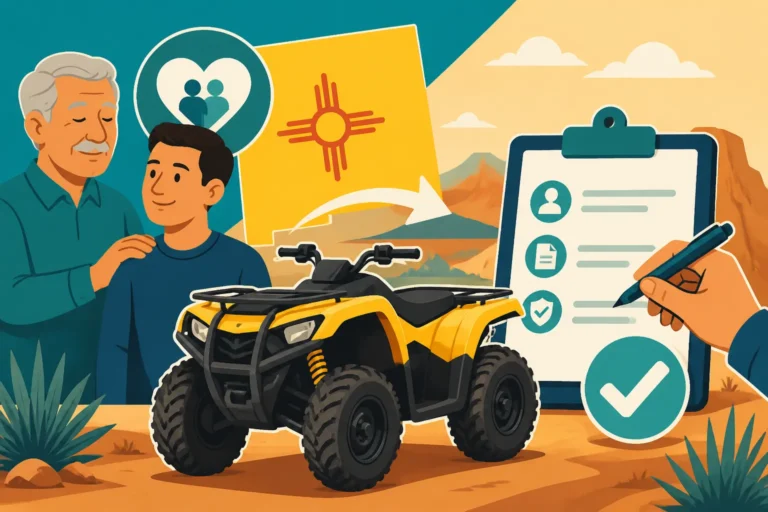
When an OHV changes hands in New Mexico, the new owner is responsible for titling and registering the vehicle in their name. This often involves providing a bill of sale, the previous title, and sometimes other supporting documents to the MVD. Once the OHV is properly titled in your name, you can then proceed with the registration renewal. It’s not just a matter of paying the fee; it’s about establishing legal ownership first. This scenario is specifically addressed in [Renewing on a Change of Ownership in New Mexico].
For situations involving transfer of ownership, especially private sales, services like LawDepot can assist with creating a legally sound bill of sale or other necessary transfer documents, ensuring both buyer and seller are protected. Getting these documents correct from the outset saves a lot of hassle during the registration process.
Understanding Fees and Where They Go
When you renew your OHV registration in New Mexico, you'll pay a fee. While this article cannot provide exact figures, it's generally a set amount for the biennial renewal. It’s important to understand that these fees aren't just arbitrary charges; they play a vital role in supporting the OHV program within the state.
A significant portion of the funds collected from OHV registrations often goes towards various initiatives, including:
- Trail maintenance and development: These funds help keep our favorite trails in good condition, ensuring they are safe and accessible for all riders.
- OHV education and safety programs: Promoting safe riding practices and educating new riders is crucial for accident prevention and responsible use of our public lands.
- Enforcement of OHV laws: Supporting law enforcement efforts helps maintain order and protect natural resources.
So, while paying the fee might feel like just another expense, remember that it's an investment in the very activity you love. Knowing [New Mexico OHV Registration Cost] can help you budget appropriately for your adventures.
Keeping Up with New Mexico OHV Laws and Decals
Staying registered is only one part of the equation; understanding and complying with New Mexico's OHV laws, especially regarding decals and paved road use, is equally important. These regulations are designed to ensure safety, minimize environmental impact, and provide clarity on where and how you can ride.
Decal Placement and What the Colors Mean
New Mexico uses a system of colored decals to indicate an OHV's registration status and its permissible use on certain roads. These decals aren't just for show; they serve a functional purpose for law enforcement and land managers.
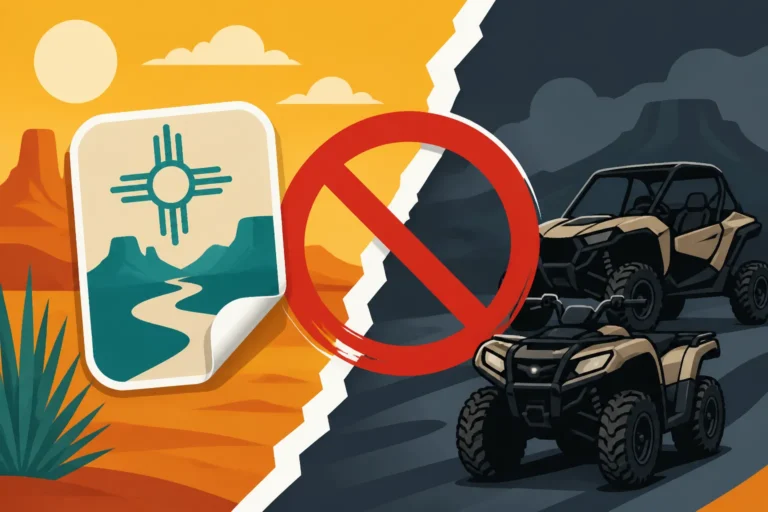
- Yellow Decals: These typically signify that your OHV is registered for off-highway use only. If your machine bears a yellow decal, it means it's generally restricted to designated trails, off-highway areas, and private property. You should not operate a yellow-decaled OHV on paved public roads, except for very limited, specific crossings or in areas explicitly designated as open to OHVs.
- Green Decals: A green decal indicates that your OHV is equipped and registered for both off-highway and on-highway (paved road) use. This means your machine has met additional requirements, such as specific lighting, mirrors, and insurance, allowing you to ride on certain paved public roads where permitted by local ordinance. Having a green decal significantly expands your riding opportunities.
The placement of these decals is also specific to your machine type. For example, on an ATV, the decal usually goes on the left rear fender. For a side-by-side or UTV, it's often placed on the left rear quarter panel. Dirt bikes typically have their decals on the left fork leg. Always refer to the MVD guidelines or [New Mexico OHV Decal Placement Rules] to ensure correct placement. Improperly placed or obscured decals can lead to unnecessary stops and questions. These distinct colors and specific placements are thoroughly explained in [New Mexico's Yellow and Green Decals].
Paved Road Plates and Your Renewal
The conversation around paved road use for OHVs in New Mexico has evolved over time. While the green decal signifies eligibility for paved road use, some machines may also require a specific paved road plate, depending on their classification and when they were registered or acquired. The rules regarding paved road plates have changed, so it's critical to understand how these updates impact your current or upcoming renewal.
Historically, there were sticker programs that allowed limited paved road use. However, these programs have been updated, and now specific plates may be issued for OHVs meeting certain criteria for paved road use. During your renewal, if you intend to use your OHV on paved roads, you'll need to confirm that your machine meets all the necessary equipment requirements (like lights, mirrors, and horn) and that your registration (and associated decal/plate) properly reflects this intent. This is a complex area, and it's always best to check the latest MVD regulations or inquire directly when you renew to ensure you are fully compliant. You can also dive deeper into [New Mexico's Paved Road Plate].
Staying Compliant on New Mexico Trails and Roads
Renewing your registration and understanding your decals are foundational steps, but compliance extends beyond just paperwork. As a responsible OHV rider in New Mexico, you should always:
- Carry your registration proof: Whether a physical certificate or a digital copy, always have proof of current registration with you when you ride.
- Know local ordinances: While the state sets overall rules, counties and municipalities can have their own ordinances regarding OHV use on local roads and trails. Always check before you ride in a new area.
- Adhere to safety regulations: This includes helmet laws, passenger restrictions (especially for minors), and operating your machine in a safe and responsible manner.
- Respect private property: Always know where you're riding and avoid trespassing on private land. If you're unsure about boundaries, err on the side of caution.
By staying informed and adhering to these guidelines, you not only protect yourself from penalties but also contribute to the positive image of the OHV community. This helps ensure that the amazing riding opportunities in New Mexico remain open and accessible for everyone to enjoy for years to come. Remember, agencies like the New Mexico Department of Game and Fish are partners in managing our outdoor spaces and appreciate riders who respect the rules.
Disclaimer
This article is for general informational purposes only and does not constitute professional advice. Laws, prices and regulations vary by location and change over time. Consult a qualified professional for guidance on your specific situation.