What the 2017 Law Changed for New Mexico Plates
Getting an off-highway vehicle (OHV) registered and legally ready for the beautiful trails and roads of New Mexico can sometimes feel like trying to solve a puzzle with missing pieces. For years, the system for plates and permits was a source of confusion, leaving many riders scratching their heads about what they needed and where to get it. This comprehensive guide will walk you through the significant changes brought about by the 2017 New Mexico law, explaining how it reshaped OHV registration and what it means for you today.
Before the 2017 Shift: The Old Plate System for New Mexico OHVs
Before the pivotal changes of 2017, New Mexico's system for off-highway vehicle registration and plate issuance was, to put it mildly, a bit convoluted and often frustrating for riders. There wasn't a clear, unified approach, leading to widespread confusion about what documentation was actually required, especially if you planned to use your ATV or UTV on any paved roads. Many folks just wanted to get out there and enjoy the vast landscapes, but the bureaucratic hurdles could sometimes feel like a bigger obstacle than any desert wash.
The Department of Game and Fish's Former Role
In the days leading up to the 2017 law, the New Mexico Department of Game and Fish (NMDGF) played a much more central role in the registration of OHVs. You'd go to them for your off-highway permit or sticker, which allowed you to ride on designated trails and public lands. This made sense for many, as NMDGF is deeply involved in wildlife and land management, so connecting OHV use to their purview felt natural for trail access. However, this system started to show cracks when riders desired more flexibility.
The main issue arose when people wanted to transition from purely off-road use to occasionally riding on paved county or city roads where permitted. The NMDGF system wasn't designed for this dual purpose. It was primarily focused on identifying machines for off-highway enforcement, not for integrating them into the broader vehicle code for street use. This created a distinct gap: how could an OHV, designed for dirt and dunes, legally navigate a paved road for a short stretch?
The Limited Paved Road "Sticker" System
To bridge this gap, a separate, often misunderstood "paved road sticker" was introduced. This sticker, different from your standard NMDGF off-highway permit, was meant to grant limited access to paved roads. It was a well-intentioned idea, aiming to allow riders to connect trails, access amenities in small towns, or simply get from their campsite to a staging area without having to trailer their machine for short distances.
However, the paved road sticker came with its own set of problems. Many riders found it difficult to understand its exact limitations, where to obtain it, and how it interacted with their primary off-highway registration. Was it a replacement for the NMDGF permit, or an addition? Did it cover all paved roads, or only specific ones? This ambiguity led to uncertainty and, unfortunately, often to riders unwittingly violating regulations. It wasn't a streamlined process, and the patchwork of requirements made it a headache for many New Mexico OHV enthusiasts.
The Landmark 2017 Legislation: A New Direction for OHV Plates
The frustrations with the old system eventually reached a critical mass, leading to the passage of new legislation in 2017. This law wasn't just a minor tweak; it was a fundamental shift, aiming to create a more cohesive and understandable framework for OHV registration and road use in New Mexico. The primary goal was to bring OHVs more squarely into the state's vehicle code, streamlining the process and clarifying exactly what was needed for both off-road and limited on-road riding.
Shifting Registration to the MVD
One of the most significant changes introduced by the 2017 law was the transfer of primary OHV registration duties from the Department of Game and Fish to the Motor Vehicle Division (MVD). This move was designed to centralize vehicle registration under one state agency, treating OHVs more like other vehicles on the road, even if their primary purpose remained off-road. For riders, this meant a change in venue for their registration needs. Instead of going to a Game and Fish office, they would now be visiting the MVD, the same place they'd register their car or truck.
This consolidation was intended to simplify the process, offering a more familiar environment for vehicle owners. It also meant that the MVD's existing infrastructure for titling, registration, and data management could be leveraged for OHVs, ideally leading to greater efficiency and accuracy. While it was a big change, the idea was that a single point of contact for all vehicle registration would ultimately benefit the public. [Why MVD Registers New Mexico OHVs] explains more about this administrative shift.
Consolidating Off-Highway and On-Highway Requirements
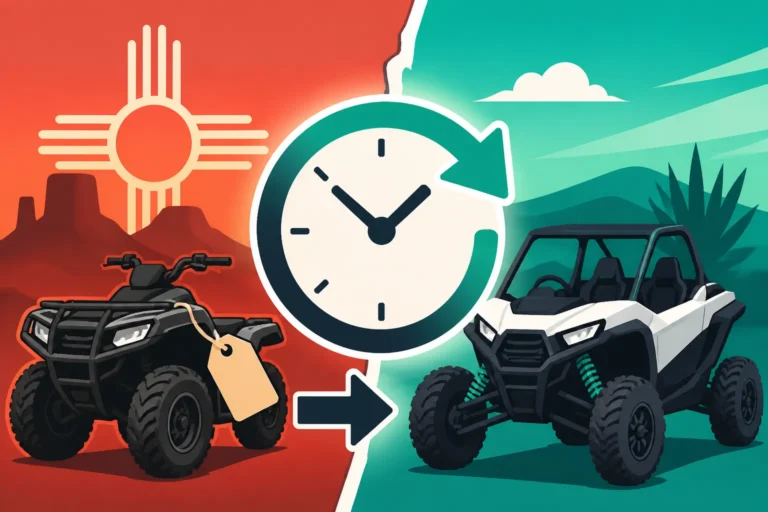
The 2017 law also sought to address the previous confusion surrounding separate permits for off-highway and paved road use. It aimed to create a more integrated system that clearly delineated how an OHV could be legally operated in various environments. The old, separate "paved road sticker" was retired, and in its place, a new system of decals was introduced, along with the option for a dedicated paved road plate if a machine met certain criteria.
This consolidation was crucial for reducing the guesswork that riders previously faced. Instead of two different agencies and two different pieces of paper, the MVD would now handle everything. The new system introduced distinct decals for different types of use, clearly indicating whether a machine was equipped for purely off-highway adventures or if it had met the additional requirements for limited paved road access. It was a step towards a more unified approach, even if it still required riders to understand which decal was right for their planned use.
Understanding the New Decal System: Yellow and Green OHV Decals
With the 2017 law, the old system of plates and stickers gave way to a much clearer, two-tiered decal system managed by the MVD. This was a welcome change for many who struggled to keep track of the prior requirements. Now, instead of a confusing array of permits, you essentially have two main colors to understand: yellow for purely off-highway adventures, and green for those machines equipped to handle a bit of pavement.
The Yellow Off-Highway Decal
The yellow decal is the standard, foundational registration for any off-highway vehicle operating on public lands in New Mexico. If your primary goal is to hit the trails, explore BLM lands, or ride in designated OHV areas, this is the decal you'll need. It signifies that your machine is properly registered for off-road use, contributing to trail maintenance and management efforts across the state. Think of it as your passport to the dirt.
Obtaining a yellow decal through the MVD means your OHV is accounted for and your registration fees are helping to fund the very trails you enjoy. This decal is universally required for most OHVs on public land, regardless of whether you ever plan to touch pavement. It's a clear signal to law enforcement and land managers that your machine is operating legally in the off-highway environment. [New Mexico's Yellow Off-Highway Decal] goes into more detail about its specific requirements and placement.
The Green On and Off-Highway Decal
The green decal is where the 2017 law really aimed to simplify the paved road question. This decal is specifically designed for OHVs that are not only registered for off-highway use but also meet additional equipment requirements to be operated legally on designated paved county and city roads. It's important to understand that "on-highway" doesn't mean "any highway" or "street legal everywhere." It's about specific, opened paved roads, usually for connecting trails or accessing services.
To qualify for the green decal, your OHV must typically meet certain equipment standards, such as having headlights, taillights, brake lights, mirrors, and a horn. These are the kinds of safety features that make an OHV more visible and controllable in a mixed traffic environment. The green decal essentially replaces the old, confusing paved road sticker, providing a more formal and integrated way to signal a machine's compliance with these additional requirements. [New Mexico's Green On and Off-Highway Decal] provides a deeper dive into what it takes to get this dual-purpose decal.
| Decal Type | Primary Use | Issuing Agency (Post-2017) | Previous System Equivalent | Key Purpose |
|---|---|---|---|---|
| Yellow | Off-Highway Only | MVD | NMDGF Off-Highway Permit | Legal operation on designated trails & public lands |
| Green | Off & Limited On-Highway | MVD | NMDGF Off-Highway + Paved Sticker | Legal operation on designated trails & opened paved roads |
Titling Your OHV in New Mexico: A Crucial First Step
Before you can even think about which color decal you need for your New Mexico adventures, there's a fundamental step that many new or out-of-state OHV owners might overlook: getting your machine properly titled. The 2017 law reinforced the importance of titling, making it an essential precursor to registration. Without a title in your name, you simply can't move forward with getting those all-important decals. This process establishes legal ownership and is absolutely critical, whether you're buying a brand-new side-by-side or a well-loved dirt bike.
Why a Title is Non-Negotiable
A title isn't just a fancy piece of paper; it's the legal document that proves you own your off-highway vehicle. In New Mexico, like with cars, motorcycles, or even houses, the title is the official record of ownership. When you purchase an OHV, especially from a private seller, transferring the title into your name is the single most important step to secure your investment and avoid future headaches. Imagine spending thousands on a quad only to find out you can't register it because the previous owner never properly transferred the title. It happens, and it's a nightmare scenario.
The 2017 law helped to solidify the MVD's role in this, emphasizing that proper titling through their system is a prerequisite for registration. This helps prevent theft, ensures that sales are legally documented, and creates a clear chain of ownership. When you bring your OHV to the MVD for registration, one of the first things they'll ask for is the title in your name. Don't skip this step, and if you're buying a used machine, make sure the seller provides a clear, properly signed title. [Titling an Off-Highway Vehicle in New Mexico] offers guidance on this critical process.
The Titling Process and Necessary Documents
The process for titling an OHV at the New Mexico MVD involves submitting several key documents. Generally, you'll need the manufacturer's statement of origin (MSO) if the machine is new, or the properly assigned title from the previous owner if it's used. You'll also typically need a bill of sale, especially for private party transactions, and proof of identification. The MVD will verify the vehicle identification number (VIN) to ensure it matches the documentation and that the machine isn't stolen.
For those engaging in a private sale, creating a robust bill of sale is highly recommended, even if not always strictly required in every scenario for titling. A well-drafted bill of sale, perhaps using a template from a service like LawDepot, can clearly outline the terms of the sale, the VIN, the purchase price, and the signatures of both buyer and seller. This protects both parties and provides invaluable backup documentation for the MVD. Ensuring all paperwork is complete and accurate before you visit the MVD can save you multiple trips and a lot of frustration. [New Mexico OHV Title Requirements] further details what you'll need to bring.
Navigating the Registration Process Post-2017: MVD's Role
Once you've got your title squared away, the next big step is registering your OHV with the MVD. The 2017 law made the MVD the sole agency for this process, meaning a more standardized experience for everyone. No more wondering if you should go to Game and Fish or somewhere else for different aspects of your OHV's legal status. Now, it's all under one roof, or at least one agency.
What to Expect at the MVD
When you head to your local New Mexico MVD office to register your OHV, be prepared with all your documentation. This typically includes your valid driver's license or state ID, the properly transferred title for your OHV, and often a bill of sale, particularly if it's a recent purchase. They'll also likely need proof of insurance if you're opting for the green on- and off-highway decal, as specific liability coverage is required for paved road use.
The MVD agent will review your paperwork, verify your VIN (sometimes requiring a physical inspection), and process your application. You'll fill out a form, declare the type of OHV (ATV, UTV, dirt bike, etc.), and specify whether you're seeking a yellow or green decal. This is where clarity is key: know which decal you need before you go, as the requirements and associated fees can differ. A solid understanding of [New Mexico OHV Registration Paperwork] will make your visit much smoother.
Understanding Fees and Renewal Cycles
The 2017 law also standardized the fee structure and renewal cycle for OHV registrations. Generally, OHV registrations in New Mexico are valid for two years. This biennial renewal means you won't be visiting the MVD every year, which is a nice convenience. The fees collected from these registrations are crucial; they often go back into maintaining and improving the very trails and OHV areas that riders enjoy across the state.
The cost for your initial registration might be slightly different than subsequent renewals, especially if there are inspection fees or other administrative costs associated with getting a new machine into the system. However, for a standard renewal, the fee is generally consistent. It's always a good idea to check the current MVD fee schedule or call ahead, as these things can occasionally change. Remember, these fees are an investment in the future of OHV riding in New Mexico. [New Mexico's $50 Biennial Renewal] sheds more light on the financial aspect of keeping your machine legal.
The Impact on Paved Road Use: Decals Versus the Old Plate
The changes implemented by the 2017 law profoundly affected how OHVs can legally access and operate on paved roads in New Mexico. The old, often confusing "paved road sticker" was eliminated, replaced by a more comprehensive system that centers around the MVD-issued green decal and, for a period, a specialized paved road plate. This new structure aimed to bring clarity and consistency, addressing the previous ambiguities that often left riders unsure of their legal standing.
The End of the Paved Road Sticker and Its Replacement
The 2017 law effectively sunsetted the old paved road sticker program. This decision was a direct response to the widespread confusion and enforcement challenges associated with the prior system. In its place, the state introduced a more robust approach. For limited paved road access, the primary method became the MVD-issued green "on and off-highway" decal. This decal signifies that an OHV not only meets standard off-highway registration requirements but also possesses the necessary safety equipment (like mirrors, lights, and a horn) to safely share certain paved roads with other traffic.
This shift meant that the responsibility for ensuring your OHV was properly equipped and registered for paved road use fell squarely on the MVD and, by extension, the rider. It was no longer a separate, secondary sticker but an integrated part of your primary registration. This made the legal requirements for limited paved road access much clearer, provided you knew to obtain the green decal and ensure your machine met the associated equipment standards.
Introducing the New Mexico Paved Road Plate
Beyond the green decal, the 2017 law also introduced a specific "paved road plate" for OHVs that met all the requirements for more extensive paved road use. This plate was essentially a full license plate, similar to what you'd see on a car or motorcycle, and it was a significant departure from the old sticker system. The idea was to create a clear, unambiguous indicator for law enforcement that an OHV was fully compliant for paved road operation, even if its primary design was off-road.
However, obtaining this paved road plate came with a more stringent set of requirements, including often needing a title, meeting specific equipment standards (which could be more extensive than for the green decal), and carrying adequate liability insurance. It represented a true "street legal" option for some OHVs, albeit with strict conditions and limitations on where they could be ridden (e.g., still generally excluding state highways and interstates). The existence of this plate, alongside the green decal, offered different tiers of paved road access, catering to different rider needs and machine capabilities. [New Mexico's Paved Road Plate] delves into the specifics of this option.
Common Confusions and Frustrations: Addressing Rider Concerns
Even with the best intentions, sweeping changes like the 2017 OHV law can lead to lingering questions and frustrations for riders. It takes time for new systems to become fully understood and seamlessly integrated into daily practice. Many long-time New Mexico riders found themselves adapting to entirely new procedures, while newcomers often wrestled with understanding the differences between the old and new regulations.
Decal Placement and Visibility
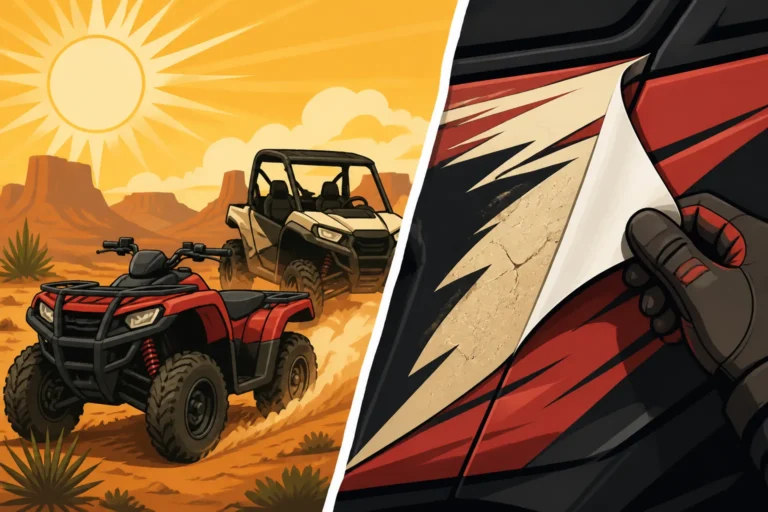
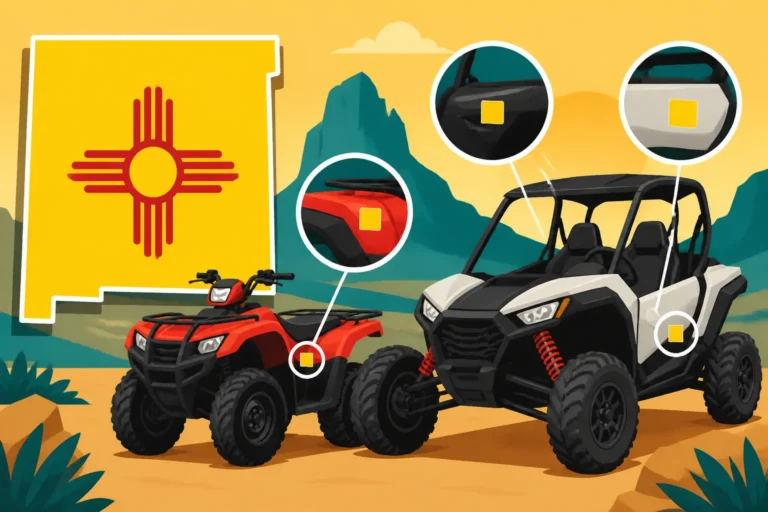
One common area of confusion following the 2017 changes revolved around the proper placement of the new yellow and green decals. Unlike a traditional license plate, which has a clear, standardized location, decals need to be affixed in specific spots on different types of OHVs to ensure visibility and compliance. A dirt bike might have its decal on the fork leg, while an ATV or UTV would have it on a rear quarter panel. This variance, while practical for each machine type, meant riders had to pay close attention to the specific rules for their vehicle.
Incorrect placement could lead to issues during roadside checks or at trailheads, as law enforcement might not easily spot the required registration. Getting it wrong, or having a decal that fades or peels due off-road wear and tear, could result in unwanted scrutiny. While the MVD provides guidelines, actually getting the decal neatly and securely attached in the right spot often required a bit of careful attention and sometimes even a second trip to an MVD field office if questions arose.
Understanding the Nuances of "Paved Road" Use
Perhaps the biggest source of ongoing frustration and confusion stems from the term "paved road use." Even with the introduction of the green decal and the paved road plate, many riders struggle with the precise definition of which paved roads are actually accessible to OHVs. New Mexico law generally prohibits OHVs from state highways and interstates, but allows individual counties and municipalities to opt-in and open their own paved roads. This means what's legal in Red River might not be legal in Ruidoso, or even in an adjacent county.
This patchwork of local ordinances creates a significant challenge for riders who want to explore different parts of the state. It requires doing homework for each specific area you plan to visit, checking county and city websites, or calling local authorities. This "opt-in" system, while granting local control, inadvertently places a heavy burden of research on the rider, leading to uncertainty and occasional accidental violations. Riders often yearn for a simpler, statewide standard, but for now, local rules reign supreme on many paved routes.
Looking Ahead: The Evolution of New Mexico's OHV Regulations
The 2017 law was a major step in the ongoing evolution of off-highway vehicle regulations in New Mexico, but it wasn't the final word. The landscape of OHV recreation is constantly changing, with new machine types, increasing popularity, and evolving environmental considerations. As such, riders should always expect the regulatory framework to continue to adapt.
Staying Informed About Future Changes
Given the dynamic nature of OHV laws, especially concerning things like paved road access and environmental regulations, staying informed is paramount. Regulations can change due to new legislative sessions, court rulings, or even local ordinances. It's not uncommon for a county to revisit its OHV rules, or for a state park to update its access policies. What was true last year might not be true this year.
Reliable sources for current information include the New Mexico MVD website, the New Mexico Department of Game and Fish website (for land-use rules), and the websites of federal land management agencies like the Bureau of Land Management (BLM) and the U.S. Forest Service. Local county and city websites are also critical for understanding paved road access. Subscribing to newsletters from OHV advocacy groups or checking online forums dedicated to New Mexico riding can also help you stay ahead of potential changes.
The Role of Advocacy and Rider Responsibility
The ongoing evolution of OHV regulations highlights the importance of both rider responsibility and collective advocacy. Riders have a responsibility to know and follow the rules, not just for their own safety and legal standing, but also to ensure continued access to riding areas. This includes proper registration, understanding environmental guidelines, and respecting private property.
Beyond individual compliance, the OHV community plays a vital role in shaping future policies. Through organized groups and associations, riders can advocate for sensible regulations that balance recreation with conservation, promote safety, and ensure continued access to New Mexico's incredible landscapes. Whether it's supporting legislation for clearer road access rules or participating in trail maintenance, an active and engaged rider community helps ensure the future of OHV riding in the Land of Enchantment. [New Mexico's First OHV Registration] and [Why New Mexico Renews Every Two Years] are good places to learn about the current baseline. For additional legal documentation needs, especially when buying or selling, using platforms like LawDepot can ensure you have proper paperwork on hand.
Disclaimer
This article is for general informational purposes only and does not constitute professional advice. Laws, prices and regulations vary by location and change over time. Consult a qualified professional for guidance on your specific situation.