Replacing a Lost Safety Permit
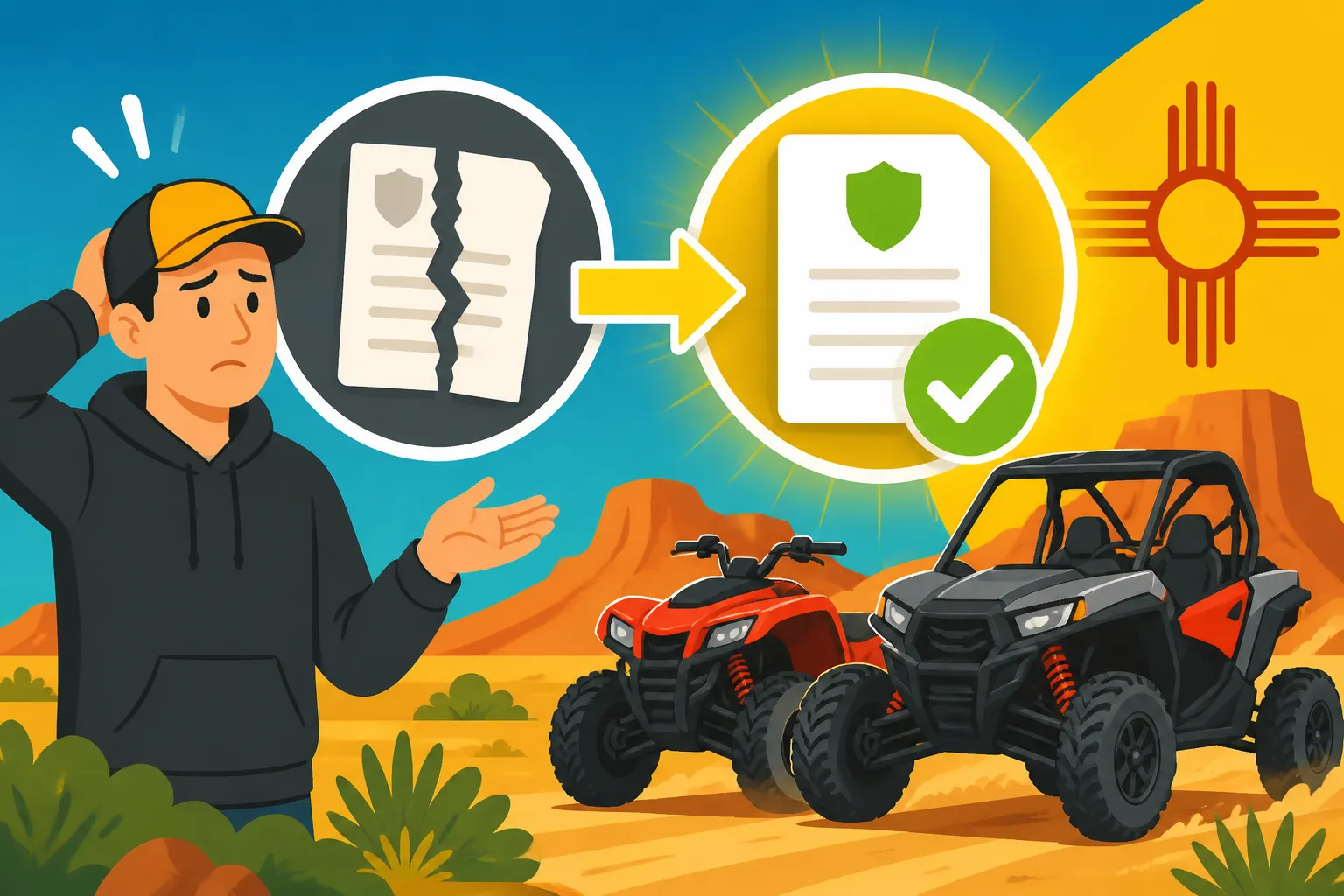
A lost safety permit can turn a planned New Mexico ride into a paperwork problem, especially when a young rider needs to show proof of completing an approved course. The key is to recover the original course record or confirm the official replacement process before riding. Here’s how to track down the right record, what to prepare, and what to do while you wait.
First, identify which permit is missing
New Mexico uses more than one kind of OHV permit. A rider safety permit is tied to a person and their safety-course qualification. It is different from the permit or registration associated with a particular ATV or UTV. Replacing a machine decal or registration document will not replace a rider’s safety permit.
That distinction matters because the paperwork comes from different processes. If the missing item is proof that a young rider completed an approved safety course, focus on the course record and the organization that issued or recorded it. If the machine’s permit or registration is missing, follow the process for that separate document instead.
The rules for young riders depend on the rider’s age and circumstances. Before assuming a safety permit is required—or that a lost one is irrelevant—check New Mexico OHV Safety Permit Requirements and New Mexico Safety Permit for a Minor. Those pages can help you identify whether the requirement applies to the rider in question.
A permit card can also be confused with a course-completion record. The card or certificate may be the proof a rider carries, while the course provider or relevant state program may hold the underlying record. That is why contacting the issuer is usually the best first step.
How to request a replacement
Start with the organization or program that issued the safety-course credential. If the rider took a course through a provider, contact that provider and ask how it handles a lost card or certificate. If you do not know who issued it, check old emails, account records, saved files, or family paperwork for a course confirmation or completion notice.
When you contact the issuer, ask specifically for a duplicate or replacement safety permit—not a new vehicle permit. The organization can explain whether it can locate the original completion record, provide replacement proof, or direct you to the right office. Avoid paying for another course before confirming that the original record cannot be found.
Prepare the information that may help the issuer search. Requirements vary, so treat this as a useful checklist rather than a guaranteed list of what will be requested.
| Information to gather | Why it may help |
|---|---|
| Rider’s full name used at the time of the course | Records may be filed under the original name |
| Rider’s date of birth | Helps distinguish people with similar names |
| Approximate course date or season | Narrows the record search |
| Course provider or location, if known | Points the request to the right record holder |
| Email address or phone number used for registration | May help locate an account or confirmation |
| Any old certificate number, email, or screenshot | Gives the issuer a direct reference |
If the rider’s name has changed, mention both the name on the course record and the current name. If a parent or guardian is making the request, ask whether the issuer needs the rider to participate in the request or whether any identity or authorization information is required. Do not send sensitive documents through an unverified email address or message form.
When you get through to the issuer, ask a few direct questions:
- Can you locate the rider’s course-completion record?
- Can you issue a duplicate card, certificate, or other proof?
- Is an electronic copy available, and is that format accepted for riding?
- Is there a replacement charge or processing time? Confirm current details with the issuer.
- If the record cannot be found, does the rider need to take an approved course again?
The accepted proof and the replacement method can depend on the program and the way the rider completed the course. Do not assume that a photograph of the lost card, a parent’s statement, or an email saying the course was completed will count as valid proof. Ask the issuing organization what the rider should carry.
For help identifying the course options or what counts as an approved course, see Approved Courses for a New Mexico Permit. If the issuer has moved or changed its process, use an official state or course-program contact channel rather than relying on an old phone number or a search result that may refer to an unrelated provider.
What to do before riding while you wait
The safest approach is to resolve the missing-document issue before the rider heads out. If the rider is required to hold a safety permit, do not treat the missing card as a minor inconvenience. First ask the issuer whether it can provide replacement proof quickly and whether that proof can be carried in a specific format.
A digital record may be convenient, but do not assume that every digital copy is acceptable in place of a physical card or certificate. Ask the issuing program what it provides and confirm how the rider should present it if asked. The state’s guidance on Carrying the Safety Permit on a New Mexico Ride can help clarify what proof riders should have available.
If you cannot confirm that the rider has acceptable proof, postpone the ride or choose an activity that does not put the rider in a situation where the requirement applies. This may be frustrating when a trip is already planned, but it avoids relying on a guess about what an officer or land manager will accept.
It is also worth checking the route and riding location before you go. A safety permit is only one part of being ready to ride; machine requirements, land access rules, age restrictions, supervision rules, and route closures may also apply. A replacement card does not grant access to a road or trail that is otherwise closed to OHVs.
If the rider has lost the permit at home but still has a saved record, contact the issuer before relying on it. Ask whether the specific document is sufficient, whether it needs to be printed, and whether any other proof should accompany it. Keep the issuer’s response with the rider’s trip records, but do not assume that a conversation alone substitutes for the required credential.
Avoiding another lost permit
Once the replacement arrives, make it easier to find without treating an unofficial copy as the original. Store the physical document in a secure, dry place, and keep a scan or photograph in a location the family can access. A backup is useful for identifying the record and requesting help, but confirm whether it is accepted as riding proof before relying on it.
Keep course details with the backup: the rider’s name as recorded, course provider, approximate completion date, and any certificate or record number. That information can make a future request much quicker if the document is misplaced again.
For families with more than one young rider, keep each person’s safety record separate and clearly labeled. A sibling’s card or course record does not establish that another rider completed the course. Before a group ride, check each rider’s own documents and confirm that the correct person has the correct proof.
If a stop or citation is the reason you discovered the document was missing, do not assume a replacement will automatically resolve the matter. Follow any instructions on the notice and contact the issuing agency or an appropriate professional if you need help understanding the next step. Information about New Mexico Fines for No Safety Permit can help explain why it is better to verify the requirement before setting out.
The main takeaway is straightforward: trace the course record first, request a replacement through the issuer, and verify which form of proof the rider must carry. For a separate question about riding when the card is simply at home, see Riding With Your Safety Permit Left at Home. A lost document and a document left behind can raise different practical questions, so confirm the right answer for the rider and the specific ride.
Disclaimer
This article is for general informational purposes only and does not constitute professional advice. Laws, prices and regulations vary by location and change over time. Consult a qualified professional for guidance on your specific situation.