New Mexico Sound Limit for ATVs
New Mexico off-highway vehicle regulations enforce a ninety-six decibel sound limit measured through standardized static testing.
Legal here, illegal one county over.
What each state allows, the mirrors, horn and signals a conversion requires, and the county and city overrides that quietly change the answer.
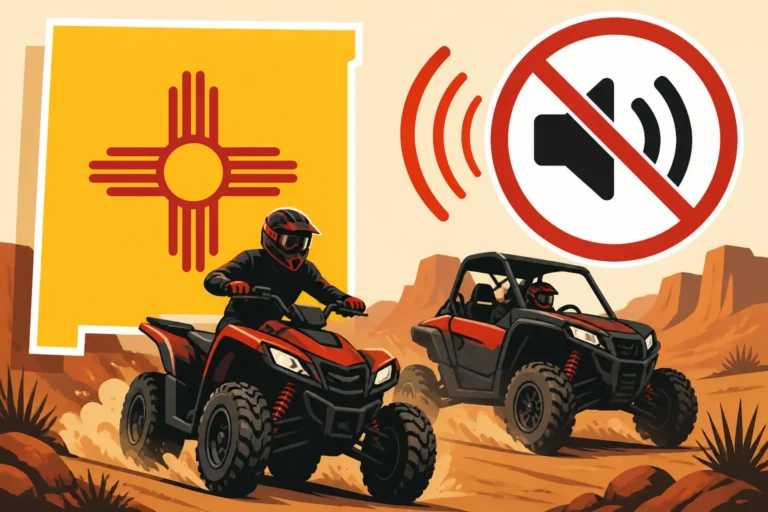
New Mexico off-highway vehicle regulations enforce a ninety-six decibel sound limit measured through standardized static testing.

New Mexico law requires off-highway vehicles to use headlights and taillights during low visibility or after sunset.

New Mexico off-highway vehicle regulations require functional headlights capable of illuminating persons and vehicles at least 150 feet ahead.

New Mexico dry wash riding involves hidden flash flood dangers and legal complexities for off-highway vehicle operators.

New Mexico arroyos offer challenging ATV and UTV terrain, but riding them involves serious legal complexities and safety risks.

New Mexico State Parks generally ban off-highway vehicle riding to protect natural resources and visitor safety.

New Mexico State Trust Land rules explain how ATV and UTV riders obtain recreational access permits to ride legally.

New Mexico tribal land OHV rules explained, detailing twenty three sovereign nations and the specific permission needed to ride legally.

New Mexico Bureau of Land Management off-highway vehicle regulations explain where riders may operate ATVs on public routes.

New Mexico national forest OHV regulations explain where ATVs and UTVs legally operate on Santa Fe, Carson, Cibola, and Gila federal roads.