60-Foot Dunes in the Southeast
A dune ride at Mescalero Sands can look simple from the staging area, but soft sand, changing wind, heat, and uncertain route boundaries can turn a short outing into a tiring day. This guide explains what to expect from the dunes in southeastern New Mexico, how to prepare your ATV or UTV, and what to check before you unload and ride.
What to expect at the Mescalero Sands dunes
A small dune field with a big change in terrain
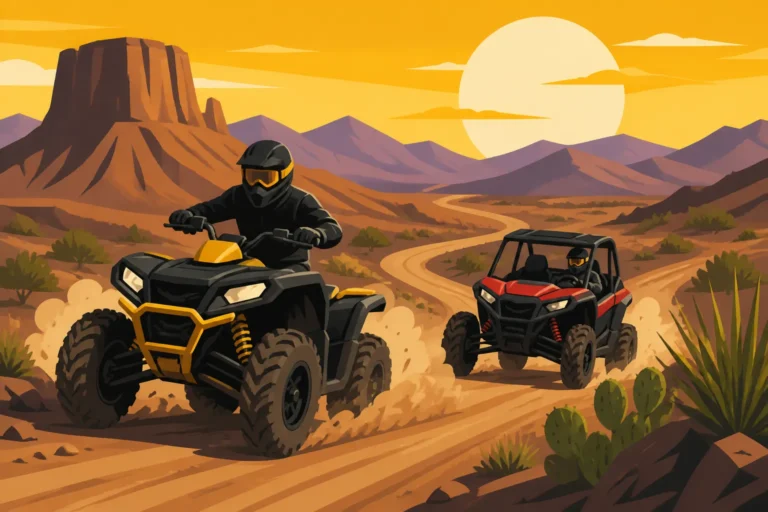
Mescalero Sands is known for a distinctive stretch of sand dunes in southeastern New Mexico, with dunes often described as reaching about 60 feet. That doesn’t mean every slope is a tall, clean face. You may find rolling sand, shallow bowls, steeper transitions, and flatter areas between dunes. The terrain can look inviting from a distance while concealing a soft patch or a sharp change in slope.
The sand changes how a machine handles. Tires can dig in instead of rolling smoothly, and a UTV may need more room to turn or climb than it does on a firm dirt road. A line that looks manageable from below may feel much steeper once you’re partway up. If you’re new to riding dunes, spend time on easier ground first and watch how experienced riders choose their lines.
Mescalero Sands is not a paved recreation park with a marked route for every turn. Conditions and access can vary, so learn the area and its boundaries before riding. For more background on the landscape, see [New Mexico's Mescalero Sands Dunes] and [New Mexico Dune Riding Areas].
How wind and weather change a ride
Wind can reshape sand and soften or fill in tracks. A route that was easy to follow on a previous visit may look different after blowing weather. Treat old tire marks as clues, not proof that a route is open or safe. Stay alert for steep drop-offs, hidden soft spots, and places where several tracks converge and make it difficult to tell which way to go.
Heat matters even when the ride itself feels breezy. Sand reflects warmth, and a rider working to move a stuck machine can overheat quickly. In the warmer months, plan around the hottest part of the day, carry more water than you expect to need, and take breaks before you feel drained. [Carrying Water in the Southern Desert] offers useful preparation for remote riding, while [New Mexico Riding in Summer Monsoon] explains why a clear morning can still lead to rapidly changing afternoon conditions.
Before setting out, check the managing agency’s current access information, alerts, and restrictions. This is especially important after storms, during fire restrictions, or when temporary closures affect an area. A familiar name on a map is not a guarantee that every road or parcel nearby is open to motorized use.
Preparing your ATV or UTV for soft sand
Set up for sand before you reach the dunes
Soft sand usually rewards smooth, steady control rather than sudden throttle and braking. On an ATV, abrupt inputs can make the tires dig in or cause the machine to dart when the surface changes. On a UTV, momentum and turning room matter: a heavy machine may feel planted on flat ground but can lose speed quickly on a steep, loose climb.
Tire pressure can affect flotation and handling, but there is no single setting that works for every tire, machine, rider, and sand condition. Follow the vehicle and tire manufacturers’ guidance, and avoid making a large pressure change based on a guess. If you do adjust pressure, make sure you have a way to check it and reinflate the tires before returning to harder surfaces. The guide to [Tire Pressure for Soft Sand] can help you think through the tradeoffs.
A quick pre-ride check can prevent a small issue from becoming a long walk back. Inspect tires, wheels, brakes, steering, fuel, and any cargo that could shift. Secure water and recovery gear so they remain accessible, and make sure passengers know where to hold on and how to keep their hands and feet inside the vehicle. Sand can hide ruts and make a machine work harder than expected, so a basic mechanical problem may become harder to manage away from the staging area.
Pack for getting stuck, separated, or delayed
Bring enough water for the whole outing, not just the planned riding time. Carry a first-aid kit, a charged phone, sun protection, and practical recovery equipment suited to your vehicle. A tow strap or winch can help, but only if you know how to use it safely and have appropriate recovery points. Keep loose items secured; a water bottle or tool bouncing around in a UTV can become a distraction or a hazard.
Agree on a simple group plan before anyone starts riding. Decide who leads, who follows, and where to regroup if the group gets separated. Riders should avoid spreading out so far that they cannot see or quickly reach one another. If someone stops unexpectedly, the rest of the group should know to slow down and check in rather than continuing to explore different lines.
Mapping tools can help with orientation, but they do not replace agency information or good judgment. Riders sometimes use onX Offroad to review an area and plan a route before leaving cell coverage. Save the relevant map information in advance if you rely on a phone for navigation, and compare what you see on-screen with posted signs and official travel guidance. For additional planning help, see [New Mexico Trail Maps Worth Carrying].
| Preparation | Why it matters on dunes | Practical check |
|---|---|---|
| Water and sun protection | Heat and exertion can catch riders off guard | Carry enough for delays, not just the planned ride |
| Tire and vehicle inspection | Sand can increase effort and expose weak equipment | Check tires, brakes, steering, and fuel before unloading |
| Recovery equipment | A machine may bog down in loose sand | Carry suitable gear and know how to use it |
| Route and access review | Tracks do not always show legal or safe routes | Confirm access with the managing agency and heed posted signs |
| Group plan | Riders can lose sight of each other among dunes | Choose a leader, regroup points, and a check-in plan |
Riding the dunes safely and responsibly
Choose a line you can see and manage
Before climbing a dune, look over the crest and make sure you know what lies beyond it. Another rider, a sudden drop, or a steep downhill face may be hidden from view. Avoid charging over a blind crest simply because tracks lead that way. If you cannot see enough of the landing area to make a safe decision, choose a different line.
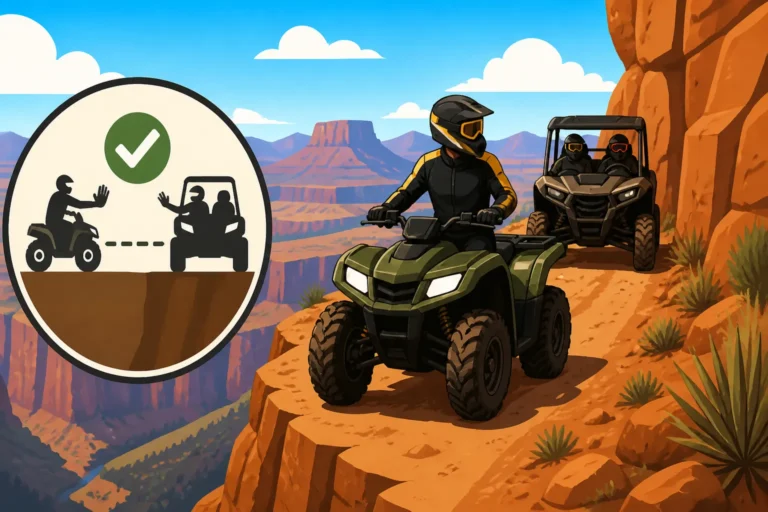
Give other riders room, especially where people are climbing, descending, or turning around. Don’t stop just below a crest where another machine may be coming over it. If you need to pause, move to a spot where you are visible and out of the main line of travel. On a shared riding area, predictable movements make it easier for everyone to avoid collisions.
Keep your speed appropriate to what you can see and control. A dune can change in just a few vehicle lengths, and steering may feel different as sand gets softer or firmer. New riders should avoid trying to match the pace of a more experienced group. It is completely reasonable to watch a climb, walk a route where appropriate, or turn around instead of forcing a line that doesn’t feel right.
Stay within authorized areas and protect the landscape
A visible track is not necessarily an authorized route. Sand can make it tempting to explore beyond the obvious riding area, but nearby land may have different ownership, access rules, or restrictions. Check current maps and signs, remain within permitted areas, and do not ride around a closure or barrier. [New Mexico Rules for Riding BLM Land] is a useful starting point when your trip involves land managed by the Bureau of Land Management.
Avoid creating new tracks through vegetation or sensitive ground just to bypass a soft section. Follow established routes where they are designated, and give other users and wildlife space. Close gates if you encounter them in a position that requires closing, and do not assume that a fence line or an open gate grants permission to ride beyond it. More guidance on shared-use practices is available in [New Mexico Trail Etiquette on Shared Ground].
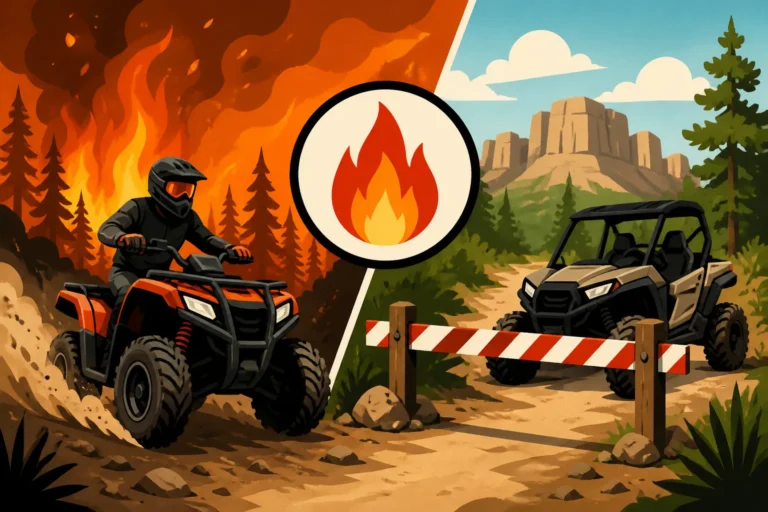
Fire conditions and seasonal weather can change where riding is allowed. Check restrictions before traveling, and never assume a route remains open because it was open on a past visit. [New Mexico Fire Season and Trail Closures] can help you plan around changing access. If you are unsure whether a route is open, pause and verify rather than discovering the answer after you have ridden into a restricted area.
Planning a comfortable trip to the dunes
Choose a pace that fits your group
A first visit is easier when the schedule leaves room for learning the terrain. Rather than trying to cover as much ground as possible, plan to ride a manageable area, take breaks, and reassess conditions as you go. A group with newer riders may need more time for turns, stops, and recovery than a group of experienced dune riders. Setting a modest plan at the start can keep the day enjoyable instead of turning it into a race.
If you are riding with children or passengers, agree on expectations before the machines start moving. Make sure each person has properly fitting safety equipment, understands how to communicate with the driver, and knows what to do if the group stops. Keep younger or less-experienced riders within sight and choose terrain that matches their ability. For applicable training and age requirements, consult [New Mexico OHV Safety Permit Requirements].
Pack for the drive as well as the ride. Bring drinking water, food, basic tools, and a way to clean up before getting back into your vehicle. Sand can work into clothing, storage areas, and equipment, so a small brush or towel may be useful. If you’re traveling a long distance, plan fuel and breaks around the route rather than assuming there will be convenient services near the riding area.
Use a pre-ride checklist
A short checklist helps catch the details that are easy to overlook during the excitement of arriving at the dunes.
- Confirm that the riding area is open and review current access rules.
- Check that the machine has the required registration or permit for the rider and vehicle.
- Inspect tires, brakes, steering, fuel, lights, and recovery equipment.
- Pack water, food, first aid, sun protection, and suitable clothing.
- Save maps or route information for offline use if needed, and carry a backup plan.
- Agree on a group leader, riding boundaries, and regroup points.
- Review the weather and any fire or seasonal restrictions before unloading.
- Ride conservatively at first and adjust the plan to actual conditions.
onX Offroad can be one part of trip planning when you want to review a route before reaching the dunes, but check your plan against official access information and signs on the ground. A phone map can help with orientation; it cannot tell you whether a track is safe at that moment, whether a closure has just been posted, or whether another rider is approaching over a crest.
For riders considering an overnight trip, preparation needs a little more attention: food, water, fuel, weather protection, and a plan for changing conditions. [Riding Mescalero Sands for an Overnight] can help you think through those details. Whatever your schedule, leave enough flexibility to turn back if the sand, weather, or access conditions are different from what you expected.
Disclaimer
This article is for general informational purposes only and does not constitute professional advice. Laws, prices and regulations vary by location and change over time. Consult a qualified professional for guidance on your specific situation.