Riding the Open Area at South Glade Run
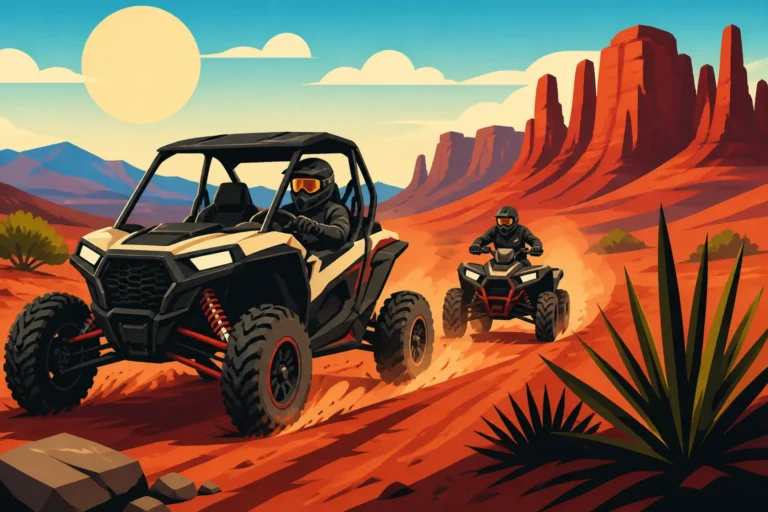
South Glade Run near Farmington can feel like a wide-open invitation to explore, but “open area” does not mean every nearby road, wash, or patch of public land is open to vehicles. This guide explains how to plan a ride, stay within the permitted area, choose sensible routes, and prepare for desert conditions before unloading your ATV or UTV.
What to Know About South Glade Run
An open riding area is not the same as unrestricted land
South Glade Run is part of the Glade Run Recreation Area near Farmington, where riders can find both open riding areas and routes with more defined travel patterns. That distinction matters. An area marked open for motorized use may allow riding beyond a single signed trail, while surrounding land can still have route restrictions, closures, or boundaries that you must respect.
Before you ride, identify the open-area boundary on an authoritative land-management map and compare it with the roads and routes you plan to use. Do not assume that a track shown in a phone app is legal simply because it appears on the screen. Maps can show old tracks, informal paths, or roads that are not currently open to motorized travel. For help understanding how route designations work on federal ground, see [Travel Management Maps on Federal Ground] and [New Mexico Rules for Riding Off a Route].
It also helps to think of the open area as a specific riding zone, not a permission slip for all nearby terrain. If a route reaches a closed sign, a posted boundary, private property, or a clearly restricted area, turn back rather than trying to find a way around it. A short detour can put you outside the area you came to ride.
How South Glade fits into the larger Glade Run area
Glade Run is a broad riding destination north of Farmington, with different types of terrain and riding experiences across the recreation area. The open area at South Glade is one part of that bigger picture. If you are planning a longer outing, it is useful to distinguish the southern open riding area from the more route-focused riding elsewhere in Glade Run. The overview in [New Mexico's 19,000-Acre Glade Run] can help put the area in context, while [Designated Trails in Northern Glade Run] covers a different style of ride.
That difference can shape your day. A family group that wants room to practice basic steering may prefer a less complicated open-area outing, while riders looking for a more structured route may want to focus on signed trails. A large side-by-side group might also have different needs from a pair of ATV riders, especially when it comes to turning around, keeping sight of one another, and choosing terrain that everyone can handle.
If you are new to the area, start with a modest plan. Pick a clear destination, identify the legal access route, and leave time to return before fatigue or fading light becomes an issue. For a practical area overview, [Riding Glade Run From Farmington] is a useful companion to this guide.
Plan Your Route Before You Unload
Check the map, boundary, and current conditions
A good map plan answers three basic questions: where the open riding area begins and ends, how you will reach it legally, and where you can safely stop or turn around. Use the current land-manager map as your primary reference. A GPS app such as onX Offroad can be useful for seeing your position, reviewing mapped roads, and saving a route before you leave, but treat it as a planning aid rather than proof that a road is open.
It is smart to compare more than one source before setting out. Look for posted closures, seasonal restrictions, fire-related notices, and route changes. Save the map for offline use, since cell service can be unreliable away from town. If you use onX Offroad, download the map area before leaving Farmington and check that your phone has enough battery for navigation. Carrying a paper map or a second device is a sensible backup, not unnecessary fuss.
A map also helps prevent a common group problem: one rider follows a visible track while the rest of the group assumes it is the planned route. Agree on a destination and turnaround point before starting. If someone loses sight of the group, everyone should know whether to stop in place, return to the last agreed meeting point, or follow another prearranged plan.
Match the ride to the machine and group
An open area can tempt riders to spread out, but the right pace depends on the least experienced rider, the vehicle, and the surface. A novice on a quad may need room to practice turns and braking without pressure from faster riders. A wide side-by-side may need more space to maneuver than a smaller ATV, particularly if the ground narrows or the group needs to turn around.
Before the ride, check that everyone understands hand signals or another simple way to communicate. Set a lead rider and a sweep rider, keep the group together, and agree that no one will pass the lead without checking first. If dust makes it hard to see, increase the space between machines while keeping the group within a manageable distance. More detail on riding together is available in [New Mexico Trail Etiquette on Shared Ground].
Choose a route that leaves options. If a section looks steeper, softer, or more exposed than expected, do not let the group’s momentum turn it into a challenge you did not plan for. Turn around early if the route stops feeling comfortable. That is especially important when riders have different machines, tires, or experience levels.
| Before leaving | Why it matters | Practical check |
|---|---|---|
| Confirm the open-area boundary | Nearby land may have different access rules | Compare the current official map with your navigation app |
| Save maps offline | Cell service may be limited | Open the downloaded map before leaving town |
| Check the machine | Small problems can become difficult to fix far from the trailer | Inspect tires, controls, fuel, and lights |
| Set a group plan | Riders can get separated in dust or unfamiliar terrain | Choose a lead, sweep, and meeting point |
| Pack water and basic supplies | Desert exposure and delays can add up | Carry more water than you expect to need |
Ride With Desert Conditions in Mind
Expect dust, heat, and changing surfaces
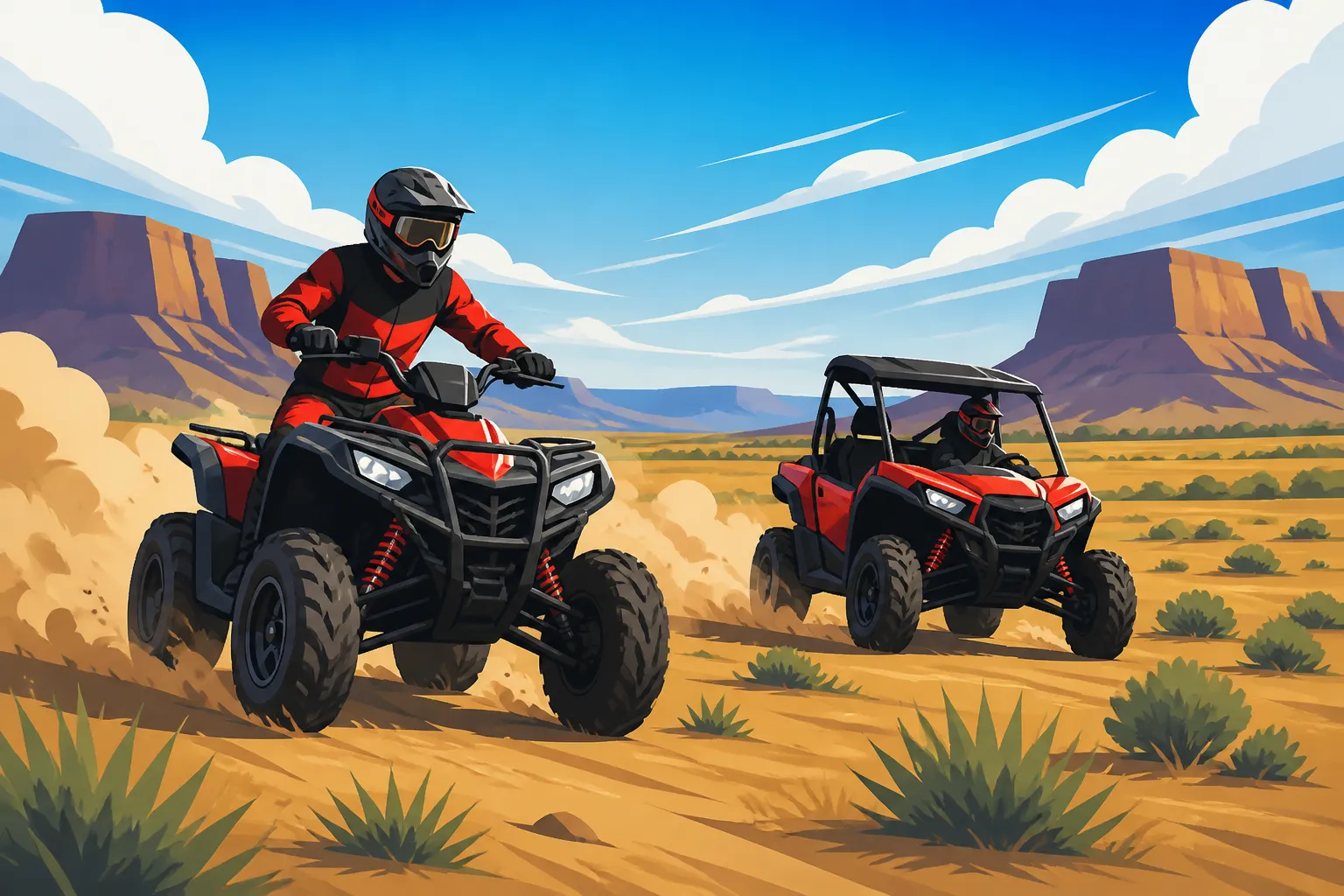
The conditions you encounter can vary across a single ride. Open ground may feel easy at first, but dust can reduce visibility, loose soil can change how a machine turns, and a wash or uneven section can be harder to read than it looks from a distance. Slow down when you cannot see far enough ahead to stop safely. If another rider disappears in a dust cloud, do not accelerate to catch up; wait for visibility to improve or use the group’s agreed communication plan.
Temperature can also be deceptive. A breezy morning may turn hot by midday, and riders focused on navigating can forget to drink regularly. Carry water where it is accessible without unloading gear, and plan breaks rather than waiting until someone feels unwell. The practical advice in [New Mexico Riding Areas With No Water] and [Dust and Visibility on a Desert Trail] applies to outings in this part of the state.
Bring eye protection that works for the conditions, and consider how dust will affect anyone riding behind another machine. A clean face covering or dust protection can make a long ride much more comfortable. If wind or dust becomes difficult to manage, shorten the loop or head back instead of pushing through because the group has already come a long way.
Stay prepared for a delay or breakdown
A small mechanical issue can become a much bigger inconvenience when you are far from your trailer. Before unloading, check fuel, tires, brakes, throttle movement, and any safety equipment your machine needs. Carry a basic tool kit and the items that make sense for your vehicle, such as a tire repair kit for a machine that uses pneumatic tires. Know how to shut off the engine and where your group will gather if someone stops unexpectedly.
Keep a charged phone, but do not make it your only plan. Offline navigation, a portable battery, and a written meeting point can help if a phone battery fails or a rider takes a wrong turn. Tell someone who is not joining the ride where you are going and when you expect to be back. That simple habit is especially valuable when your itinerary changes during the day.
Camping or staying out longer requires its own preparation. Check the area’s camping rules before setting up, and do not assume that a convenient open patch is an approved campsite. If camping is part of your plan, read [Getting a Free Camping Permit at Glade Run] before you go. For a wider list of navigation preparation tips, see [New Mexico Trail Maps Worth Carrying].
Ride Responsibly and Finish the Day Safely
Keep the area open for future riders
Open-area riding still requires care for the land and consideration for other visitors. Avoid creating new tracks outside the approved riding zone, and do not widen an existing route just to get around a rough spot. Stay clear of vegetation and sensitive ground where access is restricted. Follow posted instructions even when a route appears to continue beyond a sign; signs and closures can reflect conditions that are not obvious from the seat of a machine.
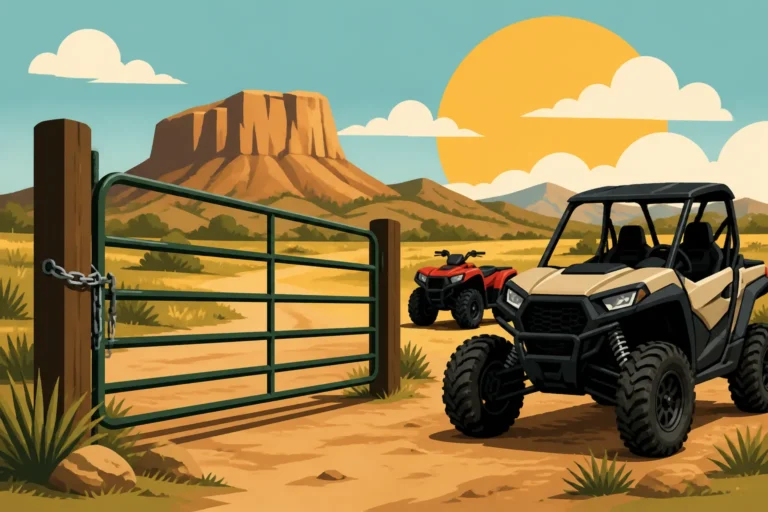
Give other riders room, especially when approaching a blind rise or a dusty section. Slow down near people who are stopped, and leave enough space for a machine to turn without forcing someone toward an edge or obstacle. If you see a gate, closure sign, or marked boundary, treat it as a direction rather than an invitation to investigate. Good decisions by individual riders help preserve access for everyone.
Carry the documentation and safety equipment that apply to your situation. Requirements can depend on the rider, machine, and where you are riding, so check the relevant New Mexico rules before the trip. Riders under 18 may have additional safety requirements; the overview in [New Mexico's Safety Permit for Under-18 Riders] can help families understand what to check.
A simple first-ride plan for South Glade
If this is your first visit, keep the day straightforward. Arrive with enough time to orient yourself, check the map, and confirm the intended access point before you start riding. Begin with a short loop or a limited exploration of the open area rather than trying to cover as much ground as possible. Once the group understands the surface and the layout, you can decide whether to continue.
Use onX Offroad or another navigation tool to keep track of your position, but compare what you see with official land-management information and posted signs. Save a planned route, mark a clear turnaround point, and avoid following an unfamiliar track just because it looks convenient. If you notice that the map and the signs do not match, choose the cautious option and stay on a clearly permitted route until you can confirm the correct boundary.
At the end of the ride, return together, inspect the machines, and account for everyone before leaving the area. A little planning can make South Glade Run feel less overwhelming, especially on a first visit. The open riding area offers room to explore, but the best day is one where the group stays within the rules, keeps a comfortable pace, and gets back to the trailer with enough energy to ride again.
Disclaimer
This article is for general informational purposes only and does not constitute professional advice. Laws, prices and regulations vary by location and change over time. Consult a qualified professional for guidance on your specific situation.