Mesquite Dunes and How They Ride
Mesquite dunes can look like an open invitation, but soft sand, hidden vegetation, changing tracks, and long gaps between services can make a ride tougher than it appears from the highway. This guide explains what riding near New Mexico’s Red Sands area is like, how to prepare your ATV or UTV, and how to protect both your group and the fragile desert terrain.
What Mesquite Dunes Are Like to Ride
Expect soft sand, shifting lines, and uneven ground
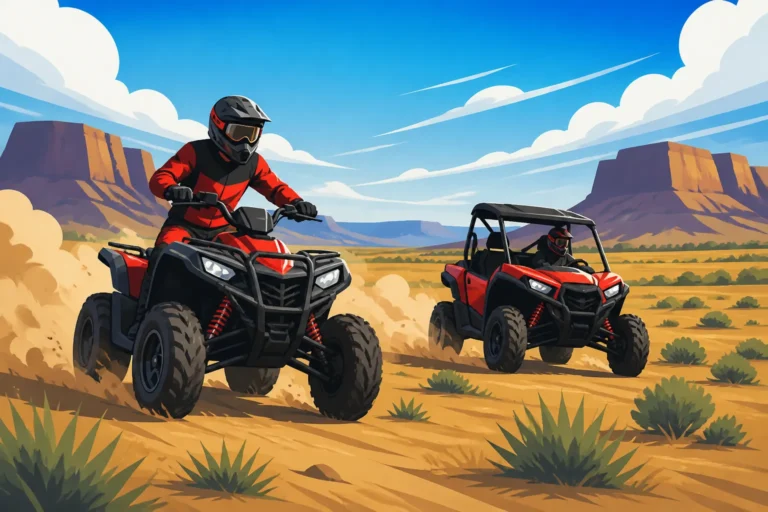
Mesquite dunes are not always tall, clean ridges of loose sand. Around New Mexico’s Red Sands OHV area, sand is mixed with open flats, scattered plants, and terrain shaped by wind and repeated vehicle travel. One stretch may feel firm and easy to cross; a nearby slope may be soft enough to slow a machine or make a rider work to keep it pointed straight.
The surface changes with wind and weather, so yesterday’s smooth line may be rutted or partly covered today. Tire tracks can also give a misleading impression of what lies ahead. A track that looks well established might lead toward a steep face, a soft pocket, or a patch of vegetation that should not be crossed. Slow down when you cannot see the terrain beyond a rise.
The sand itself affects handling. The front end may wander, especially when you try to make a sudden turn or brake hard. Rather than fighting every small movement, keep your steering smooth and look toward the route you want to follow. Abrupt inputs can dig the tires in or send the machine off the line you intended.
Mesquite growth is a boundary, not an obstacle course
The plants that give these dunes their character are part of the landscape, not markers to weave between. Mesquite and other desert vegetation help hold soil in place and provide habitat. Driving through plants, over root systems, or across fragile ground can damage terrain that may take a long time to recover.
When you see vegetation growing across a possible route, do not assume it is a shortcut or a convenient gap. Choose open, established riding ground instead. That can mean turning around, even if the path ahead appears passable. A small detour is preferable to widening a track or creating a new one through the plants.
This matters particularly when a group follows a lead rider. The first machine may clear a narrow line, while the riders behind it spread outward to avoid dust or ruts. Agree in advance to keep everyone on the same durable route. If the lead rider cannot confidently identify a safe, permitted way through, stop and reassess rather than letting the group fan out.
The ride can feel different by machine and rider experience
An ATV can feel nimble in open sand, but its smaller footprint does not make a steep or blind dune automatically safe. A UTV may offer a more secure seating position and room for passengers, yet its added weight and width can make soft turns and narrow routes more demanding. Either type of machine can lose momentum quickly in deep sand.
Riders new to sand often overcorrect when the handlebars or steering wheel start to wander. A better approach is to keep a steady pace that suits the terrain, avoid sharp turns, and leave enough room to respond to a rut or soft patch. Do not try to imitate a more experienced rider’s speed. A controlled pace gives you more time to notice changes in the surface.
Before a longer outing, practice on a broad, open area where riding is allowed and visibility is good. Let each rider learn how their own machine responds before the group approaches dunes or uneven ground. If someone is uncomfortable, make that the group’s pace-setting decision. Sand is not a place to pressure a newer rider into keeping up.
Planning a Ride Near Red Sands
Confirm the access and route before leaving
The name “Red Sands” is often used broadly when people discuss riding in the area, but a destination name alone does not establish where riding is allowed. Before unloading, confirm that your intended access point and route are open to OHVs and that your machine and riders meet applicable requirements. Land boundaries, closures, and permitted routes can matter even when terrain looks continuous.
Use current information from the responsible land manager when checking access. A mapping app can help you understand the general layout and keep track of your route, but it should not replace official closure notices or travel-management information. Riders may use onX Offroad as one planning reference to help orient themselves, then verify that their intended route is permitted. Do not treat a line on a digital map as proof that every segment is open.
If you are unsure whether a track is allowed, do not follow it simply because other tire marks are visible. Tracks can be old, unofficial, or left by vehicles that were not authorized to travel there. For a broader look at the setting and access considerations, see [Red Sands OHV Area in Southern New Mexico] and [Getting to Red Sands Off New Mexico's US 54].
Check conditions, not just the forecast
A forecast can tell you about broad weather conditions, but it will not reveal every soft patch, washout, or change in the sand. Wind can reduce visibility by moving dust and sand across open areas. Recent rain may firm up some surfaces temporarily while leaving other low areas muddy or difficult to cross. After a storm, runoff can also change the shape of a route.
Heat is an important planning factor in southern New Mexico. The sun can feel intense even when the air seems manageable, and a mechanical problem can turn a short stop into a long wait. Carry more drinking water than you expect to need, protect yourself from sun exposure, and plan a turnaround time that gives the group a comfortable margin before dark.
For seasonal considerations, including summer storms and changing desert conditions, review [New Mexico Riding in Summer Monsoon]. If the area has experienced heavy rain, strong wind, wildfire activity, or a closure notice, consider postponing the ride rather than gambling on conditions at the trailhead.
Plan for navigation gaps and a slower return
A route that looks short on a screen may take longer when it crosses soft sand, includes frequent stops, or requires a cautious rider to pick a line. Build extra time into the plan. Choose a clear turnaround point, tell someone where you expect to ride, and avoid extending the outing just because the group is close to another dune or track.
Cell service can be inconsistent in remote riding areas. Download or prepare the maps you need before leaving service, and make sure more than one person knows the planned route. A phone battery can drain faster when used for navigation in heat, so carry a charging option and consider a separate navigation device. onX Offroad can help with orientation, but riders should have a backup plan and know how to return without relying on a single phone.
Use a route that matches the least experienced rider and the least capable machine in the group. If a route becomes confusing, stop in a safe open place and regroup. Continuing in separate directions to “find the way out” can turn a minor navigation problem into a search.
| Planning question | Why it matters | Practical approach |
|---|---|---|
| Is the route open to OHVs? | A visible track is not proof of legal access. | Check the land manager’s current information before riding. |
| Is the route suitable for your machine? | Soft sand and narrow sections can challenge wider or heavier UTVs. | Match the route to the whole group, not just the lead rider. |
| Could weather affect visibility or traction? | Wind, heat, and rain can change conditions quickly. | Check conditions and postpone if visibility or access is uncertain. |
| Can the group navigate without cell service? | A phone may lose signal or power. | Prepare maps, carry a backup power source, and agree on a route. |
| Does everyone have enough water and fuel? | Delays can make a short ride much longer. | Pack a reserve and set a conservative turnaround point. |
Riding Sand More Smoothly and Safely
Use steady control instead of sudden inputs
On sand, smooth movements usually make it easier to keep a machine balanced. Accelerating hard can dig the rear tires in; braking sharply can make the front end plow or the machine become difficult to steer. Make gradual adjustments and leave room between vehicles so you are not forced to react suddenly to another rider’s stop or turn.
Look ahead rather than staring at the nearest rut or the machine directly in front of you. Choose a line with good visibility and enough room to correct your course. If the surface becomes too soft or the machine begins losing momentum, avoid repeated, aggressive throttle bursts. Pause when it is safe, assess the route, and consider turning back if the terrain exceeds the rider’s confidence or the vehicle’s capability.
When climbing or descending a dune, visibility is the key concern. Do not charge over a crest if you cannot see what lies beyond it. Another rider, a drop, a soft hollow, or a vehicle traveling the other way could be just out of sight. Approach cautiously, stop where you can see safely, and never assume that a track over a ridge is clear.
Give each vehicle space and avoid following dust blindly
Dust can make a familiar-looking route surprisingly difficult to read. Leave enough distance that the rider behind you can see the terrain, and do not accelerate away from the group until everyone is accounted for. In a UTV, keep passengers seated and secured according to the vehicle’s requirements; passengers should not lean or reach outside the cab to improve their view.
Agree on simple group signals before starting. Decide how the group will respond if someone stops, needs help, or becomes separated. At turns and confusing junctions, wait until the last rider arrives before moving on. This is especially helpful when tracks split and a rider at the back cannot see which line the lead vehicle took.
Avoid passing in places with limited visibility or soft, uneven ground. If someone wants to pass, wait for a broad, open area where both riders can see and communicate. Dust, engine noise, and the shape of the dunes can make it hard to notice a vehicle approaching from another direction.
Know when to turn around or stop
Turning around is a good riding decision, not a failure. If a dune is steeper or softer than expected, if the route narrows into vegetation, or if anyone in the group feels unsafe, stop before the situation becomes harder to manage. A route that is straightforward on the way in may feel different when everyone is tired or the wind has shifted the sand.
Take a break before exhaustion sets in. Heat, sun exposure, and concentration demands can affect judgment, even on a ride that feels recreational and unhurried. Check that each person is drinking water and feeling well. If someone is dizzy, unusually weak, confused, or nauseated, stop riding and prioritize their wellbeing rather than trying to finish the route.
For a longer day, review [Carrying Water in the Southern Desert], [Dust and Visibility on a Desert Trail], and [Breaking Down Far From a Road]. A basic tool kit, tire repair supplies appropriate to your machine, first-aid items, and a way to contact help can make an unexpected stop easier to handle. Carry only what you know how to use, and keep essential items accessible rather than buried under cargo.
Protecting the Dunes and Preparing Your Machine
Stay on durable ground and leave no new tracks
The temptation to explore an untouched patch of sand is understandable, particularly when the landscape looks wide open. But open-looking ground can include protected vegetation, private property, or areas outside the designated riding zone. Stay on routes that are authorized for your vehicle, and avoid cutting new lines around a rut or obstacle if doing so would spread the disturbed area.
Do not ride around a closed gate or closure sign. A gate may protect a boundary, grazing area, habitat, or a route that is temporarily unsafe. Check [New Mexico Trail Closures to Check First] and [New Mexico Trail Etiquette on Shared Ground] when planning how to travel responsibly on public and shared land.
Pack out trash, secure loose gear, and avoid leaving food or other items behind. If a vehicle becomes stuck, do not widen the route by repeatedly spinning the tires or driving around it. Stop, assess the recovery, and use a careful method that avoids damaging plants or creating a larger scar in the terrain.
Prepare the machine for sand and distance
Before heading out, check tires, brakes, steering, lights, fuel, and essential fasteners. Sand can hide bumps and place extra demands on tires and drivetrain components. Follow your owner’s manual and any manufacturer guidance for tire pressure and maintenance rather than relying on a universal number. The right setup can vary by vehicle, tire, load, and terrain.
Bring basic recovery and repair items suited to your machine, and make sure someone in the group knows how to use them. Secure cargo so it cannot shift during turns or on uneven ground. For a UTV, account for the added weight of passengers and gear when judging whether a soft slope or narrow route is appropriate.
If you trailer your machine to the area, secure it properly and check that your registration or permit requirements are satisfied before departure. New Mexico’s rules can differ for residents and visitors, so riders who are coming from outside the state can review [New Mexico's Nonresident OHV Permit] and [New Mexico Rules for Riding Federal Land]. Requirements depend on where and how you ride, so confirm the rules that apply to your specific trip.
Make the outing fit the people, not just the terrain
A good dune ride does not have to cover a lot of ground. A short, relaxed outing with clear navigation and plenty of breaks can be more enjoyable than trying to cross every visible ridge. Families and mixed-experience groups should choose a route where riders can stay together, stop safely, and turn around without pressure.
Before setting out, talk through the plan: the route, the turnaround point, how to regroup, and what to do if someone has a problem. Keep the first ride conservative, then adjust future plans based on how the machines and riders handled the sand. For more general trip-planning ideas, see [New Mexico Trail Maps Worth Carrying] and [New Mexico Trail Difficulty Ratings].
Mesquite dunes reward patience. Ride open, permitted ground; keep your controls smooth; leave vegetation undisturbed; and be ready to change plans when conditions or confidence call for it. That combination makes the outing safer and helps preserve the landscape for the next group.
Disclaimer
This article is for general informational purposes only and does not constitute professional advice. Laws, prices and regulations vary by location and change over time. Consult a qualified professional for guidance on your specific situation.