New Mexico Riding Areas Good for Kids
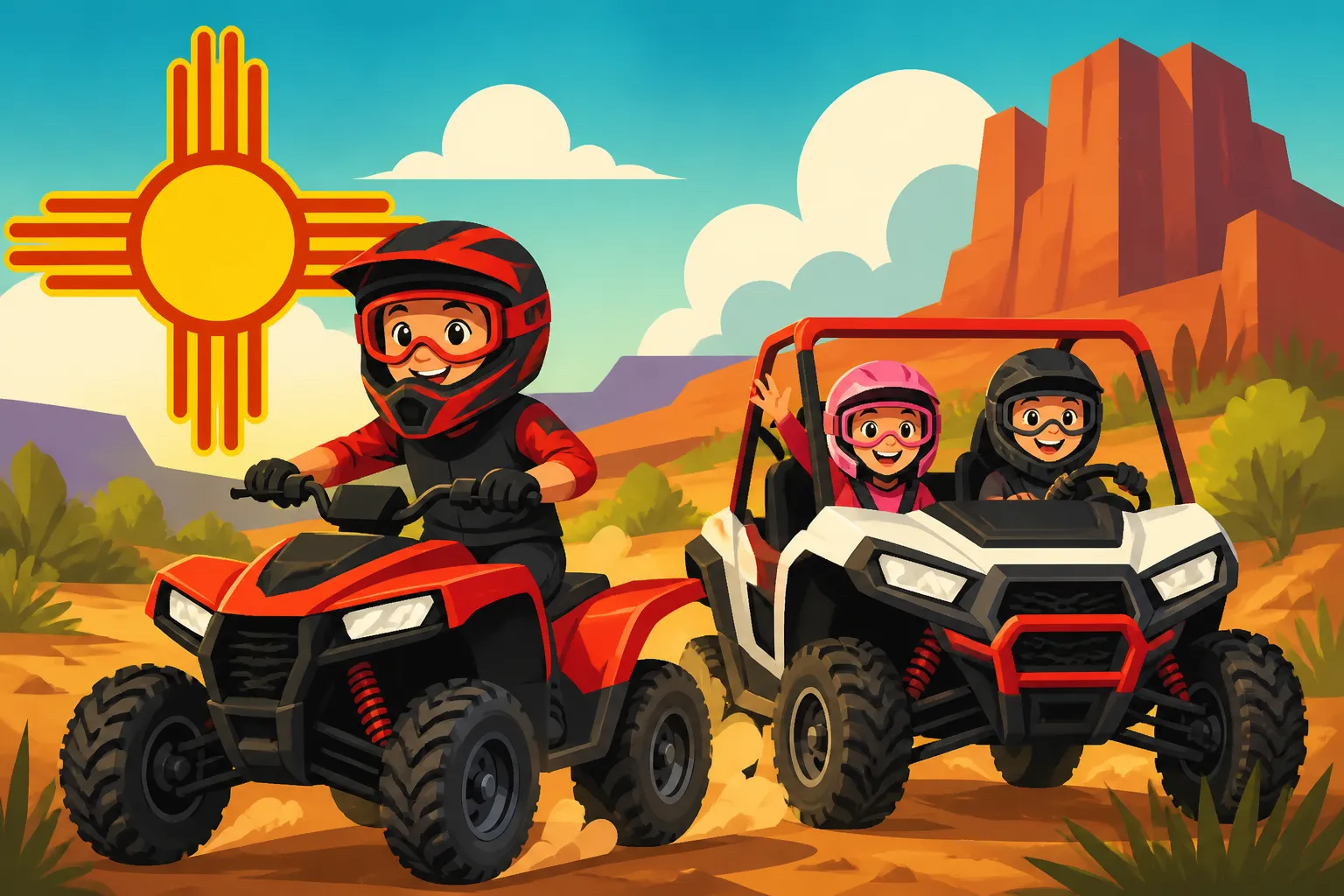
A family ride can turn stressful quickly when a route is rougher, longer, or busier than expected. New Mexico has several OHV areas with terrain that may suit children and newer riders, but “good for kids” depends on choosing an appropriate route, checking access rules, and planning for heat, distance, and changing conditions.
New Mexico riding areas to consider with kids
No public riding area is uniformly easy. A broad staging area or an easy-looking entrance can lead to more challenging terrain, and trail conditions can change after rain, wind, or heavy use. Treat these locations as places to explore selectively—not as a guarantee that every route is suitable for a child.
Red Sands OHV Area
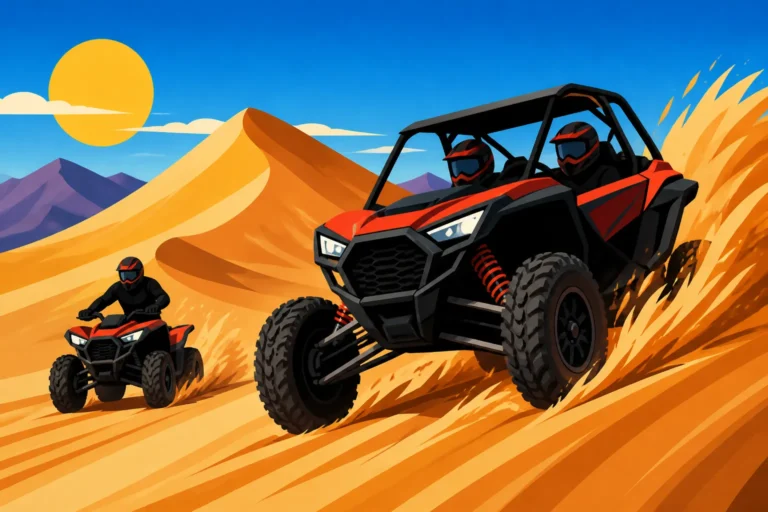
Red Sands, east of Las Cruces near U.S. 54, is known for sandy terrain and mesquite-covered dunes. The open riding environment can appeal to families because it offers room to look around and choose a manageable outing rather than committing to a long, narrow mountain trail. That flexibility can be helpful when a child is still learning how the machine handles.
Soft sand also takes more effort than it may appear to. A small rider can tire from bumps, heat, and the concentration needed to steer, while an inexperienced adult may find that sand drains fuel and energy faster than expected. Begin with a short ride in an area where you can easily turn back. Keep children within sight, leave generous space between machines, and avoid following faster riders simply because their route looks fun.
Red Sands is a remote desert setting, so plan around sun exposure, water, dust, and limited access to help. Before leaving home, check whether the area or route has current restrictions and review [Red Sands OHV Area in Southern New Mexico] for more local context. The related guide [Getting to Red Sands Off New Mexico's US 54] can also help you think through the approach and staging plan.
Haystack Mountain OHV Area
Haystack Mountain, near Roswell, offers a mix of riding opportunities, including marked trails and more open terrain. That variety can make it easier for a family to choose a modest outing, provided the adults study the route and do not assume that every trail is beginner-friendly. A short, clearly understood route is often a better first ride than trying to cover as much ground as possible.
The open setting can be appealing for children who feel uneasy on tight turns or wooded trails. But visibility across open ground does not mean there are no hazards. Ruts, loose surfaces, other riders, and sudden changes in terrain all call for careful speed and spacing. Adults should agree on a turnaround point before the ride and make sure everyone knows how to stop and regroup safely.
Look into access details, maps, and any applicable use requirements before you go. For a closer look at the area, see [New Mexico's 1,920-Acre Haystack Mountain] and [Riding Haystack Mountain for a Day]. If your family is new to OHV trips, keep the first outing short enough that a child can finish feeling comfortable rather than exhausted.
Glade Run and Chokecherry Canyon
Glade Run near Farmington has a broad range of terrain, including marked trails and open riding areas. This variety can work for families with different experience levels, but it also means route selection matters. A route that suits a confident adult may be too technical or tiring for a child, especially if it includes steep sections, loose rock, or repeated climbs.
For a family ride, look for a route whose difficulty and distance are clear before you set out. Stay on routes open to your vehicle, and do not treat an unmarked track as an invitation to explore. At Chokecherry Canyon, terrain can become more demanding than a first-time young rider may expect. Families can read [42 Miles of Marked Trail at Glade Run] and [Chokecherry Canyon's Open Area] while deciding which part of the area best matches their group.
Plan a conservative route with a clear exit or turnaround option. If there is a big difference in ability between riders, consider splitting the group only when there is a responsible adult with each group and everyone has a reliable way to communicate. Do not leave a child riding alone or ask them to follow a faster machine through terrain they have not seen.
| Riding area | What may work well for families | What to plan for |
|---|---|---|
| Red Sands | Sandy terrain and room to choose a short outing | Heat, soft sand, dust, and limited services |
| Haystack Mountain | A mix of marked routes and open areas | Route selection, loose surfaces, and distance |
| Glade Run | Variety that may suit different skill levels | Staying on appropriate routes and avoiding technical sections |
| Chokecherry Canyon | A chance to explore varied terrain with close supervision | Some routes may be challenging for newer or younger riders |
How to choose a route that fits your child
A family-friendly ride is less about finding a route with a reassuring name and more about matching the route to the youngest or least experienced rider. Children can be brave and enthusiastic, but fatigue, noise, dust, or a sudden steep section can change how they feel once the ride is underway.
Match terrain to skill, not just age
Consider what your child can comfortably do on the specific machine they will ride. Can they start, stop, turn, and maintain control on the surface you expect to encounter? Have they practiced using the controls while wearing the same gear they will use on the ride? A child who is confident on a flat practice area may need more time before attempting sand, rocks, or uneven ground.
Think about physical fit as well as riding experience. The child should be able to reach and operate the controls properly, sit securely, and understand the adult’s signals. A machine that is too large or powerful can make small mistakes harder to correct. Do not use a child’s enthusiasm as a substitute for a realistic assessment of their ability.
Plan around the least experienced person in the group. If one adult wants a more challenging ride, that may be a separate outing rather than a reason to stretch a child’s limits. For rules and age-related requirements, review [New Mexico Rules for Riders Under 18] and [New Mexico OHV Safety Permit Requirements] before riding.
Check route information before unloading
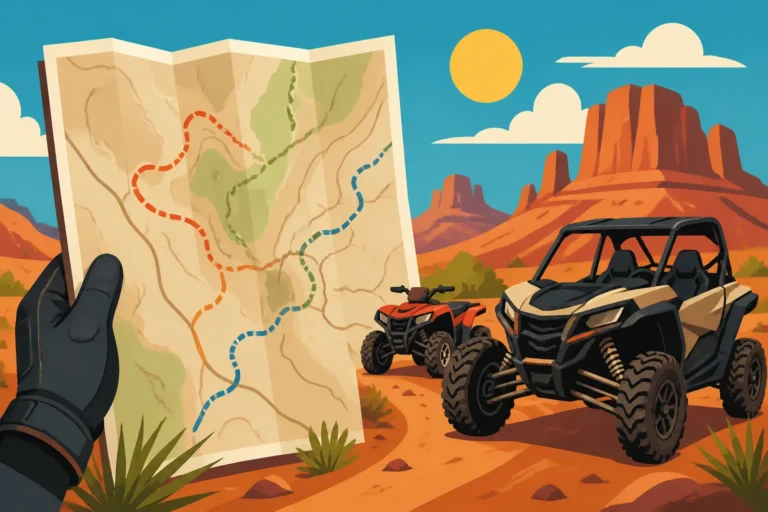
Use a current land manager map and posted signs to confirm which routes are open to your machine. Conditions and access can change, and routes may have limits based on vehicle type, width, seasonal closures, or land-use rules. A route visible on a phone map is not automatically legal or appropriate to ride.
Tools such as onX Offroad can help with advance route planning, but compare the information on your screen with signs and official land-management information. Download or save the information you need before arriving, since phone service may be unreliable in remote areas. Mark your planned route and turnaround point so the group can stay together even if the trail network is confusing.
Check for weather concerns as well. A dry wash can become dangerous during or after a storm, and summer heat can make even a short outing difficult for a child. For broader preparation, read [New Mexico Trail Maps Worth Carrying] and [New Mexico Riding in Summer Monsoon]. A map and weather check are useful, but neither replaces noticing what is happening on the ground.
Keep the first ride short and flexible
It is tempting to make a family trip feel “worth it” by staying out for hours. In practice, children often enjoy a shorter ride more—especially if it ends before they are tired, thirsty, cold, or overwhelmed by dust and noise. Pick a modest route, take a break before anyone asks for one, and treat turning back early as good judgment, not failure.
Build in a simple way to regroup. Choose a safe, visible stopping place away from traffic and other riders, and explain what to do if someone gets separated. Young riders should know to stop, stay put, and wait for the adult rather than trying to catch up alone. Agree on hand signals or clear spoken instructions before starting.
A family may also want to ride one machine at a time with a young beginner, or have an adult accompany the child where the vehicle and rules allow. Do not assume that a passenger arrangement is suitable or permitted for every machine. Check the machine’s instructions, local rules, and the child’s ability to sit securely before setting out.
Preparing children and machines for a safer ride
Good preparation does not eliminate risk, but it can prevent common problems from becoming emergencies. The basics are easy to overlook when everyone is excited to unload, so make the pre-ride routine consistent.
Gear up before reaching the trail
A properly fitting helmet is essential, and children should wear protective clothing suitable for the terrain and weather. Eye protection matters because dust, sand, and small debris can make it difficult to see. Gloves, long sleeves, long pants, and sturdy footwear can help reduce scrapes and exposure to sun and brush.
Check that the gear fits the child, not just that it is available. A loose helmet or goggles that keep slipping can distract a young rider and undermine the protection they are meant to provide. Let the child practice wearing the gear before the trip so the first experience is not at the trailhead.
Explain that gear stays on while riding, including during short stretches between staging areas and trails. For related guidance, see [New Mexico Helmet Law for Riders Under 18] and [New Mexico Eye Protection Requirement]. Rules can depend on the rider, machine, and place, so check the requirements that apply to your trip rather than relying on what another family does.
Check the machine and the essentials
Before unloading, inspect tires, brakes, throttle operation, fuel, lights where needed, and any visible damage. Confirm that the machine is appropriate for the route and that controls work as expected. If your child is using a youth machine, make sure it is in good condition and that the child has practiced operating it before the family trip.
Bring enough water for everyone, plus sun protection and basic first-aid supplies. In remote areas, carry a way to navigate and communicate that does not depend entirely on cell service. Tell someone who is not on the ride where you plan to go and when you expect to return. On a hot day, start early and be willing to shorten the outing.
Also check the requirements for the vehicle and land you plan to use. Registration, permits, and other rules may vary according to the machine, rider, and location. Guides such as [New Mexico Rules for Riding a National Forest] and [New Mexico Rules for Riding BLM Land] can help clarify what to check before a trip.
Set family riding rules in advance
Children need simple rules they can remember under pressure. Keep them close enough to see, ride at a pace that allows everyone to stop safely, and do not pass another rider without clear permission. Adults should agree on who leads and who rides at the back, so no one assumes another person is watching the youngest rider.
Make stopping normal. If a child is frightened, tired, or unsure, stop in a safe place and talk through the next step. Avoid criticism or pressure to continue. A child who feels heard is more likely to speak up before a small concern turns into a risky situation.
Agree on what to do if the group encounters an obstacle. The answer may be to stop and assess, choose a different route, or turn around. Do not ask a child to prove they can handle a hill or rough patch. A successful first ride is one where the family returns together with enough energy to want another trip.
A practical family ride plan
Planning the day around a child’s comfort level makes the outing easier for everyone. The goal is not to cover the most ground; it is to have a ride that feels manageable from the drive to the trailhead through the return home.
Before you leave home
Choose an area based on the youngest rider’s experience, not the most experienced adult’s preference. Review access and route information, check the weather, and identify a short first route with an obvious way to turn back. Make sure each rider has suitable gear and that the child is familiar with the machine.
Tell someone your general plan and expected return time. Pack water, food, sun protection, a basic repair kit suited to your machines, and navigation information you can access offline. If a route depends on a particular access road or staging location, confirm that it is open before making the drive.
At the staging area
Pause before riding. Look at the signs, identify other users, and confirm that the route is appropriate for your machine. Let the child observe the surroundings and ask questions. A calm start can make a real difference, particularly for a first ride in a noisy, dusty place.
Review the riding order, signals, and regrouping plan. Make sure the child knows not to race, leave the route, or try to catch up if separated. Start slowly and use a nearby, manageable section to see how everyone is feeling before committing to more distance.
During the ride
Watch the child, not just the trail ahead. Look for signs of fatigue, frustration, thirst, or loss of focus. Take breaks before the child is worn out, and reassess conditions as you go. If the route becomes rougher than expected or weather starts changing, turn around while you still have time and daylight.
A family ride can be a wonderful way to explore New Mexico, from the desert landscapes around Red Sands to the varied terrain near Farmington and Roswell. The best area is the one where you can choose a suitable route, keep the group together, and change plans without pressure. Start conservatively, follow posted access rules, and let your child build confidence one ride at a time.
Disclaimer
This article is for general informational purposes only and does not constitute professional advice. Laws, prices and regulations vary by location and change over time. Consult a qualified professional for guidance on your specific situation.