Red Sands and Its Mesquite Coppice Dunes
Red Sands is easy to mistake for a simple patch of open desert, but its mesquite-covered dunes, loose sand, and changing tracks can make a ride more demanding than expected. This guide explains how to plan an ATV or UTV outing there, read the terrain, protect the desert, and prepare for the practical challenges that catch visitors off guard.
Getting oriented at Red Sands
Where the riding area is and what to expect
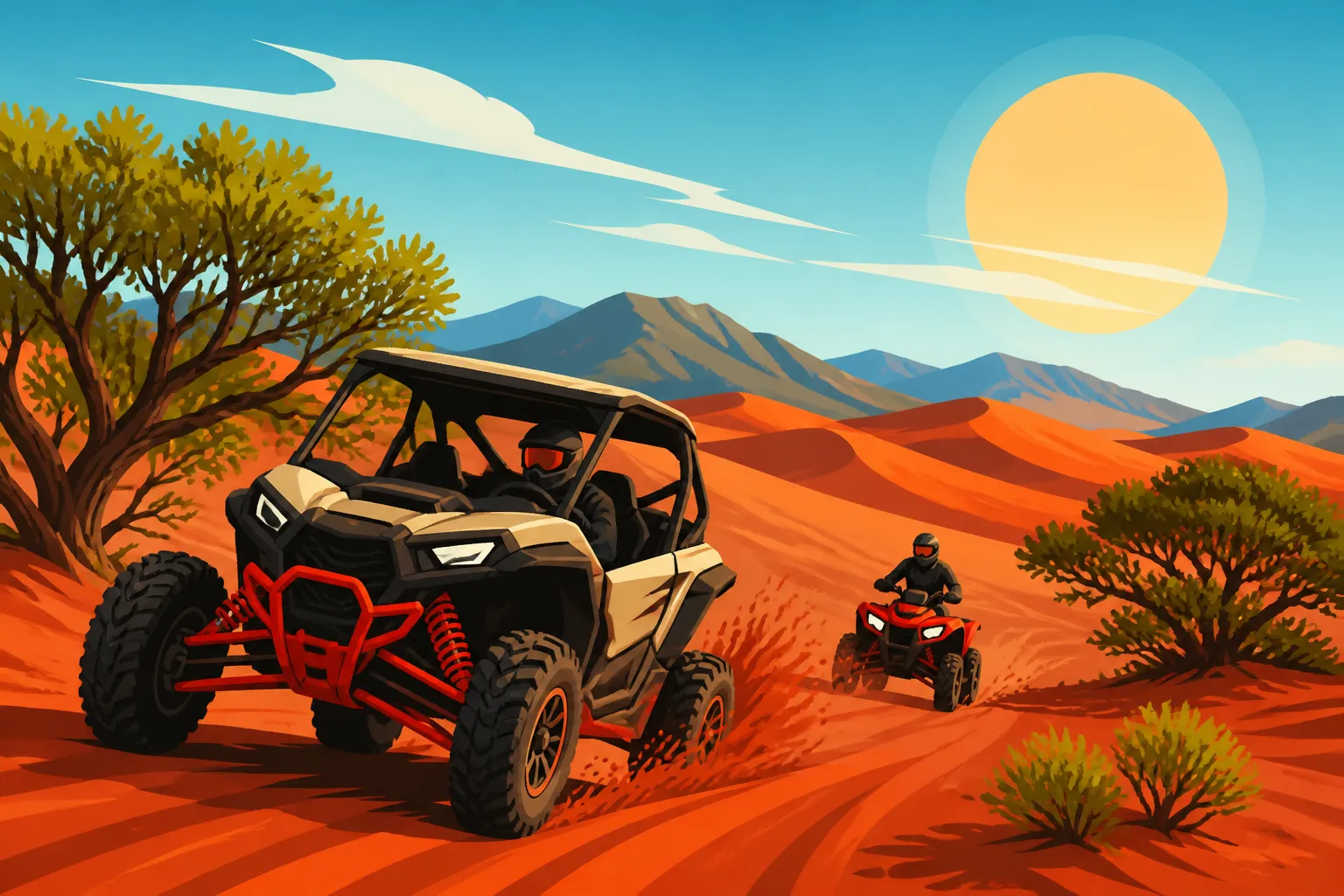
Red Sands is a desert riding area in southern New Mexico, northeast of El Paso and near the US 54 corridor. It is known for sandy terrain and low dunes formed around mesquite shrubs, which help give the landscape its distinctive coppice-dune pattern. Riders often describe the area as open and spacious, but that does not mean every visible track is an authorized route or that the terrain is uniform.
The approach is part of the planning. A highway exit, staging point, or informal landmark can be easy to pass if you are unfamiliar with the area, and a phone map may not show the best access route. Before leaving pavement, confirm the current route and access information with the land manager. For a trip-planning overview, see [Getting to Red Sands Off New Mexico's US 54]. If you use onX Offroad to review a route, treat it as a navigation aid rather than proof that a track is open or legal.
Red Sands is not a developed motorsports park with a staffed gate and a full set of visitor services. Expect a more self-reliant outing: bring what you need, keep your group together, and have a plan for getting back to your vehicle. The broader overview in [Red Sands OHV Area in Southern New Mexico] can help place the area in context with other southern New Mexico riding options.
What makes mesquite coppice dunes different
A coppice dune forms when windblown sand gathers around vegetation, often creating small rises or mounds around shrubs. At Red Sands, mesquite is part of the terrain rather than just scenery. A dune may look like a smooth, rideable hump from a distance, but its shape can hide a steep face, soft sand, or a shrub that makes a sudden turn difficult.
The vegetation also affects how the ground holds together. Riding over mesquite roots or cutting through a shrub can damage plants and disturb the sand they help stabilize. That harm is not always obvious from one pass, but repeated shortcuts can widen a track, create new erosion lines, and scar an area that takes a long time to recover. Staying on established tracks is a practical way to reduce that impact and avoid getting tangled in brush.
A useful mental picture is a field of small, changing sand features rather than a single clean dune slope. Wind, traffic, and weather can shift the surface, so yesterday’s line may feel different on your next visit. Take a cautious first pass, especially if you are riding with less experienced drivers or a wide side-by-side. [Red Sands and Its Mesquite Coppice Dunes] is a useful companion topic if you want to focus specifically on how these dunes shape the riding experience.
Choosing a route and reading the terrain
Start with the group, not the boldest rider
It is tempting to choose a route based on the most capable machine in the group. That can leave a novice rider struggling to follow, or push a family ride into sand that feels intimidating once a vehicle is committed to a climb. Set a shared comfort level before unloading: talk about who has experience in soft sand, who wants to avoid steep faces, and how far the group is comfortable riding from the staging area.
A conservative first loop is often the best way to learn the ground. Watch how the tires respond, notice where the sand gets deeper, and give riders time to settle into a pace. If one person gets stuck, the rest of the group should stop somewhere safe rather than bunching up on a slope or blocking a narrow track. Make sure everyone knows the regrouping point and what to do if the group gets separated.
For route planning, onX Offroad can help you review mapped tracks and save useful information before you lose reliable cell coverage. Still, map lines may not reflect changing conditions, closed routes, private boundaries, or signs posted on the ground. Cross-check digital information against current land-manager guidance, and turn around if a route is unclear. A map is most helpful when it gives your group a shared reference—not when it encourages you to follow a line blindly.
Sand, slopes, and visibility
Soft sand often rewards smooth, steady control. Abrupt acceleration can dig a machine into the surface, while an overly cautious stop on a soft incline may make it harder to get moving again. Riders should leave enough space to react, avoid crowding the vehicle ahead, and choose a line with room to continue or safely turn around. These are general riding considerations, not a substitute for training or the machine’s operating instructions.
Do not assume a dune is safe to crest just because another rider has gone over it. The far side may drop sharply, contain brush, or have another vehicle approaching from the opposite direction. Approach unfamiliar rises at a speed that allows you to stop before committing, and avoid jumping or accelerating over a blind crest. In a UTV, passengers should be seated and properly restrained according to the manufacturer’s instructions; they should not lean out or reach beyond the vehicle’s protective structure.
Dust can turn a manageable route into a visibility problem, especially when several machines travel close together. Increase following distance, slow down when you cannot see the track clearly, and wait for dust to settle before moving through a congested area. If a dust cloud hides other riders or a turn, stopping in a safe location is better than guessing. For a broader overview of local options and terrain styles, see [New Mexico Dune Riding Versus Forest Riding].
Preparing your ATV or UTV
Check the machine before you leave home
A basic pre-ride inspection is more valuable in a remote desert area than it may feel in the driveway. Check tire condition and pressure against the vehicle manufacturer’s guidance, inspect wheels and visible suspension parts, and confirm that the throttle and brakes operate normally. Look for loose cargo, damaged straps, leaking fluids, and anything that could shift when the machine bounces across uneven sand.
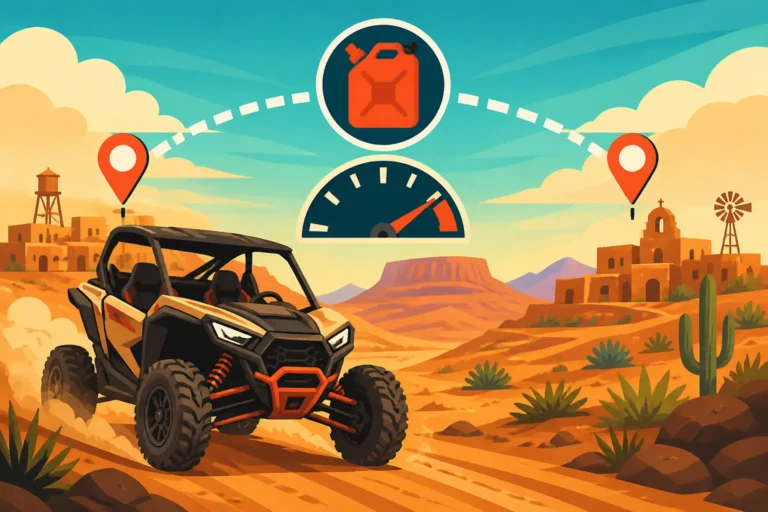
Fuel planning deserves special attention. Do not base your range on a short ride close to town or on a previous trip in firmer terrain. Deep sand, frequent stopping, low tire pressure, heavy cargo, and aggressive acceleration can all affect consumption. Start with a full tank where practical, know the limits of your machine, and avoid planning a route that leaves no margin for a detour or a slow return.
Carry a repair kit matched to the vehicle and the group’s abilities. That may include tools, a tire-repair option, basic first-aid supplies, and a way to contact help if a phone is out of service. A satellite messenger can be useful on remote outings, but it does not replace telling someone where you are going and when you expect to return. [Breaking Down Far From a Road] offers more guidance for thinking through a mechanical problem away from the staging area.
Pack for heat, dust, and limited services
Desert conditions can make a short outing feel much longer. Bring more drinking water than you think the group will need, and keep it accessible rather than buried beneath gear. Sun protection, eye protection, gloves, and clothing suited to dust and temperature changes can make a real difference over several hours. If someone in the group has a medical condition or takes medication, plan for that person’s needs before the ride begins.
Do not count on finding fuel, food, drinking water, restrooms, or a repair shop at the riding area. Confirm what is available in the nearby community before you set out, and arrive with enough supplies to avoid relying on an unplanned stop. Cell coverage can be inconsistent in open desert, so download maps or other trip information in advance. onX Offroad’s offline map features may be useful if available for your setup, but save the information before you lose a signal and carry a backup navigation plan.
A practical way to reduce last-minute confusion is to divide supplies among the group. One vehicle can carry extra water, another can carry tools, and each driver can keep their own essentials within reach. Before starting, check that every rider knows where the first-aid kit and communication device are stored. For advice on preparing for the local climate, see [Carrying Water in the Southern Desert] and [Dust and Visibility on a Desert Trail].
Rules, access, and low-impact riding
Confirm access and machine requirements
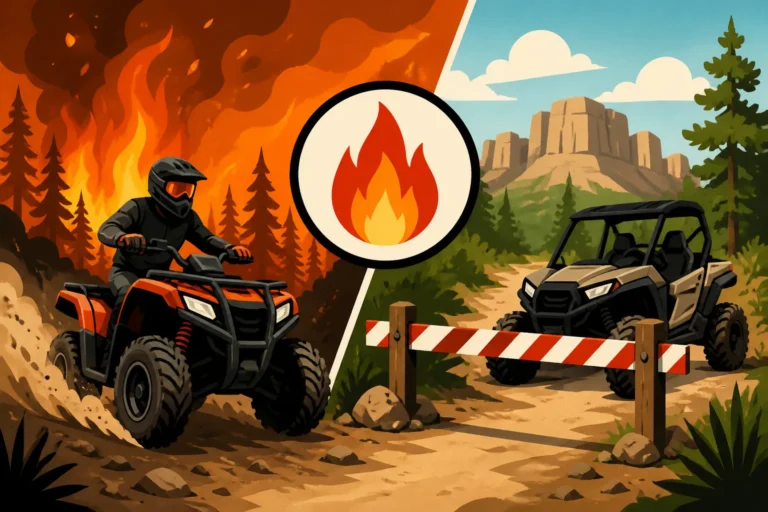
Before you ride, verify that the area is open and that the route you intend to use is permitted. Public-land access can be affected by closures, fire restrictions, land-management rules, or temporary conditions. A track displayed in a navigation app is not a guarantee of legal access. Follow posted signs and barriers, and do not ride around a closure just because the ground looks passable.
New Mexico OHV requirements can depend on whether the machine is registered in the state, where it is registered, and who is riding it. Visitors should check whether their home-state registration is recognized or whether they need a New Mexico permit. Begin with [New Mexico's Broad OHV Reciprocity] and [New Mexico's Nonresident OHV Permit] to understand the visitor side of the process. For New Mexico residents, [Registering an OHV in New Mexico] explains the registration topic in more detail.
Rules for young riders deserve their own check before a family trip. A child may need to meet age, supervision, and safety-course requirements, and those requirements can vary with the rider’s age and circumstances. Review [New Mexico's Safety Permit for Under-18 Riders] before leaving home rather than trying to sort it out at the trailhead. Also confirm that each ATV or UTV is appropriate for its operator and passengers, and follow the manufacturer’s seating and restraint requirements.
Keep your tracks on durable ground
A mesquite shrub can look like an obstacle to weave around, but driving through vegetation can damage the plant and disturb the sand around it. Avoid creating new bypasses around ruts, soft patches, or other riders. If an established route is difficult, pause and decide whether the group can safely continue; turning back is preferable to widening a track through vegetation.
Give other riders room and communicate clearly. Oncoming traffic may appear suddenly over a rise, and dust can obscure a machine that is only a short distance away. Slow down when passing, avoid stopping where another rider cannot see you, and do not block a narrow route while taking a break. If you need to regroup, choose a visible, stable place that leaves the track clear.
Pack out everything you bring in, including food wrappers, broken straps, and vehicle parts. Leave gates as you find them if your authorized route crosses one, and respect boundaries and signs. [New Mexico Trail Etiquette on Shared Ground] covers shared-use habits that help reduce conflict, while [New Mexico Trail Closures to Check First] is a useful reminder to check access before making the drive.
Planning a safer day at Red Sands
Match your plan to the day’s conditions
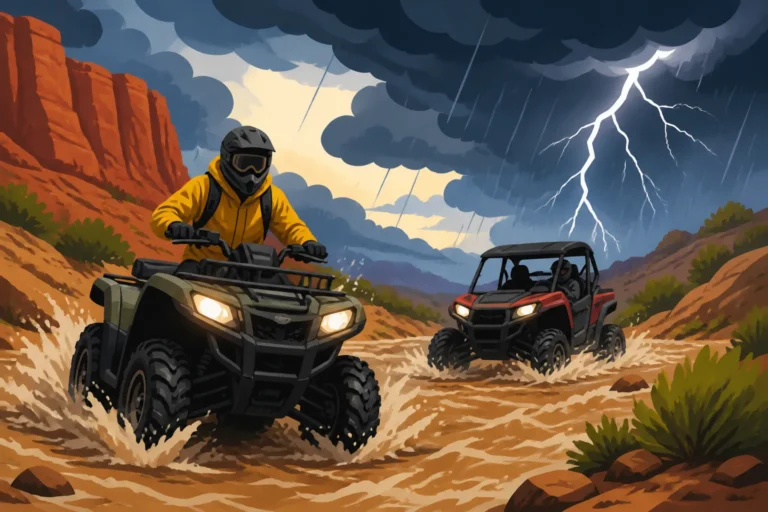
A ride that feels comfortable in cool morning weather can become exhausting as the day heats up. Check the forecast before departing, and be prepared to shorten the outing if heat, wind, dust, or a storm changes the conditions. In the desert, an afternoon storm can bring sudden rain and flash-flood risk in low areas. Avoid riding into washes or other places where water could collect, and do not assume a dry channel will remain dry.
A simple plan can prevent a lot of stress: choose a meeting point, agree on a return time, and identify who will make the call to turn around if conditions deteriorate. Keep the first ride shorter than the group’s maximum ambition. That gives you time to learn the sand, check how everyone is doing, and adjust without rushing to get back after dark.
| Planning question | Why it matters | Practical approach |
|---|---|---|
| Is the access route open? | Closures or restrictions can change where riding is allowed. | Check current land-manager information and posted signs. |
| Does the group have enough experience? | Deep sand and blind rises can challenge new riders. | Choose a conservative first loop and regroup often. |
| Is the machine ready? | A small tire or mechanical problem can become a long delay. | Inspect the vehicle and carry appropriate repair supplies. |
| Is there enough water and fuel? | Services may not be available at the riding area. | Pack for the full outing and leave a safety margin. |
| Can the group navigate without cell service? | Phone coverage may be unreliable. | Save maps in advance and carry a backup plan. |
Know when to stop, reroute, or call it a day
Turn around when the route is unclear, the sand is beyond the group’s comfort level, or a machine is behaving unpredictably. A rider who feels pressured to keep up is more likely to make a hurried decision. Make it normal for anyone in the group to call for a pause without having to justify it. A short break can help people rehydrate, check equipment, and make a better decision about the next section.
If a vehicle becomes stuck, avoid crowding it or spinning the tires aggressively. Clear people from the immediate area, assess whether a safe recovery is possible, and use recovery equipment only if the people involved know how to use it. Keep bystanders away from tensioned straps or cables, and do not attempt a recovery that risks pulling a vehicle toward a steep drop, brush, or another machine. When the problem is beyond the group’s ability, use your communication plan and request assistance.
End the ride with enough daylight and energy to load safely. Dusty, tired riders can make avoidable mistakes while securing machines or driving back to town. Check that everyone is accounted for, inspect vehicles for new damage, and take trash with you. A little extra time at the end of the day is part of the plan, not a sign that the ride went wrong.
Disclaimer
This article is for general informational purposes only and does not constitute professional advice. Laws, prices and regulations vary by location and change over time. Consult a qualified professional for guidance on your specific situation.