Registering a Quad Inherited From a Parent
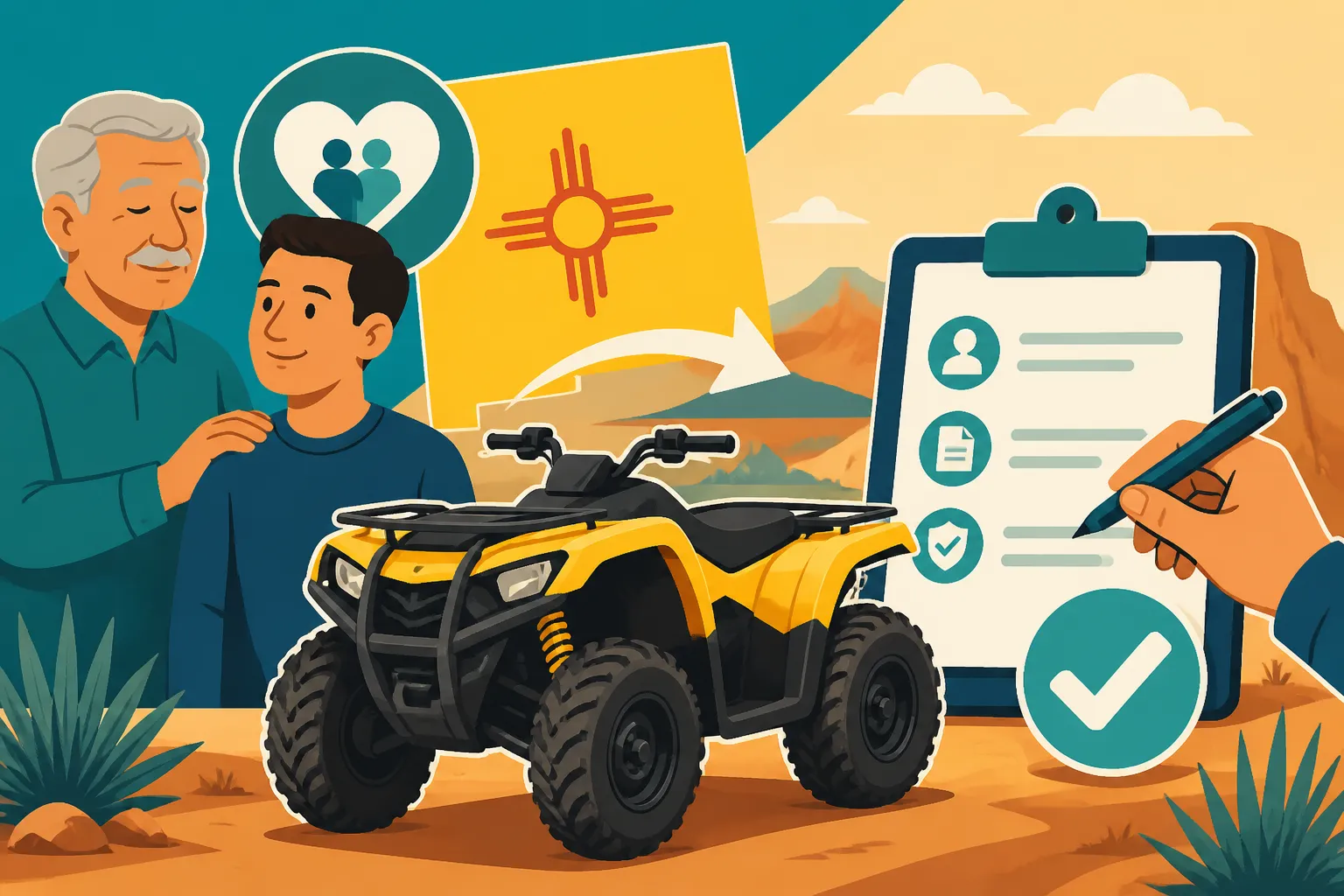
Inheriting an off-highway vehicle (OHV) like a quad or UTV from a parent can be a deeply personal and often bittersweet experience. While it offers a tangible connection to cherished memories and adventures, the thought of navigating government paperwork to legally transfer and register it during an already emotional time can feel incredibly daunting. This guide is here to walk you through the process of registering a quad, side-by-side, or any other OHV you’ve inherited in New Mexico, helping you understand the specific steps and documents required so you can focus on honoring those memories, not stressing over bureaucracy.
The Emotional Rollercoaster: Inheriting an ATV/UTV
When a parent passes, the items they leave behind often carry a weight far beyond their monetary value. An ATV or UTV isn't just a machine; it can be a vessel for shared experiences, family trips, and a connection to the open New Mexico landscapes your parent loved. Suddenly finding yourself responsible for its legal transfer can feel like an extra burden on an already heavy heart.
More Than Just a Machine
For many, inheriting an OHV isn't just about getting a new toy; it's about holding onto a piece of their parent's life, a link to shared passions, or perhaps even a dream the parent had for their family to continue enjoying the outdoors. Maybe you remember countless weekends riding trails together in the Carson National Forest or exploring the dunes at Mescalero Sands. That quad isn't just steel and plastic; it's a memory keeper.
The emotional weight of dealing with estate matters is significant. Adding the seemingly complex task of transferring vehicle ownership, which often involves deciphering legal jargon and interacting with government agencies, can be incredibly overwhelming. It's perfectly normal to feel a mix of sadness, gratitude, and frustration all at once. We want to make this one part of the process a little easier for you, so you can spend less time stressing and more time remembering the good times.
The Practical Side of Inheritance
Beyond the sentimental value, there's a very practical side to inheriting an OHV. Even if the machine feels like it's inherently "yours" after your parent's passing, the State of New Mexico needs to officially recognize you as the new owner. This isn't just a formality; it's about ensuring proper legal ownership and accountability. Without correctly transferring the title (if one exists) and registering the machine in your name, you won't be able to legally operate it on public lands or paved roads, and you could face complications with insurance or future sales.
Proper legal transfer ensures that the state knows who is responsible for the machine, which is crucial for liability, taxation, and maintaining accurate records. It also means that if you ever need to replace a [Replacing a Lost New Mexico Decal] or prove ownership, all the paperwork will be in order. Taking care of this step solidifies your legal right to the machine and allows you to enjoy it without the worry of potential legal issues down the road.
Understanding New Mexico's OHV Registration Process
New Mexico has specific rules about off-highway vehicles, and understanding them is key to a smooth registration process, especially when dealing with an inherited machine. It's not always as straightforward as buying a new one, but it's certainly manageable.
Why Registration Matters in New Mexico
In New Mexico, almost all OHVs—whether they're ATVs, UTVs, dirt bikes, or sand rails—need to be registered if you plan to operate them on public lands, including designated trails, BLM land, or Forest Service roads. This isn't just a revenue grab; it's a vital program that helps fund trail maintenance, safety programs, and administrative costs associated with managing OHV recreation across the state. Think of it as your contribution to keeping those trails open and enjoyable for everyone. [New Mexico's First OHV Registration]
The New Mexico Motor Vehicle Division (MVD) is the agency responsible for handling OHV registrations. They ensure that vehicles are properly identified, that fees are collected, and that owners have the necessary decals to indicate their compliance. Having your machine registered means you're not only adhering to state law but also contributing to the very infrastructure that makes off-highway riding possible and enjoyable in the Land of Enchantment. [Why MVD Registers New Mexico OHVs]
The Difference Between Titling and Registration (and why it matters here)
This is a point of confusion for many people, and it's particularly relevant when inheriting an OHV.
Titling establishes legal ownership of a vehicle. It's the document that says, "This machine belongs to [Your Name]."
Registration gives you permission to operate that vehicle on public roads or lands. It's proof that you've paid your fees and are legally allowed to ride.
For an inherited quad, you might need to do both or just one, depending on whether your parent had a title for the machine in the first place. Many older OHVs, or those purchased in states that didn't require titles for off-highway vehicles, might only have a bill of sale or a registration card as proof of ownership. New Mexico generally requires a title for all OHVs, especially newer ones, but there are provisions for machines without one if proper ownership can be established through other means. [Do You Need a Title for an ATV in New Mexico?] Understanding this distinction is crucial as it dictates what documents you'll need to present at the MVD.
Key Documents You'll Need for an Inherited Quad
Gathering the right paperwork is often the trickiest part of registering an inherited OHV. It's not always a clear-cut situation, and what you need will largely depend on whether your parent had a will, if the estate went through probate, and if a title existed for the quad.
Proof of Ownership from the Estate
This is arguably the most critical and often the most confusing piece of the puzzle. The MVD needs to see clear documentation that the quad legitimately passed from your parent's estate to you.
- If there was a Will and Probate: If your parent left a will and their estate went through probate court, you'll need certified copies of the Letters Testamentary (if there was a will) or Letters of Administration (if there wasn't a will but an administrator was appointed). These documents formally appoint an executor or administrator and authorize them to distribute assets, including the OHV, to the heirs. The will itself should also name you as the beneficiary of the quad.
- If there was a Trust: If the quad was held in a trust, you'll need a copy of the trust agreement clearly indicating that you are the successor trustee or beneficiary and have the right to the property.
- If no Will or Probate (Small Estates): In New Mexico, if an estate is below a certain value and no formal probate is opened, you might be able to use a Small Estate Affidavit or an Affidavit of Heirship. These are sworn statements declaring you are the rightful heir to the property. You'll typically need to get this notarized and sometimes signed by disinterested witnesses. While legal aid is always recommended for these, some online services like LawDepot offer templates for affidavits of heirship, but always ensure they are compliant with New Mexico law and consult an attorney for specific advice.
- The Original Title or Registration: If your parent had a title in their name, you'll need that original document. If no title existed (common for older machines), but they had a current or expired registration card, bring that too. It helps establish a chain of ownership to the deceased.
The MVD agent will review these documents to ensure the legal transfer is valid. It's always a good idea to bring more documentation than you think you need, just in case.
Your Personal Identification and Information
Like any MVD transaction, you'll need to prove who you are. This is straightforward:
- Valid Driver's License or State ID: Your current, unexpired identification is a must.
- Proof of New Mexico Residency: If your driver's license isn't from New Mexico or doesn't show your current address, you might need additional proof like a utility bill, bank statement, or lease agreement. This is important for establishing that you're a New Mexico resident.
- Social Security Number: Be prepared to provide this for the application forms.
These are standard requirements that help the MVD verify your identity and ensure you are eligible to register a vehicle in the state.
The OHV's Specifics
You'll also need detailed information about the quad itself. This is usually found directly on the machine or in your parent's existing paperwork.
- Vehicle Identification Number (VIN): This is absolutely crucial. The VIN is like the OHV's fingerprint, a unique 17-digit code that identifies the specific machine. It's typically stamped on the frame, often near the front wheels, under the seat, or on the steering column. Make sure you write it down accurately. [New Mexico OHV VIN Requirements]
- Make, Model, and Year: Have this information ready. It helps the MVD categorize the vehicle correctly and ensures the VIN matches the vehicle description.
- Current Odometer Reading (if applicable): Some OHVs have odometers, and the MVD may ask for this.
Having these details on hand will prevent delays. If you're struggling to find the VIN, consult the owner's manual for its typical location or look for a small metal plate on the frame.
Navigating the MVD: Steps to Registration
Once you've gathered all your documents, it's time to visit the New Mexico Motor Vehicle Division. This step can feel intimidating, but being prepared will make a huge difference.
Preparing for Your Visit
Before you even leave the house, take a few crucial steps to ensure your MVD visit goes as smoothly as possible. This preparation can save you hours of frustration and potentially a second trip.
First, double-check all your documents. Lay them out, verify names, dates, and ensure everything is legible. Make photocopies of everything, especially the will, trust documents, or affidavits. Sometimes MVD agents need to keep copies, and you’ll want to retain your originals. It's also wise to check the MVD's official website for their specific requirements for inherited vehicles, as procedures can sometimes be updated.
Next, consider the timing of your visit. MVD offices can have long wait times, particularly during peak hours or at the end of the month. If possible, try to go during off-peak times, like mid-morning or mid-afternoon on a Tuesday, Wednesday, or Thursday. Some MVD locations allow you to schedule appointments online, which can be a huge time-saver. Managing your expectations for the visit can also help reduce stress – it might take a while, but you’ll get there!
At the MVD Counter
When it's your turn, approach the counter with all your organized documents. You'll need to complete an Application for Vehicle Title and Registration. The MVD agent will guide you through this form, but having all your information ready will make it quicker.
You'll present your proof of inheritance (will, trust, affidavit, etc.), your parent's original title or registration (if available), your personal ID, and the OHV's information. The agent will review everything, and this is where the specifics of your situation will determine the exact process. They may need to make calls or consult supervisors, especially if the inheritance documents are complex or if there's no clear title. This is where patience is truly a virtue. Be prepared to clearly explain the situation and answer any questions they have about the transfer of ownership.
Finally, you'll pay the necessary fees. New Mexico OHV registration typically involves a biennial (two-year) fee. The cost can vary depending on whether it's a first-time registration under your name and if any titling fees are also involved. [New Mexico OHV Registration Cost] The agent will inform you of the exact amount due. If, for some reason, the MVD cannot process your request due to missing or insufficient legal documentation, they will explain why and suggest next steps, which might involve consulting an attorney or the probate court.
What Happens After Registration: Decals and Riding Legally
Congratulations! Once you've successfully navigated the MVD and registered your inherited quad, you're almost ready to hit the trails. There are just a few more things to understand about your new registration.
Receiving Your Decals
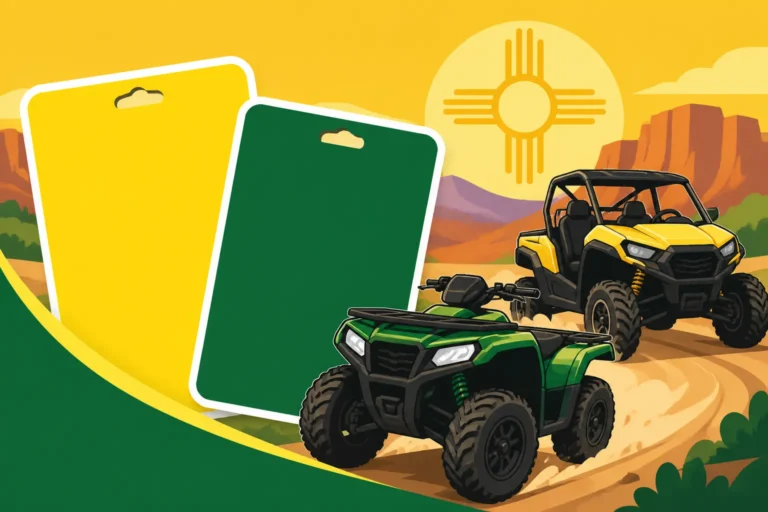
After your registration is processed and fees are paid, the MVD will issue you one or two decals, which serve as physical proof of your current registration. In New Mexico, there are generally two types of decals:
- Yellow Off-Highway Decal: This is the standard decal for OHVs used only on public lands (trails, BLM land, forest roads). [New Mexico's Yellow Off-Highway Decal]
- Green On and Off-Highway Decal: This decal is for OHVs that are also equipped to be "street legal" on designated paved roads in certain New Mexico counties or municipalities. [New Mexico's Green On and Off-Highway Decal] This requires additional equipment and often proof of insurance.
You'll receive a registration card and the appropriate decal(s). It's crucial to properly place these decals on your machine according to New Mexico's rules. The placement varies slightly by vehicle type (e.g., ATVs, UTVs, dirt bikes). The MVD will provide instructions, or you can find them online. [New Mexico OHV Decal Placement Rules] This decal confirms your registration is valid, typically for two years, after which you'll need to renew it. [New Mexico's $50 Biennial Renewal] [How Long a New Mexico OHV Registration Lasts]
Understanding Riding Requirements
While registration is a major step, it's just one part of riding legally and safely in New Mexico. Before you head out, make sure you're also aware of other important regulations:
- Helmets and Eye Protection: Riders under 18 are generally required to wear a helmet, and eye protection is recommended for everyone, especially on paved roads. [New Mexico Helmet Law for ATV Riders]
- Age Restrictions: There are minimum age requirements for operating OHVs on public lands, and rules about passengers, particularly for younger riders.
- Paved Road Use: If you received a green decal, remember that riding on paved roads comes with additional requirements, including liability insurance and often a valid driver's license. Not all paved roads are open to OHVs, so always check local ordinances. [New Mexico ATV Insurance Requirement]
- Trail Etiquette and Regulations: Always stay on designated trails, respect private property, and be mindful of other trail users and wildlife.
Taking the time to understand these rules will ensure that you can safely and legally enjoy your inherited quad, creating new memories while cherishing the old ones.
| Document Type | Standard OHV Registration (New Purchase) | Inherited OHV Registration (from Parent) |
|---|---|---|
| Proof of Ownership | Manufacturer's Certificate of Origin (MCO) OR Title (if used) OR Bill of Sale | Parent's Title OR Parent's Registration Card + Valid Will/Trust Documents OR Small Estate Affidavit/Court Order |
| Personal Identification | Valid Driver's License/State ID | Valid Driver's License/State ID |
| OHV Information | VIN, Make, Model, Year | VIN, Make, Model, Year (from machine/parent's docs) |
| Proof of Residency | NM Driver's License OR utility bill | NM Driver's License OR utility bill |
| Insurance (if applicable) | Required for paved road use only | Required for paved road use only |
| MVD Application Form | MVD Application for Title and Registration | MVD Application for Title and Registration (with inheritance details) |
| Fees | Registration, Title fees (if applicable) | Registration, Title fees (if applicable) |
Disclaimer
This article is for general informational purposes only and does not constitute professional advice. Laws, prices and regulations vary by location and change over time. Consult a qualified professional for guidance on your specific situation.