Bringing a Quad From Arizona
It can feel like a bureaucratic headache when you're trying to enjoy your off-highway vehicle (OHV) across state lines, especially when bringing your beloved quad from Arizona into New Mexico. You've got your machine, you're ready to hit the trails, but the nagging question of whether your current Arizona registration is good enough in the Land of Enchantment can really put a damper on your plans. This guide will walk you through everything you need to know about navigating New Mexico's rules when you bring your quad from Arizona, ensuring you're legally compliant and ready for adventure.
Understanding New Mexico's OHV Registration Basics
Rolling across the border with your quad on the trailer is one thing, but hitting New Mexico's amazing trails or even crossing a paved county road is another. You want to make sure you're doing it right, not just for legal reasons, but for the safety and preservation of our beautiful riding areas.
Why Registration Matters in New Mexico
New Mexico takes its off-highway vehicle regulations seriously, and for good reason. Proper registration ensures that the state can track vehicles, that funds from registration fees can go back into trail maintenance and enforcement, and that everyone on public lands is playing by the same rules. If you're caught riding an unregistered OHV in New Mexico, even if it's perfectly legal in Arizona, you could face fines and a real hassle. It's not just about a sticker; it's about contributing to the infrastructure that makes our outdoor experiences possible and staying out of trouble with local law enforcement or land managers. This applies whether you're planning a full weekend of riding or just a quick spin from your campsite to the trailhead.
Reciprocity: Does Arizona's Registration Count?
This is often the million-dollar question for riders coming from out of state! The good news is that New Mexico generally has a pretty friendly reciprocity policy. If your quad is properly registered and street-legal (if applicable) in Arizona, New Mexico will typically honor that registration for off-highway use. This means you usually won't need to get a full New Mexico OHV registration or plate if your Arizona registration is current and valid.
However, there are nuances. "Properly registered" means your Arizona registration meets your home state's requirements, and you have proof of that registration with you. It's always best to carry your Arizona registration card or documentation with you while riding here. You might be interested in reading more about [Does New Mexico Honor Arizona OHV Registration?]. This reciprocity is designed to make it easier for visitors to enjoy New Mexico's extensive trail systems without having to jump through unnecessary hoops.
When a New Mexico Permit is Still Required
While New Mexico offers good reciprocity for many states, there are still specific situations where you might need to acquire a New Mexico Nonresident OHV Permit, even if your Arizona registration is valid.
One primary reason could be if your Arizona registration, for some reason, doesn't meet New Mexico's definition of a "valid" OHV registration, perhaps due to different classifications or expired status. Another scenario might arise if you plan to utilize certain paved roads that New Mexico allows OHVs on (with specific requirements), and your Arizona registration doesn't implicitly cover that kind of use in your home state, or if you simply prefer the peace of mind of having a New Mexico-specific document. The key is to understand that while your Arizona registration is usually honored, a [New Mexico's Nonresident OHV Permit] serves as a clear, undeniable demonstration that you've met New Mexico's requirements for visitors. This permit costs a specific amount for a two-year period, or a ninety-day option if your visit is shorter. You can find out more about the [New Mexico Nonresident OHV Permit Cost] and [Where to Buy a New Mexico OHV Permit] online or by contacting the New Mexico Department of Game and Fish.
The Steps to Take When Bringing Your Arizona Quad to New Mexico
Okay, so you've got your Arizona quad, and you're ready to explore New Mexico. Let's break down the practical steps to ensure a smooth transition and legal riding experience.
Verifying Your Arizona Registration Status
Before you even load up the trailer, give your Arizona OHV registration a thorough check. Is it current? Does it clearly identify your quad? Do you have the physical registration card or a copy readily available? These seem like basic questions, but you'd be surprised how often folks get caught out by an expired tag or a misplaced document. New Mexico law enforcement or land managers will expect to see proof of valid registration, whether it's from Arizona or New Mexico.
Beyond registration, make sure you have solid proof of ownership. This usually means a title. If you've just bought the quad, ensure you have a proper bill of sale. If you're missing documents, now is the time to sort it out. Even if Arizona doesn't title all OHVs, having a clear chain of ownership is always a good idea. For a seamless transfer or just to have solid documentation, services like LawDepot can provide professional, customizable bill of sale templates that ensure all necessary information is captured, whether you're buying or selling a machine. This kind of document clarity can save you headaches down the line if there's ever a question about who owns the quad.
Understanding New Mexico's Decal System
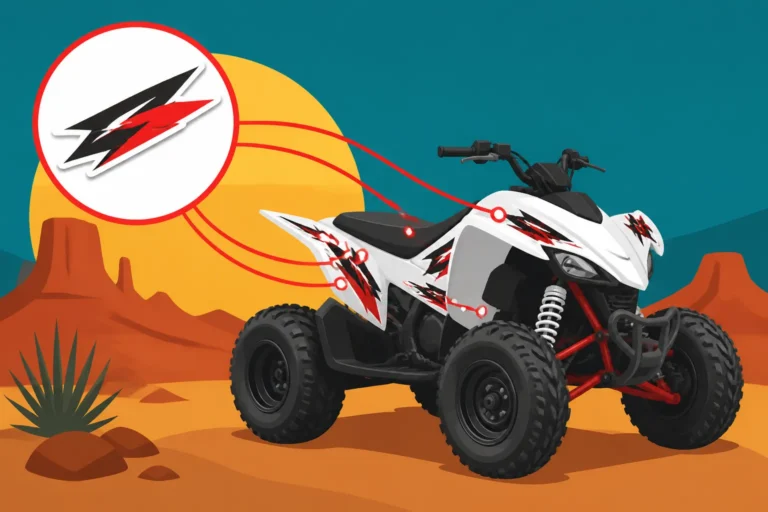
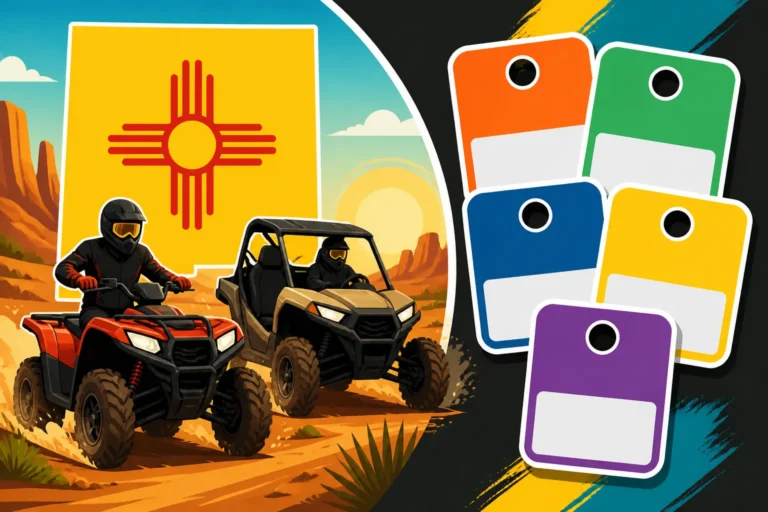
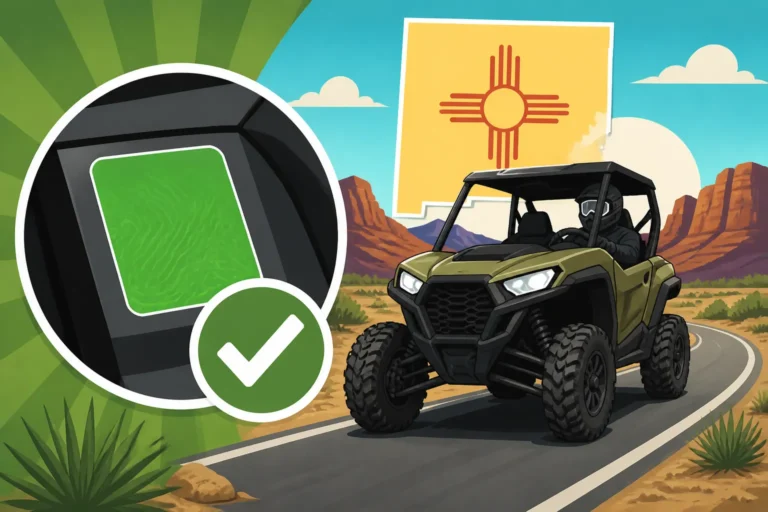
New Mexico has a distinct decal system for its registered OHVs, which can sometimes be confusing for out-of-state riders. You'll typically see yellow decals and green decals on New Mexico machines. The yellow decal generally signifies an OHV registered for off-highway use only. The green decal, on the other hand, indicates a machine registered for both on-highway and off-highway use, provided it meets additional requirements. While your Arizona registration may be reciprocated, it won't come with New Mexico decals.
You won't necessarily need these New Mexico decals if your Arizona registration is valid and you're sticking to off-highway trails. However, if you do decide to purchase a [New Mexico's Nonresident OHV Permit], you will receive a specific decal for that permit, which you'll need to display on your machine. This helps New Mexico authorities quickly identify that your vehicle is cleared for use in the state. Understanding [New Mexico's Yellow Off-Highway Decal] and [New Mexico's Green On and Off-Highway Decal] can help you recognize local machines, even if your own out-of-state registration doesn't require them.
Getting a New Mexico Nonresident Permit (If Necessary)
Let's say, after reviewing your Arizona registration and New Mexico's rules, you decide that getting a New Mexico Nonresident OHV Permit is the best route for peace of mind, or perhaps your Arizona registration is one of the rare cases not fully honored. Don't worry, the process is straightforward.
You can usually apply for this permit online through the New Mexico Department of Game and Fish website, by phone, or sometimes in person at various field offices. The permit typically covers a two-year period, though a ninety-day option is available if you're just visiting for a shorter spell. It's a small fee compared to the potential fines for non-compliance, and it ensures you have a physical decal to display, which makes roadside checks much smoother. The permit fees go towards OHV programs and trail maintenance in New Mexico, so you're also contributing to the very trails you'll be enjoying. For the latest details on exact costs and application methods, always check the official New Mexico Department of Game and Fish website or give them a call. Knowing [Where to Buy a New Mexico OHV Permit] and the [New Mexico Nonresident OHV Permit Cost] in advance will save you time and hassle.
Beyond Registration: Other New Mexico Rules for Out-of-State Riders
Registration is just one piece of the puzzle. New Mexico has a range of other rules that apply to all OHV riders, whether you're a local or visiting from Arizona. It's crucial to be aware of these to ensure a safe and legal ride.
Safety Equipment and Age Restrictions
New Mexico places a strong emphasis on rider safety. For anyone under the age of 18, wearing a helmet is mandatory when operating an OHV on public land. Even if you're an adult and it's not required in Arizona, wearing a helmet is always a smart choice for your own protection. Furthermore, eye protection is also highly recommended, and often required on public roads. There are also specific age restrictions for operating OHVs on public lands, with varying rules for different age groups. For example, riders under 18 generally cannot carry passengers, and there are minimum age requirements for riding certain types of machines. Familiarize yourself with [New Mexico Helmet Law for ATV Riders] and [New Mexico Eye Protection Requirement] before you hit the trails. Ignorance of the law is never an excuse, and these rules are in place for everyone's safety.
Riding Areas and Trail Etiquette
New Mexico boasts an incredible array of riding opportunities, from high-desert mesas to mountainous forest trails. However, not all land is open to OHVs. You must stick to designated routes and trails, especially on federal lands managed by the Bureau of Land Management (BLM) or the U.S. Forest Service. "Open riding" areas exist, but they are clearly marked. Always check with the local land management office or consult a current map before venturing out.
Respecting private property is non-negotiable; always obtain permission before riding on private land. Beyond that, general trail etiquette applies: yield to hikers and equestrians, pack out what you pack in, and minimize your impact. Also, be aware that [New Mexico Spark Arrester Requirement] applies to all OHVs operating on public land to prevent wildfires. A spark arrester is a critical piece of equipment that many Arizona machines already have, but it's worth double-checking. Understanding [New Mexico Rules for Riding Federal Land] will greatly enhance your riding experience and prevent issues.
Financial Responsibility for Paved Roads
If your plan includes crossing paved public roads or operating your OHV on designated county or city streets in New Mexico, be prepared for additional requirements. New Mexico law requires that any OHV operating on paved public roads must have liability insurance, similar to how a car would. This is not just a suggestion; it's a legal mandate under the [New Mexico ATV Insurance Requirement].
Your Arizona OHV insurance policy might extend to cover this, but you'll need to confirm with your insurance provider whether it meets New Mexico's minimum coverage requirements for paved road use. Additionally, you'll need a valid driver's license to operate an OHV on paved roads, just like any other motor vehicle. A permit is also usually required for this type of use. So, if you're planning to ride into town for lunch or use a designated road connector, make sure your insurance and licensing are in order. [New Mexico Driver's License Rules for OHVs] outlines these requirements clearly.
Important Documentation and Best Practices
Having the right paperwork and knowing how to handle common scenarios can make all the difference between a fantastic riding trip and a frustrating one.
Essential Documents to Carry
When you're out riding in New Mexico, especially as an out-of-state visitor, it's paramount to have specific documents easily accessible. These include:
- Proof of OHV Registration: Your current, valid Arizona registration card or, if you obtained one, your New Mexico Nonresident OHV Permit with its decal affixed to your machine.
- Proof of Ownership: Your vehicle's title or a notarized bill of sale. This is especially important if you've recently purchased the quad.
- Driver's License: If you're riding on paved roads, a valid driver's license is required. Even off-road, it's good practice to have ID.
- Proof of Insurance: Again, primarily for paved road use, but good to have for general liability in case of an accident.
- Safety Course Certificate: If you're a minor (under 18), proof of having completed an approved OHV safety course might be required.
While digital copies on your phone might seem convenient, a dead battery or no signal can render them useless. It's always a good idea to carry physical copies of your most critical documents in a waterproof bag or pouch on your person or securely on your quad.
Using a Bill of Sale or Title for Proof of Ownership
For many OHV riders, the title is the gold standard for proving ownership. However, some states don't issue titles for all OHVs, or perhaps you've purchased a used machine and the title transfer is pending. This is where a comprehensive bill of sale becomes incredibly valuable.
A well-drafted bill of sale, especially if notarized, serves as strong evidence of your ownership, detailing the buyer, seller, vehicle information (including VIN), sale price, and date of transaction. If you're buying or selling a quad, especially across state lines, utilizing a service like LawDepot for a proper [New Mexico ATV Bill of Sale Requirements] compliant document can protect both parties and ensure you have the necessary paperwork for registration or to address any ownership queries. Always make sure the Vehicle Identification Number (VIN) on your document matches the VIN on your quad exactly. Clear ownership documents are vital for establishing legitimacy and can be crucial if you ever need to replace a lost registration or decal.
When in Doubt: Contact New Mexico Authorities
Navigating regulations, especially when you're crossing state lines, can be complex. The information provided here is general, and specific situations can have unique requirements. If you have any lingering questions or uncertainties about bringing your quad from Arizona to New Mexico, the best course of action is always to directly contact the relevant New Mexico authorities.
The New Mexico Department of Game and Fish manages OHV permits and much of the public land use. The New Mexico Motor Vehicle Division (MVD) handles state registrations for residents and can answer questions about titling. A quick phone call or email to these agencies can often clarify any specific concerns you might have about your particular machine, riding area, or circumstances. It's always better to ask beforehand than to face a citation or disruption to your trip.
| Feature | Arizona OHV Registration (General) | New Mexico OHV Nonresident Permit | New Mexico Resident OHV Registration |
|---|---|---|---|
| Purpose | Home state off-highway legality | Visitor access to NM public lands | Resident access to NM public/paved |
| Reciprocity | Generally honored in New Mexico | N/A (is the NM permit) | N/A (is the NM registration) |
| Decal Issued | Arizona sticker | Specific NM Nonresident Decal | Yellow (Off-highway) or Green (On/Off-highway) Decal |
| Cost | Varies by AZ rules | Set fee (2-year or 90-day option) | Set biennial fee |
| Insurance Req. | Varies by AZ rules | For paved roads in NM | For paved roads in NM |
| Paved Road Use | Usually not covered by AZ OHV reg | Requires additional NM permit/plate and insurance | Green decal + insurance + driver's license |
| Who Needs It | AZ residents riding in AZ/NM | Out-of-state visitors (if reciprocity doesn't apply or preferred) | NM residents |
Disclaimer
This article is for general informational purposes only and does not constitute professional advice. Laws, prices and regulations vary by location and change over time. Consult a qualified professional for guidance on your specific situation.