Plates That Replaced the Old Stickers
Navigating the rules for riding your ATV or UTV on paved roads in New Mexico can be tricky, especially with recent changes to the old sticker system. Many riders feel frustrated trying to understand current requirements and avoid fines. This guide demystifies the transition, explaining why stickers were replaced, what the new paved road plate involves, and how to ensure your off-highway vehicle is fully compliant.
Understanding the Shift from Stickers to Plates
For years, New Mexico OHV enthusiasts who wanted to legally ride on designated paved roads relied on a special sticker. It was a simple system, or so it seemed, allowing for easier identification of machines permitted for on-road travel. However, like many regulations, the system evolved, leading to a significant change that has impacted how riders use their ATVs and UTVs on state, county, and municipal roads. The shift from a sticker to a dedicated license plate for paved road access marked a new era for OHV enthusiasts in the Land of Enchantment.
Why the Old Paved Road Sticker Program Ended
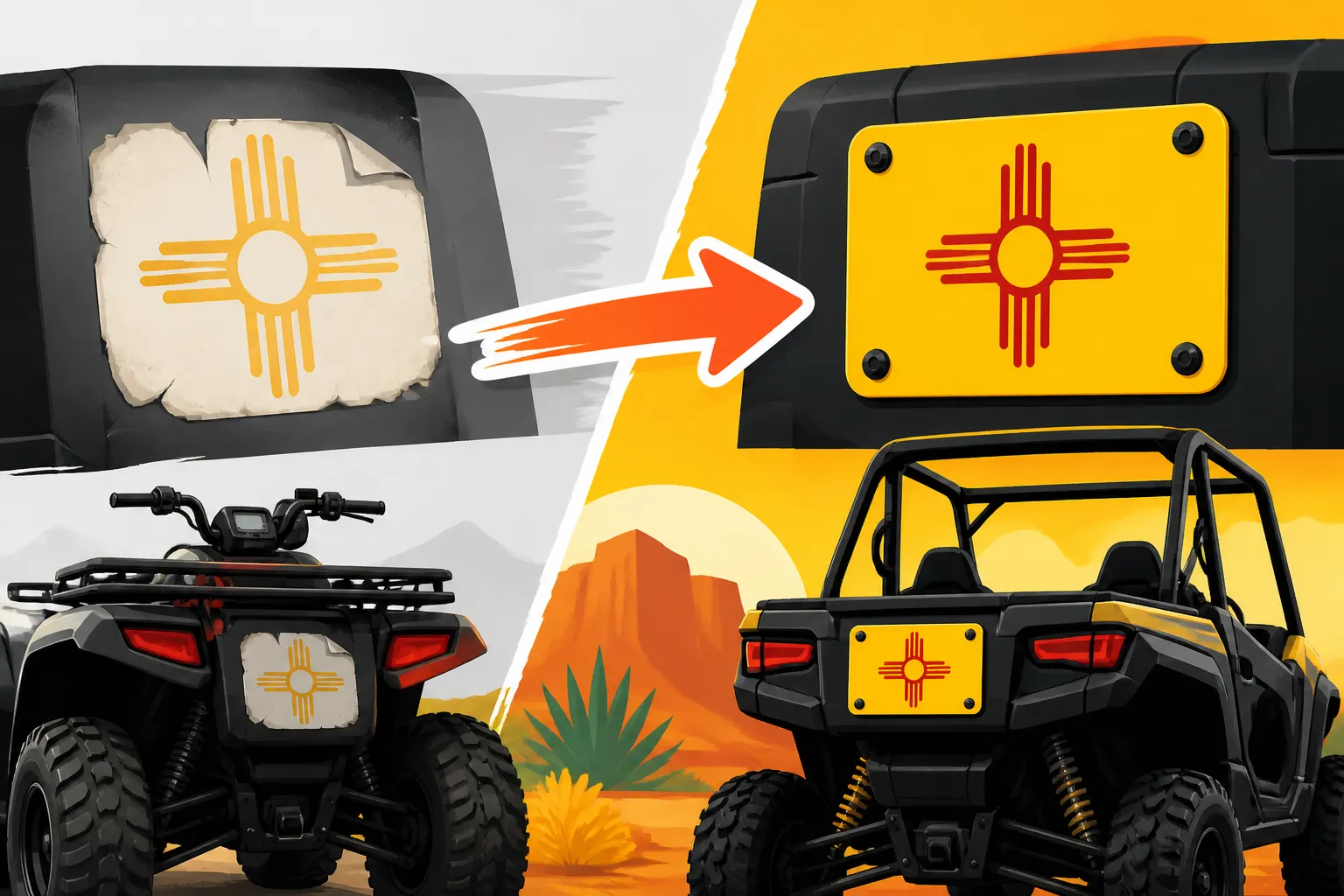
The decision to transition away from the paved road sticker program wasn't made on a whim; it reflected a desire for clearer enforcement, better integration with existing vehicle registration systems, and enhanced safety measures. The old stickers, while serving their purpose for a time, sometimes led to confusion, especially for law enforcement personnel trying to quickly verify a machine's compliance. They could be hard to see, prone to wear and tear, or sometimes incorrectly applied. The legislature recognized a need for a more robust and easily identifiable system that aligned more closely with traditional vehicle registration.
Think about it: a small sticker on a fender versus a prominent metal plate. The plate offers a more permanent and visible form of identification, making it harder for unauthorized machines to blend in and easier for officers to confirm legal road use. The move was also part of a larger effort to standardize OHV regulations, bringing New Mexico more in line with other states that utilize plate-based systems for on-road OHV access. The goal was to eliminate ambiguities and provide a clearer path for responsible riders to enjoy the diverse terrain New Mexico offers, including those necessary stretches of paved road that connect trails or provide access to amenities. If you're curious about the specific legislative details that drove this, you might find more context in [Why Paved Road Stickers Ended in December 2025].
The Introduction of the New Paved Road Plate
With the sunset of the sticker program came the dawn of the new paved road plate. This isn't just any license plate; it's specifically designed for off-highway vehicles that meet certain criteria and whose owners wish to operate them on designated public paved roads. Unlike your standard car or truck plate, this one is unique to the OHV world, yet it carries the same legal weight for road use. It's about providing a clear, unmistakable signal that your ATV or UTV is approved for those stretches of asphalt you need to traverse.
This new plate is issued by the Motor Vehicle Division (MVD), just like standard vehicle registrations. This integration into the MVD system means a more streamlined process for registration and renewals, reducing some of the previous administrative complexities. The plate acts as your official permission slip, signifying that your machine meets New Mexico's requirements for on-road operation, including specific equipment, insurance, and driver licensing provisions. It’s a crucial component for any rider who plans to mix trail riding with paved road connectors, ensuring compliance and peace of mind. For a deeper dive into this specific registration element, you can read [New Mexico's Paved Road Plate].
Navigating the New Paved Road Plate Requirements
Transitioning to the new paved road plate might seem like another bureaucratic hurdle, but once you understand the requirements, it’s a straightforward process designed to ensure safety and accountability. It's not just about getting a piece of metal for your machine; it's about making sure your OHV is properly equipped and you, as the operator, are aware of the rules that come with riding on pavement. The MVD wants to ensure that every OHV on a public road is as visible and identifiable as any other vehicle.
Who Needs a Paved Road Plate in New Mexico
So, who exactly needs this new paved road plate? If you intend to ride your ATV, UTV, or any other OHV on any designated public paved roads in New Mexico, then this plate is for you. This includes county roads, city streets, and any state highways that have been specifically opened to OHV use through local ordinances. It's important to remember that not all paved roads are open to OHVs, even with a plate, so always check local regulations. However, if your journey, whether it's connecting trails, going to a gas station, or simply crossing a main thoroughfare, involves riding on asphalt, this plate is mandatory.
This requirement typically applies to adult riders operating their own machines. Youth machines, usually ridden by minors, generally have stricter limitations on public road access, regardless of plates or decals. Furthermore, the plate is tied to the machine itself, ensuring that any operator of that specific OHV on paved roads is doing so legally. It's not just a suggestion; it's a legal mandate that carries penalties if ignored. If you're pondering [Which Riders Actually Need a Paved Road Plate], consider your riding habits and planned routes.
Essential Steps to Obtain Your Plate
Getting your New Mexico paved road plate involves a few key steps to ensure everything is above board. First and foremost, your OHV must be titled in New Mexico. This is a foundational requirement, as the plate system is built upon existing vehicle titling processes. If you've just purchased a machine, especially a used one, make sure you have a clear title in your name. For assistance with proper documentation like a bill of sale, which is often crucial for transferring ownership and titling, resources like LawDepot can provide reliable templates to ensure you cover all legal bases during a private sale. A properly executed bill of sale is critical for proving ownership and proceeding with the MVD.
Once your OHV is titled, you'll need to head to your local MVD office. Be prepared with the following:
- Proof of Ownership: Your New Mexico title for the OHV.
- Proof of Identification: A valid driver's license or state ID.
- Proof of Insurance: This is crucial for paved road use. Your OHV must be covered by a liability insurance policy that meets New Mexico's minimum requirements, similar to what's required for a car.
- Registration Paperwork: You'll fill out specific MVD forms for OHV registration and the paved road plate application.
- Fees: There will be fees associated with the plate and registration, which support OHV programs and infrastructure.
The MVD agent will review your documents, process your application, and issue your new paved road plate. It’s a good idea to call ahead or check the MVD website for any specific requirements or to book an appointment, as processes can sometimes vary slightly by location or evolve over time. Having all your paperwork in order, including a meticulously completed bill of sale (perhaps one you got from LawDepot if you bought privately), will make the process much smoother. For comprehensive details on what forms to bring, check out [New Mexico OHV Registration Paperwork].
Decals Versus Plates: A Clear Distinction
It’s easy to get confused between the different types of identification for OHVs in New Mexico – the yellow decal, the green decal, and now the paved road plate. Each serves a distinct purpose, and understanding their individual roles is key to riding legally and safely. They aren't interchangeable; rather, they work together (or exclusively) depending on where and how you plan to ride. It’s not a case of one replacing the other entirely, but rather a system of layered permissions.
The Continuing Role of OHV Decals
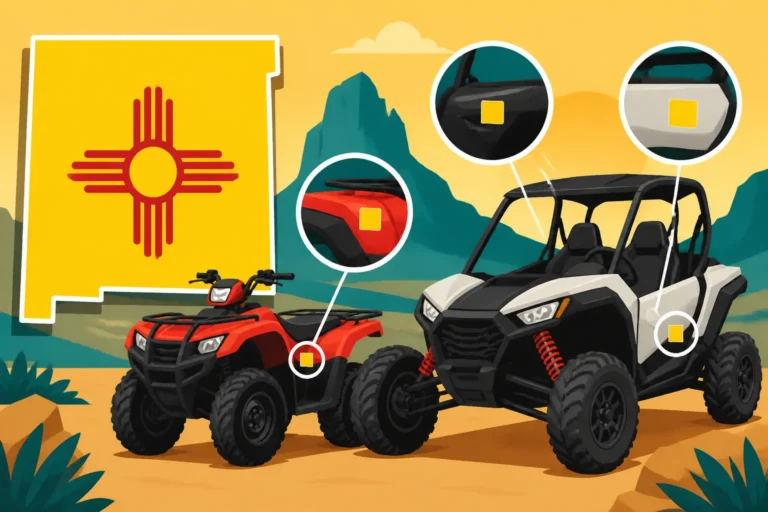
Even with the introduction of the paved road plate, the familiar OHV decals remain a vital part of New Mexico's off-highway riding regulations. These decals, primarily the yellow and green ones, are still absolutely necessary for riding on non-paved public lands, such as designated trails on BLM land, National Forests, or State Trust Lands. The yellow decal indicates that your machine is registered for general off-highway use, while the green decal signifies that your machine meets specific requirements that allow for both off-highway and limited on-highway (paved) travel, primarily crossing roads or using designated dirt county roads.
These decals are primarily concerned with the machine's registration for off-road environments and demonstrating compliance with state laws for using public lands. They fund trail maintenance, safety programs, and administrative costs associated with OHV management. So, if your primary riding involves dirt trails, washes, and unpaved county roads, your decals are still your most important companions. You can learn more about their specific uses in [New Mexico's Yellow and Green Decals].
Riding Legally: Combining Plates and Decals
Here’s where it gets interesting and where some riders might find themselves scratching their heads. For many OHV enthusiasts in New Mexico, the ultimate goal is seamless access between designated off-highway trails and the paved roads that connect them. This often means you’ll need both your current OHV decal (either yellow or green) and the new paved road plate. The decal allows you to ride on the dirt, while the plate gives you the legal authority to traverse the asphalt.
Consider a scenario: you're planning a trip to the Carson National Forest near Red River. You'll be riding miles of exhilarating dirt trails, which require your valid OHV decal. However, to get from your campsite to the trailhead, or to pop into town for supplies, you might need to use a paved county road or even a short section of a state highway that permits OHV access. In this instance, your OHV decal satisfies the off-road requirement, and your paved road plate fulfills the on-road requirement. Without both, you could face penalties depending on where you're caught riding. It’s all about having the correct identification for the specific terrain you're on.
| Feature | Old Paved Road Sticker | New Paved Road Plate | OHV Decals (Yellow/Green) |
|---|---|---|---|
| Purpose | Limited paved road access (ended) | Broad paved road access | Off-highway trail access |
| Issued By | MVD (as part of registration) | MVD (separate application/fees) | MVD (as part of registration) |
| Placement | On machine (e.g., fender) | Rear of machine (like car plate) | On machine (specific locations) |
| Visibility | Small, sometimes hard to see | Prominent, easily identifiable | Visible, but smaller than plate |
| Requirements | Basic OHV registration | Title, insurance, OHV registration | Basic OHV registration |
| Current Status | Phased out, no longer issued | Mandatory for paved road use | Mandatory for off-highway use |
This table illustrates how the systems differ, emphasizing that the paved road plate and decals serve distinct, yet sometimes complementary, roles in ensuring your OHV is legally recognized in New Mexico.
What to Expect When Riding with the New Plate
Now that you understand the plate and its purpose, let's talk about what it means for your actual riding experience. Getting the plate is only the first step; understanding the responsibilities that come with it is just as important. The goal isn't to make riding more difficult, but to ensure that everyone sharing the roads, whether paved or unpaved, does so safely and legally.
Compliance and Enforcement on New Mexico Roads
With the paved road plate affixed to your OHV, you are expected to comply with all traffic laws that apply to other motor vehicles when riding on designated paved roads. This means obeying speed limits, stopping at stop signs, signaling turns, and generally operating your machine in a safe and responsible manner. Law enforcement officers, whether state police, county sheriffs, or municipal police, are now able to more easily identify your OHV as street-legal for those specific routes.
When an officer pulls you over, they will expect to see your paved road plate clearly displayed, just as they would a car's license plate. They will also likely ask for proof of valid OHV registration, your driver's license, and proof of insurance. Without the plate or if your machine is not properly equipped (e.g., lacking headlights, taillights, mirrors, turn signals if required for road use), you could face significant fines and penalties. Ignorance of the law is generally not considered a valid excuse, so it’s your responsibility to know and follow the rules. This ensures safety for yourself and others sharing the road.
The Benefits of the New System for Riders
While it might seem like more hoops to jump through, the new paved road plate system actually offers several significant benefits for New Mexico OHV riders. Foremost among these is enhanced legitimacy and clarity. Having a dedicated plate makes it unequivocally clear to law enforcement and other drivers that your OHV is permitted for road use, reducing confusion and potential unwarranted stops. It provides a level of official recognition that the old stickers simply couldn't convey.
Secondly, it allows for greater connectivity and access. For riders who often find their favorite trails separated by a few miles of pavement, or who need to reach fuel, food, or lodging in town, the plate makes these transitions legal and less stressful. This system is a proactive step toward integrating OHVs more smoothly into the broader transportation network where appropriate, opening up new possibilities for multi-day trips and exploring more diverse landscapes. It’s an acknowledgment that OHVs are a legitimate form of recreation and transportation for many New Mexicans, deserving of a clear and structured pathway for responsible road access.
Disclaimer
This article is for general informational purposes only and does not constitute professional advice. Laws, prices and regulations vary by location and change over time. Consult a qualified professional for guidance on your specific situation.