Which Riders Actually Need a Paved Road Plate
It can be incredibly confusing trying to figure out the maze of rules for riding your ATV or UTV in New Mexico, especially when you start dreaming about taking your machine from the dirt roads onto a paved county or city street. Many riders feel frustrated by the seemingly endless regulations, wondering if they truly need that special "paved road plate." This guide is here to cut through that confusion and clearly lay out which riders actually need a New Mexico paved road plate, and why.
Understanding New Mexico's OHV Registration Basics
Before we dive into the specifics of paved road plates, it’s important to grasp the foundational registration requirements for off-highway vehicles (OHVs) in New Mexico. Every OHV operating on public land in the state needs to be registered. This initial step gets you a primary decal that signifies your machine is ready for the trails.
The Core Off-Highway Decal
When you first register your ATV, UTV, or dirt bike in New Mexico, you'll go through the Motor Vehicle Division (MVD). They will issue you an off-highway decal, often yellow, that's specifically designed for use on public lands like BLM routes, Forest Service roads, and designated OHV parks. This decal is your ticket to enjoying countless miles of incredible New Mexico terrain. It confirms that you've completed the basic registration process and are adhering to the state's requirements for off-road use. Think of it as your primary identification for hitting the dirt. The [New Mexico's Yellow Off-Highway Decal] is what most riders are familiar with, and it's essential for any off-road adventure.
However, it’s crucial to understand that this standard decal alone does not grant you permission to ride on paved public roads. This is where many riders get tripped up, assuming that registration means unrestricted access. The reality is, the state differentiates significantly between off-highway use and on-highway use, even for the same machine. This distinction is at the heart of why a separate paved road plate exists.
Why Pavement Riding is Different
The main reason New Mexico treats pavement riding differently is primarily about safety, liability, and integration with standard motor vehicle laws. When an OHV enters a paved public roadway, it shares that space with cars, trucks, and motorcycles, all of which are subject to a different set of regulations. These include specific lighting requirements, mirror mandates, and most critically, liability insurance. A car accident involving an OHV on a paved road presents different legal and safety challenges than an incident on a remote dirt trail.
Because of these differences, New Mexico enacted specific laws to allow OHVs on certain paved public roads, but only under strict conditions. This isn't about making things harder for riders; it's about ensuring everyone's safety and managing the unique risks associated with mixing these types of vehicles on asphalt. Without these distinctions, the regulatory landscape would be chaotic, and the safety of both OHV riders and conventional motorists would be compromised. It’s why you'll find that [New Mexico's Green On and Off-Highway Decal] is a key component for pavement access, often used in conjunction with a plate.
Who Absolutely Needs a New Mexico Paved Road Plate
Let's get straight to the point: if you intend to regularly ride your ATV or UTV on any paved public road in New Mexico that isn't a perpendicular crossing, you absolutely need a paved road plate. There are no two ways about it. This isn't a suggestion; it's a legal requirement designed to ensure your machine meets specific standards for road use and that you, as the operator, are compliant with state law.
Riding on Paved County or City Streets
This is the most common scenario where a paved road plate becomes mandatory. If you plan to use your OHV to travel along paved county roads to reach a trail system, or to navigate designated streets within an "open" city or town (like Red River, for specific types of machines), you must have this plate. This applies to leisurely cruises, utilitarian trips to the store, or simply getting from one point to another on the paved infrastructure. It signifies that your OHV is equipped and registered for this specific type of use.
Imagine you're staying at a cabin in a mountain town that has opened its county roads to OHVs, and you want to ride your side-by-side from your rental to a local restaurant or a trailhead down the street. If that street is paved, your standard off-highway decal isn't enough. You would need the New Mexico paved road plate. This ensures your vehicle has the proper identification for law enforcement and that you've met the increased liability requirements that come with sharing paved roads with other traffic. It’s a critical distinction for anyone hoping to truly blend their off-road adventures with some on-road convenience. [New Mexico's Paved Road Plate] replaced an older sticker program, emphasizing the state's commitment to clear identification.
The "Opt-In" Exception and What It Means
New Mexico law includes an "opt-in" provision for counties and municipalities, allowing them to open certain their own paved roads to OHV use. This is a local decision, not a blanket state rule. If a county or city decides to open its paved roads, OHVs must still comply with all state-mandated equipment requirements for street use, carry proof of financial responsibility (insurance), and, you guessed it, display a New Mexico paved road plate. Without that plate, even on an "open" street, you're not legal.
It’s important to research the specific ordinances for any town or county you plan to ride in. For instance, [Red River Ordinance 2000-5] specifies which types of OHVs are allowed on their streets and under what conditions. Even in these "opt-in" areas, you'll find limitations, such as curfews or exclusions from state highways that pass through the town. The paved road plate is your official permit for these specific, locally-approved paved routes. It signals to local authorities that you've gone through the proper channels and your machine is prepared for that mixed-use environment. This system allows local communities to manage OHV traffic while still requiring state-level compliance for road safety.
When You Might NOT Need the Paved Road Plate
Understanding when you don't need a paved road plate is just as important as knowing when you do. Many riders spend 99% of their time strictly off-road, and for them, the extra step of getting a paved road plate might be entirely unnecessary. Knowing these exceptions can save you time, money, and hassle.
Exclusively Off-Road Riding
If your riding adventures are strictly confined to dirt trails, designated OHV areas, private land with permission, or unpaved county roads, then the New Mexico paved road plate isn't for you. Your standard off-highway decal is perfectly sufficient for these types of excursions. Think about places like Red Sands OHV Area or the vast network of [Riding BLM Land in New Mexico]. These are environments where the focus is entirely on off-road performance and enjoyment, far from the asphalt.
Many riders trailer their machines directly to a trailhead or a staging area, unload, and never touch a paved surface with their tires until they're loading back up. For these dedicated off-road enthusiasts, the additional registration and equipment requirements for a paved road plate would be superfluous. Your primary New Mexico OHV registration, along with any necessary safety permits for minors, is all you'll need. Just ensure your machine always displays its valid off-highway decal.
Crossing Paved Roads Perpendicularly
New Mexico law does make an allowance for OHVs to cross paved public roads, even without a paved road plate, under very specific conditions. This is known as a "perpendicular crossing." To do this legally, you must:
- Come to a complete stop before entering the paved road.
- Yield to all oncoming traffic.
- Cross the road at an angle as close to 90 degrees (perpendicular) as possible.
- Do so only when it's safe and you're moving directly from one off-road section to another.
This exception is designed for situations where a trail or dirt road continues on the other side of a paved segment, not for traveling along the paved road. For example, if you're on a dirt Forest Service road that intersects a paved state highway, and your trail continues on the other side, you can make a perpendicular crossing. You cannot, however, turn onto the paved road and travel any distance. This provision acknowledges the reality of interconnected trail systems but strictly limits interaction with mainstream traffic. [New Mexico's Perpendicular Crossing Rule] helps ensure safety while maintaining trail continuity.
Machines That Don't Qualify for Paved Road Use
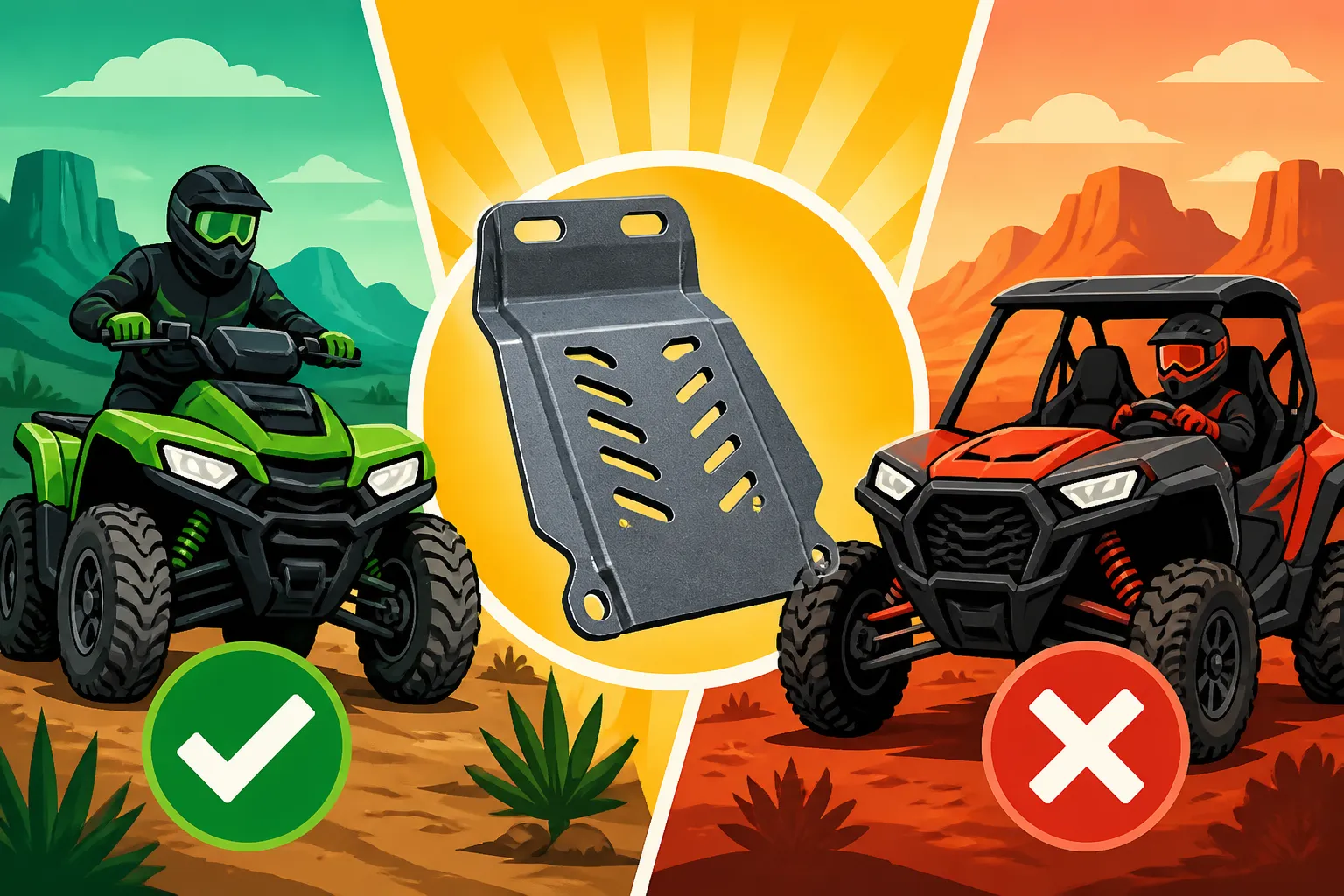
Not all OHVs are created equal when it comes to paved road legality in New Mexico. Specifically, off-highway motorcycles (dirt bikes) generally do not qualify for the paved road plate "opt-in" provision. While they still require the basic off-highway decal for trail use, they are largely excluded from the ability to be registered for general paved street use, even in counties or cities that have opened their roads to other OHVs. This often comes as a disappointment to dirt bike riders who see their ATV and UTV counterparts cruising through town.
The reasoning behind this exclusion often relates to equipment differences and safety concerns, as dirt bikes typically have a narrower profile and different braking characteristics than ATVs or UTVs, making them less suitable for mixed traffic environments in the eyes of state lawmakers. Therefore, if you primarily ride a dirt bike, a paved road plate isn't an option for you, regardless of local ordinances. You'll be sticking to the dirt roads and trails, which, let's be honest, is where dirt bikes truly shine anyway!
Getting Your Paved Road Plate: Requirements and Process
So, you've decided you need a paved road plate for your New Mexico OHV adventures. What's next? The process involves more than just asking for a plate; it requires meeting specific criteria for your vehicle and yourself. It’s a multi-step process that ensures your OHV is ready to safely share the road with other vehicles.
Essential Paperwork and Pre-Requisites
First and foremost, your OHV must already be titled and registered with the New Mexico MVD. The paved road plate is an add-on to your existing OHV registration, not a standalone registration. If you haven't already, you'll need to go through the process of [Titling an Off-Highway Vehicle in New Mexico] and getting your initial off-highway decal. Beyond that, you'll need proof of financial responsibility, which means liability insurance. This isn't just a good idea; it's mandatory for any vehicle operating on paved public roads in New Mexico.
You'll need a policy that meets the state's minimum liability coverage requirements, similar to what's mandated for cars and trucks. Many insurance providers offer specific OHV policies. When you head to the MVD, you’ll also need your valid driver's license, as you must be a licensed driver to operate an OHV on paved roads. Ensure you have your vehicle's title, proof of insurance, and your driver's license in hand, as well as the necessary fees. While LawDepot might not directly help with MVD forms, having a clear bill of sale or other ownership documentation prepared (which LawDepot can assist with) certainly smooths out the initial titling process if you're buying a used machine. Remember that the paved road plate is applied for through the MVD, and they'll have the final say on all required documents and equipment checks.
Equipment Requirements for Road-Legal OHVs
Getting the plate isn't just about paperwork; your OHV itself must meet specific equipment standards to be considered "road-legal." New Mexico law mandates several items to ensure your machine is visible and controllable in a mixed traffic environment. These generally include:
- Headlights and Taillights: These must be operational and meet visibility standards, ensuring your machine is seen from a certain distance, both day and night. [New Mexico Headlight and Taillight Rules] specify the distances.
- Brakes: Your braking system must be in good working order.
- Mirrors: You need at least one rearview mirror, typically on the left side, to see traffic behind you.
- Muffler and Spark Arrester: While important for off-road use too, specific sound limits (like [New Mexico's 96 Decibel Ceiling]) apply, and a spark arrester is generally required on public land to prevent fires.
- Tires: Must be suitable for highway use (not always a requirement for purely off-road tires).
These requirements are designed to bring your OHV closer to the standards of a conventional vehicle when it's operating on paved roads. An MVD agent may perform a quick visual inspection, or you may need to self-certify that your machine meets these standards. Missing any of these key pieces of equipment could prevent you from obtaining the paved road plate, as the state prioritizes public safety above all else. Always verify the current equipment list with the MVD before applying.
Disclaimer
This article is for general informational purposes only and does not constitute professional advice. Laws, prices and regulations vary by location and change over time. Consult a qualified professional for guidance on your specific situation.