Registering a Club Machine in New Mexico
So, your off-road club in New Mexico has acquired a new machine – maybe it's a utility vehicle for trail maintenance, a shared ATV for club events, or even a vintage dirt bike for display. You might be wondering, "Does this even need to be registered?" and "How on earth do we register something that belongs to a group, not an individual?" It can feel like navigating a maze of paperwork and rules, especially when dealing with a machine that isn't solely owned by one person. This guide will walk you through the entire process of registering an off-highway vehicle (OHV) owned by a club or organization in New Mexico, ensuring your machine is ready for legal use and your club stays in good standing.
Understanding Why a Club Machine Needs Registration
It's easy to assume that because an OHV is owned by a club, it might fall under some special exemption, especially if its primary use is for internal club activities or maintenance. However, New Mexico law is pretty clear on this point: generally, if an OHV is going to touch public land, it needs to be registered. This applies whether it's an individual's pride and joy or a piece of equipment vital to your club's operations.
The Legal Obligation for All OHVs
New Mexico Revised Statutes require that any off-highway vehicle operating on public land or designated trails within the state must be registered with the Motor Vehicle Division (MVD). This isn't just a formality; it's a critical component of responsible OHV management. Registration fees contribute directly to funds that help maintain and develop the very trails your club members enjoy. It also provides a clear system for identification in case of theft or an accident, protecting both the club's assets and its members.
Think about it this way: if your club uses its side-by-side to clear fallen branches on a forest service road that's open to OHVs, or transports equipment to a group campout on BLM land, that machine is operating on public ground. Even if it's not being used for recreational "joyriding" in the traditional sense, its presence on public lands necessitates proper registration. Overlooking this requirement could lead to fines or complications with law enforcement, which is the last thing any club wants to deal with when trying to foster community and enjoy the outdoors.
The state's approach ensures that all off-highway vehicles, regardless of who owns them, contribute to the system that supports their use and provides a baseline for accountability. It's about protecting the trails, the riders, and the sport itself. So, while your club's machine might feel different from a privately owned one, the state's registration mandate largely treats them the same when it comes to operating on public access points.
Differentiating Club Ownership from Individual Ownership
Here's where things can get a little nuanced compared to registering an OHV bought by a single person. When an OHV is purchased by a club, the legal owner isn't an individual – it's the organization itself. This distinction is crucial because it affects what documentation you'll need to present to the MVD. You can't just have one member show up with their personal ID and say, "This is for the club!" The MVD needs to see official proof that the club is a legitimate entity and that it is, in fact, the rightful owner of the OHV.
For example, if your club is incorporated as a non-profit, you'll have articles of incorporation. If it's a less formal association, you might have official by-laws or meeting minutes that clearly state the club's decision to purchase and own the vehicle. This documentation serves as the "identity" of the club for MVD purposes, much like a driver's license serves as an individual's ID. Without this clear line of ownership, the MVD simply can't process the registration, as they wouldn't know who or what to register the vehicle to.
The key is to establish a clear paper trail from the moment the club acquires the machine. This foresight prevents headaches down the road, especially when it comes time to renew the registration or if the club ever decides to sell or upgrade its equipment. Proving club ownership unequivocally is the foundation upon which all other registration steps are built.
Essential Documents for Club OHV Registration
Registering an OHV under a club's name involves a slightly more rigorous documentation process than an individual purchase. The MVD needs to ensure the club is a legitimate entity and has the authority to own and register a vehicle. This means you'll need a combination of vehicle-specific paperwork and official club documents.
Proving Club Ownership
The most critical hurdle for a club is demonstrating its legal existence and its legitimate ownership of the off-highway vehicle. If your club is formally organized as a non-profit corporation or similar legal entity, you'll need your Articles of Incorporation and any official amendments. These documents establish the club as a recognized legal person in the eyes of the state. For less formal clubs, official meeting minutes that explicitly detail the decision to purchase the OHV, including the resolution to allocate funds and take ownership, can serve as crucial evidence.
Additionally, a copy of the club's by-laws, particularly sections that outline how assets are acquired and managed, will strengthen your case. If the club has recently formalized its structure or needs to create official documents like by-laws or resolutions for vehicle acquisition, resources like LawDepot can be incredibly helpful for generating legally sound templates. The goal is to paint a clear picture for the MVD: this isn't just a group of friends, but an organized entity making an official purchase.
Without these foundational documents, the MVD may not be able to proceed, as they would have no legal entity to tie the registration to. It's always best to come overprepared, bringing originals and copies of everything that establishes your club's bona fides and its authority to own property.
The Bill of Sale and Title Considerations
Just like with any vehicle purchase, a proper bill of sale is paramount. This document must clearly list the club's legal name as the buyer, not an individual member, even if one person handled the transaction. It's the official record of the transfer of ownership to your organization. If the OHV has a title, that title must also be transferred into the club's name. This process of [Titling an Off-Highway Vehicle in New Mexico] is critical and must be completed correctly.
In cases where the OHV is older or perhaps a dirt bike that might not have come with a traditional title from the factory, you'll need to follow the MVD's procedures for registering an OHV without a title, which often involves a VIN inspection and potentially a bonded title process. If the machine was a gift to the club, a formal gift affidavit, notarized and clearly stating the club as the recipient, is necessary in lieu of a bill of sale. Again, ensuring that the club's name is consistent across all these documents is key to avoiding delays.
Always scrutinize the bill of sale and title (if applicable) to ensure the seller's information is correct and matches their ID, and most importantly, that your club's name is accurately recorded as the new owner. Any discrepancies here will halt the registration process in its tracks.
Appointing an Authorized Representative
Since a club isn't a physical person who can sign paperwork and present identification, it needs a human representative to act on its behalf at the MVD. This isn't just any member; it needs to be an individual officially authorized by the club to conduct MVD transactions. Typically, this would be an officer such as the president, secretary, or treasurer, but any member can be designated if the proper authorization is in place.
The club must draft an official resolution or letter, on club letterhead if possible, explicitly stating that a specific individual (named with their full legal name) is authorized to complete the OHV registration process for the club. This document should ideally be signed by other club officers and notarized, lending it extra weight and legitimacy. The MVD agent needs to see this proof to understand that the person standing before them has the legal right to act for the club.
This authorized representative will be the one providing their personal identification at the MVD office, but they will be signing on behalf of the club. They should be prepared to explain the club's purpose and how the OHV will be used, as the MVD agent may have questions specific to a non-individual registrant. Without this crucial piece of authorization, the MVD cannot process the registration, as there would be no verifiable link between the individual and the club's legal ownership.
The Registration Process at New Mexico MVD
Once all your club's ducks are in a row regarding documentation, it's time to face the MVD. While the general steps are similar to an individual registering an OHV, the nuances of club ownership require extra attention. Be prepared for a thorough review of your paperwork.
Gathering All Necessary Paperwork
Before you even think about heading to an MVD office, create a comprehensive checklist of every single document you'll need. This will save you immense frustration and potentially multiple trips. Your checklist should include:
- Proof of Ownership: The original title (if applicable) transferred into the club's name, or a detailed, notarized bill of sale clearly listing the club as the buyer. If the OHV was a gift, bring the notarized gift affidavit.
- Club Legal Documents: Your club's Articles of Incorporation, by-laws, or official meeting minutes that show the club's legal existence and the resolution to purchase/own the OHV.
- Authorized Representative Document: The notarized resolution or letter empowering a specific individual to act on the club's behalf for MVD purposes.
- Authorized Representative's ID: The representative must bring a valid New Mexico driver's license or state ID.
- OHV Application Forms: You'll need to fill out the appropriate MVD forms for OHV registration. Ensure the club's full legal name is entered as the registrant, not the representative's name.
- VIN Verification: Depending on the situation (e.g., if there's no title, or it's an out-of-state purchase), a VIN inspection may be required. Check with the MVD ahead of time.
- Proof of Insurance: If your club plans to operate the OHV on paved roads with a green decal, you'll need proof of liability insurance that meets New Mexico's requirements.
Double-check every name, address, and VIN for accuracy. A tiny typo can lead to significant delays. Having everything organized in a binder or folder will make the process smoother for both you and the MVD agent.
Visiting the MVD Office
For registering a club machine, an in-person visit to a New Mexico MVD office is almost certainly required. While some individual registrations can be handled online or by mail, the complexity of verifying a club's legal status and authorized representative typically necessitates face-to-face interaction. The designated authorized representative must be the one to go, bringing all the original documents you meticulously gathered.
Be prepared for potential questions from the MVD agent, who may not frequently encounter club registrations. They might need to consult with a supervisor to ensure all the nuances of your club's paperwork are correctly interpreted. Patience is truly a virtue here. Clearly explain your club's purpose and how the OHV will be used. Ensure you have copies of all documents, even those you plan to give to the MVD, for your club's records. For general steps on the process, you can refer to information on [New Mexico OHV Registration at MVD].
It's a good idea to call your local MVD office beforehand to inquire about any specific requirements for organizational registrations or to ask about the best time to visit for a potentially longer transaction. This proactive step can save you considerable time and effort.
Understanding Fees and Decals for a Club Machine
The registration fees for a club-owned OHV in New Mexico will generally mirror those for an individually owned machine. This is a biennial registration, meaning it lasts for two years. For current figures on [New Mexico OHV Registration Cost], you'll need to check the MVD's official website or inquire directly, as prices can change. These fees contribute to the state's OHV trails program, so your club's contribution helps maintain the very resources you use.
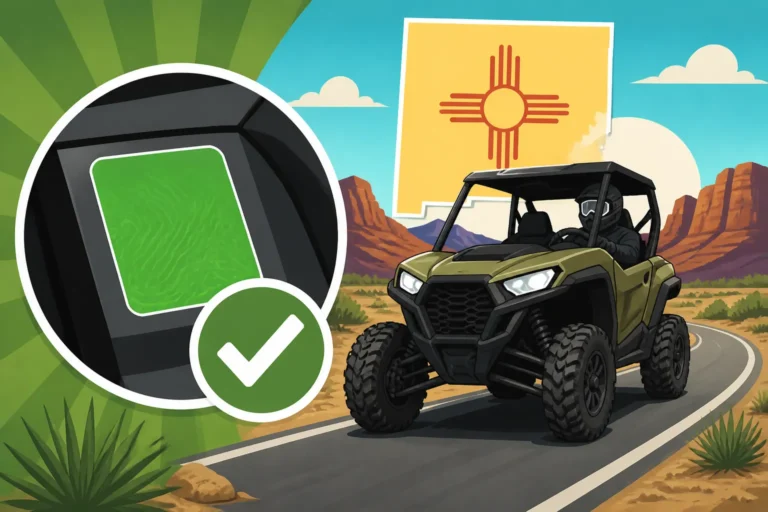
Upon successful registration, your club will receive the appropriate decal(s) for the OHV. If the machine is strictly for off-highway use, you'll receive a [New Mexico's Yellow Off-Highway Decal]. If your club plans to operate the OHV on designated paved public roads (where permitted by local ordinances), you'll also need to meet additional requirements and likely receive a [New Mexico's Green On and Off-Highway Decal]. The decals, while registered to the club, will physically be placed on the machine itself according to [New Mexico OHV Decal Placement Rules]. This typically means [Where the Decal Goes on an ATV's Left Rear] or [Where the Decal Goes on an ROV Quarter Panel] for side-by-sides.
When it comes time for renewal, the process will largely be the same, requiring an authorized club representative to handle the [Renewing a New Mexico OHV Registration] every two years. Keeping accurate records of when the registration expires will prevent your club from inadvertently operating an unregistered machine.
Special Considerations and Best Practices for Club OHVs
Owning an OHV as a club brings with it unique responsibilities and considerations beyond just getting it registered. From insurance to record-keeping and ensuring all members understand the rules, proactive measures can save your club from potential headaches.
Insurance for Club-Owned Machines
While New Mexico requires registration for OHVs operating on public land, a specific mandate for liability insurance for off-highway use is not always present for every situation. However, for a club, securing liability insurance for your club-owned OHV is not just a good idea – it's practically essential. Accidents happen, and if a club-owned machine is involved in an incident, especially one causing injury or property damage, the club itself could be held liable. This is where a robust insurance policy tailored to organizational ownership can protect your club's assets and future.
If your club machine will ever be ridden on paved public roads (requiring a green decal), then New Mexico law does mandate specific liability insurance coverage. You'll need to meet the minimum requirements of the New Mexico Mandatory Financial Responsibility Act. Details on [New Mexico ATV Insurance Requirement] will specify the coverage limits. It's crucial to discuss your club's specific usage plans with an insurance provider to ensure you have adequate coverage, not just to comply with the law, but to safeguard the club from unforeseen financial risks. Some insurers specialize in policies for organizations or equipment, so it's worth exploring options beyond standard individual OHV policies.
Maintaining Records and Future Transfers
One of the most vital best practices for any club owning an OHV is meticulous record-keeping. Every single document related to the machine – the original bill of sale, title (if applicable), registration papers, authorized representative letters, and insurance policies – should be filed securely. Create both physical and digital copies. This level of organization is invaluable for several reasons: it simplifies future registration renewals, provides clear evidence of ownership, and is absolutely critical if the club ever decides to sell or transfer the machine.
When selling a club-owned OHV, the process will again require an authorized representative to sign on behalf of the club. A clear [New Mexico ATV Bill of Sale Requirements] will need to be met, with the club listed as the seller. Having all previous ownership documents readily available will streamline this process. Consider using tools like LawDepot to generate and organize all your club's legal documents, from meeting minutes to formal resolutions and bills of sale, creating a centralized, accessible record. This kind of organized approach protects the club's interests and ensures smooth transitions in the future.
Riding Rules and Member Responsibility
Finally, even with a properly registered and insured club machine, the responsibility doesn't end there. All members who use the OHV must adhere strictly to New Mexico's OHV laws, as well as any specific internal rules your club establishes. This includes helmet laws, age restrictions (e.g., [New Mexico Rules for a Rider Under 13]), and rules regarding passengers ([New Mexico Passenger Rules for Young Riders]). Your club should have clear guidelines on who is authorized to operate the machine, what training they must have, and under what conditions it can be used.
Educate your members on designated trail use, environmental protection, and courteous riding etiquette. Ensure they understand that violating OHV laws while operating a club machine could reflect poorly on the entire organization and potentially lead to fines for the individual, and even legal complications for the club if gross negligence is involved. Regular safety briefings and ensuring all users are familiar with the machine's operation and limitations are essential components of responsible club OHV ownership. By setting clear expectations and fostering a culture of safety and compliance, your club can ensure its off-highway vehicle remains a valuable asset for years to come.
| Document Type | Individual OHV Registration | Club OHV Registration |
|---|---|---|
| Proof of Ownership | Title / Bill of Sale | Title / Bill of Sale (naming club) |
| Registrant ID | Driver's License / State ID | Articles of Inc. / By-laws / Meeting Minutes (proving club's existence) |
| Authorized Signer | The individual owner | Designated Authorized Representative (with official club resolution) |
| Required Forms | MVD OHV Registration Form | MVD OHV Registration Form (club's name as registrant) |
| Insurance Proof | Required for paved roads | Required for paved roads (club policy) |
| VIN Verification | As needed | As needed |
Disclaimer
This article is for general informational purposes only and does not constitute professional advice. Laws, prices and regulations vary by location and change over time. Consult a qualified professional for guidance on your specific situation.