New Mexico OHV VIN Requirements
It can be incredibly frustrating to navigate the paperwork required for your off-highway vehicle (OHV) in New Mexico, especially when you hit a snag with something as fundamental as the Vehicle Identification Number (VIN). Whether you’re trying to register a new side-by-side, renew the registration on a beloved quad, or buy a used dirt bike, a clear and valid VIN is absolutely non-negotiable. This guide is here to walk you through exactly what New Mexico expects regarding your OHV’s VIN, helping you avoid common headaches and get out on the trails faster.
Understanding the VIN and Why It Matters for Your OHV
Every off-highway vehicle, from the smallest youth ATV to the largest utility-task vehicle (UTV), has a unique identifier known as the Vehicle Identification Number, or VIN. Think of it as your machine's unique fingerprint, a 17-character code that tells its life story. This isn't just a random string of numbers and letters; it's a meticulously structured code that reveals the manufacturer, the model year, the manufacturing plant, and a unique serial number for that specific vehicle. When you're dealing with New Mexico's Motor Vehicle Division (MVD), this VIN is the cornerstone of almost every official interaction you'll have concerning your OHV.
Without a correct and verifiable VIN, you're essentially trying to prove ownership or register a vehicle that, in the eyes of the state, doesn't have a clear identity. This can lead to significant delays, additional inspections, or even the inability to complete your registration or titling process. It’s a common point of confusion and frustration for many riders, particularly those who've owned older machines or are venturing into the world of OHV ownership for the first time. The MVD relies on this number to prevent theft, track ownership transfers, and ensure that every machine operating on permitted lands is legally recognized. For a deeper dive into the broader requirements, check out [New Mexico OHV Title Requirements].
The VIN as Your Machine's Fingerprint
The 17-character VIN system has been standardized since 1981 across most vehicles, including OHVs. Each digit and letter in the VIN holds specific information. The first three characters identify the manufacturer, make, and type of vehicle. The next five characters describe attributes like the engine type, body style, and series. The ninth character is a check digit, designed to catch transcription errors. The tenth character tells you the model year, and the eleventh indicates the manufacturing plant. The final six digits are the unique sequential production number, making your OHV distinct from every other one ever made by that manufacturer.
Imagine trying to open a bank account without an ID; it's practically impossible. The VIN serves a similar purpose for your OHV. It's the primary way law enforcement, insurance companies, and the MVD identify your specific machine. This level of detail is crucial not only for initial registration but also for tracing stolen vehicles or verifying a vehicle's history before a sale. For example, if you're ever involved in an accident or need to make an insurance claim, the VIN will be the first piece of information required to confirm the identity of your machine.
VIN's Role in New Mexico Registration and Titling
In New Mexico, the MVD uses the VIN to create a permanent record for your OHV. This record links the vehicle to its owner, tracks its registration history, and notes any liens or other important information. When you go to register your machine, the MVD will cross-reference the VIN you provide with their database to ensure it's not reported stolen and that it hasn't been previously registered under a different, conflicting identity. This is why accurately transcribing the VIN from your machine to your application forms is so important; a single incorrect character can cause the system to flag it as an unrecognized or suspicious vehicle.
If you're buying a used OHV, the VIN becomes even more critical. You'll need to ensure the VIN on the machine matches the VIN on the title or the bill of sale provided by the seller. Any discrepancy here is a massive red flag and could indicate a stolen vehicle or a fraudulent sale. Without a clear match, you might find yourself unable to register the machine in your name, leaving you with a costly paperweight. This process can be particularly tricky, and understanding all the nuances can save you a lot of grief. For advice on this, see [Buying a Used ATV in New Mexico].
Required VIN Information for New Mexico OHV Registration
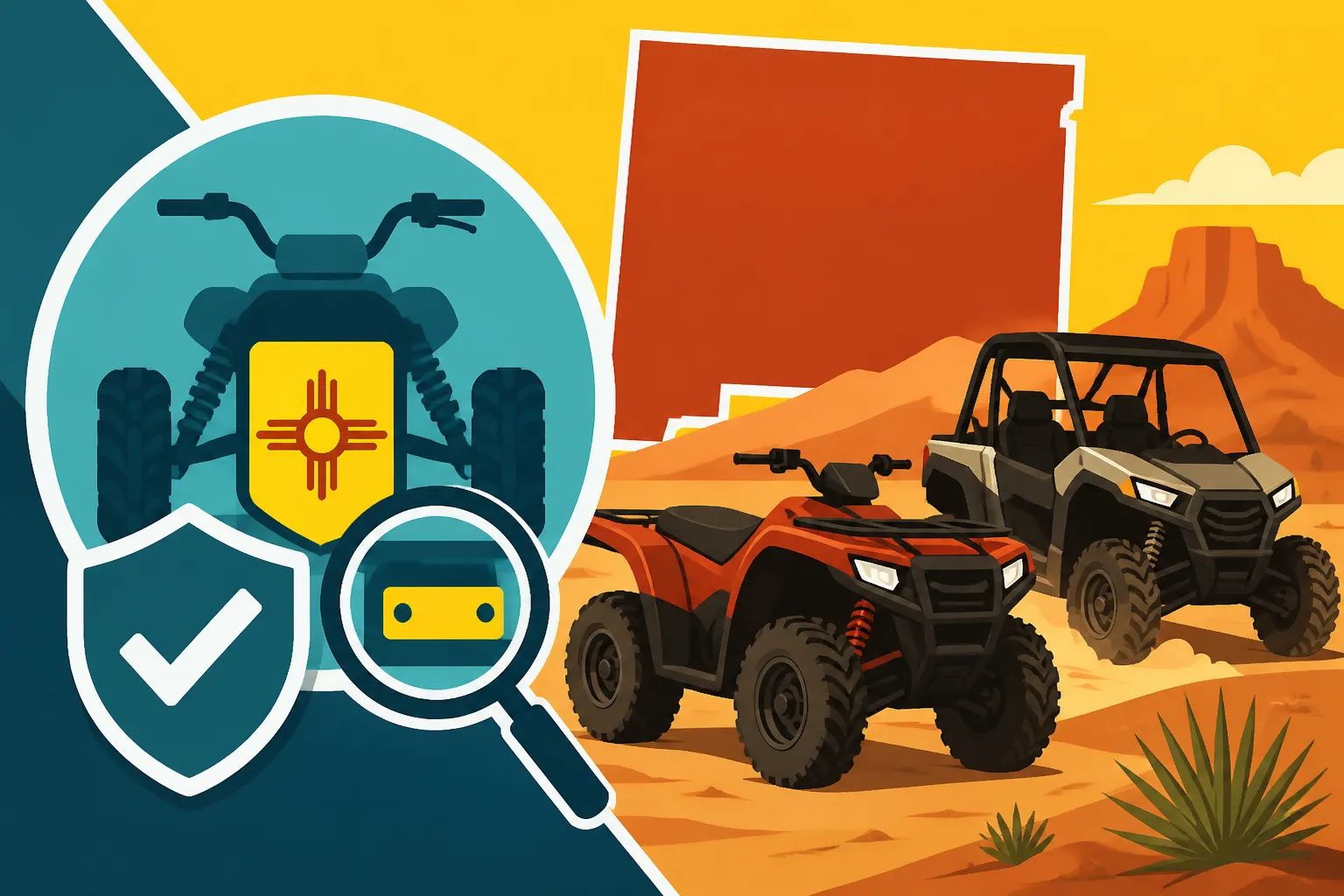
So, you're ready to get your OHV registered in New Mexico. The first step, naturally, is locating that all-important VIN. For most machines, it's etched or stamped onto the frame in a prominent, easily accessible location. However, its exact position can vary depending on the type of OHV and its manufacturer. Once you've found it, you'll need to accurately transcribe it onto your registration forms. This sounds simple enough, but issues can arise, especially with older machines where the VIN might be faded, rusted, or otherwise obscured.
When submitting your [New Mexico OHV Registration Paperwork], the VIN will be a primary piece of information. For new machines purchased from a dealership, the VIN will typically be clearly listed on the Manufacturer's Statement of Origin (MSO) or Certificate of Origin (MCO). For used machines, you'll rely on the existing title or a notarized bill of sale. Dealing with a missing or unreadable VIN is a whole different ballgame and requires specific steps to rectify before you can proceed with any official MVD processes.
Locating the VIN on Your Off-Highway Vehicle
Finding the VIN on your OHV usually isn't too hard if you know where to look. Here are some common spots:
- ATVs: Often located on the front left frame rail, near the lower control arm, or sometimes stamped on the rear frame section. You might need to turn the handlebars or clean off some mud to see it clearly. For more on ATV specifics, check out [Where the Decal Goes on an ATV's Left Rear].
- UTVs/Side-by-Sides: Commonly found on the frame, usually on the driver's side, often near the firewall, under the seat, or on a door frame. It might be on a sticker or a stamped plate.
- Dirt Bikes: Look on the steering head tube (the part of the frame where the front forks attach), usually stamped into the metal. Sometimes it's on a sticker on one of the frame tubes.
Always make sure the area is clean and well-lit. Bring a flashlight and a wire brush if necessary to reveal any obscured numbers. Some manufacturers also place a VIN sticker in other less common spots, like under the fuel tank or on the engine casing, but the frame is the most reliable place to start your search. It's not uncommon for an OHV to have multiple VIN markings, so if one is unreadable, check for another.
What if Your OHV's VIN is Missing or Unreadable?
This is a common predicament, especially with older, well-loved machines that have seen a lot of trail time or have been rebuilt over the years. A missing, unreadable, or severely damaged VIN can halt your registration process dead in its tracks. The MVD needs a clear, verifiable VIN to issue a title and registration. If your OHV's VIN is truly gone or illegible, you can't just make one up or guess. New Mexico has a process for assigning a new VIN, but it requires diligent effort on your part.
First, you'll typically need to contact the MVD or local law enforcement. They may require you to bring the OHV in for an inspection to confirm there's no original VIN or that it truly is unreadable. You'll likely need to provide proof of ownership, even without a clear VIN. This might include previous registration documents, a detailed bill of sale, or even affidavits from prior owners. Services like LawDepot can be incredibly useful here, helping you draft a solid bill of sale or other legal documents to strengthen your claim of ownership, which is paramount when dealing with a missing VIN. Once ownership is reasonably established and the lack of a manufacturer's VIN is verified, the MVD can issue a "state-assigned VIN." This new VIN will then become the official identifier for your OHV going forward, allowing you to proceed with titling and registration.
VIN Verification and Special Circumstances in New Mexico
Sometimes, simply having a VIN isn't enough; the MVD might require a formal VIN verification. This usually happens in specific scenarios designed to prevent fraud and ensure that the vehicle matches its documentation. If you're bringing an OHV into New Mexico from another state, or if there's any doubt about the machine's history or origin, a VIN inspection will likely be part of your registration journey. This process adds an extra layer of scrutiny, but it's ultimately there to protect legitimate owners and the integrity of the registration system.
Beyond standard vehicles, there are special cases, such as homemade or custom-built OHVs, that don't come with a manufacturer-assigned VIN. These unique machines still need a way to be identified and legally recognized, and New Mexico has procedures in place to address them, ensuring they can also be properly registered and used on public lands where permitted.
When New Mexico Requires a VIN Inspection
New Mexico MVD requires a VIN inspection in several key situations to verify the physical VIN on the vehicle matches the one on the ownership documents and that it hasn't been tampered with. These scenarios include:
- Out-of-State Vehicles: If you're bringing an OHV that was previously registered or titled in another state into New Mexico, a VIN inspection is often required. This ensures the vehicle's identity is correctly transferred to the New Mexico system. Learn more about this by reading [Registering an Out-of-State Machine in New Mexico].
- Salvage or Rebuilt OHVs: If your OHV has a salvage title or has been significantly rebuilt after damage, a VIN inspection will be necessary to confirm its identity before it can be re-titled and registered.
- Discrepancies in Paperwork: If there's any mismatch between the VIN on the title, bill of sale, or previous registration and the physical VIN on the machine, an inspection will be mandated to resolve the discrepancy.
- Assigned VINs: As discussed earlier, if your OHV receives a state-assigned VIN due to a missing or unreadable original, an inspection will be part of that process.
These inspections are typically performed by MVD employees, law enforcement officers, or other authorized personnel. They'll physically examine the VIN on your OHV, compare it to your documents, and check for any signs of alteration or fraud. It's a critical step in maintaining the security and accuracy of OHV records in the state.
VIN Requirements for Homemade or Specially Constructed OHVs
If you've poured your heart and soul into building a custom buggy or a unique off-road machine from scratch, you might wonder how you get a VIN for it. Since there's no factory to assign one, the New Mexico MVD has a specific process for these "specially constructed" or homemade OHVs. You can't just hit the trails without proper identification; these machines still need to be registered and titled to be legal.
The process typically involves:
- Application for a State-Assigned VIN: You'll submit an application to the MVD, indicating that your vehicle is specially constructed.
- Proof of Ownership for Components: You'll need to provide receipts, bills of sale, or other documentation for all major components used in the construction of your OHV, such as the engine, frame materials, and axles. This proves you legally own the parts. Creating detailed invoices or records of purchase can be assisted by platforms like LawDepot, ensuring you have robust documentation.
- Photos and Specifications: The MVD will likely require photographs of the completed machine and detailed specifications, including engine size, weight, and dimensions.
- Physical Inspection: An MVD inspector or law enforcement officer will need to physically inspect your homemade OHV. They'll verify its construction, confirm that all provided documentation matches the components, and ensure it meets basic safety standards. Once satisfied, they will assign a unique New Mexico VIN to your machine. This number will then be permanently affixed to your OHV (usually via a metal plate or stamping) and used for all future titling and registration purposes. For specifics on registering custom builds, check out [Registering a Homebuilt Buggy in New Mexico].
Common VIN Mistakes and How to Avoid Them
It's easy to overlook the VIN until it becomes a problem, but a small mistake can lead to big headaches. Whether you're a seasoned rider or new to the OHV scene, knowing the common pitfalls can save you time, money, and frustration down the line. Accuracy is paramount when dealing with your OHV's VIN, both when you first acquire the machine and throughout its life when interacting with the MVD.
These mistakes often involve simple transcription errors or a lack of due diligence during the buying process. However, the consequences can be anything from delayed registration to unknowingly purchasing a stolen vehicle. Let’s look at how to steer clear of these issues.
| Mistake Type | Description | How to Avoid |
|---|---|---|
| Transcription Errors | Swapping numbers/letters when writing down the VIN. | Double-check, have someone else read it back, use a photo. |
| Ignoring Discrepancies | Overlooking a VIN mismatch between the OHV and paperwork. | Always compare all documents to the physical VIN before finalizing a purchase. |
| Faded/Unreadable VIN | Not addressing an unclear VIN before needing MVD services. | Clean and protect the VIN area; seek an assigned VIN if truly unreadable. |
| No Bill of Sale/Title | Buying a used OHV without proper ownership documentation. | Insist on a clear title or notarized bill of sale with matching VIN. |
| Misplaced Documentation | Losing your registration, title, or bill of sale. | Keep digital and physical copies of all important OHV documents in a secure place. |
Double-Checking Your VIN for Accuracy
One of the most common and easily avoidable mistakes is simply transcribing the VIN incorrectly. A single transposed number or letter can make your application form look like it refers to a completely different vehicle, or even no vehicle at all. The MVD's computer system is designed to be precise, and a minor error can cause it to reject your submission, sending you back to square one.
Before you fill out any MVD forms, take a photo of the VIN on your OHV. Then, carefully compare the photo to the number you're writing down, and then compare it again to the number on your title or bill of sale. If you have someone with you, ask them to read the VIN aloud from the machine while you check it against your written form. It might seem like overkill, but the few minutes spent on this verification step can save you hours of redoing paperwork and making extra trips to the MVD. This kind of careful verification is especially important when you're purchasing a used machine; for more tips on that, consult [Checking a VIN Before You Buy].
Protecting Your OHV's VIN and Paperwork
Your OHV's VIN isn't just a series of characters; it's a vital identifier that needs to be protected, both physically on the machine and in your records. Physically, the VIN stamp or plate on your OHV can be exposed to the elements, mud, and trail debris, which can lead to fading or corrosion over time. Regularly cleaning the area where the VIN is located can help preserve its legibility. Some owners even apply a clear protective coating (like a clear coat spray or grease) to help shield it from wear and tear, especially if it's in an exposed spot.
Equally important is safeguarding your OHV's paperwork. Your title, registration, and bill of sale (which should clearly show the VIN) are proof of ownership. Losing these documents can create significant hurdles when you need to sell your OHV, register it, or prove ownership to law enforcement. Make physical copies and keep them in a secure location separate from the originals. Consider scanning digital copies and storing them on a cloud service or external hard drive. When selling an OHV, a professionally prepared bill of sale, perhaps using a template from a service like LawDepot, will accurately record the VIN and transfer of ownership, protecting both you and the buyer. This ensures a smooth transaction and helps avoid future disputes. See [A New Mexico Bill of Sale for an ATV] for further reading on this.
Disclaimer
This article is for general informational purposes only and does not constitute professional advice. Laws, prices and regulations vary by location and change over time. Consult a qualified professional for guidance on your specific situation.