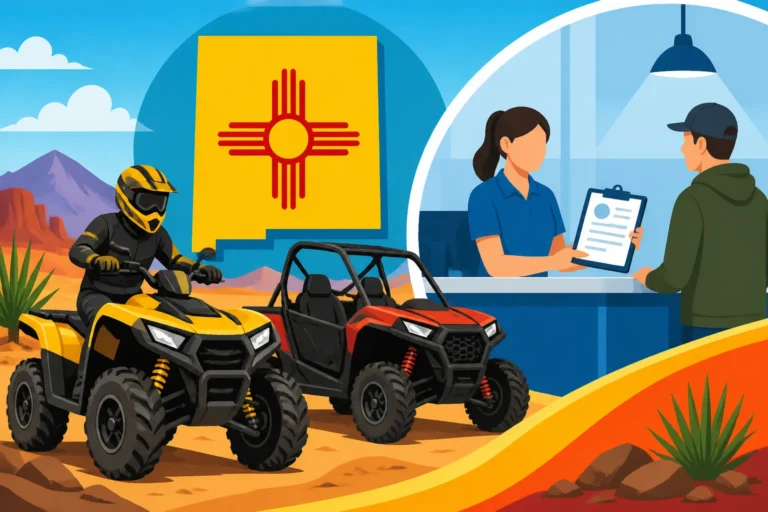
Registering a Business Machine in New Mexico
Running a business in New Mexico often means you need reliable equipment to get the job done, and for many, that includes ATVs and UTVs. But when you’re trying to figure out how to register a machine that belongs to your business, not just to you personally, it can feel like navigating a maze of paperwork and regulations. This guide is here to untangle that process, helping you understand exactly what’s required to properly register your business-owned off-highway vehicle (OHV) in New Mexico, ensuring you stay compliant and on the trails.
Why Business-Owned OHVs Need Registration in New Mexico (Even if it's "Just for the Ranch")
It's a common misconception that if an ATV or UTV is used exclusively for business, particularly on private land like a ranch, it somehow gets a pass on registration. Unfortunately, that's rarely the case in New Mexico. The state has pretty clear rules that apply to almost all off-highway vehicles, regardless of whether they're for recreation or for making a living. Trying to operate without the proper paperwork can lead to headaches, fines, and even bigger problems for your business down the road.
The Legal Obligation for Any Off-Highway Vehicle
New Mexico law is designed to ensure that all off-highway vehicles operating on public lands, designated routes, or even crossing public roadways are properly accounted for. This includes machines owned by individuals, clubs, and, yes, businesses. The primary purpose of this registration is multifaceted: it helps fund trail maintenance and development, supports OHV safety programs, and provides a clear record of ownership for law enforcement and emergency services. So, while you might think your ranch hand's trusty side-by-side never leaves your property, the moment it crosses a county road or ventures onto state trust land (even if just to get to another part of your property), it falls under these registration requirements. You might be surprised to learn that even if your machine seems like it's exclusively on private property, there are scenarios that still trigger registration. For a deeper dive into this, you might find [Must a Ranch-Only Machine Still Be Registered?] quite illuminating.
Even if your business primarily operates on private land, there are crucial exceptions and common practices that necessitate registration. For example, many businesses utilize easements or access public land for specific operations, like surveying, construction, or even just getting from point A to point B on a large property that might be bisected by a public road. In these instances, your business machine absolutely needs to be registered. It's not just about avoiding a ticket; it's about contributing to the resources that make those public lands accessible and safe for everyone, including your business operations. Neglecting this crucial step can expose your business to unnecessary legal and financial risks, especially if there's an incident involving an unregistered vehicle.
Distinguishing Between Business and Personal Ownership for Registration
From the MVD's perspective, the core registration process for an OHV is largely similar whether it's owned by an individual or a business entity. However, the critical distinction lies in who is listed as the legal owner. For a business, it's not you, the individual owner or manager, but the legally recognized entity itself – your LLC, corporation, or partnership. This means all documentation, from the title to the registration application, must accurately reflect the business's name as the owner. This detail is not just bureaucratic; it's vital for establishing clear liability and for proper accounting of business assets.
When the New Mexico MVD issues a registration, it's a formal acknowledgment of ownership and permission to operate under certain conditions. For a business, this ownership is typically tied to the business's Employer Identification Number (EIN) and its legal structure. This clear chain of ownership is important for insurance purposes, especially if your business carries commercial liability insurance for its operations. In the event of an accident or incident involving a business-owned OHV, having the machine properly registered to the business provides a layer of legal clarity that personal registration simply can't offer. It solidifies the asset as a business tool, which can have implications for depreciation, taxes, and other financial aspects of your operation. Knowing [Who the Registration Is Issued To] can help clarify this further.
The Specifics of Registering a Business Machine at MVD
Registering a business-owned OHV at the New Mexico Motor Vehicle Division (MVD) office isn't overly complicated, but it does require attention to detail regarding the specific documents your business will need to present. It’s not quite the same as walking in with your personal driver’s license and a bill of sale; there are a few extra steps to confirm the legitimacy of the business entity. Preparing these documents ahead of time can save you a significant amount of time and frustration when you visit the MVD.
Required Documentation for Business Registration
To successfully register your business's OHV, you'll need to gather several key pieces of paperwork. First and foremost, you'll need proof of ownership for the OHV itself. This typically means the original Certificate of Title or, for a brand-new machine, the Manufacturer's Certificate of Origin (MCO). Crucially, this document must show your business's legal name as the owner, not an individual's name. If you've just purchased the machine, you'll also need a bill of sale that clearly states the transfer of ownership to your business. Making sure these documents are accurate from the start will prevent delays.
Beyond the OHV's specific ownership documents, the MVD will also require documentation pertaining to your business entity. This includes your Employer Identification Number (EIN), which is essentially the Social Security number for your business. You might also need to present your Articles of Incorporation or Organization (if your business is an LLC or corporation), or other official business formation documents that prove your business is a legitimate, recognized entity in New Mexico. Additionally, proof of your New Mexico physical business address (like a utility bill or lease agreement in the business's name) will be necessary. Don't forget, the VIN of the OHV is also a critical piece of information that will be verified. Getting all your ducks in a row for [New Mexico OHV Registration Paperwork] will make the process smoother. If your business is new or you're unsure about the proper legal forms for things like a bill of sale or other operational documents, resources like LawDepot can provide customizable templates that ensure you're meeting legal requirements.
The Registration Process Step-by-Step for a Business
Once you have all your documents in hand, the actual registration process at the MVD is quite straightforward. Your first step will be to locate your nearest MVD field office in New Mexico. It's often helpful to check their website or call ahead to see if appointments are recommended or if there are specific hours for OHV registrations. When you arrive, you'll fill out the necessary MVD application forms, ensuring that all information, especially the owner's name, accurately reflects your business. Be prepared to present all the documentation we just discussed, including your proof of ownership, business entity documents, and VIN.
For certain transactions, such as registering a used OHV that was purchased out of state, or if the MVD has no record of the VIN, an OHV VIN inspection might be required. This is a quick process where an MVD agent visually verifies the Vehicle Identification Number on your machine matches your paperwork. Some MVD locations have inspectors on-site, while others might require you to visit a law enforcement agency for the inspection. After all documents are submitted and verified, and any inspection completed, you'll pay the applicable registration fees. Once processed, you'll receive your New Mexico OHV decals, which typically need to be prominently displayed on your machine, signifying its legal registration. This whole process is detailed in our guide on [New Mexico OHV Registration at MVD].
Understanding Fees and Renewal Cycles for Business OHVs
The cost to register a business-owned OHV in New Mexico generally mirrors that of a personally owned machine. The state's OHV registration is a biennial (two-year) cycle, meaning you'll renew it every other year. The fees collected go towards the administration of the OHV program and, importantly, fund various initiatives like trail maintenance, mapping, and safety education across the state. While I can't give you exact figures (as these can change), it's important to understand that the initial registration fee and subsequent renewal costs are usually quite modest, especially when weighed against the potential fines and liabilities of operating an unregistered vehicle.
It’s the business's responsibility to track these renewal cycles and ensure the registration remains current. The MVD typically sends out renewal notices, but it's always a good practice to set up your own internal reminders. If your business owns multiple OHVs, establishing a system to track each machine's registration expiration date will prevent any lapses. Remember, these fees are a legitimate business expense and should be accounted for in your operational budget. For the most current fee schedule, always refer directly to the New Mexico MVD website or contact a field office. You can find more comprehensive information about these costs in our article, [What a New Mexico Renewal Costs].
Common Scenarios for Business OHV Use and Registration Considerations
The way your business utilizes an OHV can influence how you approach its registration and what additional considerations you might have. From powering a rental fleet to navigating vast ranches, each scenario presents unique needs that New Mexico's OHV laws try to address. It's essential to think about where and how your machines will be used to ensure you're compliant across the board.
Rental Fleets and Guided Tours
Businesses that operate rental fleets or offer guided OHV tours are in a unique position regarding registration. Every single machine in your fleet that will be used by customers on public lands or designated routes must be registered individually. This isn't just about adhering to the law; it's also a critical part of your business's insurance and liability framework. Imagine the headache of a customer having an incident on an unregistered machine – it opens a pandora's box of legal complications that could severely impact your business. Therefore, maintaining meticulous records for each OHV, ensuring its registration is current, and having proper documentation on file for all vehicles is non-negotiable.
Furthermore, businesses in the rental and tour sector often deal with a high volume of client interactions, requiring robust agreements and waivers. These legal documents are essential for clarifying responsibilities and mitigating risks. Resources like LawDepot are incredibly useful for drafting comprehensive rental agreements, liability waivers, and other operational contracts tailored to your specific business needs, ensuring both your company and your customers understand the terms of service. For more details specific to this sector, consider reading [New Mexico Registration for a Rental Fleet].
Ranching, Farming, and Agricultural Operations
As we touched on earlier, the notion that "ranch machines" are exempt from registration is a common pitfall. While your ATV or UTV might spend 99% of its life on private ranch or farmland, there are very specific instances that trigger the need for registration. For example, if your ranch borders public land and you occasionally cross into it for fence repair, livestock management, or even just accessing a different part of your property, your OHV needs to be registered. The same applies if you regularly cross county roads or state highways, even if it’s just to move from one field to another.
New Mexico's MVD understands that agricultural operations have unique needs, but the fundamental requirement for registration on public access points remains. This ensures that even when performing essential farming or ranching duties, your machine is recognized by the state. This helps avoid potential issues with local law enforcement or land managers. For businesses heavily involved in agriculture, understanding [Registering a Farm Machine in New Mexico] can provide further clarity on how these rules apply to your specific tools.
Construction, Surveying, and Other Commercial Uses
For businesses involved in construction, land surveying, mining operations, or other field-based commercial activities, OHVs are invaluable tools. They allow crews to access remote sites, transport equipment, and navigate challenging terrain. Just like with ranching or rental operations, if these machines are going to be used on public roads (even briefly for crossings) or on any public or state-managed land, they must be registered. This includes using them on public rights-of-way for infrastructure projects or surveying state-owned parcels.
In some cases, especially for OHVs that might need to frequently access or traverse public paved roads, businesses might consider applying for a "paved road plate." However, it's crucial to understand the limitations and specific requirements for these plates, as not all OHVs qualify, and there are strict rules governing their use on public thoroughfares. This is a complex area, and it's essential to determine [Which Riders Actually Need a Paved Road Plate] to avoid costly mistakes. Always verify your specific use case with the MVD to ensure your business remains fully compliant with all New Mexico regulations.
Keeping Your Business OHV Registration Current and Compliant
Once your business OHV is registered, your responsibility doesn't end there. Like any vehicle asset, maintaining current records and adhering to ongoing requirements is crucial for smooth operations and avoiding legal complications. Whether your business grows, changes location, or needs to transfer ownership of a machine, knowing the correct procedures will save you time and potential penalties.
Changing Ownership, Address, or Business Name
Businesses are dynamic, and changes in legal structure, ownership, or even physical address are common. If your business entity undergoes a name change, moves to a new location, or if you sell one of your business-owned OHVs to another entity or individual, these changes must be reported to the New Mexico MVD. Failing to update your registration information can lead to issues with renewal notices, official correspondence, and even enforcement. For instance, if you sell a business machine, ensuring the title is properly transferred out of your business's name is paramount to avoid lingering liability.
The process for updating an address or business name typically involves submitting a specific form to the MVD and possibly providing updated business documentation. When transferring ownership, a new title application by the buyer and a properly executed bill of sale are usually required. Remember, a clear chain of ownership protects both the buyer and seller. For more information on how to handle these administrative changes, our article [New Mexico OHV Registration Address Change] offers valuable guidance. Should your business require new legal documents, such as an updated bill of sale to reflect a change in selling entity, LawDepot can be a useful resource for creating these documents efficiently and accurately.
Consequences of Non-Compliance
Operating an unregistered business OHV on public land in New Mexico isn't just a minor oversight; it carries real consequences that can impact your business's bottom line and reputation. The state issues fines for unregistered off-highway vehicles, and these penalties can escalate with repeat offenses. Beyond the direct financial hit, there are broader implications for your business. An incident involving an unregistered vehicle could complicate insurance claims, potentially leading to denied coverage if your policy requires all operated vehicles to be legally registered. This could leave your business exposed to significant liability in the event of an accident or property damage.
Furthermore, state or federal land management agencies can impound unregistered vehicles, causing operational delays and additional fees for retrieval. Such disruptions can be costly for businesses that rely on their OHVs for daily tasks or client services. It's a risk simply not worth taking. Ensuring every OHV owned and operated by your business is properly registered is a fundamental step in responsible business management and compliance with New Mexico law. Understanding [New Mexico Fines for an Unregistered OHV] can give you a clear picture of what's at stake.
| Requirement | Individual Registration | Business Registration |
|---|---|---|
| Proof of Ownership | Title/MCO in individual's name | Title/MCO in business name |
| Identification | Driver's License/ID | EIN, Articles of Incorporation/Organization, Business ID |
| Address Proof | Utility bill, lease (individual's address) | Utility bill, lease (business address) |
| Application Form | MVD forms (signed by individual) | MVD forms (signed by authorized business representative) |
| Bill of Sale | As needed (individual-to-individual) | As needed (business-to-individual, or business-to-business) |
Disclaimer
This article is for general informational purposes only and does not constitute professional advice. Laws, prices and regulations vary by location and change over time. Consult a qualified professional for guidance on your specific situation.