New Mexico OHV Title Cost
Navigating the world of off-highway vehicles (OHVs) in New Mexico is an exciting adventure, but sometimes the paperwork and associated fees can feel like a bumpy dirt road. Many folks get confused about the exact costs involved in getting their ATV or UTV legally titled, especially when those costs often get lumped in with the initial purchase or registration. This guide is here to untangle the financial side of securing your OHV's title in the Land of Enchantment, helping you understand what to expect and avoid any unwelcome surprises.
Understanding the Basic New Mexico OHV Titling Fee
When you bring a new-to-you OHV home, whether it's a brand-new side-by-side from a dealership or a used quad from a private seller, one of your first stops will likely be the New Mexico Motor Vehicle Division (MVD) to get it titled in your name. This process comes with its own set of fees, and it's important to understand them as distinct from other charges you might encounter.
The Core MVD Titling Charge
At the heart of the titling process is the fee the MVD charges simply to process your application and issue a new title certificate. This is the state's administrative cost for recording your ownership of the vehicle in their system. Think of it like paying a filing fee. It covers the actual paperwork, the data entry, and the creation of that all-important document proving you're the rightful owner.
This core fee is relatively modest compared to the total cost of acquiring an OHV, but it's a non-negotiable step. Many riders, especially first-time owners, might mentally combine this cost with the registration fee or even the sales tax, but it's a separate line item. It's crucial to check with the New Mexico MVD for the most current figures, as these administrative fees can change. This specific charge ensures that your OHV's ownership is properly documented by the state, a foundation for all other legal actions concerning your machine. [Titling an Off-Highway Vehicle in New Mexico] is a great resource if you want to dive deeper into the process itself.
When You Might Pay This Fee
You'll encounter the core MVD titling charge in several common scenarios. The most obvious is when you purchase a brand-new OHV from a dealer. In this case, the dealer typically handles all the titling paperwork on your behalf and rolls the MVD fee, along with other associated costs, into the final purchase price. It’s convenient, but it means you might not see the specific titling fee itemized unless you scrutinize the purchase agreement closely.
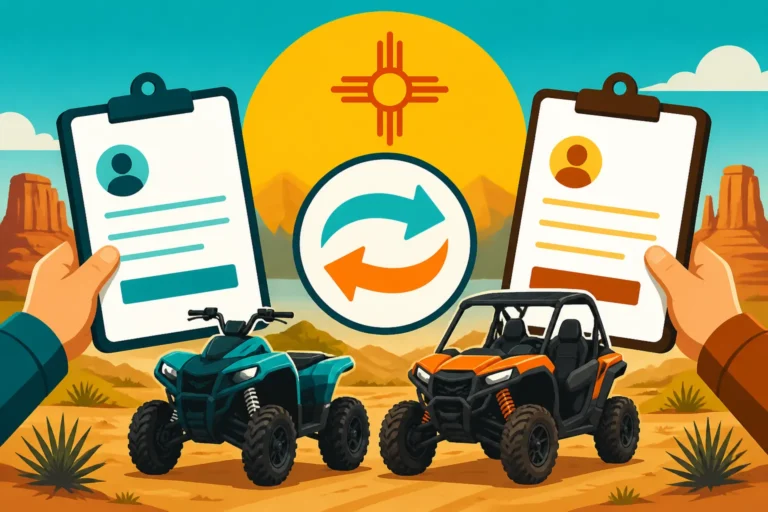
For those buying a used OHV in a private sale, the responsibility for titling falls directly on you, the buyer. You'll need to visit the MVD, present the appropriate documents—like a properly completed bill of sale and the previous owner's signed-off title—and pay this fee yourself. Similarly, if you're bringing an OHV into New Mexico from another state, even if it was titled elsewhere, you'll need to apply for a New Mexico title and pay the corresponding fee. This applies even if you're inheriting a machine or receiving it as a gift; the change of ownership still requires a new title in your name.
Additional Costs Associated with Titling in New Mexico
While the core titling fee is straightforward, there are other significant costs that often arise concurrently with the titling process. These aren't always direct "titling fees" but are usually paid at the MVD and are essential parts of getting your OHV legally ready for the trails.
Gross Receipts Tax (Sales Tax) on Your Purchase
This is often the largest single cost associated with acquiring an OHV, and it's absolutely crucial to understand. New Mexico doesn't have a traditional "sales tax" in the way many other states do; instead, it has a "gross receipts tax." When you purchase an OHV, whether new from a dealer or used from a private party, you are generally subject to this tax. If you buy from a licensed dealer, they will collect the gross receipts tax at the point of sale and remit it to the state. This is factored into your total purchase price.
However, if you buy your OHV in a private party sale, it becomes your responsibility to pay this tax directly to the MVD when you go to title the vehicle. The tax is calculated based on the purchase price you state on your bill of sale. This is why having a clear, accurate, and properly executed bill of sale is incredibly important for private transactions. Without it, the MVD may have to estimate the value, which can sometimes lead to unexpected costs. Tools like LawDepot can be invaluable for drafting a robust [A New Mexico Bill of Sale for an ATV] to ensure all the necessary details are captured and avoid any hiccups at the MVD counter. Paying this tax is a fundamental step to clear the OHV for legal ownership and subsequent registration.
Late Fees and Penalties
Life happens, and sometimes getting to the MVD isn't at the top of the priority list after buying a new toy. However, procrastinating on your OHV titling in New Mexico can cost you. The state has specific deadlines for transferring a title into your name after a purchase or change of ownership. If you miss these deadlines, the MVD can assess late fees and penalties. These aren't just minor inconveniences; they can add up, turning a relatively small administrative fee into a much more substantial expense.
The exact grace period and the structure of late fees can vary, but the message is clear: don't delay. Waiting too long not only incurs financial penalties but can also complicate the process, potentially requiring additional forms or scrutiny. Imagine getting your new-to-you quad and being eager to hit the trails, only to find out you owe an extra hundred dollars because you waited a couple of months to title it. That's a frustration many riders have faced, and it's easily avoidable by taking care of the paperwork promptly after your purchase.
Lien Holder Fees
If you financed your OHV purchase, rather than paying cash upfront, there's another set of fees you might encounter. When a lender provides you with a loan to buy an OHV, they typically place a lien on the vehicle's title. This lien signifies their financial interest in your machine until the loan is fully repaid. The process of recording this lien with the state often comes with an additional administrative fee.
This isn't a fee charged directly by the MVD for titling you, but rather a charge from the MVD to record the lien for your lender. Sometimes, the lender might pay this initially and then pass the cost on to you as part of your loan origination fees or closing costs. Other times, it might be paid at the MVD counter. It’s always a good idea to clarify with your lender whether these fees are included in your financing or if you'll need to pay them separately at the MVD. Understanding [Titling a Machine With a Lien in New Mexico] is essential when financing your OHV.
Here's a quick overview of potential costs:
| Cost Type | Description | Who Pays? | When Paid? | Avoidable? |
|---|---|---|---|---|
| MVD Titling Fee | Basic state fee for processing and issuing a new title. | Buyer | At MVD when applying for title. | No |
| Gross Receipts Tax | New Mexico's sales tax on the purchase price of the OHV. | Buyer | At MVD (private sale) or dealer (dealership sale). | No |
| Late Titling Fees | Penalties for failing to title the OHV within the state's required timeframe. | Buyer | At MVD if past deadline. | Yes |
| Lien Holder Recording Fee | Fee to record the lender's financial interest on the title. | Buyer (often via lender) | At MVD or as part of loan costs. | No* |
| Bill of Sale Prep | Cost for a legal template or service to draft a bill of sale. | Buyer/Seller (negotiable) | Prior to MVD visit. | Yes* |
Note: Lien recording fees are generally unavoidable if you finance. Bill of sale prep may be avoidable if you draft it yourself, but a well-drafted document from a service like LawDepot can prevent bigger issues and costs down the road.
The Interplay Between Titling and Registration Costs
It's easy to confuse titling and registration because they often happen in quick succession, and both are handled by the MVD. However, they are distinct legal processes with separate fees. Understanding their relationship can help manage your expectations regarding the total upfront cost of getting your OHV ready for New Mexico's stunning trails.
Why Titling Often Precedes Registration
In almost all cases, you'll need to have a clear and valid title for your OHV in your name before you can successfully register it with the state of New Mexico. The title is the proof of ownership, the foundational document that establishes your legal claim to the machine. Without it, the MVD can't legally register the vehicle to you. Think of it like buying a house: you get the deed (title) first, then you worry about utilities and services (registration).
This sequence means that you'll typically incur the titling costs (the MVD titling fee, gross receipts tax, potential lien fees) first, and then you'll pay the registration fees. This two-step process can sometimes make the initial investment feel more significant, as you're paying several different fees within a short period. It's not just one payment for "paperwork;" it's a series of payments for distinct legal requirements. Having your title squared away is the critical first step to getting those coveted New Mexico OHV decals on your machine. [New Mexico OHV Title Requirements] will walk you through all the documents you'll need.
First-Time Registration Fees
While not directly a "titling cost," the initial registration fee is usually paid right after you've successfully titled your OHV. New Mexico requires all OHVs operating on public lands (and certain private lands) to be registered. This first-time registration carries its own fee, which covers the cost of issuing your biennial (two-year) registration and those bright yellow or green decals.
It's important to differentiate this from the titling fee. The titling fee establishes who owns the machine, while the registration fee grants permission to operate it on designated lands. The first-time registration fee is often slightly higher than subsequent renewal fees because it involves setting up a new record in the MVD system. Expect to pay this alongside your titling costs when you first get your OHV ready for adventure. You can learn more about this initial step by reading [New Mexico's First OHV Registration]. It's a different financial commitment compared to [What a New Mexico Renewal Costs], which you'll encounter down the line.
Potential for Exemptions (and their cost implications)
In certain rare circumstances, you might encounter situations where the need for a title (and thus its associated costs) is different. For example, some very old OHVs might fall under different titling rules if they predate certain state requirements, or certain farm equipment that could be considered an OHV might have specific agricultural exemptions. However, these are exceptions, not the rule. Generally, if you plan to use your OHV for recreation or on public lands, a title is going to be a requirement.
While an exemption might save you the direct titling fee, it could lead to complications later if you decide to sell the machine or if you need to prove ownership for other reasons. Always assume you'll need to title your OHV unless explicitly advised otherwise by the MVD for your specific circumstance. It's often better to incur the standard titling costs upfront for peace of mind and full legality. For more on this, check out [Do You Need a Title for an ATV in New Mexico?].
Keeping Costs Down and Avoiding Surprises
No one likes unexpected expenses, especially when it comes to getting out on the trails. With a little preparation and understanding, you can navigate the titling process in New Mexico smoothly and avoid unnecessary costs.
Be Prepared with Paperwork
The single biggest way to avoid delays, extra trips to the MVD, and potential fees is to show up fully prepared. This means having all your ducks in a row when it comes to documentation. For a new OHV, you'll need the Manufacturer's Statement of Origin (MSO) or Manufacturer's Certificate of Origin (MCO). For a used OHV, you absolutely need the previous owner's properly signed-off title.
Beyond that, a detailed [New Mexico ATV Bill of Sale Requirements] is critical for private sales. Ensure it lists the correct purchase price, the VIN, and all relevant buyer and seller information. If you're coming from out-of-state, you'll need your out-of-state title. Sometimes, VIN verification might be required. Any missing document or incorrect information can lead to rejection of your application, forcing you to go back, gather more paperwork, and potentially incur a new processing fee if you miss a deadline. Familiarize yourself with [New Mexico OHV Title Requirements] before you even step foot in the MVD.
Research Before You Buy
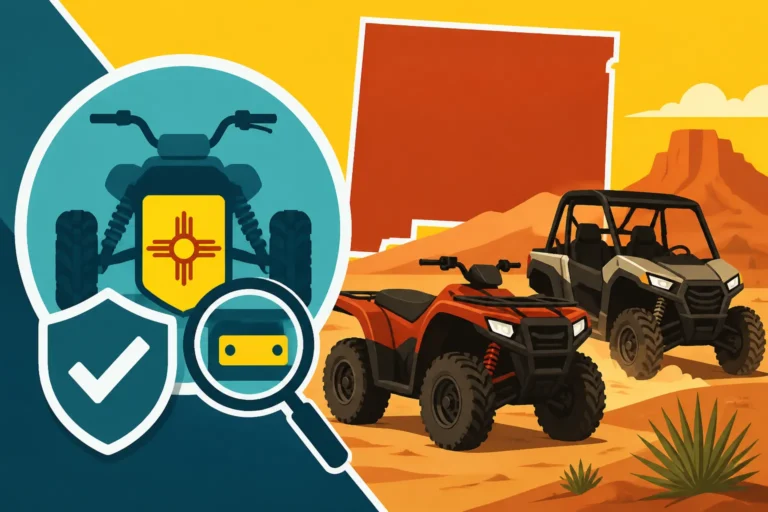
This step can save you far more than just titling fees; it can prevent you from buying a headache. Before handing over any cash for a used OHV, do your due diligence. Always check the Vehicle Identification Number (VIN). You can often do a VIN check through various online services (some free, some paid) to look for reported thefts, accident history, and even outstanding liens. This is crucial because if you buy an OHV with a lien on it that the seller doesn't clear, you could become responsible for that debt, or worse, be unable to title the machine in your name.
Insist on seeing the title in the seller's hand, ensuring their name matches the title, and that there are no active liens listed. If the seller "lost" the title, be very wary. While it's possible to apply for a duplicate title, it adds a layer of complexity and potential cost to your purchase. A little detective work upfront can prevent a costly ordeal later on. Reading [Checking a VIN Before You Buy] is a wise move, especially when considering [Buying a Used ATV in New Mexico].
Use Reputable Sources for Documents
For private sales, the bill of sale is your proof of purchase and a key document for titling and tax purposes. Don't just scribble something on a napkin. A well-drafted, legally sound bill of sale protects both the buyer and the seller. Services like LawDepot offer templates that cover all the necessary legal language and information, ensuring you have a document that the MVD will accept without question.
Investing a small amount in a professional bill of sale template can prevent disputes over the purchase price (and thus the gross receipts tax owed), clarify the condition of the OHV, and ensure a smooth transfer of ownership. It might seem like an extra step, but preventing a single issue at the MVD or a legal misunderstanding with the seller will be well worth it. Proper documentation streamlines the titling process, minimizes questions, and helps you avoid any unexpected administrative fees or penalties for incomplete or incorrect paperwork.
Disclaimer
This article is for general informational purposes only and does not constitute professional advice. Laws, prices and regulations vary by location and change over time. Consult a qualified professional for guidance on your specific situation.