How Long a New Mexico OHV Registration Lasts
It's easy to lose track of when your off-highway vehicle (OHV) registration in New Mexico is actually valid, especially with all the exciting places to ride across our beautiful state. Nobody wants to be caught out on a trail with an expired sticker, facing a potential fine. This guide is here to clear up any confusion and thoroughly explain exactly how long a New Mexico OHV registration lasts, ensuring you're always good to go for your next adventure.
The Standard Two-Year Registration Cycle
For most New Mexico off-highway vehicle owners, the standard registration period is a straightforward two years. This biennial cycle applies whether you're registering a brand-new ATV, a trusty used UTV, a zippy dirt bike, or even a specialized sand rail. It's designed to be consistent, making it easier for everyone to remember their renewal timeline.
Understanding the Biennial Period
When we talk about a "biennial" registration, it simply means it's valid for 24 months from its effective date. This isn't tied to the calendar year, so your registration might expire in March, July, or any other month, depending on when you initially registered your machine. For instance, if you register your quad on October 15th, your registration will be good until October 31st two years later. The state often grants you until the end of the month of your expiration, which is a small but helpful grace period to keep in mind.
This two-year period is a practical approach that balances the need for regular updates with the convenience of not having to renew every single year. It also ensures that the funds collected through registration fees are consistently flowing back into programs that benefit OHV riders, such as trail maintenance and safety initiatives. You can learn more about [Where New Mexico OHV Fees Go] and how they support our riding community.
Why the Two-Year System Works for Riders
Having a two-year window really helps us as riders. It means less paperwork to fuss with annually, and it gives us a longer stretch of time to enjoy our machines without the immediate pressure of an upcoming renewal. Imagine planning a multi-day trip into the Carson National Forest or a weekend out at Red Sands; knowing your registration is solid for two years provides that extra peace of mind. It allows for more consistent funding for the various state agencies that oversee OHV programs, which in turn means better trails and more resources for everyone.
However, this longer period also means you need to be diligent about remembering that expiration date. It's easy to set it and forget it for 23 months, only to realize you're a month overdue! This is why many riders mark their calendars or set digital reminders.
Factors That Reset or Affect the Registration Period
While the two-year cycle is the standard, certain situations can either reset that clock or introduce variations to your registration's effective duration. It's crucial to understand these nuances to avoid any unexpected surprises.
New Registrations and Changes of Ownership
Any time an OHV is registered for the very first time in New Mexico, or when it changes hands to a new owner, that two-year clock essentially resets. So, if you just bought a used side-by-side from a private seller, even if their registration had a few months left on it, your new registration will be valid for a full 24 months from the date MVD issues it to you. This is a great perk, as you're not inheriting someone else's expiring timeline. It ensures every new owner gets a fresh start. For specifics on how to handle this, check out [Renewing on a Change of Ownership in New Mexico].
This fresh start is particularly important when buying from a private party. You'll need a clear bill of sale and proper documentation to transfer ownership smoothly. Services like LawDepot can be incredibly useful for drafting a robust bill of sale, ensuring all the necessary details are captured to make your new registration process as seamless as possible. Without proper documentation, you might face delays or issues getting your two-year registration.
Registering an Out-of-State Machine
If you've recently moved to New Mexico and brought your OHV with you, or if you purchased a machine from another state, the process is similar to a new registration. Once you apply for and receive your New Mexico OHV registration, it will also be valid for the standard two years from its issue date. New Mexico is quite welcoming to out-of-state machines, but it's essential to get your local registration sorted promptly. For more details, refer to [Registering an Out-of-State Machine in New Mexico].
It's not uncommon for folks to move here from places like Arizona or Texas, bringing their beloved quads or UTVs. While those states might have different registration lengths or even different reciprocity agreements, once you establish residency and apply for a New Mexico registration, you're on the two-year cycle. This gives you plenty of time to explore our vast public lands, from the deserts of southern New Mexico to the high mountain trails in the north.
Paved Road Plates and Decals
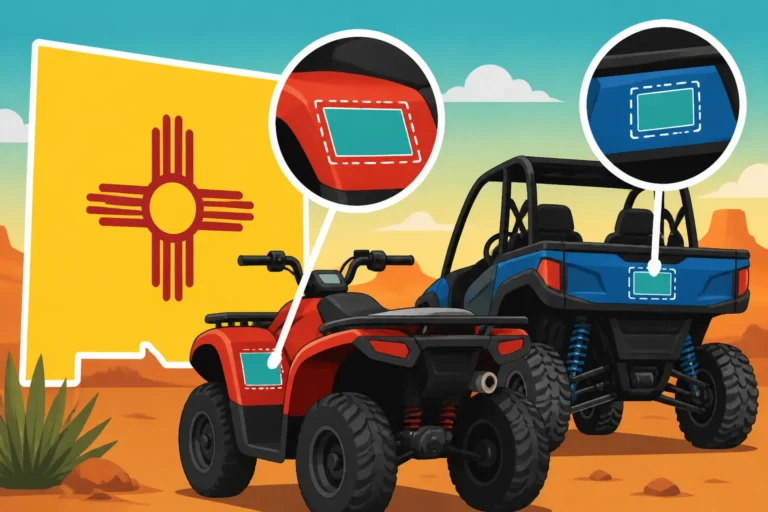
New Mexico has different decals for various riding scenarios: the yellow decal for off-highway use and the green decal for on- and off-highway use. While both are tied to your primary two-year OHV registration, the paved road plate system used to have a slightly different dynamic. The older "stickers" for paved roads were phased out, and now if you want to legally ride your OHV on approved paved county or municipal roads, you need to apply for a specialized paved road plate through the MVD. This plate is directly tied to your existing two-year OHV registration, so its validity aligns with your main registration. You'll also need proper insurance for paved road use. Find out more about [New Mexico's Green On and Off-Highway Decal] and [New Mexico's Paved Road Plate].
It's a common point of confusion, especially for new riders or those returning to the sport. The key takeaway is that the underlying two-year registration period is the anchor for all your OHV's legal road-worthiness in New Mexico. Without a current two-year registration, neither the yellow nor green decal, nor any paved road plate, is valid.
Keeping Track of Your Expiration Date
Knowing your registration lasts for two years is one thing; actually remembering when those two years are up is another challenge entirely. However, there are several straightforward ways to ensure you never miss a renewal and avoid those pesky late fees or fines.
Locating Your Expiration Date
The easiest way to find your OHV registration's expiration date is to look directly at the registration certificate itself. This is the document you receive from the Motor Vehicle Division (MVD) after successfully registering your machine. It clearly states the issue date and the expiration date. Additionally, your physical OHV decal (the sticker you place on your machine) will often have the expiration year printed on it, serving as a quick visual reminder. Make it a habit to check this annually, perhaps when you're doing your spring maintenance.
Many folks keep a digital photo of their registration card on their phone, which can be a lifesaver if you forget the physical card at home. While it's always best to carry the original, a quick glance at the photo can remind you of the date. Knowing [When a New Mexico OHV Registration Expires] can save you a lot of headache.
The Importance of Timely Renewal
Renewing your registration on time is more than just avoiding a fine for an [New Mexico Fines for an Unregistered OHV]. It ensures continuous legal access to New Mexico's incredible riding areas, from designated OHV parks to vast tracts of BLM and National Forest land where OHVs are permitted. An expired registration means you're technically riding illegally, which could not only lead to a citation but also create issues if you're involved in an accident. The renewal process itself is usually very simple, often doable online or by mail, or in person at an MVD office. You can find out more about [Renewing a New Mexico OHV Registration].
Imagine planning a big weekend trip with friends, only to discover at the last minute that your registration expired a month ago. That's a surefire way to derail a perfectly good adventure. Proactive renewal means your machine is always ready when you are.
Setting Up Reminders
Given the biennial nature, it's easy to forget about your OHV registration for a while. The best approach is to set multiple reminders. Here are a few ideas:
- Calendar Alerts: Put a recurring reminder on your digital calendar (phone, computer) for a month or two before the expiration date.
- Physical Calendar: Jot it down on your kitchen calendar or workshop whiteboard.
- Email Reminders: Some MVDs offer email renewal reminders, or you can use a personal reminder service.
- Annual Check-up: Tie it to another annual event, like your vehicle's car registration renewal or your annual OHV maintenance check. When you're cleaning out your garage or tuning up your machine, that's a great time to check the sticker.
By being proactive, you ensure your OHV is always legally ready for the next ride, whether it's a short jaunt to a local trail or an epic adventure across the state. Remember, even if you just need to replace a lost decal, knowing your current registration status is key. Learn about [Replacing a Lost New Mexico Decal] if you ever find yourself in that situation.
Navigating Special Circumstances and Permits
While the two-year registration period is standard for resident OHVs, there are a few other scenarios that involve different validity periods, primarily for non-residents or specific types of permits. It’s good to be aware of these, especially if you have friends visiting or own multiple types of vehicles.
Non-Resident OHV Permits
New Mexico welcomes OHV enthusiasts from all over, but if you're a non-resident and your home state doesn't have an OHV registration program that New Mexico recognizes for reciprocity, you'll need to purchase a non-resident permit. These permits come in different durations: a 90-day permit for short visits and a two-year permit for those who plan on riding in New Mexico frequently over a longer period. This is distinctly different from the full two-year registration that New Mexico residents get through the MVD, and it serves as a temporary alternative to ensure legal riding status.
This flexibility is great for folks who live in states without comprehensive OHV registration systems but want to experience New Mexico's diverse terrain. For example, a rider from a state like Alabama, which may not have a reciprocity agreement, would purchase a New Mexico non-resident permit to legally ride here. It’s a good way to contribute to our trail system while enjoying the Land of Enchantment.
Safety Permits for Young Riders
For riders under the age of 18, New Mexico has a mandatory safety permit requirement. This isn't a registration for the machine itself, but a permit for the rider. Once earned by completing an approved safety course, this permit generally doesn't have an expiration date in the same way an OHV registration does. It signifies that the rider has met the state's safety education requirements, and it's valid for as long as the rider needs it, up until their 18th birthday.
This is a critical distinction, as some people confuse the safety permit with the vehicle registration. While both are necessary for young riders on public land, they serve different purposes and have different validities. The safety permit is about proving knowledge and responsibility, while the registration is about the vehicle's legal status and contributing to trail funds. Ensuring your young rider has their safety permit is just as important as having a current OHV registration.
Registration Processing Times
While your registration is valid for two years once issued, the time it takes to receive that registration can vary. Whether you're registering a new machine or renewing an old one, there can be a processing period. If you apply in person at an MVD office, you might walk out with your documents and decals the same day. However, if you apply by mail or through certain online portals, it could take a few weeks for everything to arrive. It's wise to factor in this [New Mexico OHV Registration Processing Time] when you're planning your first ride or anticipating a renewal.
Getting your paperwork done early helps ensure you don't miss out on riding time. There’s nothing worse than having a trip planned, only to find your registration hasn't arrived in the mail yet. A little foresight goes a long way in keeping your OHV adventures smooth and legal.
| Scenario | Duration of Validity | Issued By | Notes |
|---|---|---|---|
| Resident OHV Registration | Two Years (24 months) | New Mexico MVD | From date of issuance for new/transferred machines, or current expiry for renewals. |
| Non-Resident OHV Permit | 90 Days or Two Years | NM Dept. of Game & Fish | For visitors from states without OHV registration reciprocity. |
| Paved Road Plate | Aligns with OHV Registration | New Mexico MVD | Requires a valid two-year OHV registration to be active. |
| Youth OHV Safety Permit (Rider) | Valid until 18th Birthday | NM Dept. of Game & Fish | Certification for riders under 18, not for the vehicle itself. |
Disclaimer
This article is for general informational purposes only and does not constitute professional advice. Laws, prices and regulations vary by location and change over time. Consult a qualified professional for guidance on your specific situation.