New Mexico’s $7.50 Plate Transition Fee
Navigating the ever-changing landscape of off-highway vehicle (OHV) regulations in New Mexico can feel like trying to hit a moving target, especially when new fees and processes pop up. Many riders found themselves scratching their heads when the state introduced a specific $7.50 fee related to the paved road plate transition, unsure what it was for, who had to pay it, or if it even still applied to them. This guide is here to untangle the confusion, explaining exactly what this fee covered, why it came into existence, and how it fits into the broader picture of New Mexico's OHV road use regulations.
Navigating New Mexico's OHV Plate Transition
For a long time, New Mexico OHV riders who wanted to venture onto paved roads had a distinct system to follow. It wasn't always straightforward, and like many state regulations, it evolved over time. Understanding the $7.50 plate transition fee really requires a look back at what came before and the changes that necessitated such a fee.
The Confusion Around Shifting Regulations
It's completely understandable to feel overwhelmed by the shifting rules for OHV registration and road use in New Mexico. One year you might have a sticker, the next year a plate, and then suddenly, there's a specific fee for transitioning between the two. Riders often just want to know if their machine is legal for where they want to ride, without having to become legal scholars. The state's attempt to streamline things, while well-intentioned, often led to more questions than answers in the short term, leaving many wondering if they were still compliant or if they needed to rush to the MVD again. This particular $7.50 fee, tiny as it may seem, was a point of confusion for many.
Imagine you've had your OHV for years, dutifully renewed its registration every two years, and maybe even had that special permit to ride on certain paved roads. Then, out of the blue, the system changes. You hear talk of new plates, different decals, and a "transition fee." It's enough to make you just want to stick to the dirt. The frustration isn't just about the money; it's about the time and effort required to understand and comply with new rules that don't always feel clearly communicated. We've all been there, standing in line at the MVD, hoping we brought the right paperwork.
What Exactly Was the Paved Road Plate?
Before the most recent updates, New Mexico had a distinct system for OHVs that allowed limited use on paved public roads. This wasn't a free-for-all; it was a specific opt-in program designed to give riders more flexibility, particularly for connecting trails or accessing services in rural areas. This system often involved a "paved road sticker" that would be affixed to your machine in addition to your regular off-highway registration decal. The goal was to provide a clear visual indicator that an OHV was authorized for certain paved road use, under strict conditions, of course.
The "paved road plate" emerged as a refinement or replacement for this sticker system. The idea was to move from a sticker, which could sometimes be less durable or harder to enforce, to a more traditional license plate format for those machines approved for paved road use. This plate was different from a standard vehicle plate and was solely for OHVs meeting specific criteria and having proper registration. It signified that your machine had gone through the necessary steps to gain limited paved road privileges. [New Mexico's Paved Road Plate] was a key part of this evolution, reflecting the state's ongoing efforts to balance rider access with public safety and road management.
The Evolution of New Mexico's OHV Road Use Laws
New Mexico's approach to OHV road use hasn't been static; it's a dynamic area of legislation that continues to adapt to the growing popularity of these machines and the desire for more consistent regulation. The transition from stickers to plates and then to a more comprehensive decal system reflects this ongoing evolution.
Why the Sticker Program Ended
The original paved road sticker program, while serving its purpose for a time, had its limitations. One of the main reasons for its eventual phasing out was a push for clearer enforcement and a more standardized approach across different types of vehicles. Stickers could sometimes be less visible, prone to wear and tear, or lead to confusion for law enforcement officers trying to quickly identify an OHV's road-legal status. There was also a desire to integrate OHV road use more seamlessly into the existing motor vehicle registration framework, which primarily uses plates for road-going vehicles.
Essentially, the state wanted a more robust and easily identifiable system. The decision to end the paved road sticker program was a deliberate step towards a more unified and durable method of indicating which OHVs met the requirements for limited paved road access. It paved the way for the introduction of the specific paved road plate, and subsequently, the green decal system we see today. [Why Paved Road Stickers Ended in December 2025] gives a deeper dive into the specific timeline and reasoning behind this change, which ultimately sought to enhance both clarity and compliance for riders and authorities alike.
The Intent Behind the Legislative Change
The legislative changes weren't just about swapping out stickers for plates; they were part of a broader effort to better manage OHV use in New Mexico. The intent was multi-faceted: to improve public safety, ensure compliance with environmental regulations, and create a more equitable system for all road users. Lawmakers recognized that OHVs were increasingly being used for purposes beyond just off-road recreation, including accessing hunting grounds, commuting short distances in rural areas, or connecting different trail systems.
By requiring a more formal "paved road plate" (and later the green decal system), the state aimed to ensure that only properly equipped, registered, and insured OHVs were venturing onto public roads. This included mandates for headlights, taillights, mirrors, and often, liability insurance, bringing OHVs more in line with requirements for other motor vehicles when operating on pavement. The entire process, including the $7.50 transition fee, was designed to facilitate this shift, making it possible for existing sticker holders to seamlessly move to the new plate system and for new applicants to enter a more structured framework.
Who Needs to Pay the $7.50 Transition Fee?
The $7.50 plate transition fee wasn't a universal charge for all OHV registrations. It was specifically tied to the shift from the old paved road sticker system to the newer paved road plate. Understanding who needed to pay it, and why, helps clarify the financial side of this regulatory evolution.
Converting an Existing Paved Road Sticker to a Plate
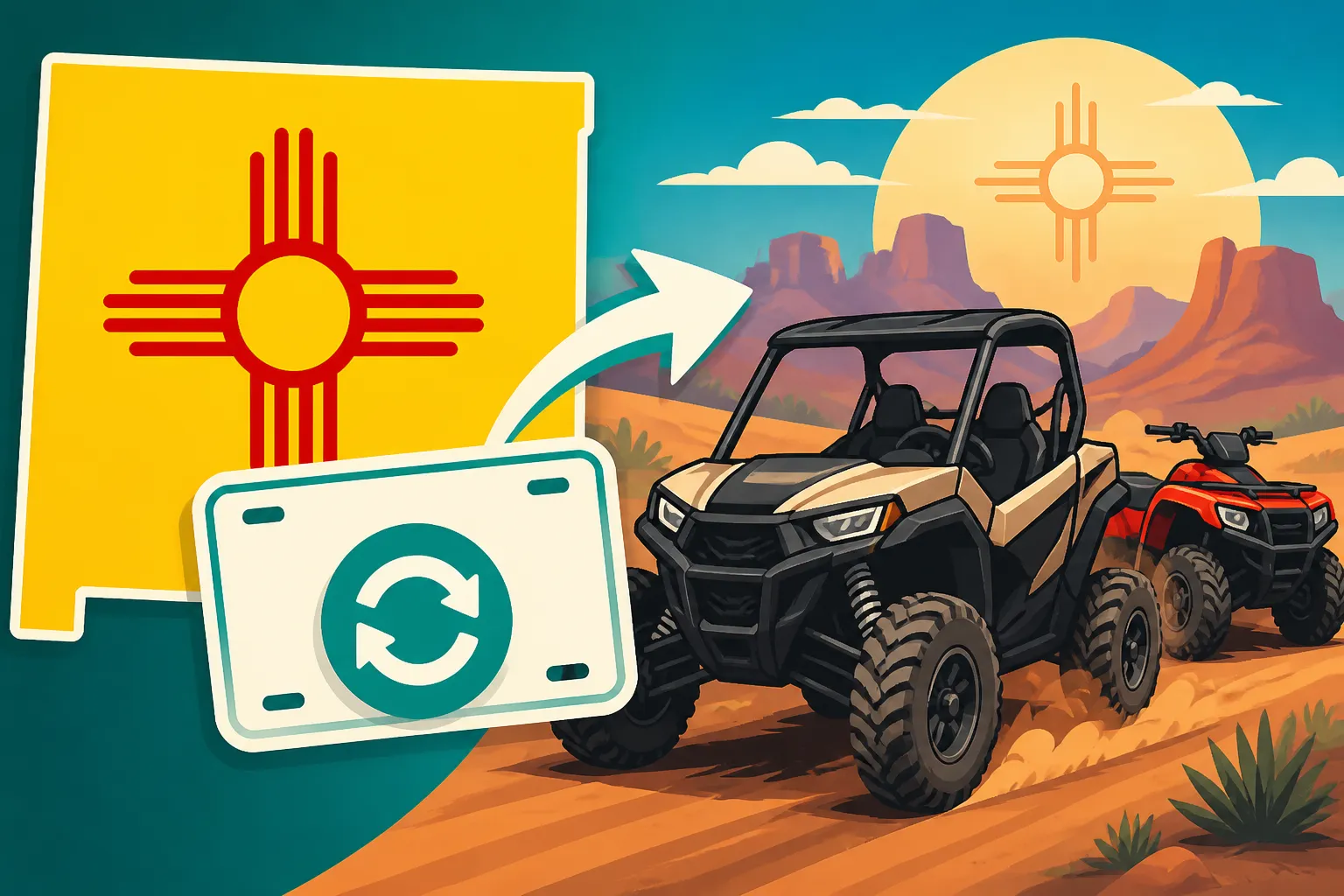
If you were a rider who already possessed a valid paved road sticker for your OHV, then the $7.50 transition fee likely applied to you. This fee was essentially the administrative cost associated with swapping out your old sticker for the newly introduced paved road plate. The state understood that riders had already paid for their paved road privileges through the previous sticker program, so this fee wasn't meant to be a full re-application cost, but rather a nominal charge to cover the processing, manufacturing, and distribution of the new physical plate.
It was designed to be a relatively low-cost way for existing compliant riders to migrate to the updated system without feeling penalized for an arbitrary change. Think of it as a processing fee for updating your credentials. You were moving from one authorized method of paved road access to another, and the state needed to cover the operational costs of this statewide conversion. For many, it was a small price to pay for continued, uninterrupted paved road access.
The Fee for New Paved Road Plate Applications
The $7.50 fee also applied to new applications for a paved road plate during the transitional period. If you were getting your very first paved road authorization for your OHV after the new plate system was in place but before it fully transitioned to the dual decal system (yellow for off-road, green for on-road), this fee would have been part of your total cost. It was separate from the biennial registration fee and any other applicable taxes or title fees. [New Mexico OHV Paved Road Plate Cost] would have included this transition fee during its active period, alongside the actual cost of the plate and any other associated charges.
This meant that whether you were an existing paved road sticker holder or a brand-new applicant seeking paved road privileges, the $7.50 fee was typically part of the equation during the specific window when the state was making this switch. It helped standardize the cost structure for anyone entering the paved road plate program at that time, ensuring consistency in how the state recovered its administrative expenses for this particular aspect of OHV regulation.
Exemptions and What They Mean for You
While the $7.50 transition fee was fairly widespread for those seeking paved road plates during the transition, it's important to remember that not every OHV owner in New Mexico needed to pay it. If you never intended to ride your OHV on paved roads and therefore never applied for a paved road sticker or plate, this fee would not have applied to you. Your standard off-highway registration (typically signified by the yellow decal) would be sufficient for purely off-road use, and you wouldn't incur any additional costs related to paved road access.
Furthermore, once the system fully transitioned away from the specific paved road plate to the current dual decal system (yellow and green), the specific "plate transition fee" would no longer be applicable in its original form. The fees would then align with the costs associated with obtaining the appropriate decals. So, if you're registering a machine today for paved road use, you'll be looking at the cost for the green decal, not this particular $7.50 transition fee for the old plate system. Always check the most current MVD guidelines or consult a local expert for up-to-date information, as regulations continue to evolve.
The Step-by-Step Process for the Transition
For riders who needed to make the switch from their old paved road stickers to the new paved road plates, the process involved a trip to the New Mexico Motor Vehicle Division (MVD). While MVD trips can sometimes feel like a daunting task, knowing what to expect and what documents to bring can make it a lot smoother.
Gathering Your Documentation
Just like with any official vehicle registration process, having all your ducks in a row before heading to the MVD is crucial. For the paved road plate transition, riders typically needed to present proof of their existing OHV registration, which included the off-highway decal and the now-defunct paved road sticker. This established that they were already authorized users and were simply upgrading their credentials. You'd also need proof of ownership, often your vehicle's title or a bill of sale, to ensure the machine was legally yours. If you'd misplaced your title, resources like LawDepot could provide a template for a bill of sale if you were in the process of a new purchase, or guidance on how to apply for a duplicate title.
Additionally, some form of personal identification, like a driver's license, would be required. Depending on the exact timing of the transition, proof of insurance might also have been necessary, especially if the paved road plate implicitly carried the same insurance requirements as full road-legal vehicles. It's always a good idea to bring more documents than you think you need, including copies, just in case. [What MVD Asks For at a Two-Year Renewal] provides a good general overview of the documents typically required for any MVD visit related to your OHV.
Where to Process Your Plate Application
The primary place to handle your paved road plate transition, and indeed most OHV registration matters, was at a New Mexico MVD office. These are the state's official hubs for all vehicle-related transactions. You'd visit a local MVD branch, take a number, and wait for your turn. While some larger dealerships might offer to handle initial registration for new purchases, the specific transition process from sticker to plate was usually an MVD-direct interaction.
It's worth noting that some private businesses are licensed by the MVD to perform certain transactions, acting as third-party MVD offices. These can sometimes offer quicker service, though they might charge an additional convenience fee. During the transition period, you would have needed to confirm whether these third-party agents were equipped to handle the specific plate transition process, as not all services are universally available at every location. The most reliable bet was generally a state-run MVD office. [New Mexico OHV Registration at MVD] offers more details on the typical procedures you'd encounter there.
What to Expect at the MVD
When you arrived at the MVD for your plate transition, you'd typically present your gathered documents to a customer service representative. They would verify your existing paved road sticker status and process the request for the new plate. This is when the $7.50 transition fee would be collected, along with any other applicable fees. The representative would usually take your old sticker (if applicable) and issue you the new paved road plate, which you would then be responsible for properly affixing to your OHV according to state regulations.
The process was generally straightforward for those with all their paperwork in order. The main challenge, as many of us know, often revolved around wait times, especially if you went during peak hours. It was a formal exchange where you surrendered your old authorization method and received your new one, confirming your continued compliance with New Mexico's OHV paved road use laws. For those without a title, or if there were any discrepancies in ownership, the process could become more complex, potentially requiring additional forms or a trip to verify ownership details, something a legal document provider like LawDepot could assist with by offering template forms or guidance on what constitutes valid proof of ownership. [Titling an Off-Highway Vehicle in New Mexico] is crucial reading if you find yourself needing to establish ownership before you can even think about plates.
Understanding New Mexico's Current Paved Road Options
While the $7.50 plate transition fee was a specific item during a particular period, New Mexico's OHV road use regulations have continued to evolve. It's important for riders today to understand the current system for operating OHVs on paved roads.
The Yellow and Green Decal System
New Mexico has largely moved to a dual decal system for OHV registration and road use. When you register your OHV, you typically receive a yellow off-highway decal. This decal signifies that your machine is registered for use on designated off-highway trails and areas. It's the baseline registration for any OHV operating on public lands in New Mexico.
However, if you want to operate your OHV on paved roads where permitted by local ordinance, you also need a green decal. This green decal is specifically for "on-highway" or paved road use. It indicates that your OHV meets the additional requirements for paved road operation, which often include specific equipment like headlights, taillights, mirrors, and proof of financial responsibility (insurance). The green decal essentially superseded the old paved road sticker and the transitional paved road plate, becoming the current standard for limited paved road access. [New Mexico's Yellow Off-Highway Decal] and [New Mexico's Green On and Off-Highway Decal] provide comprehensive details on these current requirements.
Here's a quick comparison of the systems:
| Feature | Old Paved Road Sticker System | Transitional Paved Road Plate System | Current Dual Decal System (Yellow & Green) |
|---|---|---|---|
| Purpose | Limited paved road access | Limited paved road access | Limited paved road access |
| Visual ID | Sticker affixed to OHV | Small license plate | Green decal (in addition to yellow) |
| Fee Impact | Specific permit fee | $7.50 transition fee (if applicable) | Cost of green decal (if applicable) |
| Requirements | Varied, evolving | Varied, evolving | Specific equipment, insurance, yellow decal |
| Current Status | Phased out | Phased out | Active |
When a Paved Road Plate is Still Applicable
It's a common misconception that the paved road plate is entirely gone. While the specific transition fee for it is no longer relevant for new registrations, and the system has largely moved to the green decal, there might still be older paved road plates in circulation. The state generally allows existing registrations to run their course until renewal. So, if someone obtained a paved road plate during the transitional period, they would have been able to use it until its expiration. At that point, upon renewal, they would transition to the current green decal system.
The phrase [Plates Only for New Mexico Paved Road Use] points to a specific era where the physical plate was the primary indicator. However, with the current regulations emphasizing the green decal for on-highway use, new applicants for paved road privileges will receive the green decal rather than a physical plate. It’s always best to ensure your machine is current with the latest MVD requirements to avoid any roadside surprises, especially if you're operating an older machine that might still have the physical plate attached.
The Future of OHV Road Use in New Mexico
The evolution of OHV road use laws in New Mexico isn't likely to stop. As the popularity of ATVs and UTVs continues to grow, and as communities grapple with how to best integrate these vehicles into their infrastructure, regulations will continue to adapt. We've seen a clear trend towards greater standardization, increased safety requirements, and a clearer delineation between off-road-only and limited-on-road vehicles.
Future changes could involve further refinements to equipment requirements, updates to insurance mandates, or adjustments to where OHVs are permitted to ride on paved surfaces. For riders, this means staying informed is key. Regularly checking the New Mexico MVD website, consulting local ordinances, and participating in rider advocacy groups can help ensure you're always up-to-date. The goal remains to provide safe and accessible riding opportunities while minimizing conflicts and protecting the environment. Knowing your [New Mexico OHV Registration Cost] and what it covers is always a good starting point.
Common Misconceptions and Troubleshooting
It’s easy to get tangled up in the details of OHV registration, especially when rules change. Let's clear up some common misunderstandings about the $7.50 plate transition fee and related OHV road use.
"Do I Still Need to Pay the $7.50 Fee Today?"
This is perhaps the most common question related to the $7.50 fee. The short answer for most current registrations is no. The $7.50 fee was specifically a "transition fee" designed to facilitate the move from the old paved road sticker program to the newer paved road plate system. Since New Mexico has now largely moved past the paved road plate era and into the green decal system for on-highway use, that particular transition fee is no longer a standard charge for new or renewal registrations.
If you are applying for paved road privileges today, your costs will typically involve the biennial OHV registration fee and the fee for the green decal, which grants you the limited on-highway authorization. You won't be charged the specific $7.50 plate transition fee. However, always confirm current fees with the New Mexico MVD, as fees can change over time. The key takeaway is that this specific fee was tied to a historical change that has largely completed its course.
Troubleshooting Missing Documents for Road Use
It's an all-too-common scenario: you're ready to register your OHV for paved road use, or renew an existing registration, and you realize you're missing a crucial document, like your title. This can be a major roadblock. If you're [Having a Title but No Paved Road Plate] or, worse, no title at all, you'll need to address that first. The MVD requires proof of ownership to register any vehicle, including an OHV.
If your title is lost or was never properly transferred to you, you'll need to apply for a duplicate title or go through a process to establish ownership. This might involve a bill of sale, especially if you purchased the machine privately. Reputable online legal document services like LawDepot can offer templates for a New Mexico bill of sale, which might be helpful in establishing clear ownership, particularly for older machines or private sales where formal titles weren't always exchanged. Having a complete chain of ownership is essential before you can even think about getting decals or plates.
What to Do If Your Paved Road Plate Expired
If you had a paved road plate that has since expired, you would not be able to simply renew it for another plate. Instead, your renewal would fall under the current New Mexico OHV regulations, meaning you would apply for the yellow off-highway decal and, if you desire paved road access, the green on-highway decal. This applies even if you had a valid paved road plate previously. The system has moved on, and renewals are always brought into compliance with the most current laws.
This means you’ll need to ensure your OHV meets all current requirements for the green decal, including necessary equipment and insurance. It's not a direct plate-to-plate renewal. Instead, it's a renewal into the updated decal system. This is part of the state's ongoing effort to maintain consistent and up-to-date standards for OHV operation on New Mexico's roads. Don't worry, the process at the MVD is designed to guide you through this, ensuring you get the correct current authorizations for your machine.
Disclaimer
This article is for general informational purposes only and does not constitute professional advice. Laws, prices and regulations vary by location and change over time. Consult a qualified professional for guidance on your specific situation.