Why New Mexico Wants Both Decals for Pavement
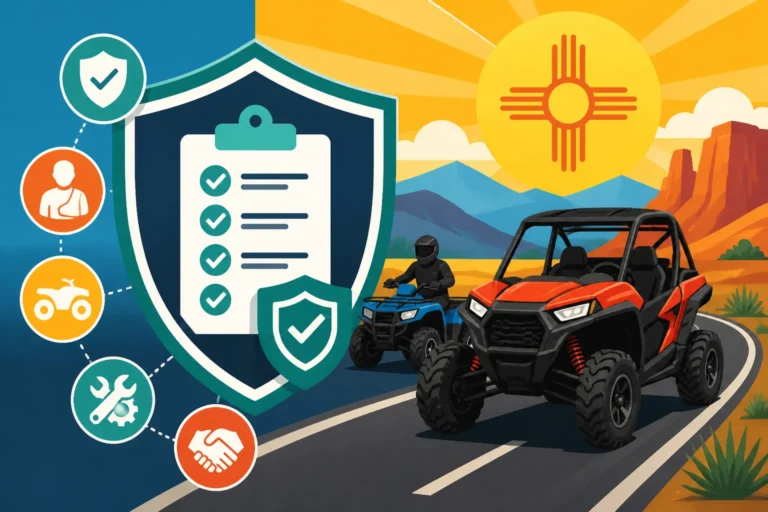
It can feel a bit like you need a secret decoder ring sometimes, trying to figure out all the rules for riding your ATV or UTV in New Mexico. Many riders dream of the freedom of taking their machine from a dirt trail right onto a paved county road to connect to the next adventure or simply get to town for supplies. But then they hit a wall of confusion: what exactly do you need to make that happen legally? This guide is here to untangle the mystery, explaining why New Mexico requires both the yellow off-highway decal and the green on-highway decal if you want to legally ride your OHV on paved public roads.
Understanding New Mexico's Decal System
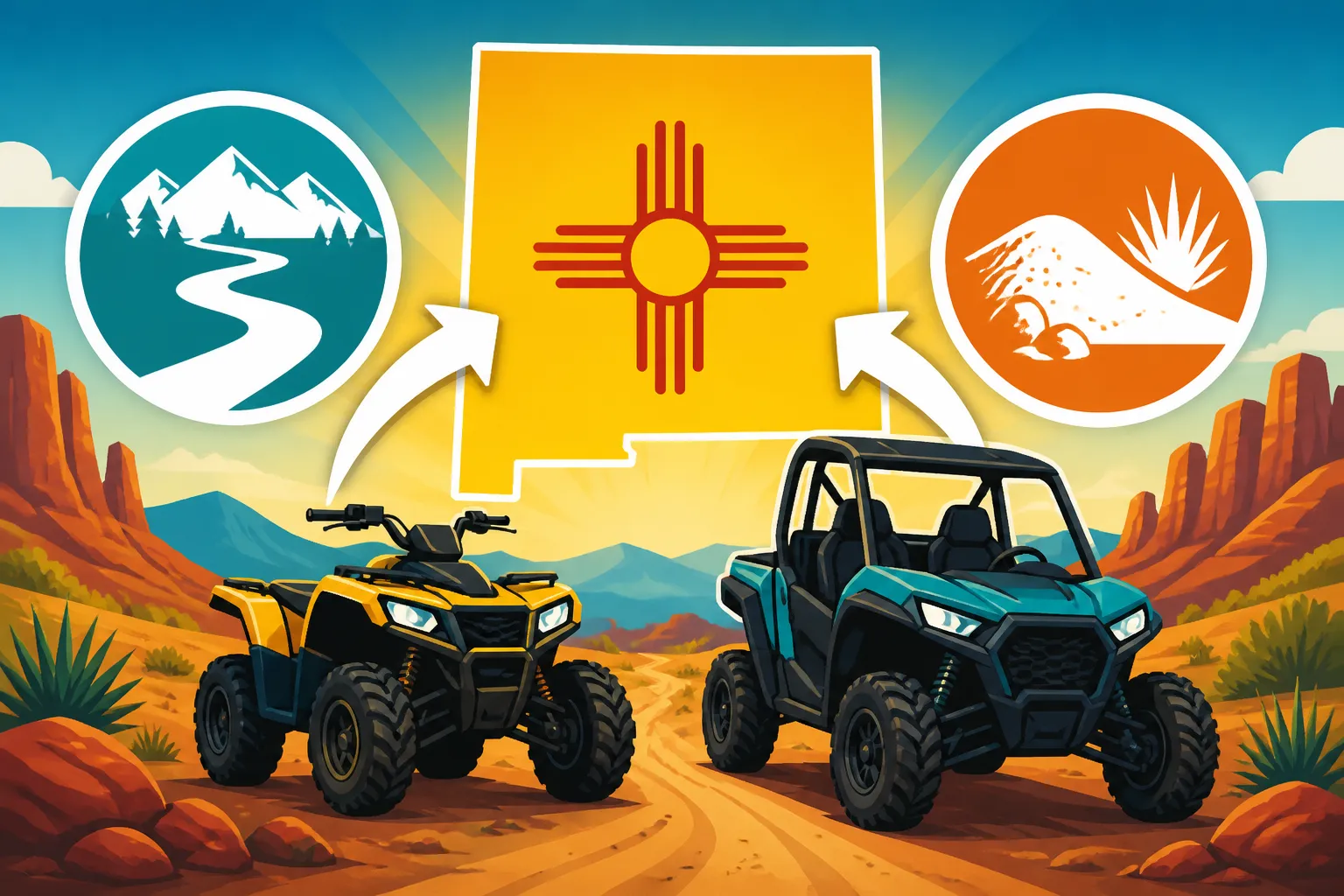
New Mexico's system for registering off-highway vehicles (OHVs) might seem a little complex at first glance, especially when you start talking about riding on paved roads. There isn't just one type of decal; there are two distinct ones, each with its own purpose, and understanding them is the first step to truly enjoying all the Land of Enchantment has to offer. These decals are essentially your machine's passport, dictating where it's allowed to travel.
The Yellow Off-Highway Decal: Its Purpose and Limitations
Let's start with the most common one: the yellow off-highway decal. This is the decal that nearly every OHV owner in New Mexico will be familiar with. Its primary purpose is to designate your machine as legally registered for off-highway use. Think of it as your entry pass to all the incredible dirt roads, trails, and open riding areas across the state, from the sand dunes of Mescalero Sands to the challenging terrain of Glade Run.
This decal indicates that you've completed the basic registration requirements through the New Mexico Motor Vehicle Division (MVD), confirming ownership and the machine's primary purpose. It's a bright, clear signal to law enforcement and land managers that your ATV, UTV, or dirt bike is authorized to be where the pavement ends. However, and this is a crucial point that often catches new riders off guard, the yellow decal alone does not grant you permission to ride on paved public roads. It strictly limits your machine to off-highway terrain, meaning dirt, gravel, or designated trails. Attempting to ride on paved roads with just a yellow decal can lead to citations and fines, taking the fun right out of your ride.
The Green On-Highway Decal: Opening Up Paved Roads
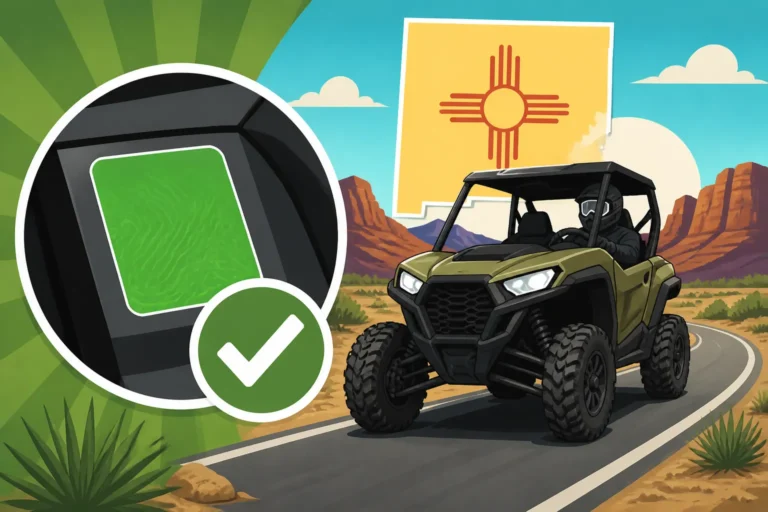
Now, if you want to unlock the ability to ride on certain paved roads, that's where the green on-highway decal comes into play. This decal is like an upgrade to your OHV's registration, signifying that your machine meets additional requirements to operate in a limited capacity on paved county and city roads. It's not about making your OHV a street-legal car replacement; it's about providing a practical way to connect trails, access services, or enjoy specific community ordinances that permit OHV use on local streets.
To obtain this green decal, you'll need to jump through a few more hoops. This includes ensuring your OHV has a clear title, is equipped with specific safety features required for road use (like headlights, taillights, mirrors, and a horn), and, crucially, carries proof of liability insurance. The green decal works in conjunction with your yellow decal, never replacing it. It's a layer of permission that acknowledges the dual potential of your machine. For more details on the specific requirements, you might want to look into [New Mexico's Green On and Off-Highway Decal].
The Evolution of New Mexico's OHV Pavement Rules
The current system of yellow and green decals for New Mexico OHV registration, especially concerning paved road use, hasn't always been this way. Laws and regulations evolve, often in response to increasing OHV popularity, safety concerns, and the need for clearer guidelines. Many veteran riders will remember a time when the system was different, perhaps simpler in some ways, but also less comprehensive.
Historically, there was a program that involved "paved road stickers" or plates that allowed some OHVs onto pavement. However, as of a few years ago, that system was retired. The state recognized the need for a more robust and unified approach to OHV registration and road use, leading to the current dual-decal system. This change aimed to standardize compliance, improve safety, and provide clearer instructions for both riders and law enforcement across the state. If you're curious about the specifics of these changes, articles like [What the 2017 Law Changed for New Mexico Plates] can offer a deeper dive into the legislative history. The shift was about creating a more coherent framework that acknowledged the unique characteristics of OHVs while integrating them safely onto select public roads, ensuring that the primary off-highway designation was still clear while allowing for the "on-highway" exception.
The Legal Framework for Paved Road Use
Navigating the legalities of riding your OHV on paved roads in New Mexico can feel like deciphering a complex legal document, but it's essential for a safe and enjoyable experience. The state has put a framework in place that allows for limited paved road use, but it comes with strict conditions. Understanding these conditions isn't just about avoiding fines; it's about ensuring your safety and the safety of others on the road.
New Mexico's Paved Street Opt-In: What It Means
New Mexico operates on what's often referred to as a "paved street opt-in" system for OHVs. This means that, by default, OHVs are not allowed on paved roads. However, individual counties and municipalities have the authority to "opt-in" or pass ordinances that permit OHV use on specific paved roads within their jurisdiction. It's a localized decision, not a blanket state rule. This is why you might be able to ride your UTV down Main Street in one New Mexico town, but be absolutely prohibited from doing so in a neighboring community.
The critical distinction here is that this opt-in never applies to state highways, U.S. highways, or interstate freeways. These roads are always off-limits for OHVs, regardless of county or city ordinances. The opt-in is specifically for local paved roads, primarily county roads and city streets. Riders often get confused, thinking that once they have the green decal, all paved roads are fair game, but that's a common and costly mistake. Always check local ordinances for the specific areas you plan to ride. Understanding [New Mexico's Paved Street Opt-In] is crucial for any rider planning to mix pavement with dirt.
Essential Equipment and Requirements for Road Legality
To be eligible for the green on-highway decal and to legally ride on permitted paved roads, your OHV must be equipped with several items that enhance safety and visibility, bringing it closer to the standards of other road-going vehicles. These aren't suggestions; they are mandatory requirements designed to make your machine more predictable and visible in traffic.
First and foremost, your OHV needs functional headlights and taillights. These must be operational and visible from specific distances, especially during dusk, dawn, or adverse weather conditions. You'll also need at least one rearview mirror, typically mounted to provide a clear view of traffic behind you. A horn is another essential item, allowing you to signal your presence to pedestrians and other drivers. Good brakes, of course, are non-negotiable for any vehicle on a paved surface. Furthermore, New Mexico requires a spark arrester on your exhaust system when riding on public lands, which implicitly extends to paved roads in these areas. You also need to be mindful of sound limits; your machine must not exceed 96 decibels. For a comprehensive list of what you need, check out [New Mexico Equipment Rules for Road Use]. It’s about being seen, being heard, and being able to react safely to other road users, making your OHV a predictable participant in traffic, even if only for short stretches.
The Role of Financial Responsibility (Insurance)
Beyond the physical equipment on your OHV, New Mexico also mandates financial responsibility when you're operating your machine on paved public roads. In simpler terms, this means you must carry liability insurance. Just like with a car, this insurance protects other drivers and their property in case you are involved in an accident while operating your OHV on a paved road. It's a crucial layer of protection, not just for you, but for everyone else sharing the road.
The specific coverage amounts are typically aligned with the state's minimum requirements for motor vehicles, covering bodily injury and property damage. Without this insurance, even if you have both the yellow and green decals and all the proper equipment, you are not legally permitted to operate your OHV on paved roads. Proof of this insurance must be carried with you whenever you're riding on pavement and be presented if requested by law enforcement. This requirement underscores that when an OHV ventures onto paved surfaces, it assumes a greater level of responsibility, similar to other vehicles. It's not just about your machine being physically ready; it's about you being financially prepared for unforeseen circumstances. You can learn more about specific requirements from resources like [New Mexico ATV Insurance Requirement].
Why Both Decals Are Necessary for Pavement
This is often the million-dollar question for riders: "If I have the green decal for paved roads, why do I still need the yellow one?" It seems redundant, right? But from New Mexico's perspective, both decals serve distinct, yet complementary, roles in classifying and regulating your OHV's use. It's about recognizing the dual nature of these machines and ensuring comprehensive compliance.
The Dual Nature of OHV Operation
The fundamental reason for needing both decals boils down to the inherent "off-highway" nature of your vehicle, even when it's temporarily on pavement. An ATV or UTV is designed, first and foremost, for rugged, unpaved terrain. The yellow decal is the primary identifier that your machine is, indeed, an off-highway vehicle registered in the state of New Mexico. It certifies its existence and legal operation as an OHV.
When you apply for the green decal, you're not transforming your OHV into a street-legal car. Instead, you're applying for a specific, limited exception that allows an off-highway vehicle to operate on certain paved roads. The yellow decal continues to confirm its identity as an OHV, while the green decal adds the conditional permission for paved road use. Without the yellow decal, the green one wouldn't make sense; it's an add-on, not a replacement. This dual recognition ensures that whether you're kicking up dust on a trail or cruising down a county road, the state understands what kind of vehicle you're operating and under which set of rules.
Proving Compliance: The MVD's Perspective
From the Motor Vehicle Division (MVD)'s standpoint, requiring both decals is a clear and unambiguous way to prove comprehensive compliance with New Mexico's OHV laws. The MVD isn't just tracking if you can ride on pavement; they're tracking all registered OHVs in the state. The yellow decal ensures your machine is registered as an OHV, period. It's the foundational piece of your registration puzzle.
The green decal, then, acts as a visible endorsement that your already registered OHV has met the additional, more stringent requirements for paved road use, including insurance and specific equipment. It creates a complete picture. Imagine an MVD agent or law enforcement officer reviewing your machine's status. The presence of both [New Mexico's Yellow and Green Decals] immediately tells them that your vehicle is a legitimate off-highway machine and it has gone through the process to be permitted on designated paved roads. It streamlines the verification process and reduces ambiguity about your OHV's legal status, whether it's parked at a trailhead or moving through a town.
Avoiding Fines and Confusion for Law Enforcement
One of the most practical reasons for having both decals prominently displayed is to avoid unnecessary stops, questions, and potentially expensive fines from law enforcement. When a New Mexico State Police officer or a County Sheriff's Deputy sees an OHV on a paved road, their first instinct is often to verify its legality. If they only see a yellow decal, their immediate assumption will be that the OHV is illegally operating on a paved surface, leading to a stop.
However, if they observe both the yellow and the green decals, it provides instant visual confirmation that the rider has taken the necessary steps to comply with the paved road opt-in rules. This clarity can prevent a lot of hassle and misinterpretation. It's a straightforward way for you, the rider, to communicate your compliance at a glance. Without both, you're leaving room for doubt, and that doubt can quickly translate into a citation for illegal operation, especially if you're riding in an area that requires the green decal. Understanding the implications of riding without proper registration, or the right decals, is vital to avoid [New Mexico Fines for an Unregistered OHV].
Practical Steps for Equipping Your OHV for Paved Roads
Deciding to equip your OHV for paved road use means taking a few concrete steps beyond just getting the decals. It involves ensuring your paperwork is in order, your machine is up to snuff with safety equipment, and you know exactly where those decals need to go. It's a process that ensures you're ready for both the trail and the street.
Getting Your Green Decal: The Paperwork Trail
The journey to getting your green decal for paved road use begins at the New Mexico Motor Vehicle Division (MVD). You'll need to demonstrate clear ownership of your OHV, typically through a title. If you've just purchased your machine, especially if it was a private sale, ensuring you have a properly executed bill of sale is paramount. Sometimes, having the right forms for these transactions can be tricky. For those instances, services like LawDepot can be incredibly helpful for generating legally sound documents like a bill of sale or power of attorney, which might be needed during the MVD process. Having a clear record of ownership prevents headaches down the road.
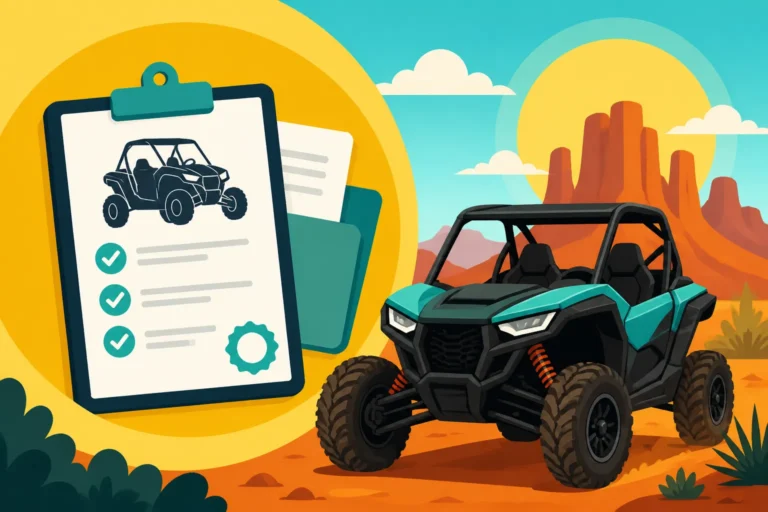
Beyond ownership, you'll need to provide proof of current liability insurance that meets New Mexico's minimum requirements for road use. The MVD will also verify that your OHV has passed any necessary inspections or certifications for the required safety equipment, although this might often be a self-certification process, so honesty is key. Make sure all your ducks are in a row with your [New Mexico OHV Registration Paperwork] before heading to the MVD. This isn't a quick in-and-out process; it requires diligent preparation to ensure all aspects of your machine's legality are covered.
Ensuring Your Machine Meets Equipment Standards
Once you’ve got your paperwork ready, the next big step is to physically inspect and, if necessary, upgrade your OHV to meet the state’s equipment standards for paved road use. This isn't just about ticking boxes; it's about making your machine safe and visible for operating alongside cars and trucks.
You’ll need functioning headlights that illuminate the road ahead for a specified distance, typically 150 feet, and taillights that are visible from 200 feet. A working brake light is also mandatory. A horn, which seems simple, is often overlooked but essential for signaling. At least one rearview mirror is required to give you a clear view of traffic approaching from behind. Your brakes must be in excellent working order, capable of bringing your machine to a safe stop. And don't forget the spark arrester, crucial for preventing wildfires, especially if you'll be transitioning from paved roads to public lands. While you won't get a specific "road-readiness" inspection before the MVD, you are attesting that your machine meets these standards. It’s your responsibility to ensure compliance to avoid fines or accidents.
Where to Place the Decals for Maximum Visibility
Proper decal placement isn't just a minor detail; it's a legal requirement designed to make your OHV's registration status clear and easily verifiable by law enforcement. New Mexico has specific rules for where both the yellow and green decals should be affixed, and these locations can vary slightly depending on your OHV type.
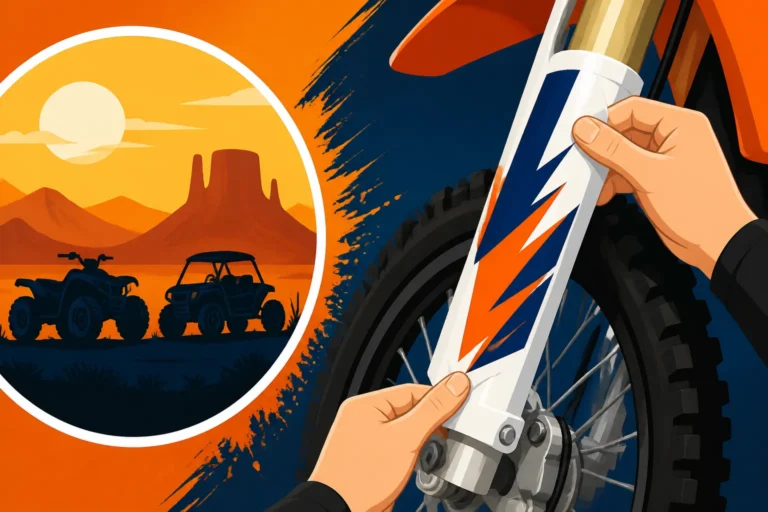
For ATVs and quads, both decals generally go on the left rear fender or quarter panel. This placement ensures they are visible from the rear and side, which is crucial when operating on roads. For side-by-sides (ROVs/UTVs), the decals typically go on the left rear quarter panel. Dirt bikes have a slightly different requirement, with the decals usually affixed to the left fork leg. The key is visibility and accessibility. The MVD wants law enforcement to be able to quickly see and verify your decals without having to hunt for them. If your decals are obscured by mud, equipment, or improper placement, you could still face questions or a citation. Always refer to [New Mexico OHV Decal Placement Rules] and specifically [Where the Decal Goes on an ATV's Left Rear] or [Where the Decal Goes on an ROV Quarter Panel] for precise guidance to avoid any issues.
Common Misconceptions and Mistakes to Avoid
Riding an OHV in New Mexico, especially when you start incorporating paved roads, comes with a specific set of rules that can be easily misunderstood. Many riders, with the best intentions, make common mistakes that can lead to frustrating and expensive consequences. Clearing up these misconceptions is vital for a smooth and legal riding experience.
The "Street Legal" Myth vs. "Paved Road Capable" Reality
This is perhaps the biggest misconception out there: that equipping your OHV with the green decal somehow makes it "street legal" in the same way a car or motorcycle is. This is absolutely not the case. Your OHV remains, at its core, an off-highway vehicle. The green decal, and the associated equipment, simply make it "paved road capable" or "paved road permitted" on specific, designated county and city roads under local ordinances.
It's a crucial distinction. A truly "street legal" vehicle adheres to a much broader set of federal and state safety and emissions standards, often including crash-worthiness, advanced lighting, and full-time road tires. OHVs do not meet these standards. Therefore, while you can ride on some paved roads with both decals, you can't treat your OHV as a general-purpose street vehicle. You're still subject to all OHV rules, even on pavement. This is why you'll often see resources emphasizing [Street Legal ATVs in New Mexico: The Short Answer] – which is usually a resounding "no" for true street legality.
State Highways Are Still Off-Limits
Another common and potentially dangerous mistake riders make is assuming that once they have both decals, they can use any paved road, including state highways. This is a firm "no" in New Mexico. Regardless of your decals, equipment, or local county ordinances, state highways, U.S. highways, and interstate freeways are explicitly off-limits for OHVs. There are no "opt-in" provisions for these major thoroughfares.
This restriction is in place due to the higher speeds, greater traffic volumes, and different design characteristics of state and federal highways, which make them unsafe for OHVs. Even if a local paved road leads directly to a state highway, you cannot legally continue on the state highway. You'll need to find an alternative route, trailer your machine, or turn around. Understanding [Why New Mexico State Highways Are Off Limits] is not just about avoiding a ticket; it's about your safety on roads not designed for OHV traffic. Ignoring this rule puts you and others at severe risk.
Renewing Both Decals
It might seem obvious, but it's another point where riders sometimes stumble: remembering that both decals require renewal. Your initial OHV registration, which includes the yellow decal, is typically valid for two years. If you've also opted for the green on-highway decal, that too is tied to your biennial registration period. It's not a one-time purchase that lasts indefinitely.
When your two-year registration period approaches its end, you'll need to go through the renewal process for your OHV registration at the MVD. This will cover both your basic off-highway registration and your paved road permission. The fee you pay will typically include the cost for renewing both. It’s easy to forget about the green decal if you don't use paved roads frequently, but letting it lapse means you lose your paved road privileges, even if your yellow decal is current. Be sure to mark your calendar for your [New Mexico's $50 Biennial Renewal] and generally know how to go about [Renewing a New Mexico OHV Registration] to keep both aspects of your machine's legal status current.
Where to Ride Once You Have Both Decals
So, you've done your homework, got your paperwork in order (perhaps using a trusted source like LawDepot for any needed forms), equipped your machine, and proudly displayed both your yellow and green decals. Now what? The exciting part! Having both decals opens up a new world of interconnected riding opportunities, allowing you to seamlessly transition between off-road trails and the specific paved roads that welcome OHVs.
Exploring Open County and City Roads
The primary benefit of having both decals is the ability to legally explore county and city roads that have been opened to OHV traffic. In New Mexico, this means certain local governments have passed ordinances allowing OHVs on their paved roads. This can vary wildly from one community to the next. Some counties, like parts of Sierra County, have opened nearly all their county roads, creating vast networks for riders. Other cities, like Red River, have very specific streets designated for OHV use, typically for connecting lodging to trailheads.
These open roads become vital links, allowing you to access trail systems without having to trailer your machine for every short hop. Imagine riding from your campsite directly into a small town for gas and groceries, or connecting two fantastic trail networks that are separated by a few miles of asphalt. It transforms the riding experience, making it more fluid and less reliant on trailers. Always remember to research the specific ordinances of the area you plan to visit. For example, [Red River's ROV-Only Streets] illustrates how some towns have highly detailed rules. You're no longer just confined to dirt, but can strategically use the paved roads as part of your larger adventure, significantly expanding your riding range and convenience.
Crossing State Highways Legally
Even though state highways are strictly off-limits for riding an OHV, having both decals can be essential for making legal crossings. New Mexico law provides for a specific exception that allows OHVs to cross a state highway, U.S. highway, or interstate freeway, but only under very specific conditions. This isn't about riding on the highway; it's about getting from one side to the other.
The rule requires you to stop completely before entering the highway, yield to all oncoming traffic, and cross the highway at approximately a 90-degree angle (perpendicularly) to the flow of traffic. The goal is to minimize your time on the highway itself and cross in the safest, most direct manner possible. While the yellow decal confirms your OHV status, having the green decal and the associated insurance makes you a more legally recognized, and therefore safer, participant in the fleeting moment you interact with highway traffic. Without the proper registration and insurance implied by both decals, even a simple crossing could lead to a citation for illegal operation. This nuance is critical for safely navigating the diverse landscape of New Mexico roads, and you can find more detail in [New Mexico's Perpendicular Crossing Rule].
The Best of Both Worlds: Accessing Trails via Pavement
Ultimately, the goal of having both decals is to enjoy the best of both the paved and unpaved worlds. It creates a seamless transition that enhances the entire riding experience. You can stage at a hotel, ride down a designated city street, hop onto an open county road, and then peel off onto a BLM or Forest Service trail, all without having to load your machine onto a trailer.
This flexibility is a game-changer for many riders, especially those exploring diverse areas of New Mexico. It allows for longer, more adventurous trips that incorporate different types of terrain. Think about connecting a high-desert trail to a mountain pass, using a short stretch of paved road as a necessary link. This is particularly useful for journeys where trails might be discontinuous or where you need to access amenities in a town situated along an open road. Having both decals means your OHV is equipped for the full spectrum of adventure New Mexico has to offer, truly enabling you to embrace the freedom of the trail, even when a bit of asphalt connects the dots. This is why many riders strive to achieve the dual decal status, as it dramatically expands where and how you can ride, making planning trips like [Riding From a Campsite to a Trailhead] much easier.
| Feature | Yellow Off-Highway Decal (Primary) | Green On-Highway Decal (Supplemental) |
|---|---|---|
| Purpose | Legalizes off-highway use | Permits limited paved road use |
| Requires | Basic MVD OHV Registration | Yellow Decal, Title, Insurance, OHV equipment |
| Where to Ride | Dirt roads, trails, unpaved public land | Designated paved county/city roads |
| Paved Road Access | No | Yes, conditional |
| Insurance | Not always required for off-road use | Mandatory liability for paved use |
| Equipment | Spark arrester often required | Headlights, taillights, horn, mirror, brakes, spark arrester, etc. |
| Placement | Left rear fender/quarter panel | Left rear fender/quarter panel (alongside yellow) |
| Validity | Two years, biennial renewal | Two years, biennial renewal (with yellow) |
Disclaimer
This article is for general informational purposes only and does not constitute professional advice. Laws, prices and regulations vary by location and change over time. Consult a qualified professional for guidance on your specific situation.