New Mexico’s Yellow Off-Highway Decal
Riding the stunning trails and vast open lands of New Mexico is an experience like no other, but if you’re new to the Land of Enchantment – or even if you’ve been here a while – understanding the ins and outs of off-highway vehicle (OHV) registration can feel like navigating a maze. One of the most common points of confusion revolves around the distinctive yellow decal, which is absolutely critical for legal riding. This comprehensive guide is here to cut through the jargon, explain exactly what the yellow off-highway decal means for your adventures, and help you ensure your machine is always street-legal for the dirt, not the asphalt.
Understanding the Yellow Off-Highway Decal in New Mexico
When you're out exploring New Mexico's incredible landscapes, from the high desert mesas to the national forest trails, you'll undoubtedly see OHVs sporting a bright yellow decal. This isn't just a random sticker; it's a vital piece of identification that tells everyone, including law enforcement, that your off-highway vehicle is properly registered for its intended use. Understanding its purpose is the first step toward responsible and legal riding.
What Exactly Is the Yellow Decal For?
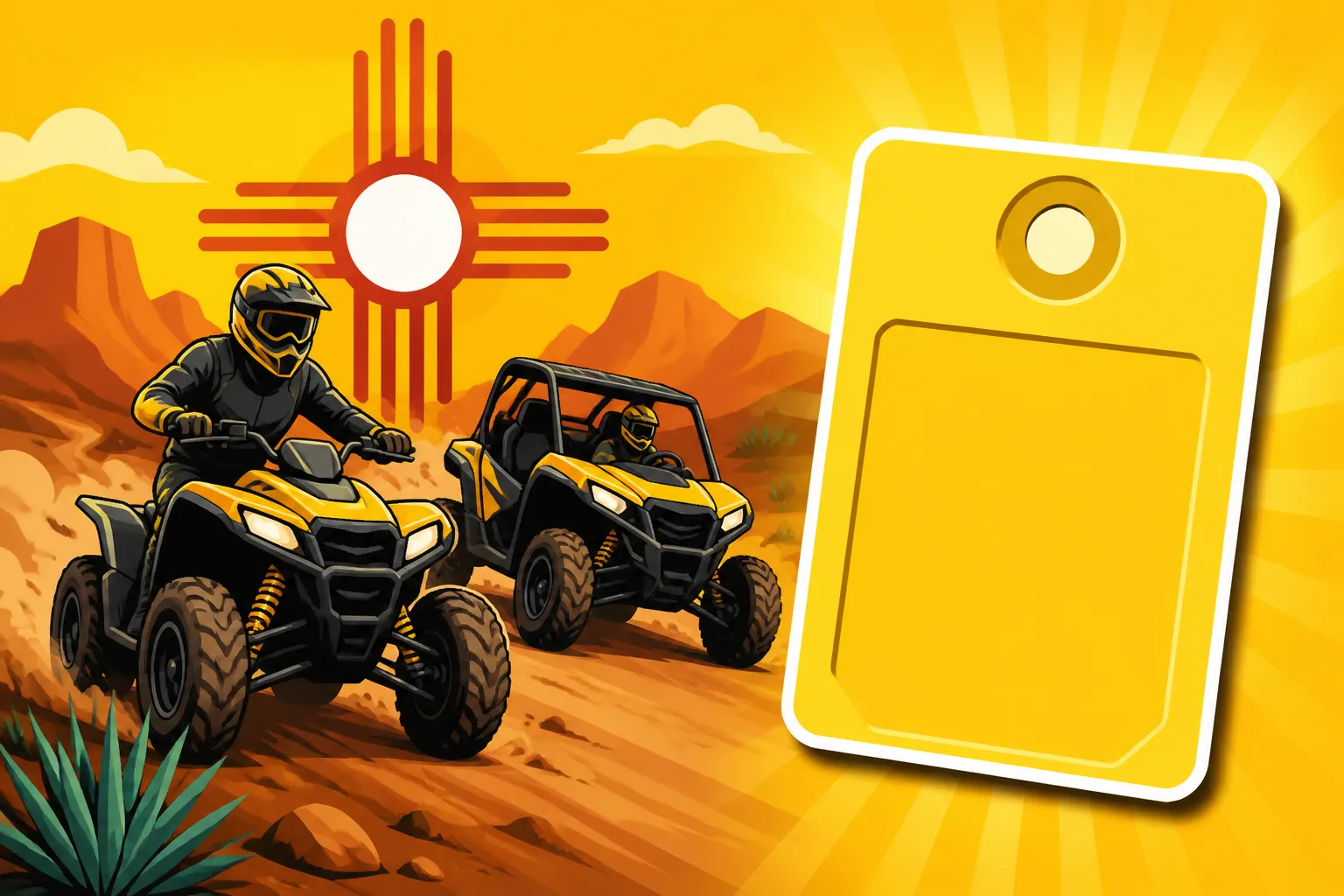
This is where the rubber meets the trail, literally. When you see a bright yellow decal stuck to the back of an ATV or side-by-side out here in New Mexico's wide-open spaces, it's not just a splash of color. This vibrant sticker is your golden ticket for legal off-highway vehicle (OHV) riding on public lands. It signifies that the machine has been properly registered with the New Mexico Motor Vehicle Division (MVD) for exclusive off-highway use. Think of it as a stamp of approval from the state, letting everyone know you're playing by the rules when you're exploring our incredible desert trails, mountain paths, and sand dunes.
The choice of yellow isn't just arbitrary; it's a clear visual signal to distinguish it from its green counterpart, which allows for some paved road access under specific conditions. For those of us who live and breathe the off-road lifestyle, this yellow decal is a symbol of our commitment to responsible riding and access to the vast network of trails that make New Mexico such a fantastic place to ride. Without it, you're not just risking a fine; you're also potentially jeopardizing your access to the very lands we all love to explore. It's the state's way of ensuring that machines operating off-pavement are accounted for and that their fees contribute to the maintenance of the very trails we all enjoy.
This decal represents more than just legal compliance; it's a part of the funding mechanism for OHV-related programs and infrastructure in New Mexico. The fees collected through registration help maintain trails, provide safety education, and even support enforcement efforts to protect our natural resources. So, while it might seem like a small sticker, it carries a lot of weight in the world of New Mexico OHV recreation.
Who Needs to Display This Yellow Sticker?
If you're a New Mexico resident and you plan on taking your ATV, UTV, dirt bike, or any other OHV onto public land – that means state parks, national forests, BLM lands, or state trust lands – you absolutely need a yellow decal. It doesn't matter if your machine is brand new or a seasoned veteran of the trails; the requirement applies across the board. Even smaller machines often ridden by younger enthusiasts, sometimes called [New Mexico Registration for a Youth Machine], need to be properly registered and display this decal. This ensures that all off-road vehicles operating on shared public resources contribute to the system and abide by safety regulations.
Now, if you're visiting us from out of state, the rules can get a little nuanced. New Mexico has reciprocity agreements with many other states, meaning if your OHV is legally registered in your home state, you might be good to go. However, if your home state doesn't have an OHV registration program, or if it's one of the states without reciprocity, you'll likely need to purchase a [New Mexico's Nonresident OHV Permit] to legally ride on our public lands. It's always best to check the latest regulations before you head out, especially if you're new to the Land of Enchantment, to avoid any unexpected issues.
The principle here is simple: if you're riding on public land, your machine needs to be identifiable and accounted for through some form of state-recognized registration. This universal requirement helps manage vehicle impact on trails, track ownership in case of theft, and ensure that all users are contributing to the preservation of our natural spaces. It's about shared responsibility for shared resources.
Yellow Versus Green: Why the Color Matters So Much
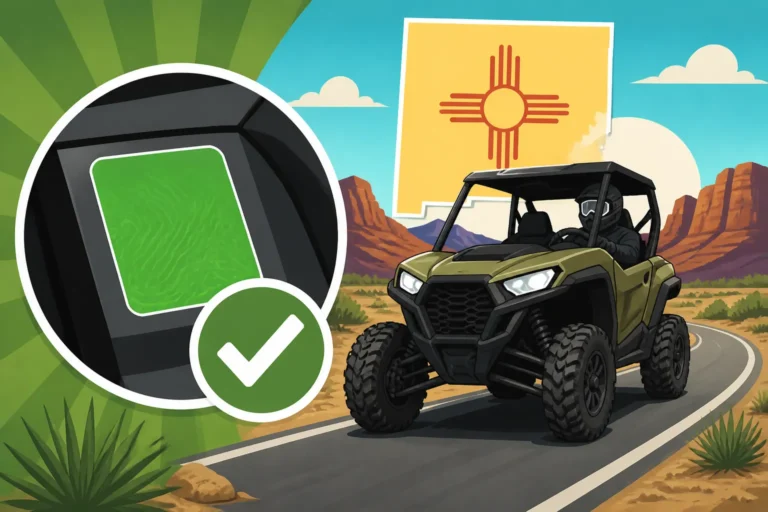
This is where a lot of confusion crops up, and it's a really important distinction for riders to grasp. The yellow decal, as we've established, is strictly for off-highway use. It means your machine is registered to tackle dirt, sand, mud, and rock – but not paved roads. The green decal, on the other hand, is the "on-and-off highway" decal. It allows your OHV to be operated on both designated off-highway trails and certain paved public roads, provided you meet additional requirements like insurance, a driver's license, and proper safety equipment. You can learn more about its specific rules in our guide to [New Mexico's Green On and Off-Highway Decal].
The reason for these distinct colors and rules boils down to safety and public infrastructure. Paved roads are designed for traditional street-legal vehicles, and OHVs have different handling characteristics, tire types, and speed capabilities. New Mexico's MVD uses these decals to clearly differentiate between machines authorized for different types of terrain, helping to keep everyone safe and clarify enforcement. Trying to ride a yellow-decaled machine on a paved road, outside of very specific crossing allowances, can lead to immediate legal trouble and, more importantly, put you and others at risk. [Why a Yellow Decal Keeps You Off Pavement] delves deeper into these restrictions.
This distinction is enforced rigorously because the physics of riding an OHV on a paved surface are vastly different from riding on dirt. Tires designed for off-road traction don't grip asphalt as effectively, braking distances can increase dramatically, and the narrower stance of many OHVs makes them more vulnerable in traffic. The color coding simplifies enforcement and helps riders quickly understand the limitations of their registration, contributing to safer roads for everyone.
The Journey to Your Yellow Decal: Registration Explained
Getting your yellow off-highway decal is a pretty straightforward process, but it does require a trip to the right place with the right documents. Knowing what to expect beforehand can save you a lot of time and frustration, getting you back on the trails sooner.
Where to Go for Your Off-Highway Registration
For most New Mexico residents, your first stop will be the New Mexico Motor Vehicle Division (MVD). They're the official agency responsible for handling all OHV registrations, including issuing those crucial yellow decals. You can visit one of their field offices across the state, and many people find it helpful to make an appointment online to cut down on wait times. It’s always wise to check their website for current operating hours and required documentation before you head out. For a full breakdown of the process and what to expect, check out our article on [New Mexico OHV Registration at MVD].
While the MVD is the primary source, some OHV dealerships in New Mexico offer the convenience of handling the registration paperwork for you, especially if you're purchasing a new machine from them. They often have systems in place to submit your application and fees directly, saving you an extra trip. This can be a huge time-saver and is one of the perks of buying from a reputable local dealer. However, not all dealerships offer this service, so it's always a good idea to confirm with them beforehand. If you're buying used, or from a private seller, you'll almost certainly be heading to the MVD yourself. We've got more details on [Dealers That Handle MVD Registration for You] if you're wondering about that option.
Beyond the MVD and select dealerships, be cautious of any third-party services claiming to expedite the process without involving the official state channels. While some legitimate private businesses may assist with paperwork, the ultimate registration and decal issuance must come directly from the MVD or an authorized partner. Sticking to these known entities ensures your registration is valid and recognized by the state.
Paperwork You'll Need to Bring to the MVD
Preparation is key to a smooth registration experience. Nobody wants to show up at the MVD only to realize they're missing a vital piece of paper and have to make a second trip! The most important document you'll need is proof of ownership for your OHV. This usually means the vehicle's title, if it has one. If you're buying a used machine from a private party, a properly completed [A New Mexico Bill of Sale for an ATV] will be critical. Tools like LawDepot can be incredibly helpful for drafting a clear and legally sound bill of sale, ensuring all the necessary details are included for a seamless transfer of ownership. Make sure it clearly states the buyer, seller, purchase price, and a full description of the OHV, including the all-important VIN.
You'll also need proof of your identity, typically a valid New Mexico driver's license or state ID card. The MVD will require the Vehicle Identification Number (VIN) of your OHV to ensure it's accurately recorded in their system; this is a non-negotiable step, as the VIN is how your machine is uniquely identified and tracked. [New Mexico OHV VIN Requirements] explains why this number is so vital. It's always a good idea to locate and record your VIN before you head to the MVD, just in case, and even have a clear photo of it on your phone. Finally, be prepared to fill out an MVD application form for OHV registration, which an MVD agent can provide, or sometimes you can even download it online to fill out in advance, saving time at the counter.
Having all your ducks in a row with your documentation not only speeds up the process but also demonstrates your due diligence as a responsible OHV owner. This includes checking that any bill of sale, perhaps generated through a service like LawDepot, is thoroughly filled out with all parties' signatures and dates. Missing details on a critical ownership document can lead to delays and additional trips back to the MVD.
Understanding the Costs and Renewal Process
Let's talk dollars and sense. The cost of registering your OHV for that yellow decal in New Mexico is generally quite reasonable, especially when you consider it grants you two years of legal riding access to some of the most stunning landscapes in the country. The initial registration fee is usually a bit more than a renewal, covering the administrative costs of setting up your new registration in the system. While prices can change, the goal is always to keep OHV access affordable for everyone. For a detailed breakdown of current figures, our guide on [New Mexico OHV Registration Cost] can provide the latest information.
Once you've got your yellow decal, it's valid for two years. That's right, New Mexico operates on a biennial renewal cycle, meaning your registration is good for 24 months from the date of issuance. This long validity period is a definite perk, as it means less frequent paperwork and fees. [How Long a New Mexico OHV Registration Lasts] explores this in more detail. When it comes time to renew, the process is generally simpler, and the fee for [New Mexico's $50 Biennial Renewal] is a standard cost that helps support OHV programs, trail maintenance, and safety initiatives across the state. You'll typically receive a renewal notice from the MVD before your current registration expires, giving you plenty of time to get it sorted and keep your machine legal on the trails.
It's important to budget for this biennial renewal just as you would for other vehicle expenses. The funds collected through these fees are directly reinvested into the OHV community, improving trails, staging areas, and educational programs. So, while it's a mandatory expense, it's also a direct contribution to the quality and longevity of our beloved New Mexico riding areas.
Where Your Yellow Decal Grants You Access (and Where It Doesn't)
Having a shiny yellow decal on your OHV is a ticket to adventure, but it's crucial to understand precisely where that ticket is valid. New Mexico offers a diverse range of riding opportunities, but not all lands are open to OHVs, and the yellow decal carries specific limitations.
Exploring New Mexico's Public Lands
With that yellow decal proudly displayed, a whole world of adventure opens up to you here in New Mexico. This decal is your official permission slip to ride on the vast majority of our public lands, which include incredible stretches of National Forest, Bureau of Land Management (BLM) property, and certain State Trust Lands. In our National Forests, you'll often find miles of scenic forest roads and designated trails, perfect for exploring mountainous terrain and enjoying the cooler air at higher elevations. Just remember to stick to marked routes; responsible riding is about respecting the land and existing trail systems. For more on this, check out [New Mexico Rules for Riding a Forest Road].
BLM land, on the other hand, offers expansive desert and high-desert landscapes, from challenging rock crawls to fast, open washes. While it might seem like wide-open country, most BLM areas still require you to stay on existing roads and trails, especially in more sensitive environments. This is critical for preventing erosion and protecting fragile ecosystems. Our guide to [New Mexico Rules for Riding BLM Land] provides essential details on navigating these lands responsibly. State Trust Land also offers riding opportunities, but it comes with a specific requirement: you'll need to purchase a separate Recreational Access Permit in addition to your OHV registration. This permit helps fund the management of these lands, and you can learn more in [New Mexico Rules for Riding State Trust Land].
Finally, New Mexico is home to several dedicated OHV areas like Red Sands and Glade Run, which are purpose-built for off-roading and are perfect places to utilize your yellow-decaled machine. These areas are specifically managed for OHV recreation and often provide maps and designated routes. You can explore these and other fantastic spots in our comprehensive guide [Where to Ride an ATV in New Mexico]. Always consult land manager maps and local regulations before heading out, as closures or restrictions can occur due to weather, fire danger, or wildlife management.
Navigating Private Property and Ranch Roads
It's important to remember that your yellow decal applies specifically to public lands. When it comes to private property, including ranch roads that may crisscross public land, the rules are different. Absolutely never assume you have permission to ride on private land just because you have an OHV decal. Permission is paramount, and it should ideally be obtained in writing. Many large ranches and private landowners are very protective of their property, and trespassing can lead to serious legal consequences, not to mention a potential loss of access for all riders if such incidents become widespread.
If you are fortunate enough to gain permission to ride on private ranch roads, always be respectful. This means staying on designated paths, driving slowly when near livestock or residences, and leaving gates as you found them. If a gate is open, leave it open; if it's closed, close it behind you. This small act of courtesy, explored further in [New Mexico Rules for Opening a Gate], goes a long way in maintaining good relationships with landowners and preserving future access. Remember, some ranch roads might look like public thoroughfares but are, in fact, privately owned and maintained, and riding without permission is a serious offense.
A written permission agreement, even a simple one, can save a lot of headaches. Just like how LawDepot can help you draft a bill of sale, you could use similar structured documents for outlining permission to ride on private land, clearly stating the dates, areas, and any specific conditions. This provides clarity for both the rider and the landowner.
The Big "No-Go": Paved Roads and Highways
Here's the critical limitation of the yellow off-highway decal: it does not grant you permission to ride on paved public roads, streets, or highways in New Mexico. This is a common point of confusion and a frequent source of citations for riders who aren't aware of the distinction. New Mexico's state highways, in particular, are strictly off-limits to OHVs, no matter what decal you have, due to safety concerns and state law. We cover this extensively in [Why New Mexico State Highways Are Off Limits]. It's a hard-and-fast rule designed to protect both OHV riders and other motorists.
There are, however, very specific and limited exceptions for crossing paved roads. New Mexico law generally allows you to cross a paved public road at a right angle (perpendicularly) if you are moving from one section of off-highway trail to another. You must come to a complete stop, yield to all traffic, and cross as directly and safely as possible. This is not an invitation to ride along the road, but merely to traverse it. Our article [New Mexico's Perpendicular Crossing Rule] provides more guidance on how to do this legally and safely. Unless a specific county or municipality has passed an ordinance explicitly opening certain paved roads to OHVs (which would typically require a green decal and other street-legal equipment anyway), your yellow decal keeps you firmly on the dirt.
Understanding and respecting this "no-go" zone for paved roads is perhaps the single most important aspect of responsible yellow-decal riding. Disregarding it not only invites legal trouble but also contributes to negative perceptions of the OHV community. Stick to the trails where your yellow decal truly belongs, and everyone benefits.
Decal Practicalities: Placement, Replacements, and Penalties
Once you have your yellow off-highway decal, the journey isn't quite over. There are practical considerations around its placement, what to do if it gets damaged, and the consequences of neglecting these rules. These details might seem minor, but they are essential for uninterrupted enjoyment of New Mexico's OHV opportunities.
Where to Affix Your Yellow Decal for Optimal Visibility
Correct placement of your yellow off-highway decal isn't just a suggestion; it's a legal requirement designed to ensure your machine's registration is clearly visible to law enforcement and land managers. The specific location can vary slightly depending on the type of OHV you own. For most ATVs, the decal should be firmly affixed to the left rear of the machine. This spot is generally easy to see from behind and to the side, allowing officials to quickly verify your compliance without having to ask you to stop your ride. We detail this in [Where a Quad's Decal Goes].
If you're riding a side-by-side (ROV/UTV), the decal is typically placed on the left rear quarter panel. This ensures it's still visible even if you have gear, passengers, or a cooler loaded in the bed. For dirt bikes, the placement is a bit different: it should go on the left fork leg. The key across all machine types is that the decal must be securely attached, fully visible, and not obstructed by anything like mud, accessories, or other stickers. An unreadable or improperly placed decal could still lead to questions from a ranger or deputy, so it's worth taking the time to get it right. Read more about specific placements in [Where a Side-by-Side's Decal Goes] and [Where a Dirt Bike's Decal Goes].
The reasoning behind these specific placement rules is straightforward: consistency and ease of identification. When every rider adheres to these guidelines, it makes the job of enforcement simpler and faster, allowing officers to focus on more serious issues. It also reduces the likelihood of you being stopped unnecessarily, ensuring your ride is as smooth as possible.
When Your Decal Needs a Refresh or Replacement
Life in the New Mexico sun and elements can be tough on anything, and your OHV decal is no exception. It's not uncommon for those vibrant yellow stickers to fade, peel, or become otherwise unreadable over time, especially with constant exposure to our intense desert sun and the rigors of off-road riding. [When Desert Sun Peels a Decal Off] is a very real scenario for many riders! If your decal becomes damaged, torn, or so faded that the numbers are illegible, it's considered invalid. In such cases, you'll need to obtain a replacement.
Getting a replacement decal is usually a straightforward process through the MVD. You'll typically need to fill out a form, possibly provide proof of your existing registration, and pay a small replacement fee. It's a minor inconvenience compared to the potential headaches of riding with an invalid decal. Our guide on [Replacing a Lost New Mexico Decal] provides step-by-step instructions and advice on how to navigate the process smoothly. The [New Mexico OHV Decal Replacement Cost] is generally quite low, making it an easy fix to stay compliant and avoid any issues while you're out enjoying the trails. Don't put it off; an unreadable decal is almost as bad as no decal at all in the eyes of the law.
Proactive replacement can save you from a potential fine or a disrupted ride. Make it a habit to inspect your decal periodically, especially before a long trip or the start of a new riding season. If you notice it's starting to look a little worse for wear, getting a replacement early can prevent issues down the line.
The Consequences of an Unregistered OHV
Riding an OHV on public land in New Mexico without a valid yellow decal (or a valid out-of-state registration with reciprocity) is not just frowned upon; it's against the law. The penalties for non-compliance can range from monetary fines to more serious consequences, depending on the severity and frequency of the offense. You could be facing significant [New Mexico Fines for an Unregistered OHV], which can quickly put a damper on your weekend ride and leave a dent in your wallet. Law enforcement agencies, including local deputies, state police, and federal land managers, regularly patrol popular riding areas and will check for proper registration.
Beyond the financial penalties, repeated violations could potentially lead to your machine being impounded, which is a hassle and an expense nobody wants. Imagine having your prized OHV towed away and incurring impoundment fees on top of the fines – it's a situation best avoided. The registration system isn't just about collecting fees; it's about promoting responsible recreation, funding trail maintenance, and ensuring that all riders are accounted for. By properly registering your OHV and displaying that bright yellow decal, you're not only protecting yourself from fines but also contributing to the upkeep and accessibility of the very trails we all cherish. It's a small but vital part of being a good steward of New Mexico's incredible off-road resources, and ultimately, it keeps our riding areas open and enjoyable for everyone.
Table: Yellow vs. Green OHV Decal in New Mexico
| Feature | Yellow Off-Highway Decal | Green On-and-Off Highway Decal |
|---|---|---|
| Primary Use | Exclusive off-highway trails, unpaved roads, public lands. | Off-highway trails AND designated paved public roads. |
| Paved Road Access | No general access. Limited to perpendicular crossings. | Yes, on designated roads, with additional requirements. |
| Required Equipment | Basic OHV equipment (lights, muffler, spark arrester). | All Yellow Decal requirements PLUS street-legal equipment (mirrors, horn, turn signals, etc.), valid driver's license, liability insurance. |
| Issuing Agency | New Mexico Motor Vehicle Division (MVD) | New Mexico Motor Vehicle Division (MVD) |
| Cost | Part of standard biennial OHV registration fee. | Part of standard biennial OHV registration fee (plus potential additional fees for specific plate/permit if applicable). |
| Duration | Two years (biennial renewal). | Two years (biennial renewal). |
| Legal Basis | New Mexico Off-Highway Motor Vehicle Act | New Mexico Off-Highway Motor Vehicle Act & Paved Road Opt-In Laws |
Disclaimer
This article is for general informational purposes only and does not constitute professional advice. Laws, prices and regulations vary by location and change over time. Consult a qualified professional for guidance on your specific situation.