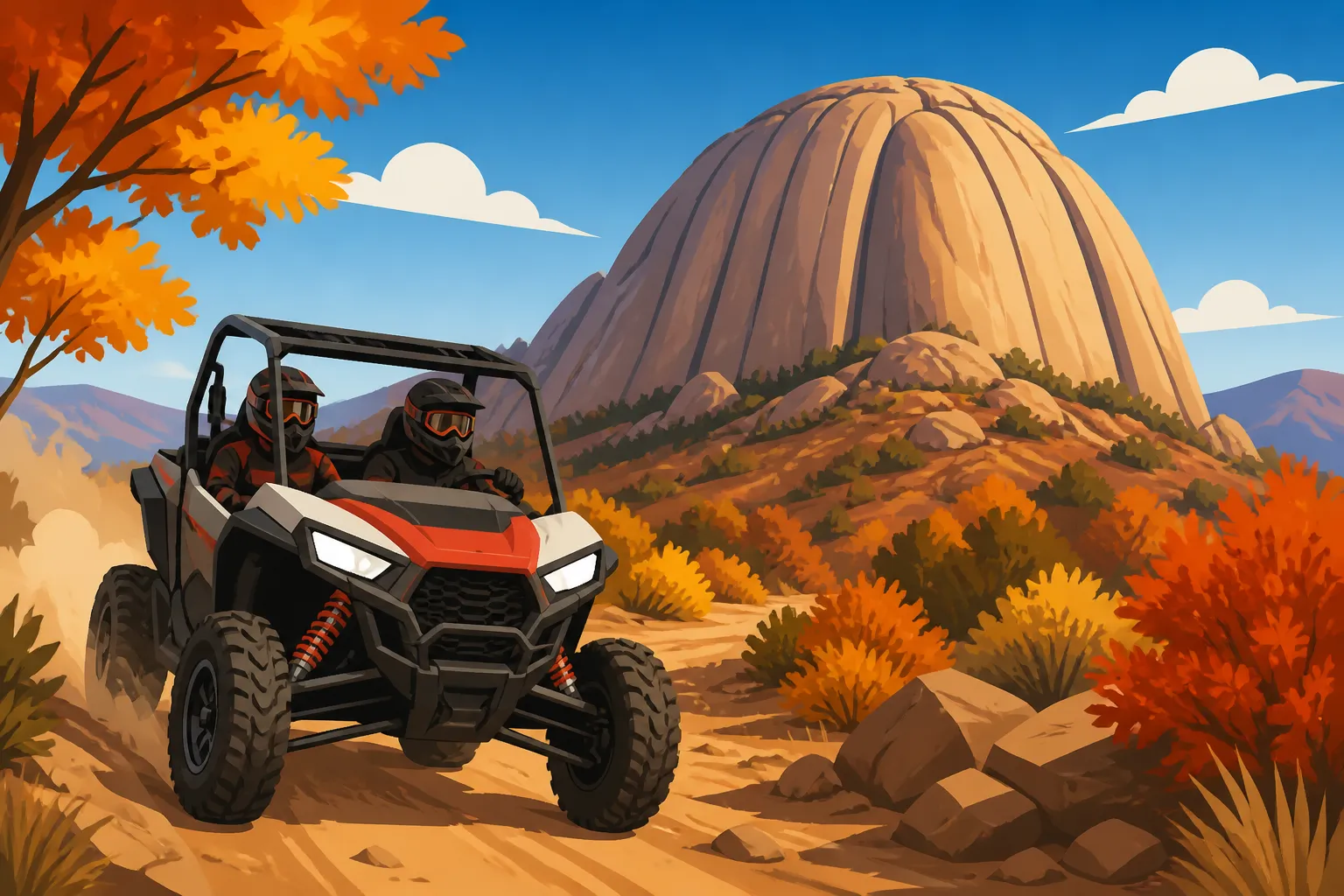
St. Peter’s Dome in Autumn
Autumn can make St. Peter’s Dome look like an easy escape from Santa Fe, but changing weather, dusty roads, and confusing route boundaries can complicate an ATV or UTV trip. This guide explains how to plan a responsible ride in the Caja del Rio area, what to expect in fall, and how to check that your route is open and appropriate for your machine.
Planning an Autumn Ride to St. Peter’s Dome
Understand the terrain and the setting
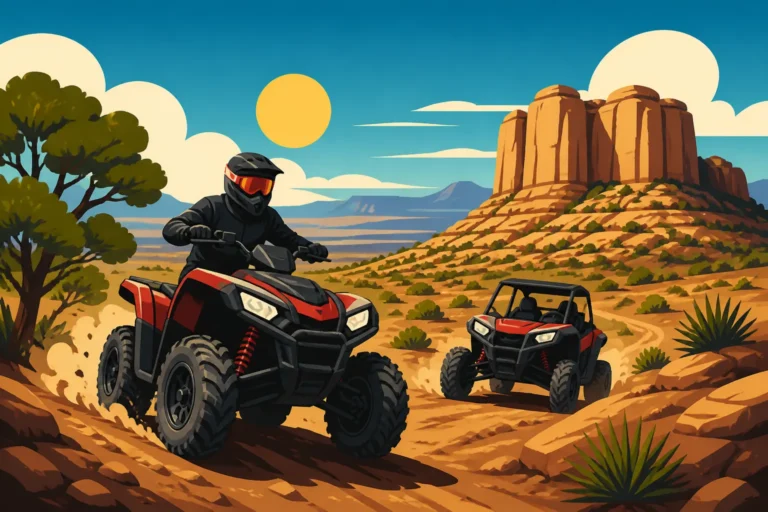
St. Peter’s Dome sits in the Caja del Rio area west of Santa Fe, where open volcanic country, piñon-juniper woodland, and broad views give the landscape a very different feel from the high forests farther north. The area can be rewarding for a fall outing: cooler temperatures often make a day outside more comfortable than a midsummer ride, and the changing light gives the open terrain a distinctive look.
It is still rugged country, not a managed off-road park with one simple loop and services at every turn. Roads and routes may vary from broad and relatively smooth to rocky, rutted, or sandy. Conditions can change after rain, and a route that looks straightforward on a map may feel different in a side-by-side or on an ATV. Ride at a pace that leaves room to react to loose surfaces, blind corners, and other road users.
St. Peter’s Dome is also part of a much larger landscape. A ride toward the Rio Grande overlooks can involve different routes and terrain than a short outing near a staging area. For a broader orientation to the area, see [Riding Caja del Rio to the Rio Grande Overlook] and [New Mexico OHV Areas Near Santa Fe].
Check that your planned route is open
The most important planning step is confirming where motorized travel is allowed. On National Forest land, motor vehicles generally need to stay on routes designated for that use. A visible track on the ground is not, by itself, proof that it is open to ATVs or UTVs. Routes can have restrictions based on vehicle type, seasonal conditions, resource protection, or temporary closures.
Before leaving, check the relevant Forest Service travel map and look for route-specific information. Match the map to posted signs and route markers on the ground; if a sign says a route is closed or restricted, follow it even if an app shows the road as passable. [Travel Management Maps on Federal Ground] and [Matching a Route Number on a Forest Sign] explain why those checks matter.
Digital navigation can help with preparation, but it should not replace official route information. Riders may use onX Offroad to review route options and organize a trip, then compare the planned route with the applicable travel map and signs. Download maps for offline use before you lose reception, and carry a backup way to navigate. For more preparation ideas, see [New Mexico Trail Maps Worth Carrying].
Choose a plan that fits your group
A sensible autumn plan is one that works even if the ride takes longer than expected or the weather changes. Decide on a turnaround time, tell someone where you intend to ride, and agree on a regrouping point before the group spreads out. If a rider is new to the terrain, start with a conservative route and leave the more demanding sections for another day.
A compact ATV and a wide side-by-side do not necessarily fit the same routes. Check any width, vehicle-type, or route restrictions before setting out, and don’t assume that a track suitable for a motorcycle or smaller quad will be comfortable for a larger machine. If your route includes narrow turns, rough sections, or limited places to pass, a smaller group and a slower pace can make the day easier for everyone.
| Planning question | What to check before you go |
|---|---|
| Is motorized use allowed? | Confirm the route on the applicable travel map and follow posted signs |
| Does the route suit your machine? | Check vehicle-type restrictions, width, surface, and tight turns |
| Could the weather affect access? | Review the forecast and consider how rain, wind, or early snow may change the road |
| Will you have navigation without reception? | Save offline maps and carry a backup |
| Does everyone know the plan? | Set a route, turnaround time, regrouping point, and check-in plan |
What Autumn Conditions Can Mean on the Trail
Expect bigger temperature swings
Fall days around Santa Fe can start cool and warm up in the sun, then turn chilly when the light fades or the wind picks up. The open terrain offers less shelter than a forested trail, so the temperature you feel while stopped may be very different from what you felt while riding. A comfortable departure at midday can become an unpleasantly cold return if the group runs late.
Dress in layers that are easy to adjust, and bring more warmth than you think you’ll need. Gloves, eye protection, and a wind-resistant outer layer can make a noticeable difference on an exposed ride. Pack drinking water even when the air feels cool; dry conditions and time outdoors can still leave riders dehydrated.
Autumn weather can also shift quickly. Check the forecast for the area, not just the weather in town, and make a conservative decision if strong winds, rain, or an early-season storm is expected. [New Mexico Riding Seasons by Elevation] offers useful context for how conditions can vary across the state.
Treat rain, dust, and visibility as changing hazards
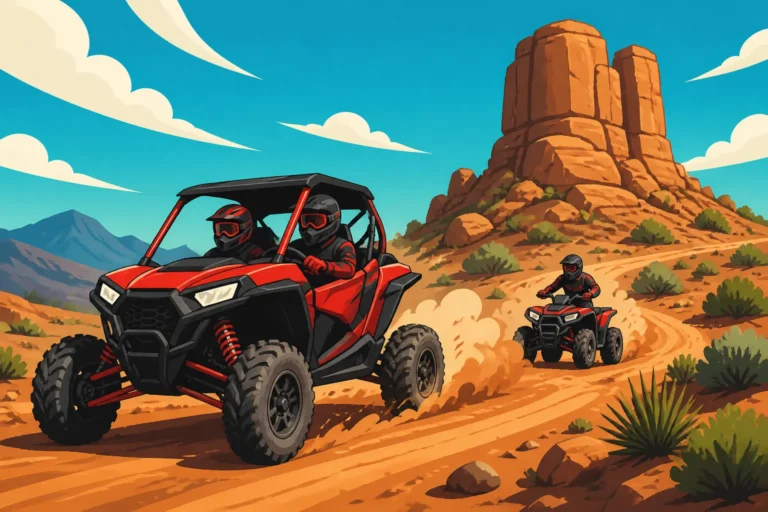
A dry road may be dusty enough to reduce visibility, especially when several machines travel close together. Leave extra space between vehicles so the person behind can see the road and avoid riding directly in another machine’s dust cloud. If visibility becomes poor, slow down, increase the gap, and regroup somewhere safe rather than continuing at the same pace.
Rain can change the character of a route. Loose soil may become slick, ruts may collect water, and a dry wash or low crossing can become hazardous during or after a storm. Don’t enter flowing water or ride into a wash when rainfall is nearby, even if the sky above you looks clearer. Desert drainage can respond to weather beyond the spot where you are standing.
The route surface can be rougher than it first appears, too. Watch for embedded rock, erosion, soft sand, and sharp edges that can damage tires or catch a wheel. Keep a repair kit suited to your machine and know how to use it. For a wider discussion of seasonal access issues, see [New Mexico Trail Closures to Check First].
Keep fall wildlife, hunting, and fire conditions in mind
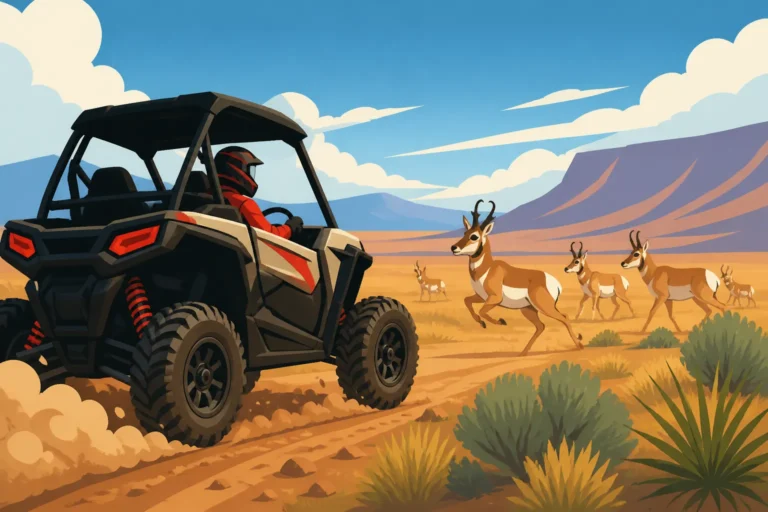
Autumn is a busy season across many New Mexico public lands. Other visitors may be hiking, hunting, camping, or driving on the same roads, and visibility can be limited by terrain or dust. Slow down near trailheads, intersections, campsites, and places where people or animals could emerge from brush. Never assume a quiet road is empty just because you have not seen another vehicle recently.
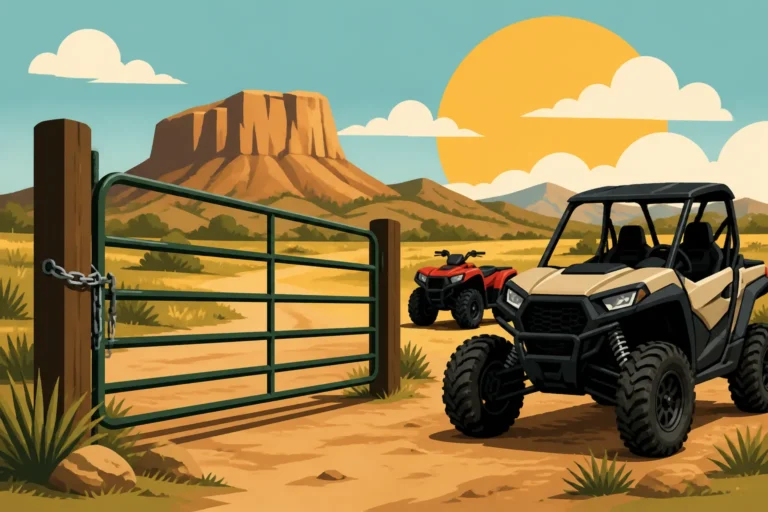
If you encounter livestock, give the animals plenty of space and avoid chasing or splitting a group. Close gates behind you if you opened them, and do not treat a gate as an invitation to continue beyond it. Respect private property boundaries and any land-use restrictions along the route. [New Mexico Trail Etiquette on Shared Ground] and [Riding Near a Wilderness Boundary] are helpful reminders for riding responsibly in a mixed-use landscape.
Fire rules can change with conditions. Before your trip, check for restrictions that affect the area, and avoid sparks or activities that could start a fire. A small problem can become serious quickly in dry vegetation, particularly when wind is present. If an official closure affects your destination, choose another legal route or postpone the ride rather than trying to find a way around it.
Preparing Your ATV or UTV and Your Group
Do a pre-ride check before leaving home
A little maintenance before the trip is less frustrating than discovering a problem far from the staging area. Check tire condition and pressure, brakes, throttle, steering, lights, and fuel. Look for loose fasteners or damage, and make sure the machine is appropriate for the routes you plan to ride. Carry the manufacturer-recommended supplies and any tools needed for basic repairs.
Pack for the possibility of a delay. Useful items can include water, food, a first-aid kit, warm layers, a tire repair kit, a flashlight, and a charged phone. A satellite messenger may be worth considering if your group expects to ride beyond reliable cell coverage. Keep essentials secured so they won’t shift or fall off over rough ground.
For navigation, save the route and any important map layers before you leave service. onX Offroad can be one tool for viewing and organizing possible routes, but confirm access against official Forest Service information and obey field signs. If your group splits up, agree on a communication plan and a place to stop if someone loses sight of the others.
Confirm permits, registration, and rider readiness
Before riding, make sure the machine and riders meet the requirements that apply to the trip. New Mexico registration and nonresident permit requirements can differ depending on where the machine is registered and where it will be operated. Start with [New Mexico OHV Permits Explained] and [New Mexico Rules for Riding a National Forest], then check the specific requirements for your situation.
For younger riders, don’t rely on assumptions about age, supervision, or safety training. Confirm the rules ahead of time and choose terrain that matches the rider’s experience and the machine’s size. A child who is comfortable in a flat practice area may not be ready for rocky, narrow, or exposed routes. Keep the group together and make sure every rider knows how to stop, signal, and respond if separated.
It also helps to agree on basic group etiquette before the engines start. Discuss hand signals, passing, spacing, and what to do if a machine has a problem. If one rider needs to stop, the group should know whether everyone will pull over or whether a designated person will stay with them while the others find a safe place to wait.
Leave a conservative margin in your schedule
It is easy to underestimate the time a ride will take when you’re stopping for views, navigating unfamiliar junctions, or helping someone through a rough section. Build in time for breaks and a slower return, and plan to be off the route well before dark. If the day is running behind, shorten the ride rather than rushing.
Avoid making the turnaround point depend on reaching a particular landmark. A route may be rougher than expected, or a closure sign may require you to change plans. The best decision can be turning around while everyone is still comfortable, not pressing on because the group has already traveled a certain distance.
If you are visiting the area for the first time, consider making your first outing a reconnaissance ride. You can learn where the route forks, how the surface feels, and where reception drops without committing the whole day to a long circuit. That approach is especially useful when daylight is limited or the fall forecast is uncertain.
Riding Responsibly Around St. Peter’s Dome
Stay on open routes and respect closures
Keep your machine on routes open to your type of vehicle. Riding around a barrier, driving onto a closed track, or creating a new shortcut can damage soil and vegetation and may put you in violation of land-management rules. If a route is blocked or marked closed, turn around and use a confirmed legal alternative.
Pay attention at every junction. Maps and signs may not look identical, and a route can change status along its length. If you cannot establish that a road is open, don’t guess. Stop in a safe place, check your information, and choose a route you can verify. [New Mexico Rules for Riding a Designated Route] provides more background on this principle.
Stay alert for boundaries with different rules, including private land and areas where motorized travel is not allowed. An open road does not give you permission to ride cross-country alongside it. The route itself is the route; the surrounding ground may have separate restrictions.
Reduce your impact on other visitors and the landscape
Ride at a controlled speed, especially where sightlines are short or the road is shared. Slow down when passing hikers, horseback riders, cyclists, or other vehicles, and give people enough room to feel safe. Avoid spinning tires, cutting corners, or driving through vegetation to get around another machine.
Pack out everything you bring in, including food wrappers, broken parts, and repair materials. Use established staging and parking areas where available, and avoid blocking gates or access roads. If you stop for a break, choose a safe pull-off that doesn’t create a hazard or encourage others to leave the designated route.
A considerate ride also means being willing to change plans. If the road is crowded, the surface is deteriorating, or weather is turning, shorten the trip. A day out at St. Peter’s Dome is more enjoyable when the group can ride without rushing and leave the area in good condition for the next visitor.
Disclaimer
This article is for general informational purposes only and does not constitute professional advice. Laws, prices and regulations vary by location and change over time. Consult a qualified professional for guidance on your specific situation.