Riding Mescalero Sands for an Overnight
Mescalero Sands can look like an easy overnight escape: find a sandy spot, unload the machines, and ride until sunset. The harder part is planning for soft terrain, limited services, changing weather, and rules that may differ by route or camping location. This guide covers how to prepare, what to bring, and how to make an overnight trip safer and less stressful.
Plan the overnight trip before you leave
Confirm access, camping, and current conditions
Start with the managing agency’s current information for Mescalero Sands and the specific area you plan to visit. Access roads, route designations, fire restrictions, and camping guidance can change. Don’t assume that because an area is open to OHVs, every nearby road is open to riding or every pullout is an appropriate place to camp.
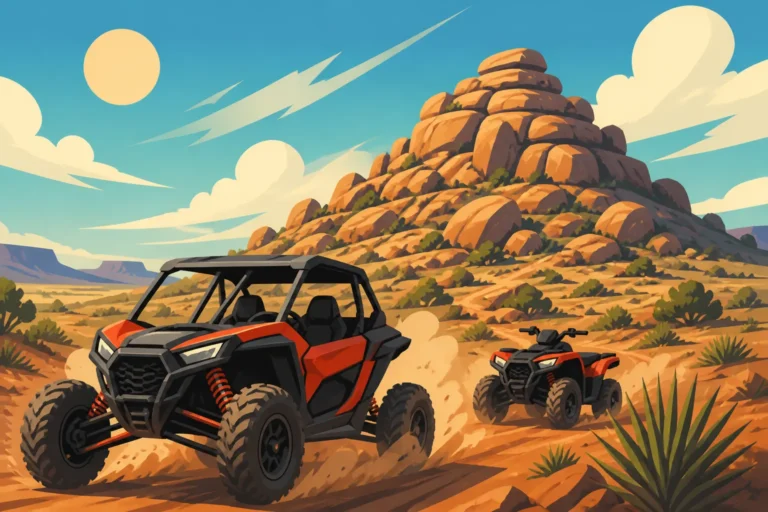
Mescalero Sands is known for sandy riding and dune terrain in southeastern New Mexico. That can make it tempting to arrive and choose a campsite on the spot, but a little research can prevent a long, frustrating search after dark. Look for information about where motorized travel is allowed, whether camping is permitted in the area you intend to use, and whether any temporary closures are in effect. The overview in [New Mexico's Mescalero Sands Dunes] is a useful starting point for understanding the area, while [Camping at a New Mexico OHV Area] offers broader planning context.
Treat third-party maps as helpful references, not final permission to ride. Apps such as onX Offroad can help you review terrain and orient yourself before the trip, but compare what you see with current land-manager information and posted signs. A line on a phone screen does not override a closed-route sign, a boundary, or a local restriction.
Choose your campsite with the return ride in mind
A campsite is not just somewhere to park for the night. It is your base for unloading, storing gear, cooking, and getting back onto the machine the next morning. Choose a spot that is appropriate for camping and does not block a route, trailhead, gate, or other visitor’s access. Avoid fragile vegetation and areas where vehicles have already made damaging new tracks.
Think through how you will move between camp and the riding area. If your machines need to be trailered to a legal riding route, make sure there is room to park and unload safely. If you are camping near sandy ground, avoid placing your tent or cooking area where a passing vehicle could throw dust or sand into it. Keep the sleeping area separate from the machines, fuel, and cooking equipment.
For an overnight trip, it is wise to plan as though the area has no dependable services. Check whether toilets or other facilities are available before you go, and bring what you need rather than counting on finding them when you arrive. [New Mexico OHV Areas With No Water] and [New Mexico Dispersed Camping for Riders] can help you think through the extra preparation that comes with a remote, self-supported stay.
Build a realistic schedule
A short map distance can take longer than expected when the road is sandy, the trailer is loaded, or the group has to stop to air down, unload, or check directions. Plan to reach your campsite with enough daylight to set up and inspect the machines. Arriving after dark makes it easier to miss soft patches, uneven ground, or a poor place to park.
Set a turnaround time for the day’s ride. If the group is still exploring late in the afternoon, remember that everyone may need to return, secure the machines, and prepare dinner before nightfall. A rider who is unfamiliar with dunes may need more time than the person leading the trip expects. Build in a margin instead of planning every hour tightly.
| Planning question | Practical approach |
|---|---|
| Is the area open? | Check current land-manager information and signs when you arrive |
| Is camping allowed where you plan to stop? | Verify the camping guidance for that specific location |
| Are services available? | Plan as if water, fuel, and facilities will not be available at camp |
| Can you return before dark? | Set a turnaround time and tell the group what it is |
| Is the route shown on an app open to riding? | Confirm it against current official information and posted signs |
Prepare machines and people for sand
Check the machine before loading it
Sand can place a different kind of demand on an ATV or UTV than a firm dirt road. Before the trip, inspect the tires, brakes, steering, cooling system, battery, and safety equipment. Look for loose fittings, worn tread, leaks, or anything that could become a problem once you are away from your trailer. A small repair is much easier to handle at home than on a remote stretch of soft terrain.
Bring tools and basic supplies that match your machine and your ability to use them. A tire repair kit, a suitable air source, a tow strap, and basic hand tools may be useful, but they are not a replacement for knowing how to use them. If your group includes more than one machine, discuss how you would help a rider who gets stuck or has a mechanical problem. Avoid using a tow strap in a way that could injure someone or damage a vehicle.
Tire pressure is a common question on sand, but there is no single pressure that fits every machine, tire, load, and riding style. Follow the manufacturer’s guidance and make adjustments only if you understand the trade-offs. Lower pressure can help a tire spread its footprint, but it can also increase the risk of bead problems or tire damage. Bring a reliable gauge and a way to reinflate before returning to firmer surfaces. For more planning on terrain and equipment, see [Tire Pressure for Soft Sand].
Pack for a self-supported night
Carry more drinking water than you think the group will need, especially in warm weather or when riders are working hard in the sand. Keep some accessible while riding, not just buried beneath luggage at camp. A water shortage can turn an enjoyable afternoon into a safety problem surprisingly quickly. [Carrying Water in the Southern Desert] is worth reviewing before departure.
Bring food that is easy to prepare, a way to store it securely, warm layers for after sunset, and lighting that does not depend on a phone battery. Desert days can feel hot while you are moving, then become uncomfortable once you stop. Pack a first-aid kit, personal medications, sunscreen, eye protection, and clothing that protects against sun, dust, and brush.
Charge phones and navigation devices before leaving, and carry a backup battery if you rely on them. Download maps for offline use where possible. onX Offroad can be useful for checking your position and reviewing routes, but keep a paper or other backup map if you have one, and do not let a low battery leave the group without a way to navigate. [New Mexico Trail Maps Worth Carrying] covers why a backup matters even when digital navigation is part of your plan.
Make a plan for the group
Before riding, agree on who is leading and who is riding at the back. Set simple rules for regrouping at junctions or other decision points. A slower rider should not feel pressured to keep pace with someone who knows the terrain better. If the group splits up, decide in advance where everyone will wait and how long before the lead rider returns to check.
Make sure each rider knows the basic plan: where camp is, how to recognize the route back, what to do if separated, and who to contact in an emergency. Keep keys, water, and essential safety items with the rider rather than leaving everything in one machine. If someone has a medical condition, make sure the group knows what to do and where relevant medication is kept.
Families should be especially deliberate about supervision and machine choice. A child who is tired, overheated, or overwhelmed by sand may not be able to keep up with an adult’s pace. Choose a short, manageable ride and turn back early if conditions or confidence change. For general preparation and shared-space considerations, read [New Mexico Trail Etiquette on Shared Ground].
Ride dunes carefully and adapt to conditions
Read the sand instead of rushing through it
Dune riding rewards smooth, deliberate control. Sudden turns, hard braking, and sharp throttle changes can unsettle a machine, especially where the sand is soft or visibility is limited. Give other riders room, stay alert for vehicles approaching over a rise, and avoid charging into terrain you cannot see clearly.
The dunes are not uniform. A section that looks firm from a distance may be loose, while a slope that appears manageable may hide a sharper drop or a soft landing. Ride within your ability and leave room to stop or change direction. Do not assume that tracks left by another rider indicate a safe or permitted route.
The area’s dunes are often described as reaching around 60 feet, but the number is less important than the way the terrain changes your sightlines. A crest can hide a rider, a stopped machine, or a steep side. Use particular care when approaching a dune top, and avoid stopping where another rider is likely to crest without seeing you. [60-Foot Dunes in the Southeast] provides more context on the terrain.
Watch weather and visibility
Weather can change the character of an overnight ride quickly. Wind may reduce visibility by blowing loose sand, and rain can make access roads or low areas difficult. In New Mexico, summer storms can bring lightning and sudden runoff. Do not camp or park in a wash simply because it is dry when you arrive; water can move through low ground after rain falls elsewhere.
Check the forecast before leaving and keep checking it during the trip. If storms are developing, shorten the ride and return to a safer location rather than waiting until the sky is directly overhead. Avoid exposed high points during lightning and do not cross flowing water. For more seasonal guidance, see [New Mexico Riding in Summer Monsoon] and [New Mexico Fire Season and Trail Closures].
Wind and dust also affect group riding. Increase following distance, keep goggles or eye protection in place, and slow down when you cannot see far enough to stop safely. If the lead rider disappears in a dust cloud, do not continue at speed just to catch up. Stop in a safe place and regroup using the plan you agreed on before the ride.
Protect the place you came to enjoy
Stay on routes and riding areas that are open to motorized travel. Avoid creating new tracks through vegetation or around a closed section. Driving around a closure can enlarge the damaged area and make it harder for land managers to keep routes open. Close gates behind you if you encounter one, and never assume that an open gate means the road beyond it is open to public riding.
Keep camp tidy and take all trash with you. Secure food and equipment so that wind does not scatter wrappers or bags. Use only permitted fire methods, and check restrictions before lighting anything. If fires are not allowed or conditions are unsafe, bring a stove that is permitted for the area or plan meals that do not require cooking.
Respect other visitors, including people who are camping, hiking, or riding at a different pace. Keep noise reasonable near camp and do not use another person’s campsite as a shortcut. Responsible riding helps preserve access and keeps the area more enjoyable for the next group.
Handle the return trip and common problems
Leave time to pack and inspect
Do not wait until the last possible moment to pack. Give yourself enough time to secure the campsite, check the machines, and load the trailer without rushing. Walk the camp area before leaving and pick up small items that are easy to overlook, such as zip ties, food scraps, and packaging.
Check tires, lights, straps, and trailer connections before driving away. If you changed tire pressure for sand, reinflate as needed before traveling on firmer roads, following the machine and tire manufacturer’s guidance. Keep dusty gear contained so it does not coat the vehicle interior on the drive home.
If you are traveling a long distance between services, plan fuel before you leave town. Do not assume that a convenient station will be open or that a machine’s stated range will match your actual riding conditions. Sand, load, speed, and terrain can all affect fuel use. [Fuel Range Between Desert Towns] is useful for thinking through the gaps between refueling opportunities.
Know what to do if a machine gets stuck
Getting stuck is frustrating, but rushing often makes it worse. Stop spinning the tires before the machine digs itself in. Ask the group to keep clear of the wheels and tow points, then assess whether a small amount of controlled digging or a properly used recovery strap can help. If the machine is in a risky position or the group is unsure how to recover it, do not improvise a high-tension pull.
Keep a phone or other communication method accessible, but do not depend on cell service. Tell someone who is not on the trip where you are going and when you expect to return. If plans change, update that person when you can. A simple check-in plan can make a delay less alarming and help others respond appropriately if the group does not return.
Keep a backup route and a flexible plan
A planned overnight may need to change because of weather, a closure, a mechanical issue, or a campsite that is unsuitable when you arrive. Have a backup plan that does not depend on pushing farther into unfamiliar terrain. That could mean shortening the ride, staying somewhere else where camping is allowed, or returning to your starting point.
Use onX Offroad or another navigation tool to orient yourself, but cross-check route access and boundaries with official information. Save important details before heading out, such as the land manager’s contact information and the location of your staging area. A map is most useful when you have already studied it and can interpret it without relying on a signal.
An enjoyable overnight at Mescalero Sands is less about covering as much ground as possible and more about arriving prepared, riding within your limits, and leaving the area in good shape. Check access before the trip, carry your essentials, respect the dunes and other visitors, and keep enough daylight in reserve to get back to camp safely.
Disclaimer
This article is for general informational purposes only and does not constitute professional advice. Laws, prices and regulations vary by location and change over time. Consult a qualified professional for guidance on your specific situation.