New Mexico’s 60-Foot Dune Field
A dune ride can look simple from the staging area, then turn into a confusing mix of soft sand, blind crests, heat, and routes that are harder to spot than expected. This guide explains what to expect at New Mexico’s 60-foot dune field, how to plan a responsible visit, and what to check before unloading your ATV or UTV.
What to know about New Mexico’s 60-foot dune field
Where the dunes are and what makes them different
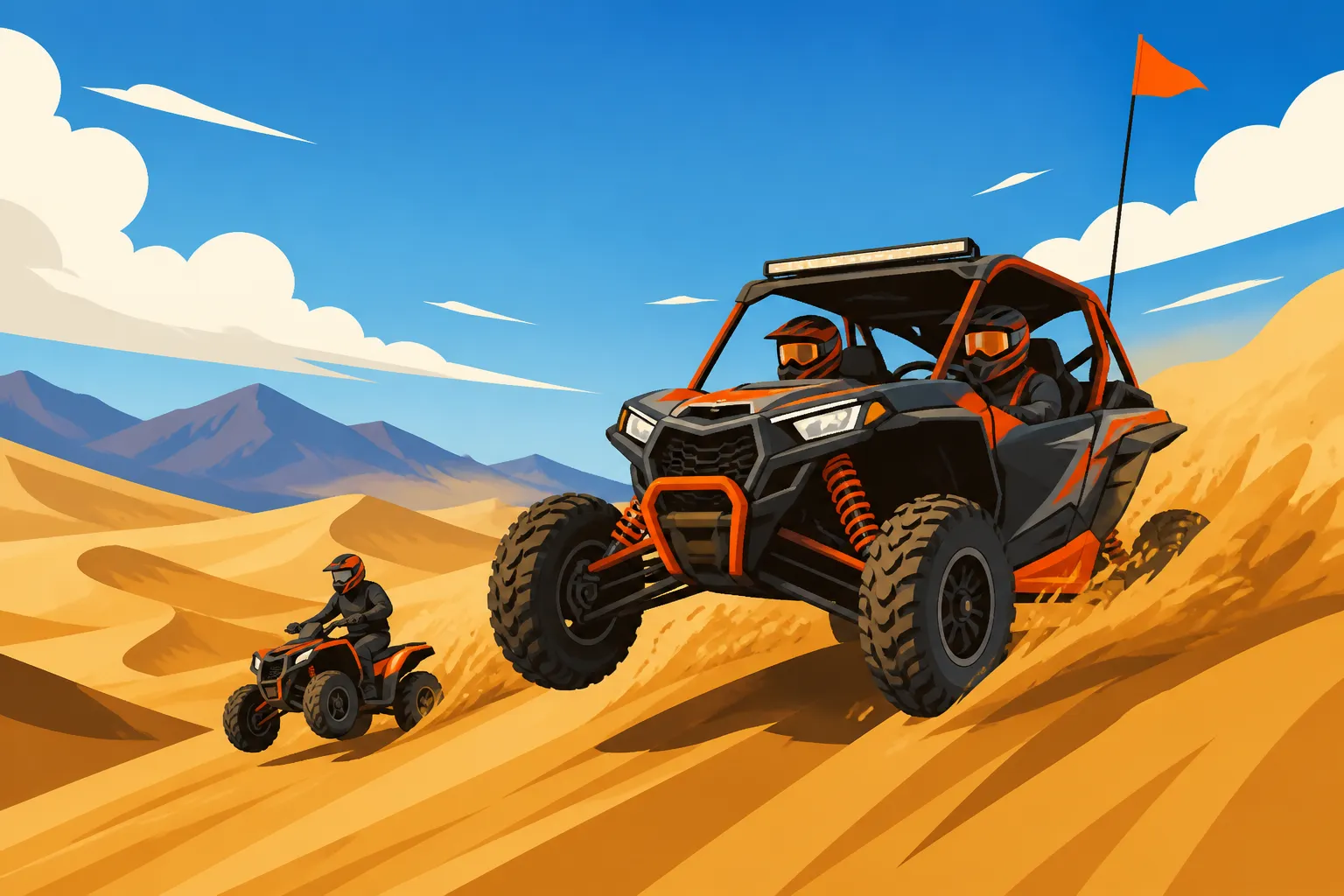
The 60-foot dunes are part of the Mescalero Sands dune country in southeastern New Mexico. The area’s pale, wind-shaped sand creates a very different ride from the rocky trails and forest roads found elsewhere in the state. A dune’s height can make a route look inviting from a distance, but the shape of the land can hide the terrain on the other side of a crest.
The dunes are not a groomed track with a single, predictable riding line. Wind continually changes the surface, and a path that looks firm in one place can become loose or churned in another. That shifting landscape is a big part of the appeal, but it also means riders should treat every crest as a potential blind spot and avoid assuming that a familiar route will feel exactly the same on a return visit.
For a broader introduction to this riding area, see [New Mexico's Mescalero Sands Dunes]. If you are comparing sand destinations around the state, [New Mexico Dune Riding Areas] can help you think through how dune riding differs from other terrain.
What kind of ride to expect
Expect a ride where momentum, smooth throttle control, and good judgment matter more than picking a high speed. In soft sand, a sudden stop can leave a machine bogged down, while an aggressive turn can make it slide wider than expected. On a dune face, speed that feels manageable at the bottom may become difficult to control near the crest.
Conditions are not uniform. Some stretches may be packed enough to travel comfortably, while pockets of loose sand can ask more of the rider and machine. A UTV may feel stable and roomy, but its weight and width can make recovery more involved if it sinks or tips. An ATV may be easier to maneuver through narrower lines, but the rider still needs to stay balanced and make deliberate inputs.
It helps to arrive expecting a learning curve rather than a full day of charging up the tallest slope. A first visit is a good time to ride conservatively, observe how the sand is behaving, and choose terrain that matches the least experienced person in your group. The aim is not to conquer every dune; it is to finish the day with enough energy and control to get back to the staging area safely.
Planning your visit before you leave
Confirm access and current conditions
Before driving out, confirm that the area is open and that the access route, land-use rules, and any temporary restrictions work for your plans. Land managers may issue notices about closures, fire danger, weather, road conditions, or maintenance. A map pin alone does not confirm that a route is open or that the destination is accessible from the approach you intended to use.
Build a little flexibility into your day. A storm can change sand and road conditions, and a hot afternoon may make a long ride less comfortable than it seemed during breakfast. If your group is traveling from Alamogordo, Tularosa, Roswell, or farther away, check the route before leaving town and think through where you can turn around if conditions are not suitable.
Digital maps can make it easier to orient yourself, but they should be a planning tool, not permission to ride anywhere a screen shows a line. Apps such as onX Offroad can help you review mapped roads and terrain before the trip. Download the information you need in advance if you expect limited service, and compare it with land-manager information and posted signs on site. A digital track does not override a closure or authorize travel across land that is not open to riding.
Check the machine, paperwork, and group
Give the machine a careful once-over before towing it to the dunes. Check tires for damage and suitable condition, inspect brakes and controls, and make sure the throttle returns smoothly. Bring basic recovery gear that matches your vehicle and your group’s experience. A strap or shovel can be useful when sand stops a machine, but recovery should be done thoughtfully: a poorly planned pull can injure someone or damage a vehicle.
Check registration or permit requirements before the trip, especially if you are visiting from another state. New Mexico’s rules depend on the vehicle and the rider’s circumstances, so confirm what applies to your machine rather than relying on what a friend carried on a previous visit. Start with [New Mexico OHV Permits Explained] and [New Mexico's Nonresident OHV Permit] if you are unsure whether your out-of-state registration or permit is sufficient.
Agree on simple group procedures before anyone starts riding. Pick a meeting point, decide what to do if someone gets separated, and make sure everyone knows not to cross a dune crest blindly. For a group with mixed skill levels, establish a slower pace and keep riders close enough to communicate without crowding one another. A short conversation at the staging area can prevent a lot of confusion once engines are running.
Riding safely on soft sand
Read the dune before you climb
Before approaching a slope, look at its shape and what you can see beyond it. If the far side is hidden, do not assume it is clear. Another rider, a drop, or a change in surface may be just out of view. Choose a line that gives you room to stop or turn around, and avoid following another machine so closely that you cannot respond to its movement.
Do not treat a tall dune as a challenge that must be climbed. If you cannot see the top or do not know what lies beyond it, choose a lower, more visible route. A machine that loses momentum on a steep face can slide backward or sideways, while an uncontrolled descent can put both the rider and anyone below at risk. If a climb feels wrong, back away only when you can do so safely and without putting yourself in the path of another vehicle.
Passing requires extra care in dune terrain. Keep a predictable line, give other riders room, and avoid cutting across someone’s path near a crest. Dust and sunlight can reduce visibility, and engine noise can make it hard to hear an approaching machine. The safest assumption is that another rider may be coming from the other side of any blind rise.
Manage pace, fatigue, and heat
In sand, smooth control is usually more useful than sudden bursts of throttle or sharp steering. Avoid abrupt inputs, especially when crossing a slope or changing direction. If the machine begins to bog down, forcing it forward with repeated hard acceleration may dig it in deeper. Stop in a safe place, assess the situation, and use a controlled recovery plan rather than having several people crowd around a spinning tire.
Heat and fatigue can sneak up on riders who are concentrating on the terrain. Bring more water than you expect to need, take breaks before you feel drained, and keep an eye on children or less experienced riders who may not speak up when they are tired. Start earlier in the day when conditions are cooler, and avoid turning the final hour into a race back to the staging area.
Weather deserves the same attention as terrain. Sudden rain can change access roads, while thunderstorms bring lightning and potentially hazardous travel conditions. Monsoon weather can also produce fast-changing conditions in the region; review [New Mexico Riding in Summer Monsoon] before planning a summer outing. If a storm is building, stopping the ride and getting to a safe location is a better choice than trying to squeeze in one more run.
| Riding concern | Why it matters on dunes | Practical response |
|---|---|---|
| Blind crests | You may not see riders or terrain on the far side | Slow down, check visibility, and avoid cresting at speed |
| Loose sand | A machine can lose momentum or dig in | Use smooth control and avoid repeated aggressive throttle |
| Heat and fatigue | Tired riders make poorer decisions and may miss hazards | Carry water, take breaks, and shorten the ride when needed |
| Changing weather | Rain, wind, and lightning can change conditions quickly | Check forecasts and leave room to change plans |
| Separation | Dunes can make it difficult to see or hear your group | Set a meeting point and agree on a regrouping plan |
Rules, maps, and responsible riding
Stay within authorized riding areas
A public-land recreation area is not an invitation to ride across every visible patch of sand or surrounding open ground. Follow posted signs and land-manager directions, and stay on routes and surfaces where riding is allowed. Do not cross fences, enter closed areas, or assume that a track visible on a phone is an approved route.
For help understanding the broader rules that apply to public land, read [New Mexico Rules for Riding BLM Land]. The details of access can depend on the specific location and current land-management decisions, so use official notices and signs as your guide. If a boundary or route is unclear, stop and check rather than guessing.
Respecting boundaries helps protect the landscape as well as access for other riders. Dune environments can be vulnerable to damage from repeated travel outside designated areas, and a shortcut can create impacts that last long after the tire tracks disappear. Pack out trash, avoid disturbing wildlife, and give other visitors room to enjoy the area without unnecessary noise or dust.
Use maps as backup, not as a substitute for judgment
A map is most useful when you review it before the ride, not when you are already turned around. Save the area information for offline use, note the access point and staging location, and make sure every rider knows where the group intends to meet. [New Mexico Trail Maps Worth Carrying] offers a useful starting point for thinking about navigation tools and backup planning.
onX Offroad may help riders orient themselves and review mapped routes, but map layers can differ in detail and should be cross-checked against signs, local notices, and land-manager guidance. Keep your phone charged and protected from dust, and consider carrying a paper map or another navigation option. If the group relies on one person’s phone, make sure someone else also knows the route and meeting point.
Do not let navigation distract the driver. The person operating the ATV or UTV should be focused on the terrain, especially near dune faces and intersections. If you need to check a map, stop somewhere visible and out of the way. A few extra minutes spent regrouping is far safer than trying to follow a screen while moving through soft sand.
What to bring and how to make the day enjoyable
Pack for sand, sun, and a remote outing
A comfortable dune day starts with practical gear. Bring water for everyone, sun protection, appropriate eye protection, and clothing that shields skin from sun and blowing sand. Dust can find its way into small openings, so secure loose items and protect electronics. A basic first-aid kit, a charged phone, and a backup way to navigate are sensible additions even if you expect to stay close to the staging area.
Bring the tools and recovery equipment suited to your machine, but do not assume that having gear makes every recovery safe. If a vehicle is stuck on a steep or unstable slope, clear the area and assess the risk before anyone pulls, pushes, or digs. Keep people away from moving wheels and recovery lines, and avoid using improvised attachment points that could fail under tension.
Food, extra water, and a plan for getting help matter more if your group is traveling from farther away. Do not count on reliable cell service in every part of the riding area. Let someone outside the group know where you plan to go and when you expect to return, especially if you are riding with a small group or heading out for a longer session.
Set a pace that fits the whole group
A good group ride is not necessarily the one that covers the most ground. Match the pace to the least experienced rider, and agree that anyone can call for a break without being teased or rushed. For children and newer riders, begin on terrain where they can practice turning, stopping, and reading the sand before moving toward taller dunes.
Make regrouping routine. Pause at agreed points, count riders, and check that no one is overheated or struggling with their machine. If someone falls behind, the group should have a clear plan for who waits and where, rather than sending multiple riders back through uncertain terrain. This is especially helpful when dust or the shape of the dunes makes it difficult to see everyone at once.
When you are ready to leave, take a final look around the staging area and make sure you have all your gear and trash. If you are considering an overnight trip, research camping rules and facilities separately rather than assuming you can camp wherever you park. [Camping at a New Mexico OHV Area] is a useful next step, while [New Mexico OHV Areas Near Alamogordo] can help you explore other nearby riding options.
A practical first-visit plan
Before the trip
Start by confirming that access is open and identifying the legal riding area. Check the weather, review any land-manager notices, and verify the registration or permit requirements for your vehicle and residency. Save maps offline, choose a meeting point, and tell someone who is not riding with you where you plan to go.
Then prepare the machine and trailer. Check the tires, brakes, controls, fuel, and tie-downs, and pack water, sun protection, basic tools, and recovery gear. If your group has a range of experience, decide ahead of time that the first ride will be a familiarization lap rather than an attempt to reach the tallest dune.
At the dunes
Once you arrive, take a moment to observe before riding. Look for posted instructions, identify where other people are traveling, and choose a low-pressure place to get used to the sand. Keep speed conservative until you understand how the surface and visibility feel that day.
As the ride continues, stay alert for blind crests and other vehicles, and regroup often. Stop if anyone is tired, the weather changes, or the group becomes separated. A flexible plan makes it easier to turn a difficult day into a shorter, safer one.
The 60-foot dunes can make for a memorable New Mexico ride, but the best experience comes from treating the terrain with respect. Plan ahead, ride within your ability, and leave the area in good condition for the next group.
Disclaimer
This article is for general informational purposes only and does not constitute professional advice. Laws, prices and regulations vary by location and change over time. Consult a qualified professional for guidance on your specific situation.