Registering Two New Mexico Machines at Once
It’s easy to feel overwhelmed when you’ve got more than one off-highway vehicle (OHV) in the garage, especially if you’ve just bought a couple of quads for the family or added a side-by-side to your dirt bike collection. You’re probably wondering if you can tackle the registration for all of them in one fell swoop, hoping to avoid multiple trips to the Motor Vehicle Division (MVD) office. This guide is here to walk you through the practicalities of registering two or more New Mexico OHVs simultaneously, detailing the documentation you'll need for each and how to streamline the process.
The Reality of Registering Multiple OHVs in New Mexico
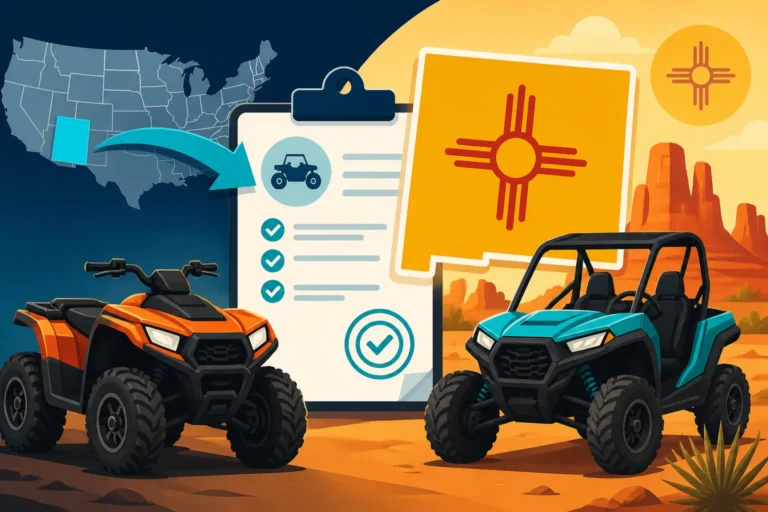
When you’re thinking about registering more than one OHV, it’s not really about a special "multi-machine" registration process. Instead, it’s about presenting multiple, individual registration applications to the MVD at the same time. Each ATV, UTV, dirt bike, or sand rail you own is a unique vehicle in the eyes of the law, and each requires its own set of documentation to be properly registered. Imagine it like getting a driver's license for three different people; while you might go to the MVD together, each person still has to go through their own distinct application process.
The MVD agent will review the paperwork for each machine sequentially. So, while you can bring all your paperwork for all your machines in one visit, they won't just magically register them all with one form. You'll essentially be going through the registration process for your first machine, then your second, and so on, all within the same appointment. This means organization is absolutely key to making your visit as smooth as possible. Don’t just dump a pile of papers on the counter; have each vehicle's documents neatly separated and ready to go.
Preparing for Your MVD Visit
Before you even think about heading to the MVD, the most critical step is preparation. This isn't just about gathering papers; it's about organizing them so that each machine's file is complete and easily accessible. Think of it as creating a separate folder (even if it's just a stack with a paperclip) for each OHV you intend to register. This level of organization will not only impress the MVD agent but will also significantly reduce the chances of you forgetting a crucial piece of documentation for one of your vehicles. A missing title for one machine, for example, could halt the entire process for that specific OHV, even if the others are perfectly in order.
You’ll want to double-check every single item on the checklist for each machine. For instance, if you're registering a new side-by-side and a used dirt bike, the requirements will differ slightly. The new machine will have a manufacturer's certificate of origin (MCO), while the used one will likely require a title and a bill of sale. Being aware of these nuances for each of your machines ahead of time can save you immense frustration and a wasted trip to the MVD.
Why Organization is Your Best Friend
It's easy to get flustered when dealing with government paperwork, and having multiple vehicles to register can multiply that stress. But taking the time to organize each vehicle's documents prevents confusion, both for you and the MVD staff. When you approach the counter with a clearly labeled stack of documents for "Quad A" and another for "UTV B," it demonstrates that you've done your homework.
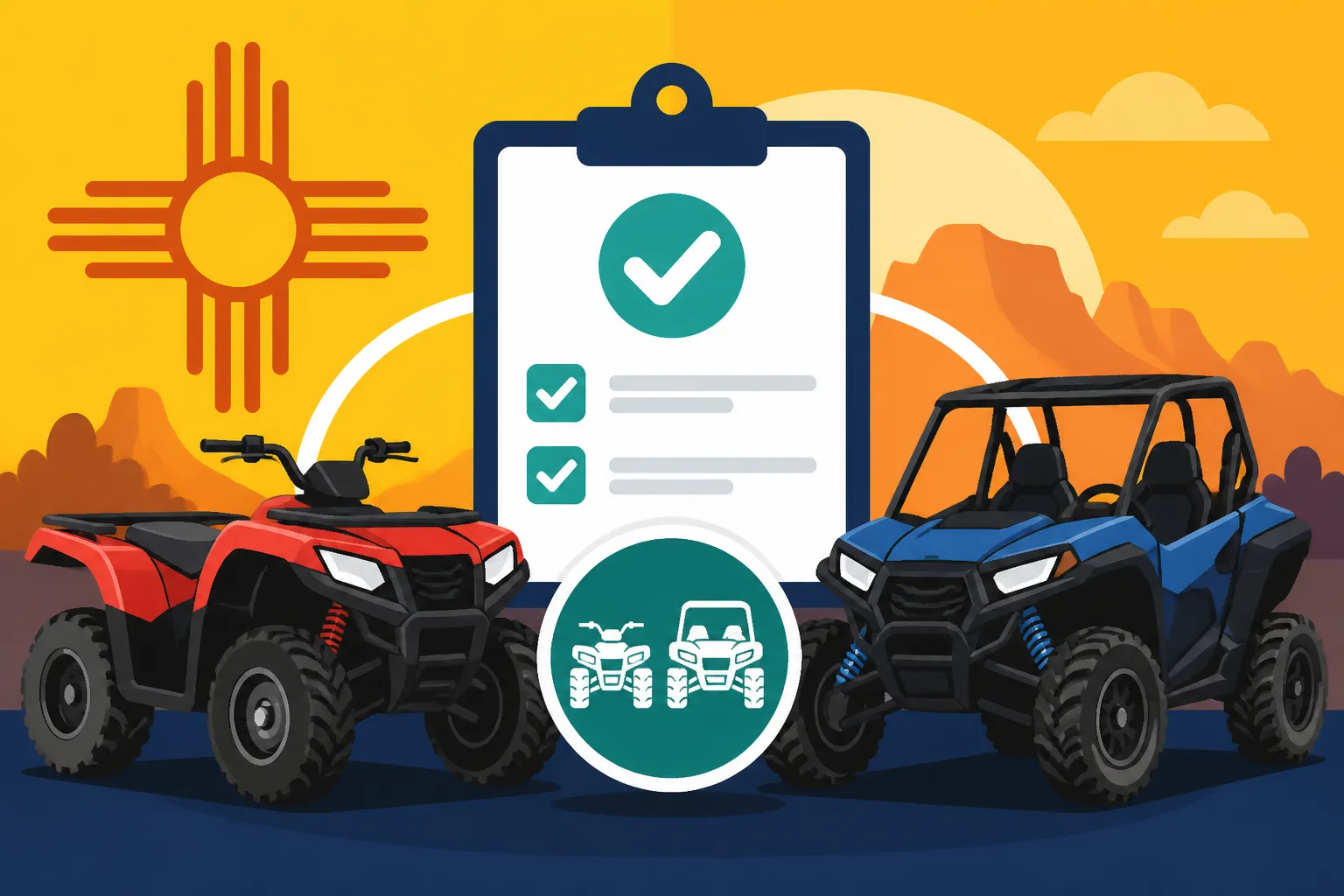
Consider creating a simple checklist for each vehicle based on its specific situation (new purchase, used, gifted, etc.). Mark off each item as you gather it. This systematic approach can highlight any missing pieces before you even leave your home. Imagine the disappointment of waiting in line, finally getting to the counter, and realizing you left the bill of sale for one of your machines on the kitchen table. Nobody wants that, especially when you have multiple vehicles to process.
Essential Documentation for Each OHV
The paperwork required for registering an OHV in New Mexico remains consistent, regardless of whether you’re registering one or ten. The key is that each machine needs its own complete set of these documents. This is where most people tend to stumble when trying to register multiple vehicles at once.
Proof of Ownership for Each Machine
This is perhaps the most critical component. For a brand-new OHV, you'll need the original Manufacturer's Certificate of Origin (MCO), often called a Manufacturer's Statement of Origin (MSO). This document is like a birth certificate for your machine and should be provided by the dealer. Make sure it’s signed and properly assigned to you. For a used OHV, you'll generally need the New Mexico title, properly signed over to you by the previous owner. If it's an out-of-state title, ensure it's notarized if required by that state, and that all necessary fields are filled out. [Titling an Off-Highway Vehicle in New Mexico] covers this in more detail.
Sometimes, especially with older dirt bikes or quads, you might encounter a situation where there's no traditional title. In such cases, you might need a notarized bill of sale along with a statement of fact or other supporting documentation to establish ownership. It's best to check with MVD directly if you're in this unique situation for any of your machines. Having these ownership documents pristine and correctly filled out for each vehicle is non-negotiable.
The Bill of Sale (for each used machine)
If you've purchased any of your OHVs used, a bill of sale is crucial. This document proves the transfer of ownership from the seller to you and provides details like the purchase price, date of sale, and the Vehicle Identification Number (VIN). Even if you have a properly assigned title, a bill of sale is often requested by the MVD. It acts as a supporting document to the title transfer. It's smart to use a standardized form, and if you're looking for a reliable template, platforms like LawDepot offer excellent, customizable bill of sale forms that can cover all the necessary legal bases. Having this accurately filled out for each used machine in your batch is vital. [A New Mexico Bill of Sale for an ATV] goes into depth on this document.
| Document Type | New Machine (Dealer Purchase) | Used Machine (Private Sale) |
|---|---|---|
| Proof of Ownership | Manufacturer's Certificate of Origin (MCO/MSO) | Properly Assigned New Mexico Title (or out-of-state equivalent) |
| Bill of Sale | Not typically required, but good to have a dealer invoice | Yes, for each used machine. Consider using LawDepot for a template. |
| Photo ID | Yes (for the registrant) | Yes (for the registrant) |
| Proof of Residency | Yes (e.g., utility bill, driver's license) | Yes (e.g., utility bill, driver's license) |
| Registration Application | Yes (separate for each machine) | Yes (separate for each machine) |
| Payment for Fees | Yes (for each machine) | Yes (for each machine) |
| VIN Inspection | Not always required for new, but may be requested for used or out-of-state | Often required for used or out-of-state machines |
Your Valid Photo Identification and Proof of Residency
For you, the registrant, you'll need your valid New Mexico driver's license or another form of government-issued photo identification. This verifies your identity. In addition to your ID, the MVD will want proof that you are indeed a New Mexico resident. This could be a utility bill, a lease agreement, or other official mail showing your current New Mexico address. While this applies to you, the individual, remember that all the OHVs must be registered to this verified address. This single set of documents identifies you as the person responsible for all the registrations you are processing.
It's common for people to forget to update their driver's license address after a move, leading to a mismatch with their current residency. Ensure your ID reflects your current home address, or be prepared with additional documentation if it doesn't. You only need one set of these documents for yourself, but make sure they're readily available for the MVD agent.
Completed Application Forms for Each OHV
Each OHV requires its own completed New Mexico OHV registration application form. Do not try to list multiple vehicles on a single form. Each VIN, make, model, and year needs its own dedicated application. You can usually download these forms from the MVD website ahead of time and fill them out. This saves time at the office, allowing you to simply hand over the completed forms rather than filling them out on the spot with a pen that might be running out of ink.
When filling out these forms, pay close attention to details like the VIN. A single transposed digit can cause delays. If you're unsure about any section, it's better to leave it blank and ask the MVD agent than to fill it in incorrectly. Having these forms pre-filled and organized with the corresponding ownership documents for each machine will make a huge difference in how quickly your batch of registrations gets processed. This is a primary point of friction for many people, so getting it right for each individual machine is paramount.
Payment for Registration Fees
You’ll need to pay the applicable registration fees for each OHV. The cost for registration is per machine, not per person or per visit. For example, if you're registering two machines, you'll pay the registration fee twice. While the MVD processes these fees, they typically accept cash, credit/debit cards, or checks. It’s a good idea to confirm their accepted payment methods before your visit. Knowing the total cost for all your machines upfront ensures you aren’t caught off guard. [New Mexico OHV Registration Cost] outlines these fees.
It's also worth noting that the initial registration fee might be different from a renewal fee. [Why a First Registration Costs More Than a Renewal] explains this. Make sure you've budgeted for the full cost of registering each of your machines.
Streamlining the Registration Process at MVD
Registering multiple OHVs in one go is totally doable, but it requires a bit more strategic thinking than just showing up. Think of yourself as project manager for your personal fleet of fun machines.
Making an Appointment
If your local MVD office allows appointments, make one. This cannot be stressed enough, especially when you have multiple transactions. An appointment often means a dedicated time slot, which is invaluable when you have several vehicles to register. Showing up as a walk-in with a stack of paperwork for three OHVs might lead to a longer wait or, worse, being told they can only handle one transaction per customer for walk-ins on a busy day. Call ahead or check the MVD website for their appointment policies. This simple step can save you hours of waiting and potential frustration. [New Mexico OHV Registration at MVD] offers more advice on navigating the MVD.
Even with an appointment, arrive early. This gives you a buffer in case of unexpected traffic or if you need to quickly review your documents one last time in the parking lot. A few extra minutes of preparation can prevent a stressful start to your MVD visit.
Preparing for the VIN Inspection
For used OHVs, or those coming from out of state, a Vehicle Identification Number (VIN) inspection might be required. This is to verify that the VIN on your physical machine matches the VIN on your documentation. The MVD agent will need to visually inspect the VIN on each machine you're registering. For multiple machines, this means you'll either need to bring them all to the MVD office or arrange for a certified VIN inspector to come to your location if that's an option in your area.
Make sure the VIN plate or sticker on each of your OHVs is clean, unobstructed, and easily readable. If it’s caked in mud from a recent ride, clean it off. If it’s in an awkward spot, know exactly where it is so you can quickly point it out to the inspector. Any difficulty in reading the VIN can cause delays or require you to come back another time. This applies to every single machine you want to register.
Understanding Potential Roadblocks
Even with the best preparation, sometimes unforeseen issues pop up. Maybe a previous owner didn't properly sign the title, or there's a lien on one of the vehicles that wasn't disclosed. It’s important to stay calm and be prepared to address these issues individually.
One common snag is an improperly filled out bill of sale. If you're using a generic template, it might miss crucial New Mexico-specific details. This is where resources like LawDepot can be incredibly helpful, as they often provide state-specific legal forms designed to meet local requirements. If a document for one machine is found to be incorrect or incomplete, the MVD may process the other, correctly documented machines and ask you to return later with the corrected paperwork for the problematic one. They won't hold up all your registrations for one error.
Another roadblock can be a discrepancy in the VIN. If the VIN on the title doesn’t exactly match the VIN on the machine, you’ll have a significant hurdle. Always double-check this before you even buy a used OHV. [Checking a VIN Before You Buy] is a vital resource for this. Addressing these potential issues for each machine before you leave home will make your MVD experience much smoother.
After Registration: Decals and Responsibility
Once you've successfully navigated the MVD and registered all your OHVs, you'll walk out with your registration documents and the decals for each machine. Remember, each OHV will receive its own unique decal, usually a yellow one for off-highway use. If you plan to ride any of your machines on paved county or city roads where permitted, you'll need the green on-and-off highway decal as well, which requires additional steps and documentation like proof of insurance. [New Mexico's Yellow Off-Highway Decal] and [New Mexico's Green On and Off-Highway Decal] provide more specifics on these.
Proper Decal Placement for Each OHV
The placement of these decals is specific to the type of machine. A quad’s decal goes on the left-rear fender, a side-by-side’s on the left-rear quarter panel, and a dirt bike’s on the left fork leg. It’s not a one-size-fits-all situation. Make sure you apply the correct decal to its corresponding machine in the designated spot. Improper decal placement can lead to fines from law enforcement, so take a moment to understand where each one belongs. [New Mexico OHV Decal Placement Rules] is a great resource to ensure you get this right for every vehicle.
For example, if you just registered two quads and a dirt bike, you’ll have three sets of decals. Don't mix them up! Affix the quad decals to the correct quads and the dirt bike decal to the dirt bike, all in their proper places. This might sound obvious, but in the excitement of getting home, it’s easy to make a small mistake.
Maintaining Your Registration Records
Even after the registration process is complete, it's crucial to keep your records organized. File away your copies of the registration applications, bills of sale, and titles for each OHV. You never know when you might need them again, whether for a renewal, selling a machine, or in case of theft. Creating a digital backup of these documents is also a smart move, stored securely on a cloud drive or external hard drive.
Remember, OHV registrations in New Mexico typically last for two years. Keep track of the expiration date for each machine, as they might not all expire at the exact same time if you registered them on different dates. When it's time for renewal, you'll repeat a simplified version of the process for each vehicle. [Renewing a New Mexico OHV Registration] has more information on this. By staying organized from the initial registration through to renewals, you ensure that all your New Mexico OHVs remain legally ready for adventure.
Disclaimer
This article is for general informational purposes only and does not constitute professional advice. Laws, prices and regulations vary by location and change over time. Consult a qualified professional for guidance on your specific situation.